Artwork
Chapel of Elijah on Mount Horeb
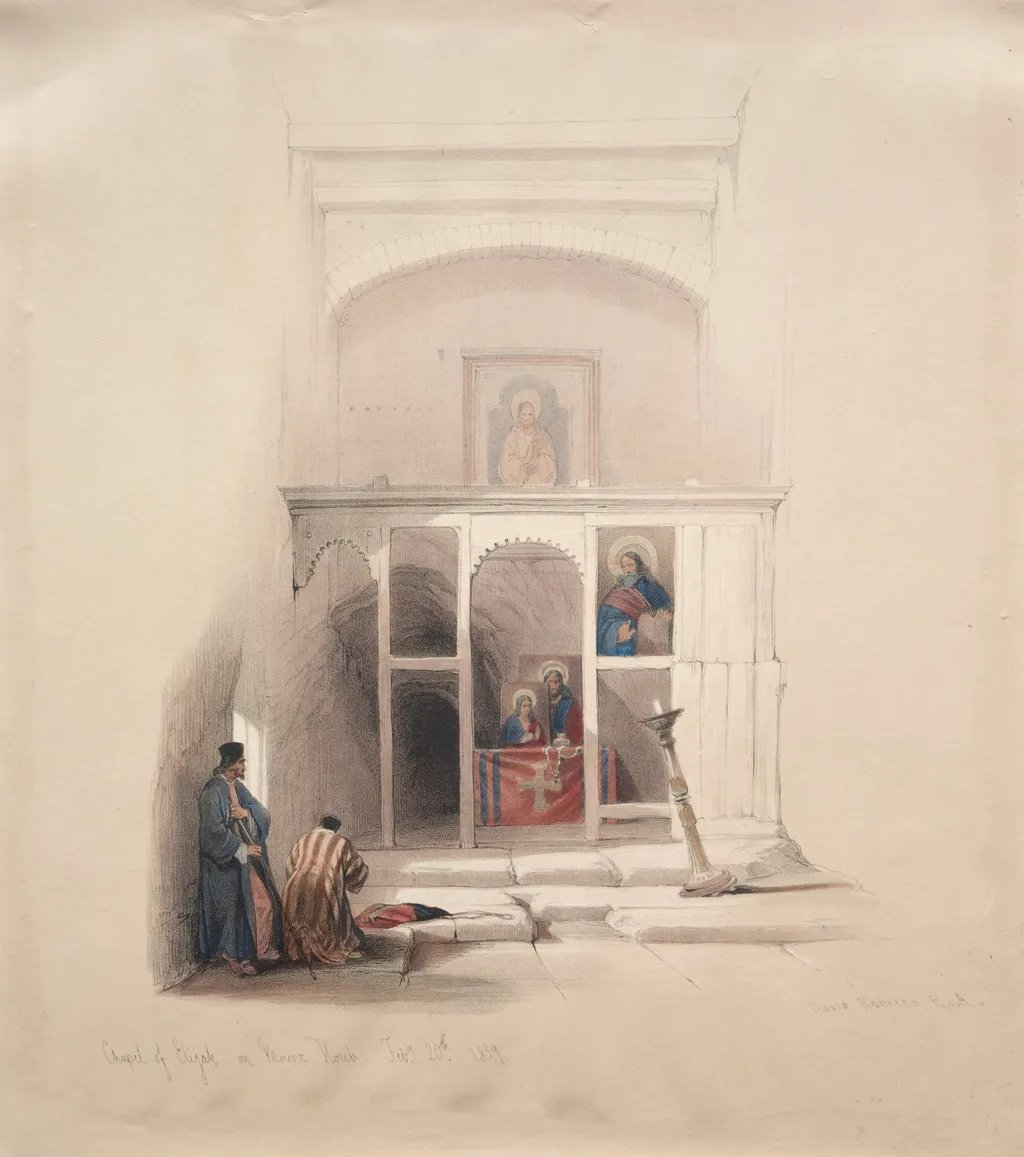
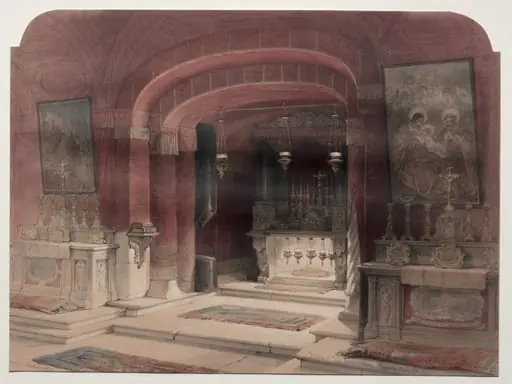
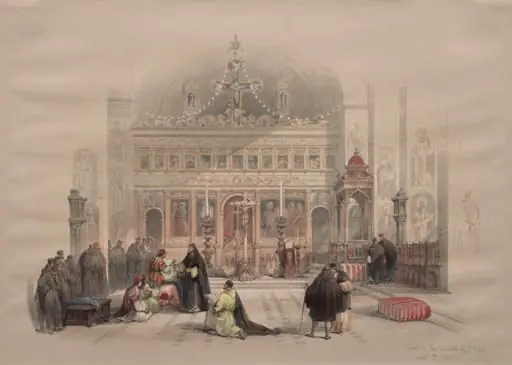
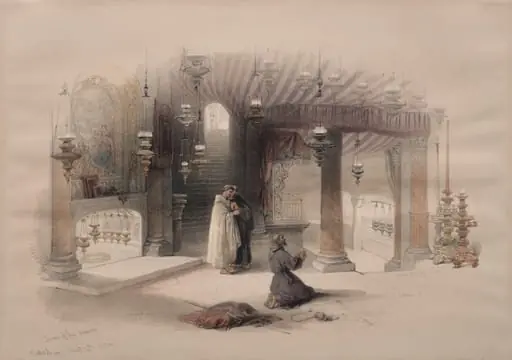
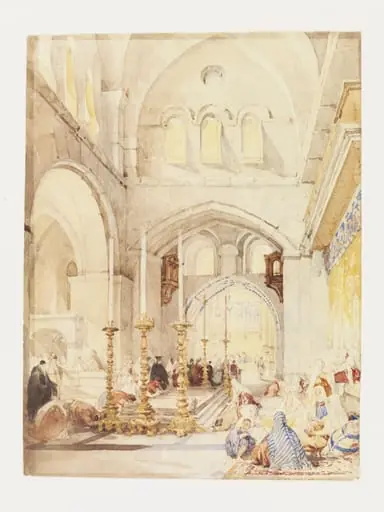
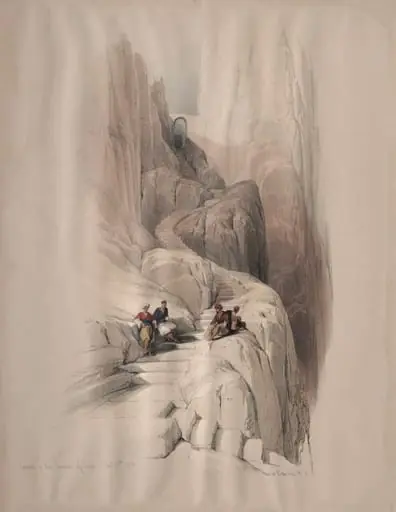
Chapel of Elijah on Mount Horeb is a print by the Romanticist artist David Roberts. It dates from 1839 and is held in the collection of the Cleveland Museum of Art.
About this work
Overview
David Roberts, a Scottish artist known for his precise renderings of Middle Eastern and North African sites, produced this sketch in 1839 during his travels through the region. It is one of many works created on-site and later adapted into lithographs. This piece captures an intimate interior scene rather than a grand monument, emphasizing quiet devotion over spectacle.
Subject & Meaning
The scene depicts a small chapel interior associated with the biblical prophet Elijah, located on Mount Horeb.
The scene depicts a small chapel interior associated with the biblical prophet Elijah, located on Mount Horeb. Two figures kneel in prayer before an altar bearing three framed icons, one showing the Virgin and Child. The presence of cushions and a tall candleholder suggests a place of personal worship. The composition invites contemplation, focusing on solitude and spiritual reflection within a sacred space.
Technique & Style
Roberts employed subtle chiaroscuro to model the chapel’s stone walls and define the figures’ forms. The dim, directional light draws attention to the altar and its icons, while shadows recede into the background. His pencil or ink work is precise yet restrained, capturing texture and volume without embellishment. The sketch retains the immediacy of on-site observation, avoiding theatricality.
History & Provenance
Created during Roberts’s 1838–39 journey through Egypt, Sinai, and the Levant, this sketch was made as part of a larger visual record. It was later used as a reference for lithographs published in his series *The Holy Land, Syria, Idumea, Arabia, Egypt and Nubia*. The original drawing remains in private or institutional collections, valued for its documentary precision.
Context
Roberts’s travels coincided with growing European interest in biblical geography and Orientalist art. His sketches served both artistic and ethnographic purposes, documenting religious sites as they appeared to Western travelers. Unlike idealized studio compositions, this work reflects the modest, lived-in quality of local worship spaces, offering a counterpoint to grander imperial narratives.
Legacy
Roberts’s on-site sketches helped shape 19th-century European perceptions of the Holy Land. While his lithographs reached wide audiences, this drawing reveals the quiet, observational foundation of his practice. It stands as a record of a specific moment in a specific place, valued for its authenticity rather than its spectacle, influencing later travel documentation in art.
Artist & collection
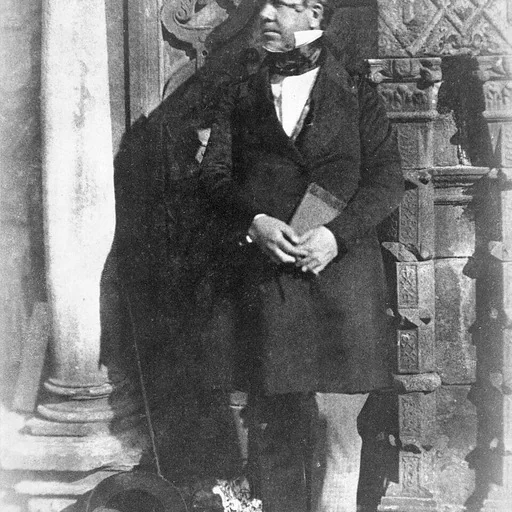
Artist
David Roberts (24 October 1796 – 25 November 1864) was a Scottish painter. He is especially known for The Holy Land, Syria, Idumea, Arabia, Egypt, and Nubia, a prolific series of detailed lithograph prints of Egypt and…