Artwork
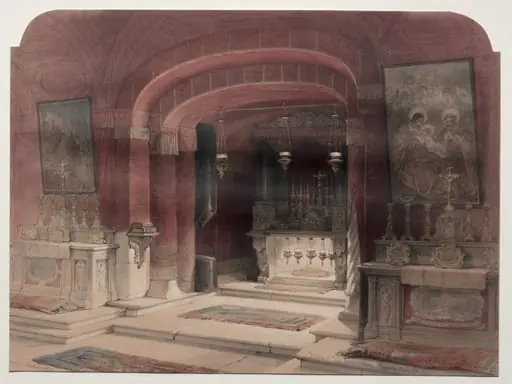
Shrine of the Nativity, Bethlehem
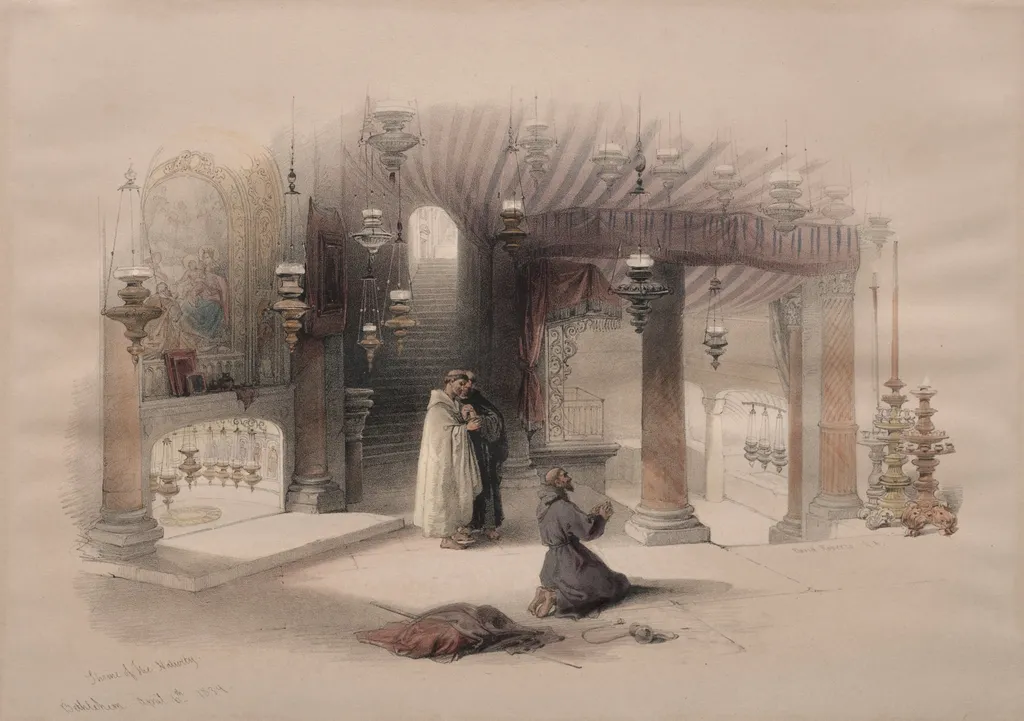
Shrine of the Nativity, Bethlehem is a print by the Romanticist artist David Roberts. It dates from 1839 and is held in the collection of the Cleveland Museum of Art.
About this work
Overview
Created during a multi-year journey through the region, the work is one of many studies that informed his later published series on sacred sites.
David Roberts, a Scottish artist known for his precise renderings of Middle Eastern architecture, produced this detailed interior view of the Shrine of the Nativity in Bethlehem in 1839. Created during a multi-year journey through the region, the work is one of many studies that informed his later published series on sacred sites. The piece captures a moment of quiet devotion within a historic Christian sanctuary, rendered with careful observation and technical discipline.
Subject & Meaning
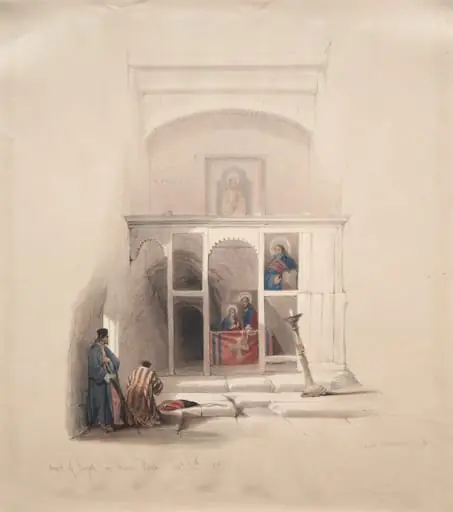
The scene depicts two figures in prayer within the Grotto of the Nativity, a site believed to mark the birthplace of Jesus. One man stands near an altar illuminated by candles, while another kneels in silent reverence. The composition emphasizes stillness and contemplation, avoiding dramatic action to focus on the spiritual atmosphere of the space. The presence of pilgrims underscores the site’s enduring religious significance across centuries.
Technique & Style
Roberts employed chiaroscuro to model the interior’s architectural forms, using subtle gradations of light and shadow to suggest depth and volume. The textures of stone columns, draped fabrics, and metal lamps are rendered with meticulous detail, enhancing the sense of material presence. The faint natural light entering through a high window contrasts with the warm glow of candles, reinforcing the sacred quietude of the setting without theatricality.
History & Provenance
The work was made during Roberts’s 1838–1839 expedition through the Levant, undertaken to document religious sites for a planned publication. It later became part of his broader visual record of the Holy Land, which gained recognition in Britain and Europe. The print entered the collection of The Cleveland Museum of Art, where it remains as a testament to 19th-century European engagement with Eastern Christian heritage.
Context
Roberts’s travels coincided with a growing European interest in biblical geography and Orientalist scholarship. His detailed sketches served both artistic and ethnographic purposes, aligning with contemporary efforts to visually map sacred landscapes. Unlike many of his peers, he avoided exoticizing his subjects, instead focusing on architectural accuracy and the quiet rituals of local worship.
Legacy
Roberts’s work contributed to the visual documentation of sites that were rarely seen by Western audiences. His precise renderings influenced later artists and archaeologists interested in the physical reality of biblical locations. Though associated with Orientalism, his approach was marked by restraint and fidelity to observed detail, distinguishing his output from more romanticized interpretations of the region.
Artist & collection
Artist
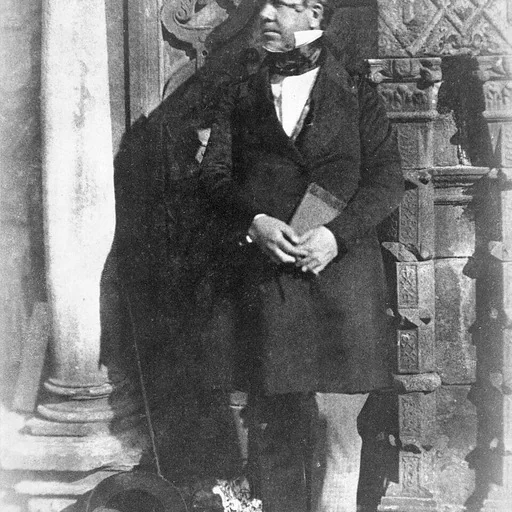
David Roberts (24 October 1796 – 25 November 1864) was a Scottish painter. He is especially known for The Holy Land, Syria, Idumea, Arabia, Egypt, and Nubia, a prolific series of detailed lithograph prints of Egypt and…

 Shrine of the Annunciation, Nazareth
 Chapel of Elijah on Mount Horeb
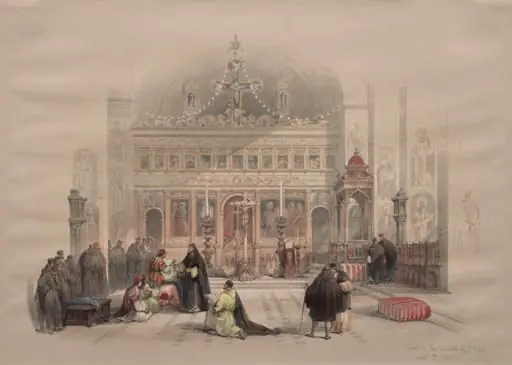 Chapel of the Convent of St. Saba
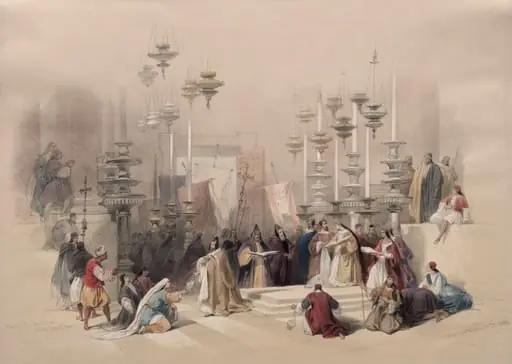 Stone of Unction, Holy Sepulchre
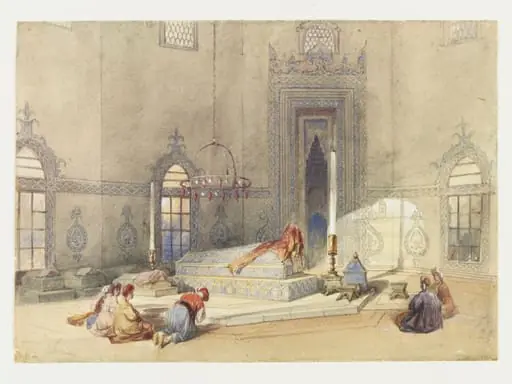 The Mausoleum of Sultan Mahomed, Brusa
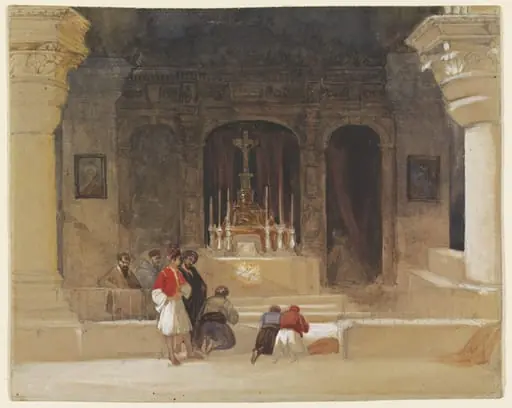 Chapel of St. Helena, Crypt of the Holy Sepulchre, Jerusalem
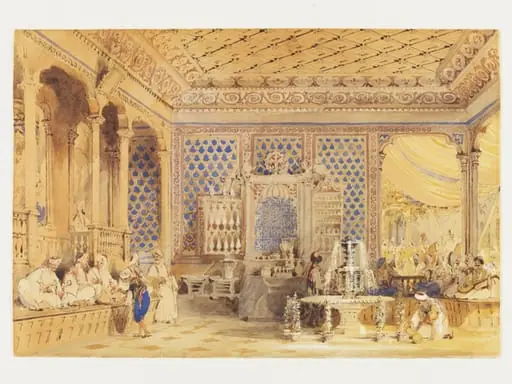 Interior of a Turkish Caffinet, Constantinople
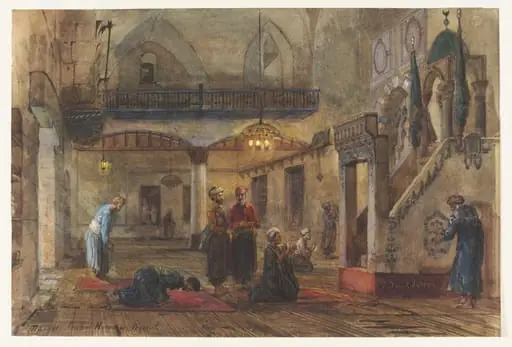 Mosque. Souk el Hommos. Byrout
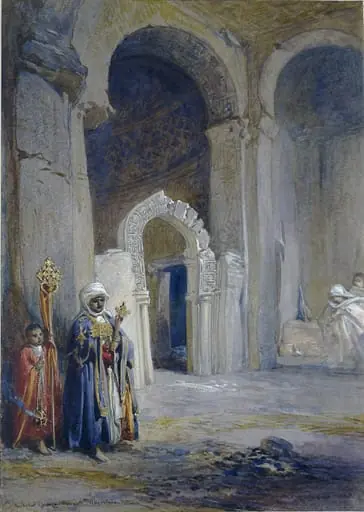 The Rock-Cut Church of Kados Kirkos at Dongola, Abyssinia
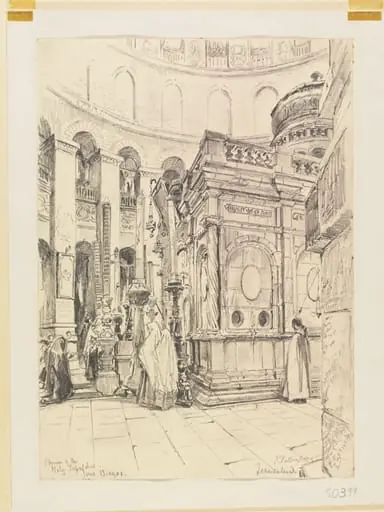 Shrine of the Holy Sepulchre, Jerusalem
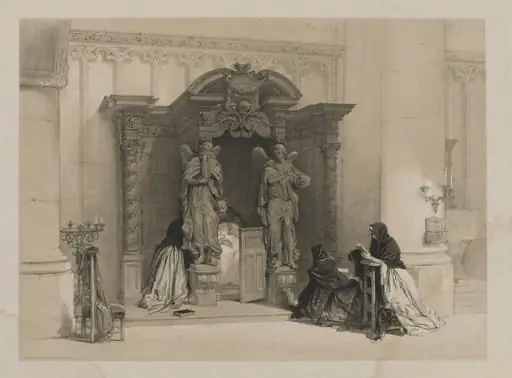 Sketches in Belgium and Germany, Volume I: Confessional in St. Gudule, Brussels
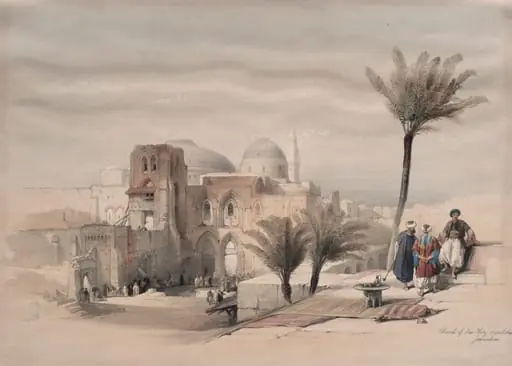 Church of the Holy Sepulchre, Jerusalem