Artwork
Citadel of Jerusalem, without the Walls, Tower of David
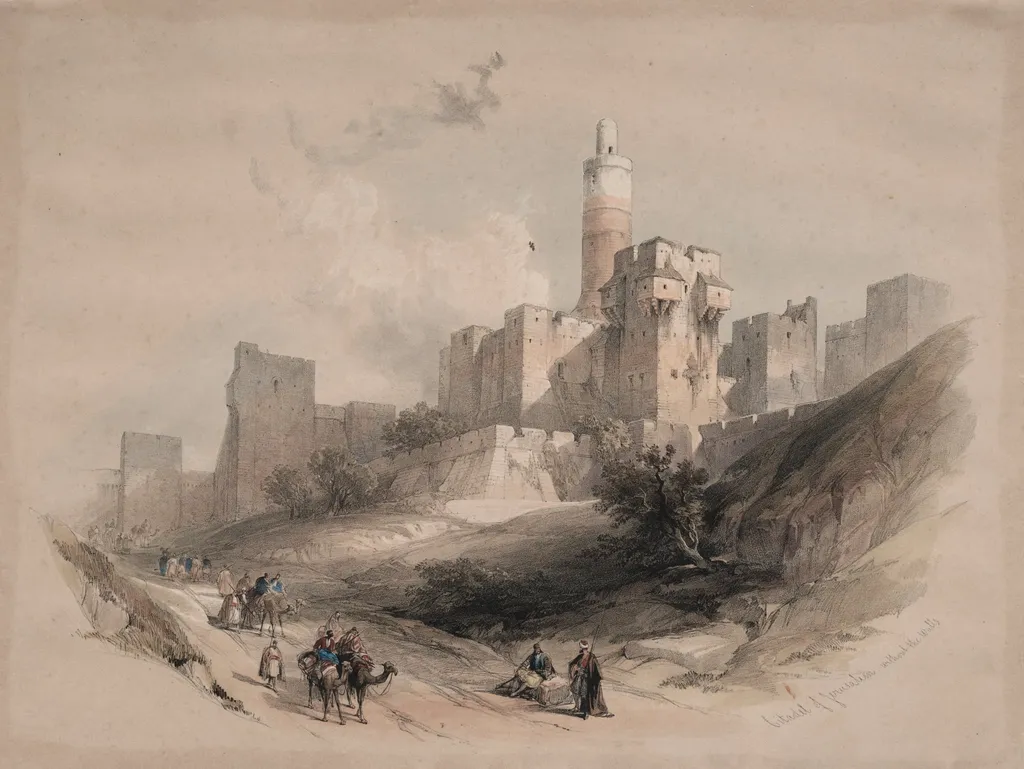
Citadel of Jerusalem, without the Walls, Tower of David is a print by the Romanticist artist David Roberts. It dates from 1839 and is held in the collection of the Cleveland Museum of Art. Created in 1839, this print portrays Jerusalem’s historic citadel and the Tower of David without its surrounding fortifications.
About this work
Overview
Created in 1839, this print portrays Jerusalem’s historic citadel and the Tower of David without its surrounding fortifications. A central tower rises above a cluster of buildings, set against a light sky streaked with clouds. In the foreground, travelers on foot and camels move along a road that leads toward the structure, while the play of light and shadow gives the scene depth and atmosphere.
Subject & Meaning
The image captures a moment in the ancient city’s daily life, juxtaposing the monumental architecture of the citadel with the ordinary activity of pedestrians and animal‑drawn traffic. By omitting the outer walls, the composition emphasizes the tower’s prominence and invites viewers to contemplate the layered history of Jerusalem as both a sacred site and a living urban environment.
Technique & Style
Roberts employed the precise line work and tonal gradations characteristic of early 19th‑century lithography, achieving a detailed rendering of architectural forms and human figures. The treatment of light—bright sky contrasted with shaded stone—reflects Romantic sensibilities, while the meticulous observation aligns with the Orientalist emphasis on documentary accuracy.
History & Provenance
The print belongs to a series produced after Roberts’ extensive travels in the Near East between 1838 and 1840. Following its publication, the work contributed to his reputation, leading to his election as a Royal Academician in 1841. It remains part of the body of lithographs that documented the region for European audiences during that period.
Context
Roberts’ depiction fits within the broader Orientalist movement, wherein Western artists recorded the architecture and daily life of the Middle East for a European market. The Romantic era’s fascination with exotic locales and historic ruins informs the work’s atmospheric qualities, positioning it alongside contemporary visual records of sacred and secular sites in the Levant.
Artist & collection
Artist
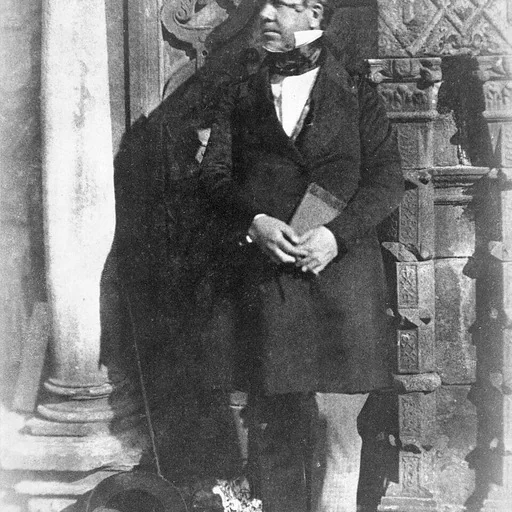
David Roberts (24 October 1796 – 25 November 1864) was a Scottish painter. He is especially known for The Holy Land, Syria, Idumea, Arabia, Egypt, and Nubia, a prolific series of detailed lithograph prints of Egypt and…

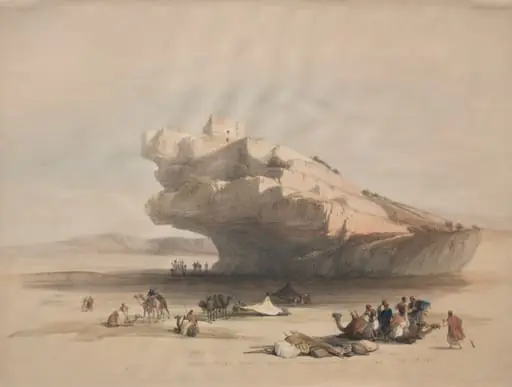 Approach to Petra, an Ancient Watch Tower Commanding the Valley of El Chor
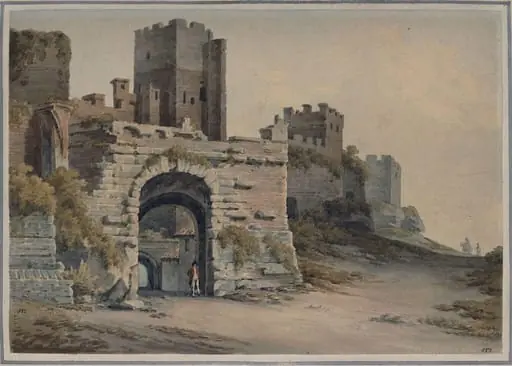 Porta Tiburtina, Rome, seen from the inside
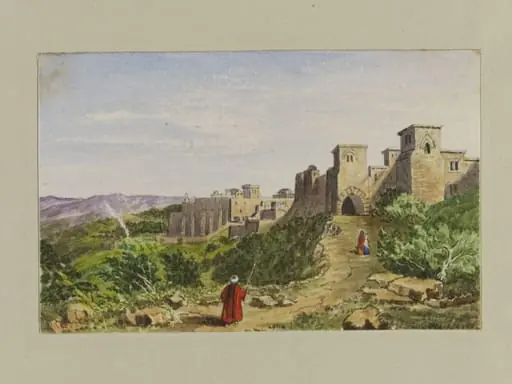 Bethlehem
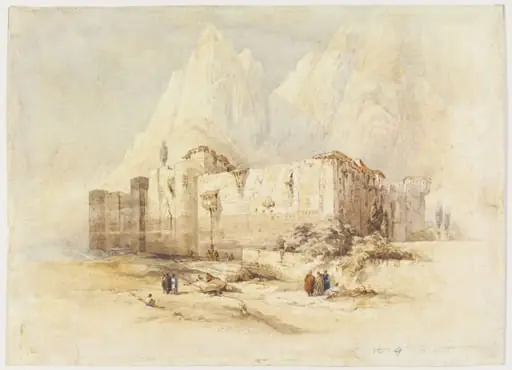 Convent of St Catherine, Mount Sinai
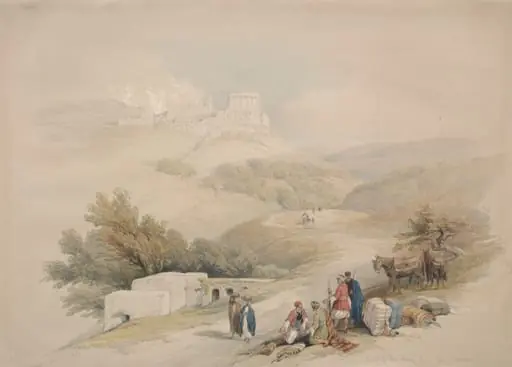 Ruins of the Church of St. John Sabaste
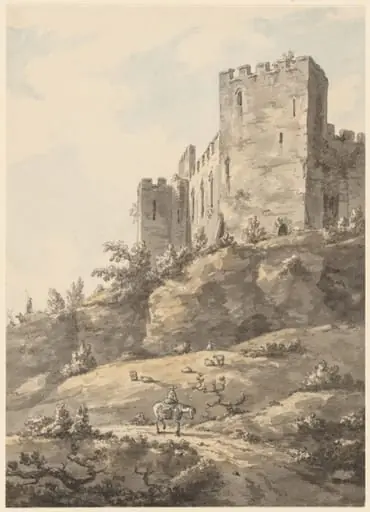 Ludlow Castle, Shropshire
 Mountainous landscape with ruined building
 Remains of the Ancient Temple of Jerusalem