Artwork
Ruins of the Church of St. John Sabaste
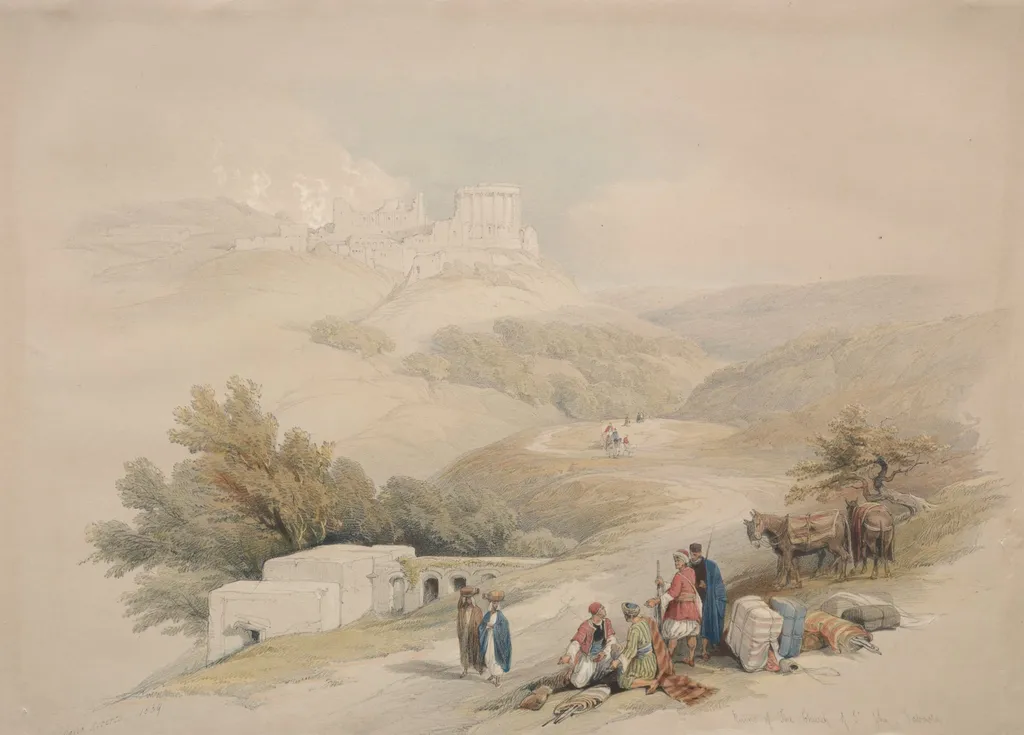
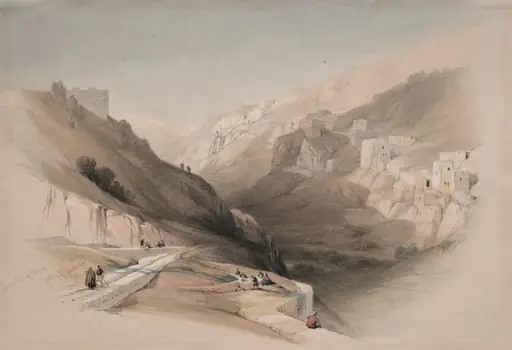
Ruins of the Church of St. John Sabaste is a print by the Romanticist artist David Roberts. It dates from 1839 and is held in the collection of the Cleveland Museum of Art.
About this work
Overview
Created in 1839, this print by Scottish artist David Roberts captures the remains of the Church of St. John Sabaste in the Near East. It is part of a broader body of work produced during Roberts’s travels through the region between 1838 and 1840. The image reflects his commitment to documenting architectural sites with precision, combining topographical accuracy with quiet human presence.
Subject & Meaning
The scene depicts a desolate valley where weathered stone ruins rise on a hillside, surrounded by sparse vegetation and rocky terrain. Figures in simple garments move near the site, one holding a staff, others tending to a cart drawn by horses. The composition suggests quiet contemplation rather than grandeur, emphasizing the passage of time and the endurance of place over human activity.
Technique & Style
Roberts rendered the scene with meticulous detail, capturing the texture of aged stone, the folds of fabric, and the dry, sun-baked earth. The use of fine linework and subtle tonal gradations reflects the conventions of 19th-century topographical drawing. His approach prioritizes observational clarity over dramatic effect, aligning with the era’s emphasis on empirical representation.
History & Provenance
The print originated from Roberts’s journey through the Levant, undertaken to gather material for a published series of lithographs. These works were later compiled into travel albums, widely circulated in Europe. Roberts’s documentation of Eastern sites contributed to his election as a Royal Academician in 1841, recognizing his role in expanding British artistic engagement with the region.
Context
Roberts’s work emerged during a period of growing European interest in the archaeology and antiquities of the Near East. His images were part of a broader cultural movement that sought to record ancient sites before further decay or alteration. While not overtly romantic, his depictions resonated with contemporary sensibilities that valued historical memory and the sublime in ruins.
Legacy
Roberts’s detailed records of Eastern architecture influenced both artistic and scholarly perceptions of the region. His prints served as visual references for architects, historians, and travelers, helping to shape Western understanding of Near Eastern heritage. The precision of his work remains a valuable resource for the study of historical sites now altered or lost.
Artist & collection
Artist
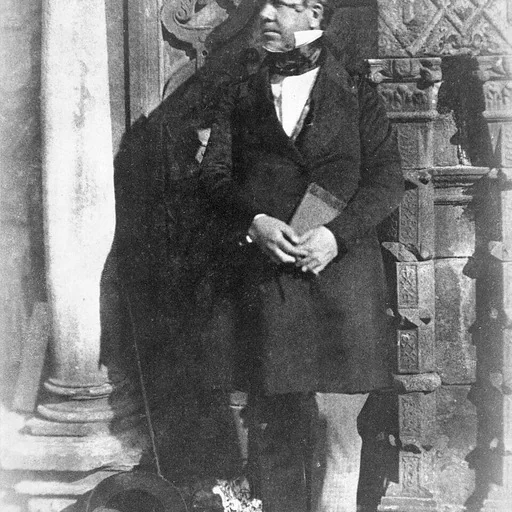
David Roberts (24 October 1796 – 25 November 1864) was a Scottish painter. He is especially known for The Holy Land, Syria, Idumea, Arabia, Egypt, and Nubia, a prolific series of detailed lithograph prints of Egypt and…

 Lower Pool of Siloam, Valley of Jehoshaphat
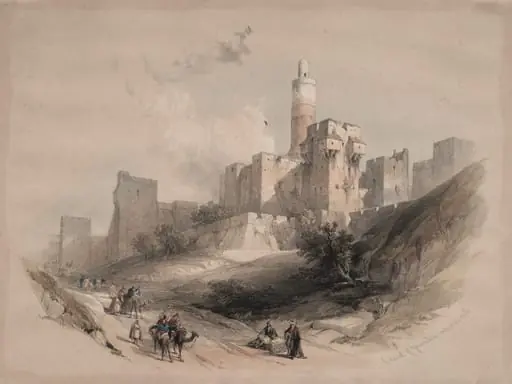 Citadel of Jerusalem, without the Walls, Tower of David
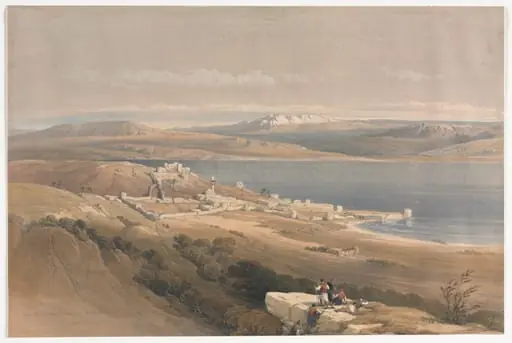 City of Tiberias on the Sea of Galilee, looking towards Hebron
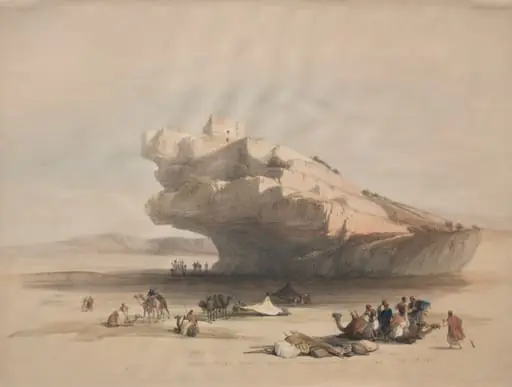 Approach to Petra, an Ancient Watch Tower Commanding the Valley of El Chor
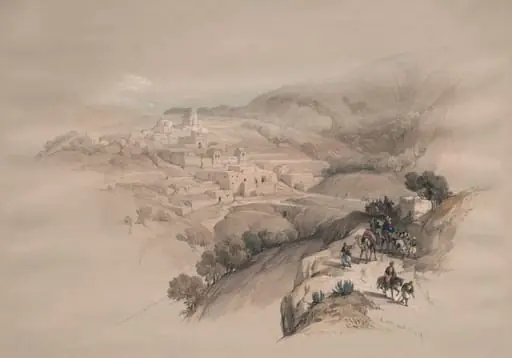 Bethany
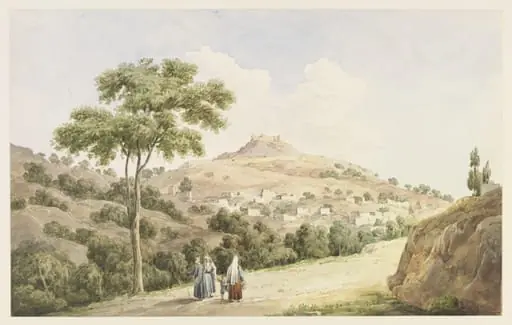 Saffed
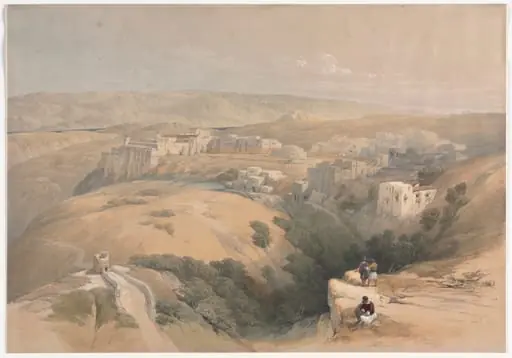 Bethlehem
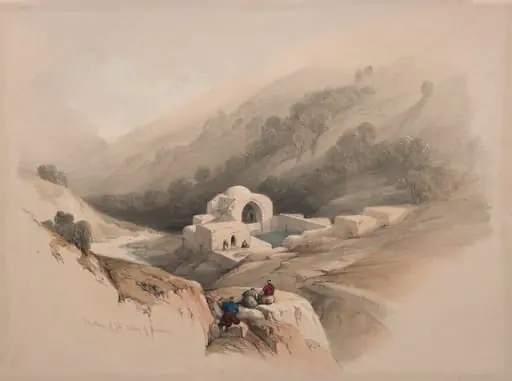 Fountain of Job, Valley of Hinnom
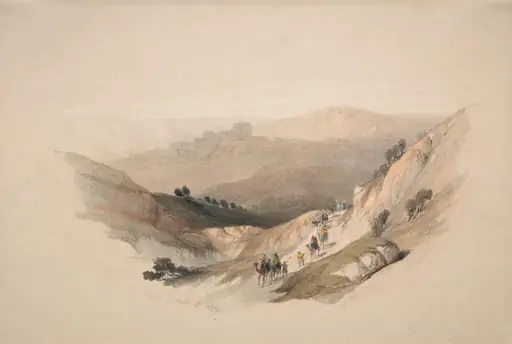 Semua
Semua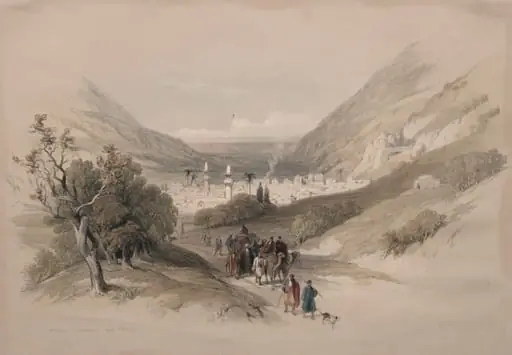 Entrance to Nablus
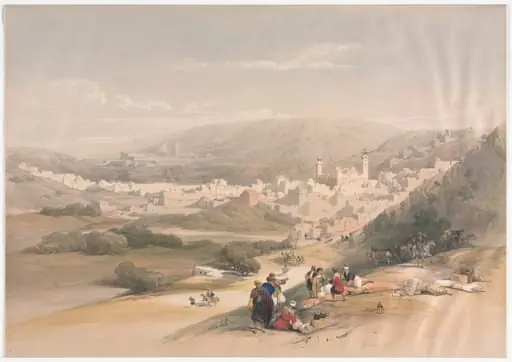 Hebron
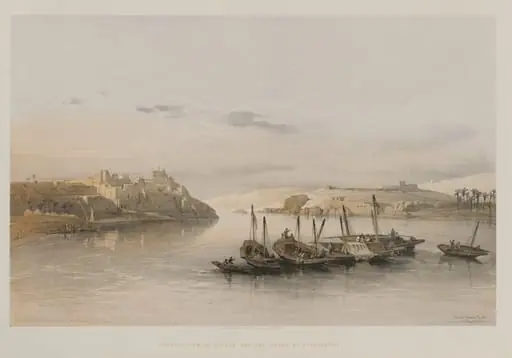 Egypt and Nubia, Volume II: General View of Esouan and the Island of Elephantine