Artwork
Convent of St Catherine, Mount Sinai
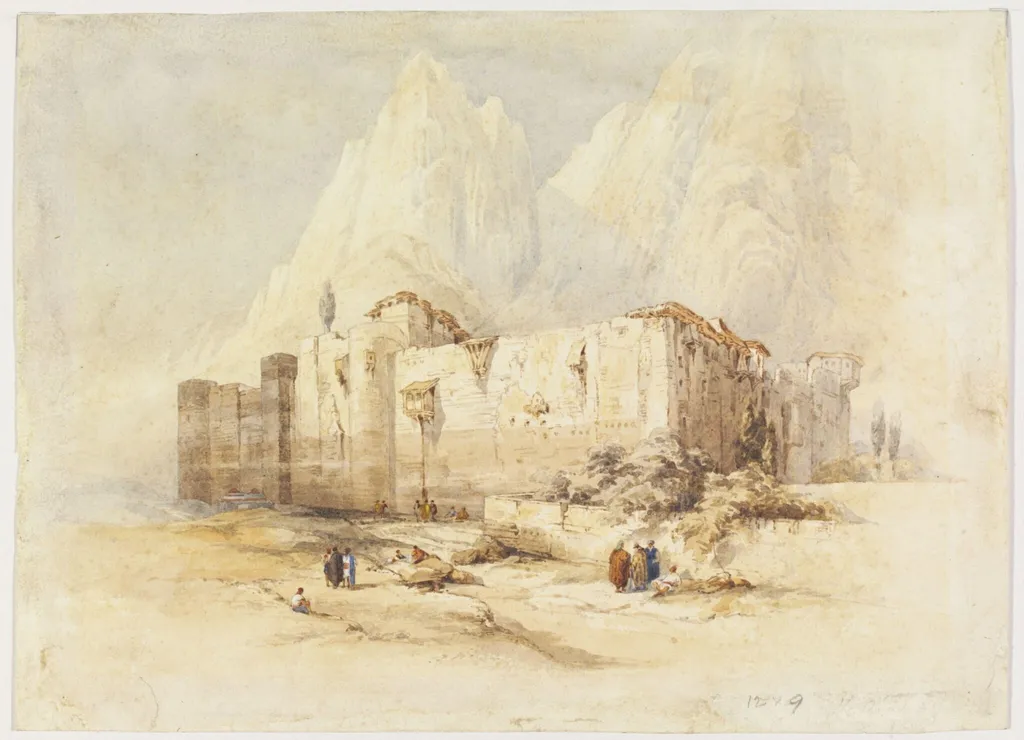
Convent of St Catherine, Mount Sinai is a watercolor work on paper by David RA Roberts. It is held in the collection of the Victoria and Albert Museum.
About this work
Overview
It depicts the Convent of St Catherine nestled in the rugged terrain of Mount Sinai.
This watercolour is a hand-painted reproduction of Louis Haghe’s lithograph, originally created for David Roberts’s *The Holy Land* series published between 1842 and 1849. It depicts the Convent of St Catherine nestled in the rugged terrain of Mount Sinai. The work was acquired by the Victoria and Albert Museum in May 1974 from the monastery’s monks for £30, reflecting its status as a modestly valued but historically significant record of 19th-century travel imagery.
Subject & Meaning
The scene portrays the ancient monastery surrounded by arid mountains and scattered figures, suggesting quiet human presence amid enduring architecture. The ruins and stillness evoke a sense of timelessness, aligning with 19th-century European fascination with sacred sites of the Eastern Mediterranean. The composition does not dramatize the location but instead invites contemplation, emphasizing solitude and the passage of time rather than religious narrative.
Technique & Style
Rendered in soft, muted watercolours, the piece relies on subtle gradations of tone to suggest texture and depth. Light and shadow are delicately applied to convey the weathered stone of the buildings and the hazy distance of the peaks. The pale, washed-out palette and loose brushwork create an atmospheric effect, prioritizing mood over topographical precision. This approach reflects the conventions of travel watercolours of the period, valued for their evocative rather than documentary qualities.
History & Provenance
The watercolour derives from a lithograph by Louis Haghe, based on David Roberts’s sketches during his 1838–39 journey to the region. It was likely produced as a hand-coloured variant for private collectors or institutional use. The work entered the Victoria and Albert Museum’s collection in 1974 after being obtained directly from the monks of St Catherine’s Monastery, preserving a direct link to its place of origin and underscoring its role as a cultural artifact exchanged between East and West.
Context
In the mid-19th century, European artists and travellers increasingly documented sacred sites in the Middle East, driven by religious interest and colonial-era exploration. Roberts’s publications, including this image, became widely circulated through prints and watercolour copies. Such works shaped Western perceptions of the Holy Land, blending observation with romanticized reverence, and contributed to the growing market for Orientalist imagery in British collections.
Legacy
As a hand-painted reproduction of a widely disseminated lithograph, this watercolour represents the circulation of visual knowledge in the pre-photographic era. It preserves a specific moment in the reception of Mount Sinai’s architecture within European visual culture. While not an original sketch, its existence highlights how travel imagery was adapted, collected, and preserved by institutions and religious communities alike, serving as both record and relic.
Artist & collection
Artist
Traveler and watercolorist David RA Roberts captured distant landmarks in crisp detail during the 1830s–40s.

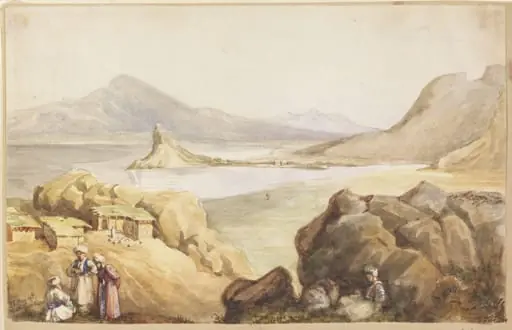 Gule-Hissa Ovassy in the Northern part of Lycia
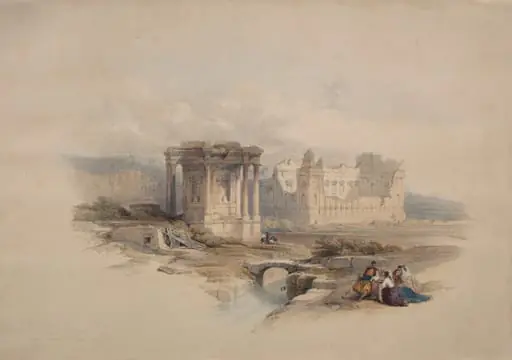 Circular Temple at Baalbec
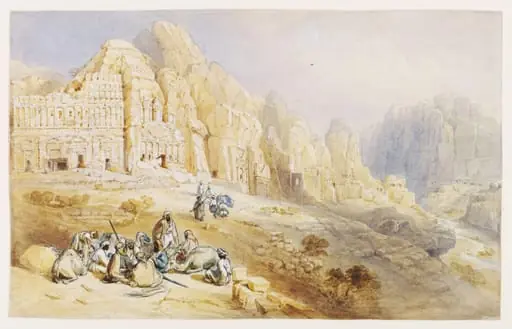 Principal range of tombs
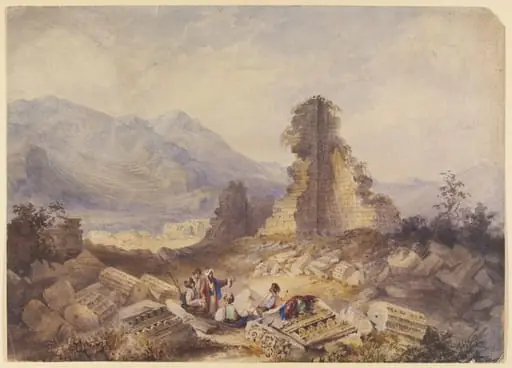 Ephesus (Ruins of the Temple of Diana)
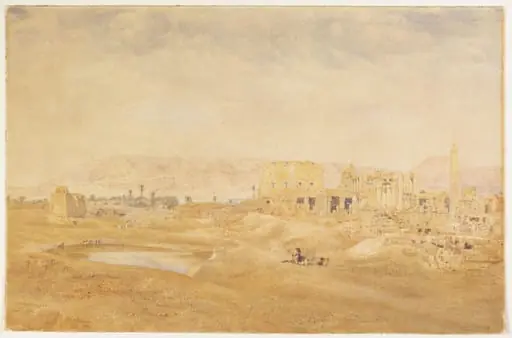 Karnak
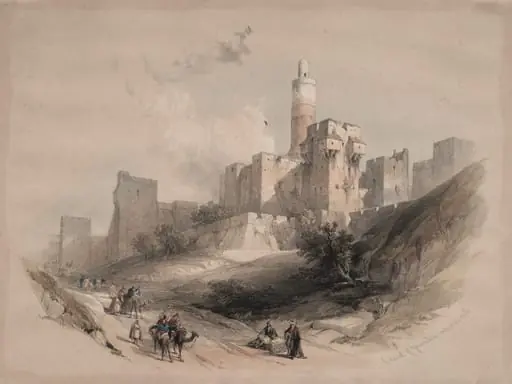 Citadel of Jerusalem, without the Walls, Tower of David
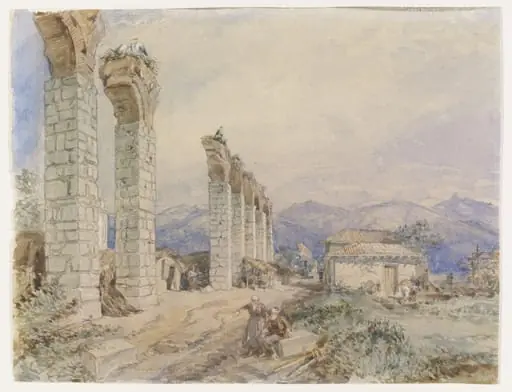 The Aqueduct - Ephesus
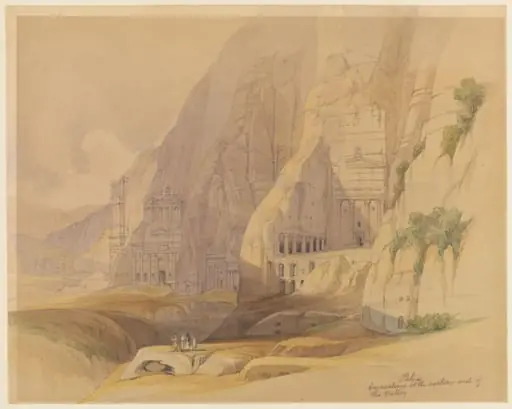 Petra Excavations at the eastern end of the Valley
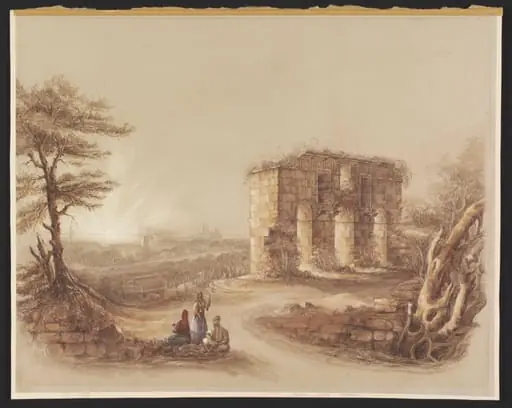 Monumental Gateway, Patara, Turkey