Artwork
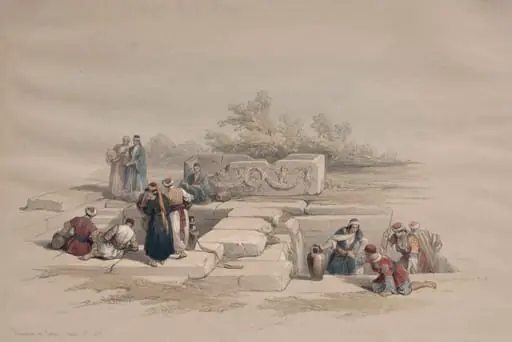
Entrance to the Tombs of the Kings, Jerusalem
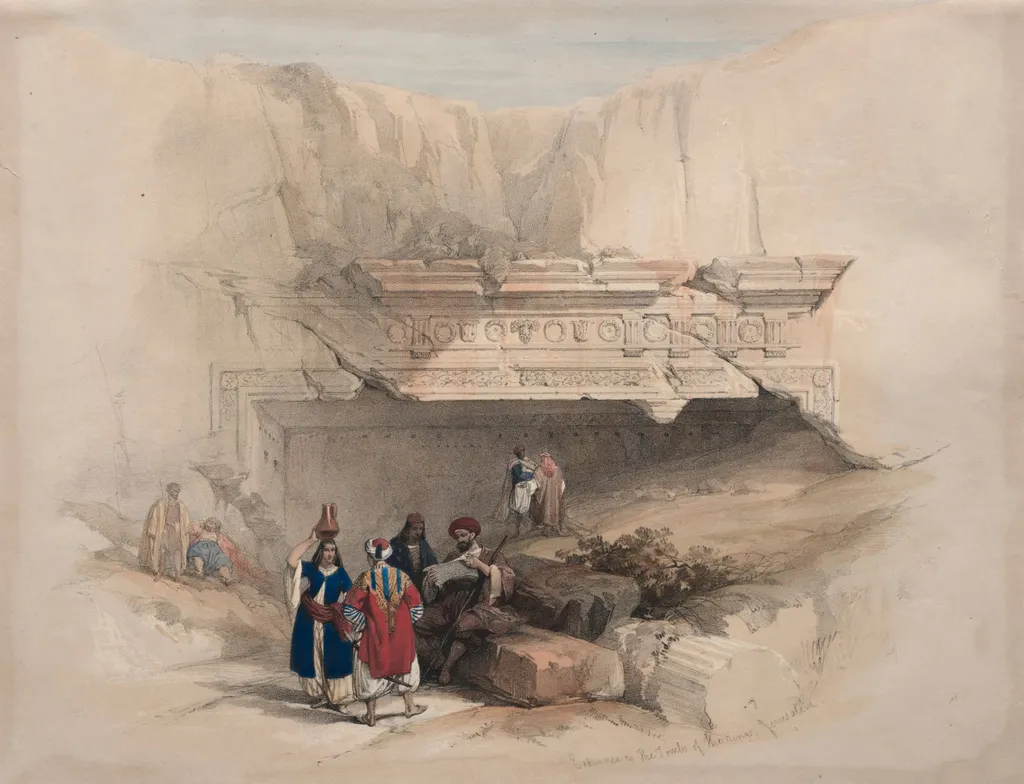
Entrance to the Tombs of the Kings, Jerusalem is a print by the Romanticist artist David Roberts. It dates from 1839 and is held in the collection of the Cleveland Museum of Art.
About this work
Overview
Executed during his journey through the Levant, the work belongs to a larger series documenting archaeological sites of biblical interest.
Created in 1839, this print by Scottish artist David Roberts captures the entrance to an ancient burial complex near Jerusalem. Executed during his journey through the Levant, the work belongs to a larger series documenting archaeological sites of biblical interest. Roberts prioritized observational accuracy over idealization, rendering the site as he encountered it—weathered, partially obscured by earth, and integrated into its arid surroundings.
Subject & Meaning
The scene depicts the entrance to a rock-cut tomb complex traditionally associated with royal burials, though its actual origins are uncertain. Figures in regional dress—carrying water, resting on staffs—suggest ongoing local use of the site. The faded inscriptions and crumbling stonework convey the passage of time, emphasizing the site’s layered history: ancient, forgotten, yet still inhabited by contemporary life.
Technique & Style
Roberts employed a sketch-like approach, using fine linear detail to record architectural fragments and topographical texture. The composition avoids dramatic lighting or romantic embellishment, instead favoring a topographical clarity. Shadows and sparse vegetation ground the structure in its physical environment, while the figures’ scale reinforces the ruin’s imposing yet decaying presence.
History & Provenance
This image was produced during Roberts’ 1838–1840 expedition across the Middle East, undertaken with the intent of creating a visual record for European audiences. It later appeared in his multi-volume lithographic publication, *The Holy Land, Syria, Idumea, Arabia, Egypt, and Nubia*. The series contributed to his election as a Royal Academician in 1841 and became a key reference for 19th-century Orientalist imagery.
Context
Roberts’ work emerged amid growing European interest in biblical archaeology and the Near East’s material past. His drawings were among the first detailed visual records of sites like this tomb entrance, made before widespread archaeological excavation. They served both scholarly and popular audiences, bridging travel literature and emerging disciplines of antiquarian study.
Legacy
Roberts’ prints helped shape Western perceptions of ancient Jerusalem’s landscape, influencing later artists and archaeologists. While his approach lacked modern scientific rigor, his commitment to recording architectural detail preserved visual evidence of sites now altered or lost. His work remains a primary source for understanding 19th-century encounters with the region’s heritage.
Artist & collection
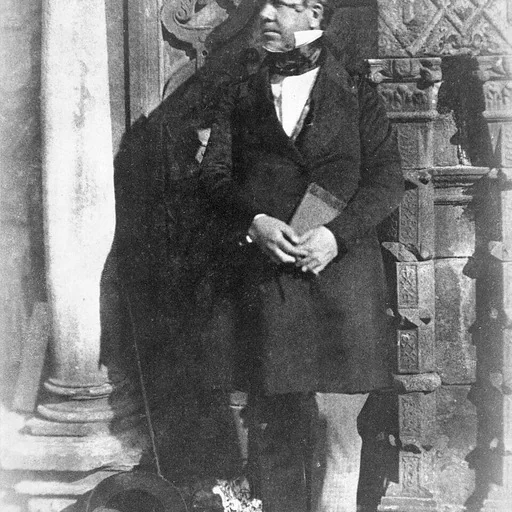
Artist
David Roberts (24 October 1796 – 25 November 1864) was a Scottish painter. He is especially known for The Holy Land, Syria, Idumea, Arabia, Egypt, and Nubia, a prolific series of detailed lithograph prints of Egypt and…