Artwork
Ephesus (Ruins of the Temple of Diana)
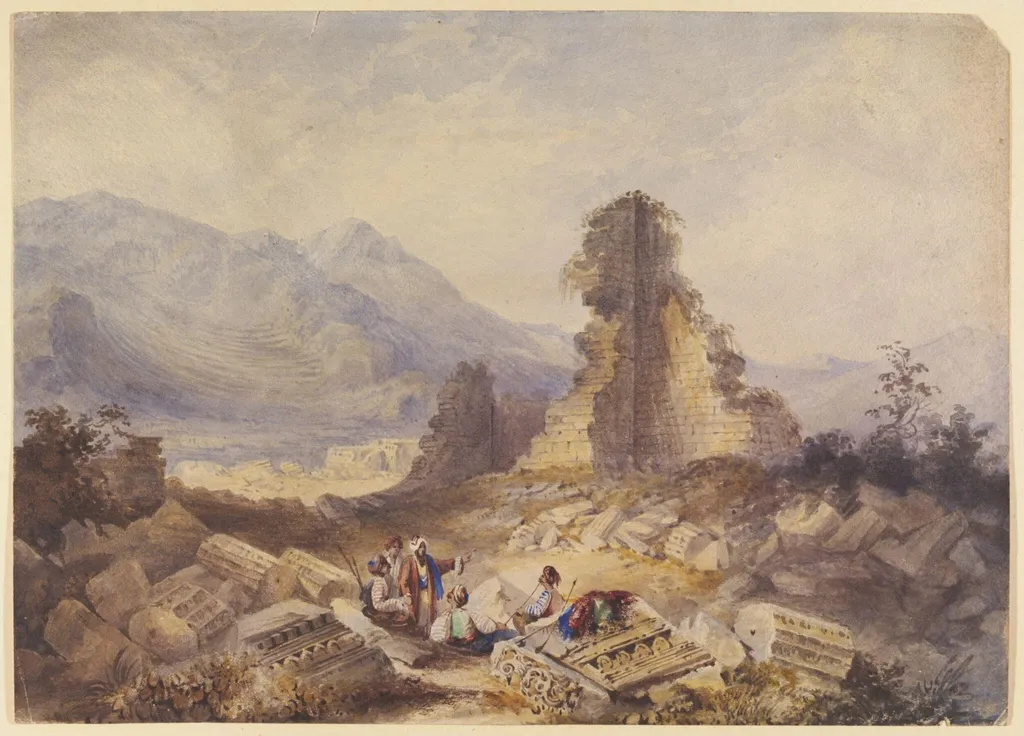
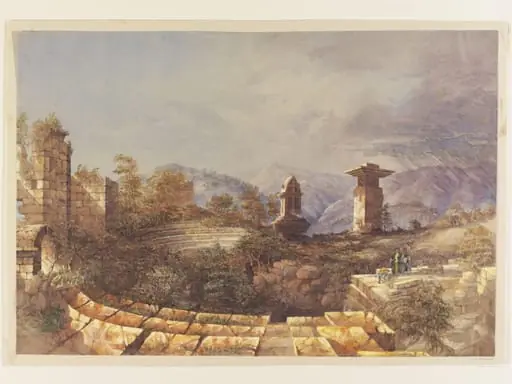
Ephesus (Ruins of the Temple of Diana) is a watercolor work on paper by the American Folk Art artist William Page. It dates from 1834 and is held in the collection of the Victoria and Albert Museum.
About this work
Overview
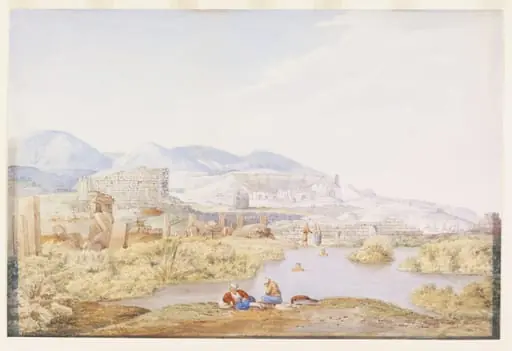
Ephesus (Ruins of the Temple of Diana) is a watercolour by William Page, created between 1828 and 1840. The piece captures a serene, abandoned landscape, focusing on the remnants of a structure amidst a natural setting.
Subject & Meaning
Although titled after the Temple of Diana (Artemis), the work does not accurately depict the ancient wonder. Instead, it conveys the poetic allure of ruins, with figures in the foreground contemplating the passage of time amidst scattered stones and a crumbling tower.
Technique & Style
Page employed loose, sketchy brushstrokes to evoke texture, prioritizing atmospheric effect over precise detail. The muted colour palette, featuring earthy browns and pale blues, enhances the sense of antiquity and abandonment.
History & Provenance
Originally intended as a preparatory sketch for publication in *Landscape Illustrations of the Bible*, it later influenced a watercolour by J.D. Harding, engraved by E. Finden (published 1836). The drawing was acquired by Prue Heathcote-Williams in 1971.
Context
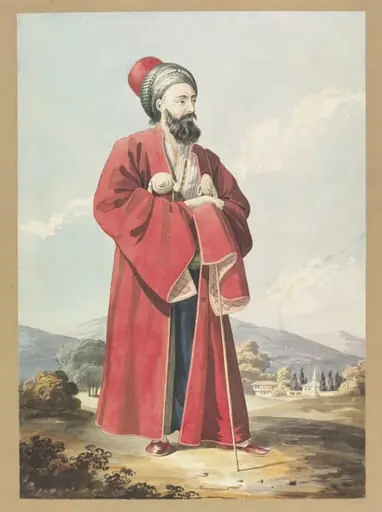
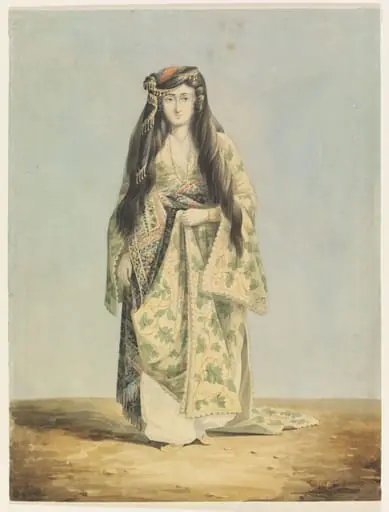
This work marks a stylistic shift for Page, moving from earlier costume studies towards more expansive, scenic compositions, aligning with contemporary interests in landscape and antiquity.
Artist & collection

 Theatre, with the Sarcophagus and Harpy Tombs, Xanthus
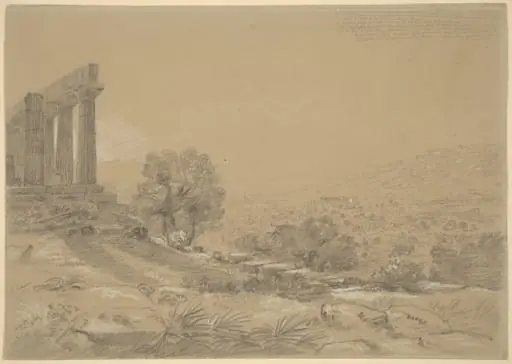 Temple of Juno, Agrigentum
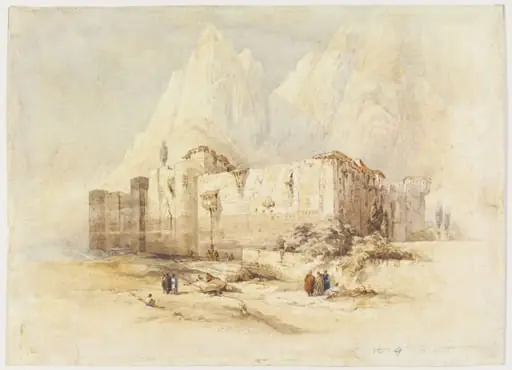 Convent of St Catherine, Mount Sinai
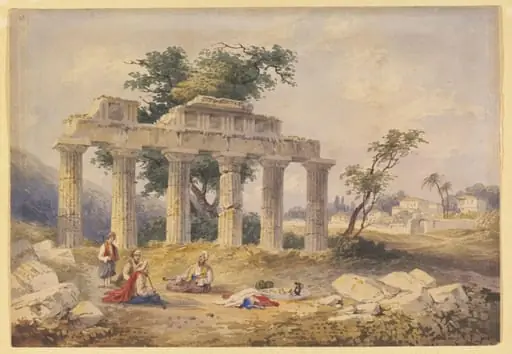 Temple at Boudroun, Halicarnassus
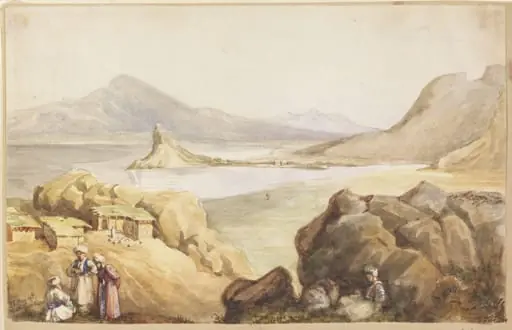 Gule-Hissa Ovassy in the Northern part of Lycia
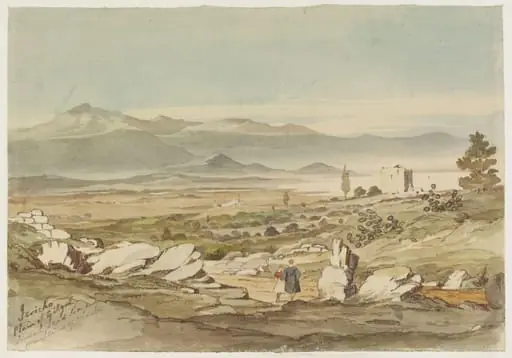 Jericho Plain of Gilgal, Jordan, Dead Sea, and Mountains of Moab
 Hierapolis - Natural Hot Spring. Phrygia
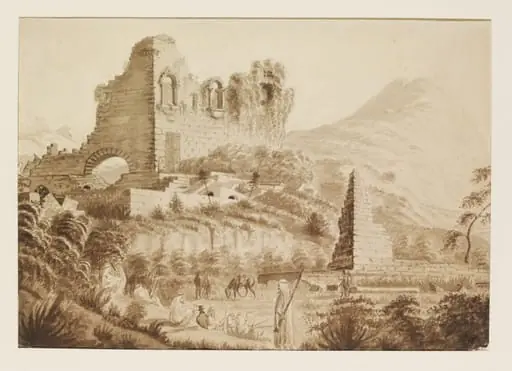 Villa Sevillana on the Road from Bona to Constantine
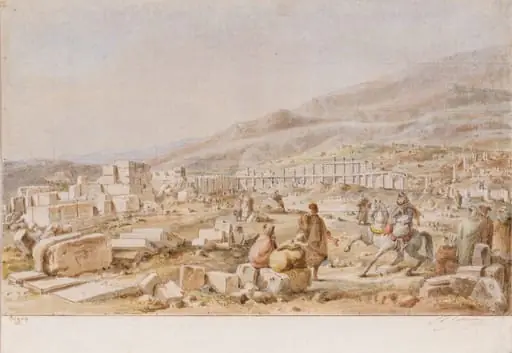 Ruine la Sigus