Artwork
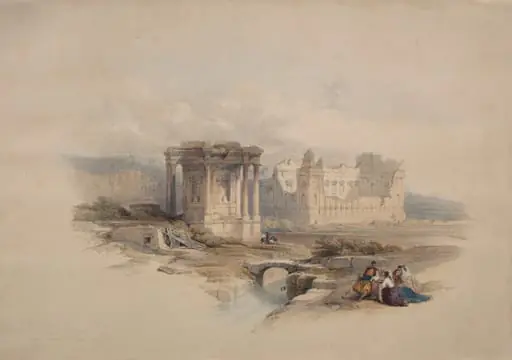
Ruins Called Om El Hamed near Tyre
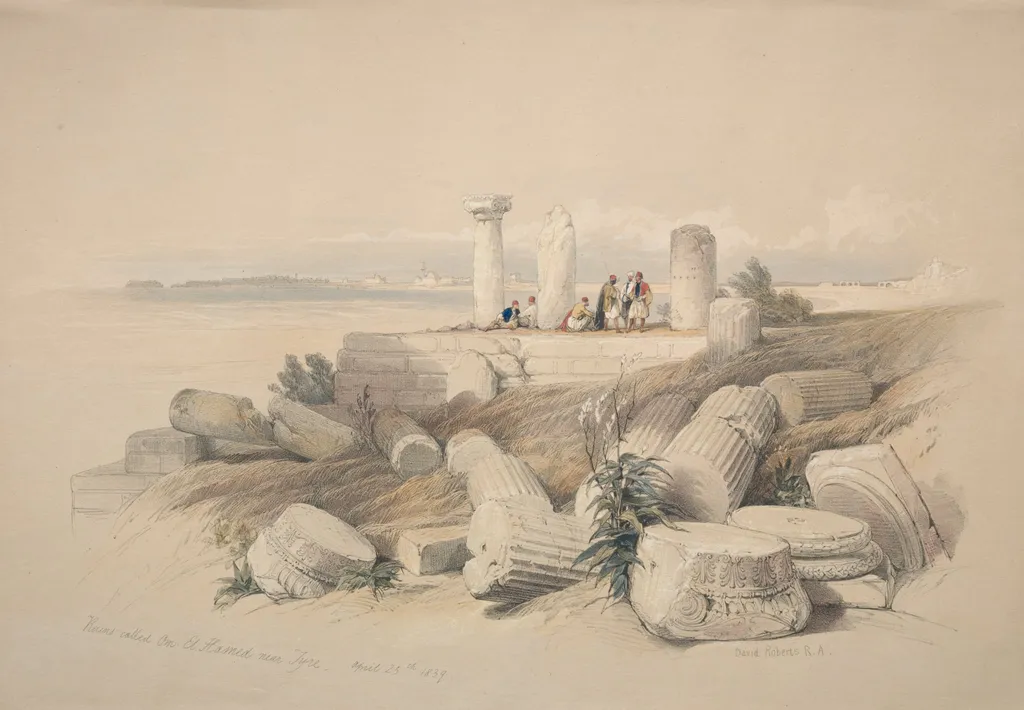
Ruins Called Om El Hamed near Tyre is a print by the Romanticist artist David Roberts. It dates from 1839 and is held in the collection of the Cleveland Museum of Art.
About this work
This painting shows a crumbling stone archway in Lebanon. A lone camel stands under it. The background is bright blue sky with scraggly trees.
Roberts sketched these ruins on a trip to the Middle East. He often added small human figures to show scale. The light hits the stones just right.
It’s a quiet scene but full of details. Look at the camel’s shadow on the ground.
Check out David Roberts (Scottish, 1796–1864).
Overview
David Roberts, a Scottish artist active in the early nineteenth century, produced the lithographic print *Ruins Called Om El Hamed near Tyre* in 1839. The image captures a weathered stone archway in the Lebanese landscape, beneath which a solitary camel stands, all set against a clear blue sky and sparse vegetation. The composition balances architectural decay with a quiet, natural setting.
Subject & Meaning
The work records the remnants of an ancient structure known locally as Om El Hamed, suggesting the passage of time and the persistence of human activity in the region. By placing a camel—a common element of local life—within the scene, Roberts juxtaposes the enduring presence of the animal against the dilapidated architecture, inviting contemplation of continuity and change.
Technique & Style
Roberts rendered the scene with precise line work and careful shading, typical of his lithographic practice. The light falls on the stone surfaces, emphasizing texture and depth, while the camel’s shadow provides a subtle sense of volume. Small figures are used sparingly to convey scale, a hallmark of his approach to documenting distant locales.
History & Provenance
Created during Roberts’s 1838–1840 expedition through Egypt, Syria, and the Levant, the print formed part of the material later assembled in his influential series *The Holy Land, Syria, Idumea, Arabia, Egypt, and Nubia*. The work reflects the artist’s on‑site sketches and contributes to the visual record of Near Eastern antiquities that circulated in Europe during the mid‑nineteenth century.
Artist & collection
Artist
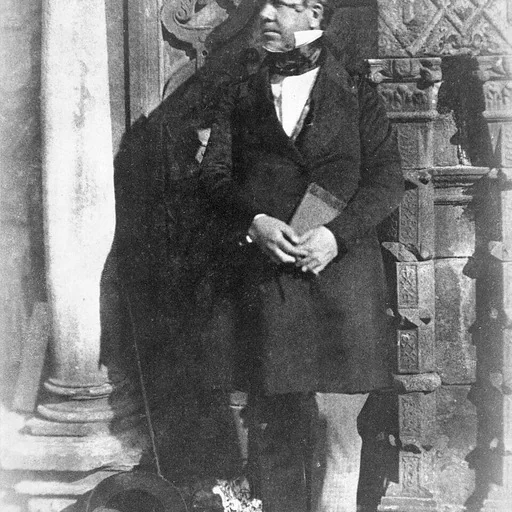
David Roberts (24 October 1796 – 25 November 1864) was a Scottish painter. He is especially known for The Holy Land, Syria, Idumea, Arabia, Egypt, and Nubia, a prolific series of detailed lithograph prints of Egypt and…

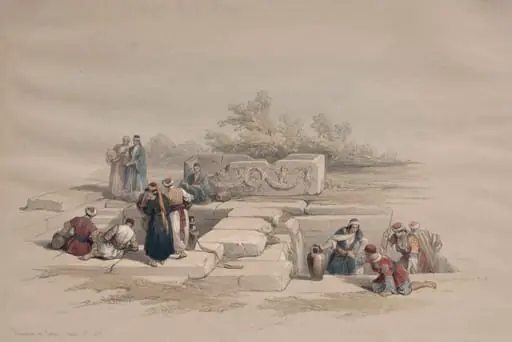 Fountain at Cana
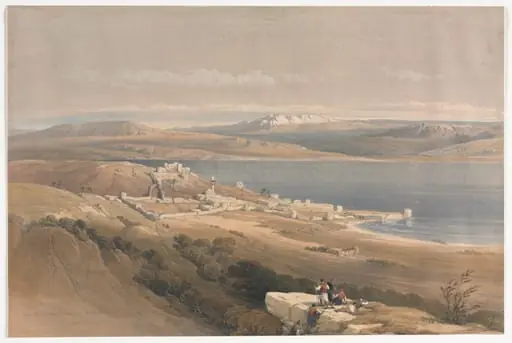 City of Tiberias on the Sea of Galilee, looking towards Hebron
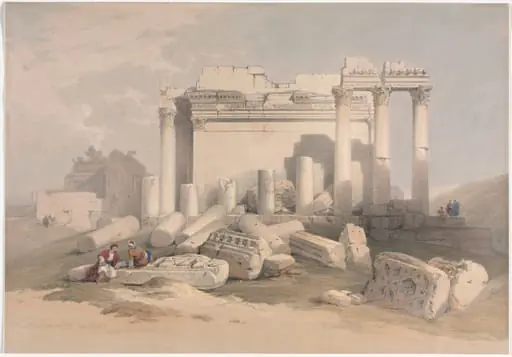 Ruins of the Eastern Portico of the Temple of Baalbec
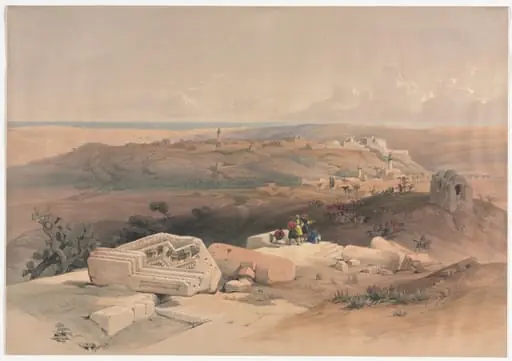 Gaza
Gaza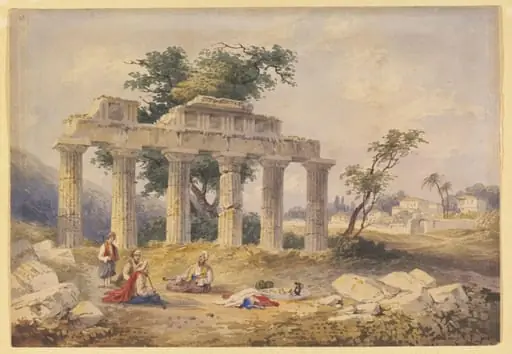 Temple at Boudroun, Halicarnassus
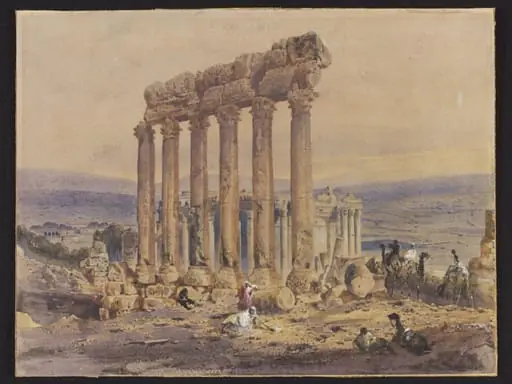 The Temple of Jupiter, Baalbek
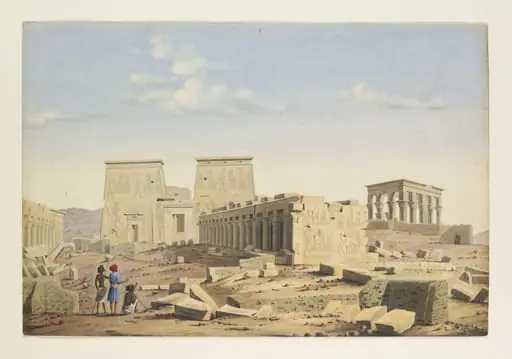 Ile de Philoé
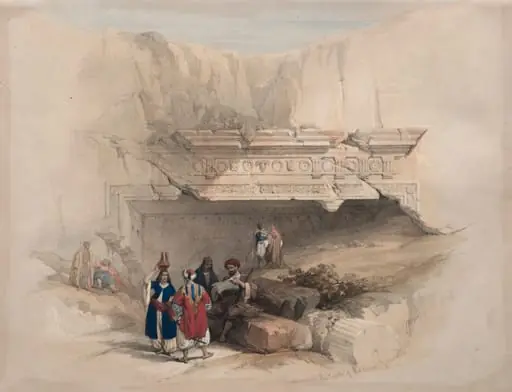 Entrance to the Tombs of the Kings, Jerusalem
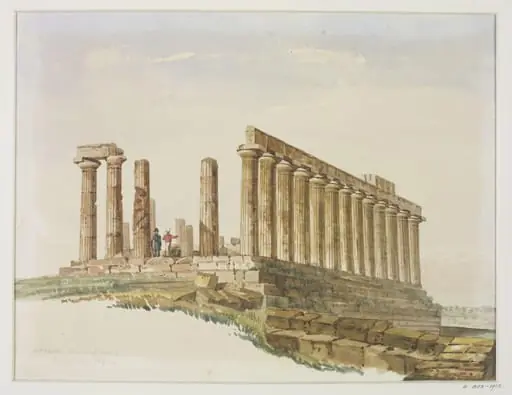 Girgenti. Temple of Juno Lucina.
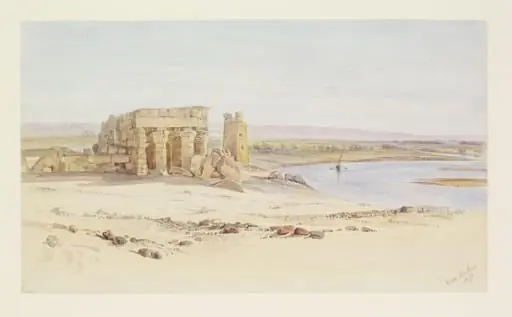 Kom Ombos
 Circular Temple at Baalbec
 Ephesus