Artwork
Gaza
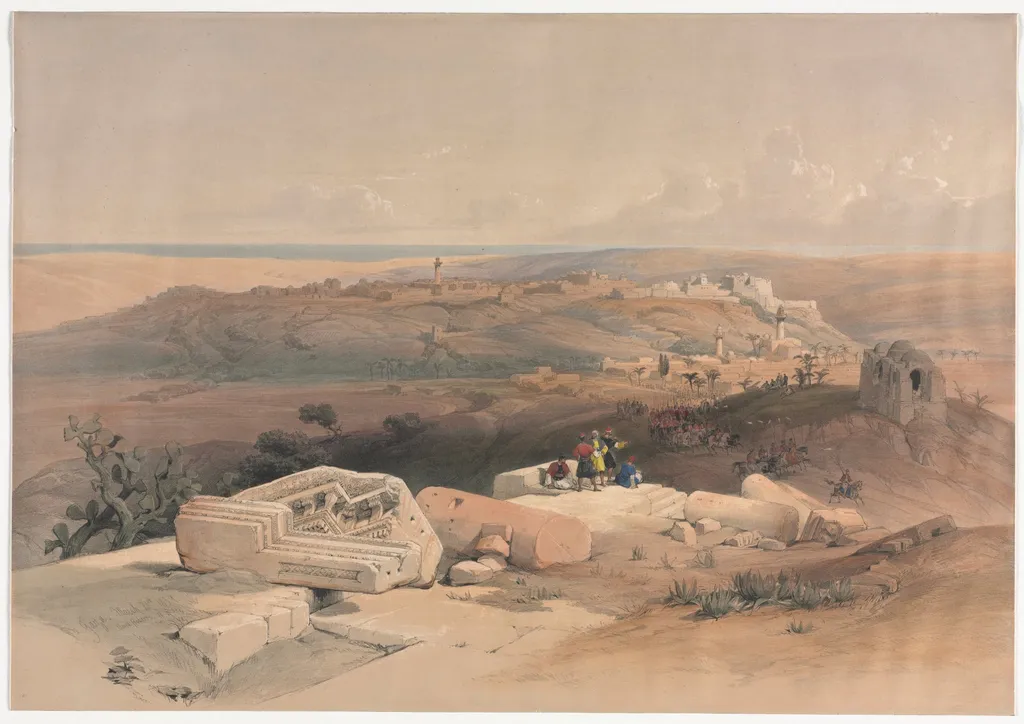
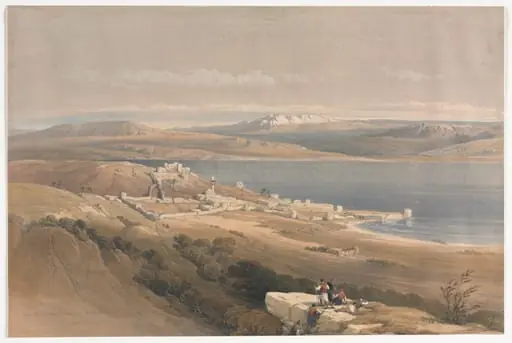
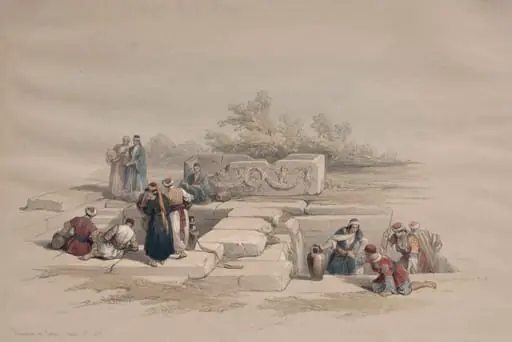
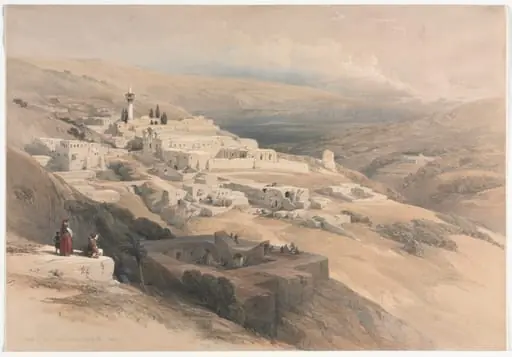
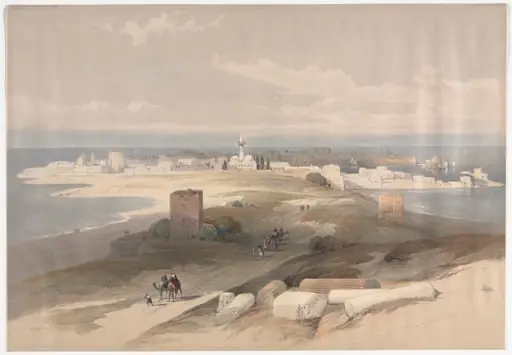
Gaza is a print by the Romanticist artist David Roberts. It dates from 1839 and is held in the collection of the Cleveland Museum of Art.
About this work
If you like this, see more by David Roberts (Scottish, 1796–1864).
This painting shows a crowded Gaza street in 1839. People walk past stone buildings and a market stall. A donkey carries goods in the background.
Roberts visited Gaza during a long trip through the Middle East. He sketched what he saw, then painted it later in his studio. Most artists stayed close to home. He traveled thousands of miles.
If you like this, see more by David Roberts (Scottish, 1796–1864).
Overview
David Roberts, a Scottish artist, produced *Gaza* in 1839 during a multi-year journey through the Middle East. The work is one of many lithographs and paintings derived from his on-site sketches, capturing urban life in the Levant. Unlike many contemporaries who relied on imagination or secondhand accounts, Roberts prioritized direct observation, documenting architecture and daily activity with precision.
Subject & Meaning
The scene depicts a bustling street in Gaza, with pedestrians, a market stall, and a donkey transporting goods beneath stone structures. The composition emphasizes ordinary life rather than monumental landmarks, suggesting an interest in the texture of daily existence. There is no overt narrative or idealization; the focus remains on the quiet rhythm of commerce and movement in a regional center.
Technique & Style
Roberts rendered the scene using lithographic techniques, allowing for fine detail and tonal gradation. His style blends topographical accuracy with subtle atmospheric effects, learned from architectural drawing traditions. The figures are observed but not dramatized, and the architecture is rendered with careful attention to proportion and material, reflecting his background as a stage designer and his commitment to visual fidelity.
History & Provenance
Created during Roberts’ travels between 1838 and 1840, *Gaza* was part of a larger project to document sites across Egypt and the Levant. The prints were later published in folio volumes, widely distributed in Europe. The work contributed to his reputation and led to his election as a Royal Academician in 1841. Original editions remain in institutional collections, including the Victoria and Albert Museum.
Context
Roberts’ work emerged during a period of heightened European interest in the Near East, fueled by archaeological exploration and colonial expansion. While his images were often framed within Orientalist conventions, his reliance on firsthand sketches distinguished him from artists who fabricated exoticized scenes. His travels were uncommon in scope and ambition for a British artist of the time.
Legacy
Roberts’ detailed records of Middle Eastern cities and monuments became valuable references for later scholars and travelers. His approach influenced the documentation of archaeological sites and helped shape public perception of the region in 19th-century Britain. Though his work is now critically examined within postcolonial discourse, its historical record remains a significant visual archive.
Artist & collection
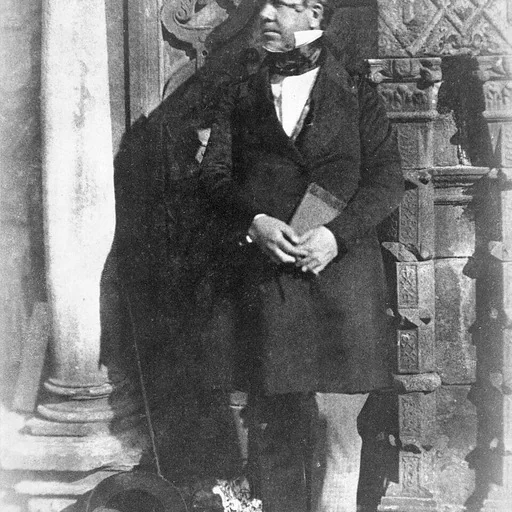
Artist
David Roberts (24 October 1796 – 25 November 1864) was a Scottish painter. He is especially known for The Holy Land, Syria, Idumea, Arabia, Egypt, and Nubia, a prolific series of detailed lithograph prints of Egypt and…