Artwork
Sur or Tsor, Ancient Tyre from the Isthmus
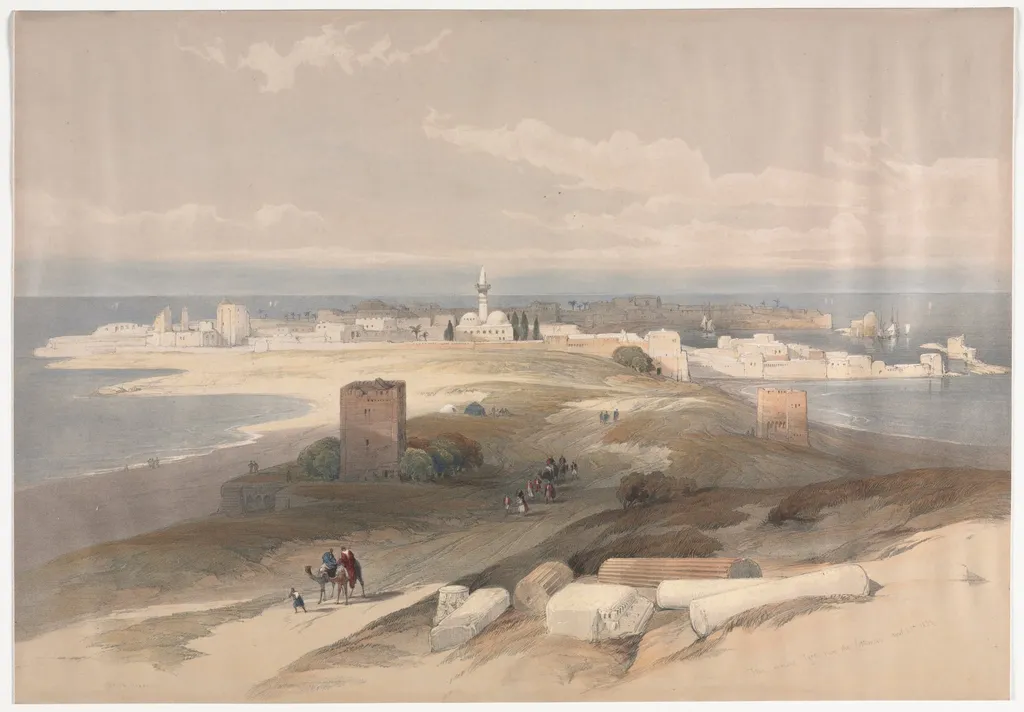
Sur or Tsor, Ancient Tyre from the Isthmus is a print by the Romanticist artist David Roberts. It dates from 1839 and is held in the collection of the Cleveland Museum of Art.
About this work
Overview
Created after a multi-year journey through the region, the work captures the ancient Phoenician city of Tyre from its connecting land bridge to the mainland.
David Roberts, a Scottish artist known for his topographical precision, produced this lithograph in 1839 as part of a larger series documenting sites across Egypt and the Levant. Created after a multi-year journey through the region, the work captures the ancient Phoenician city of Tyre from its connecting land bridge to the mainland. The image reflects Roberts’s commitment to recording architectural remains with documentary care, even as it conveys a contemplative mood.
Subject & Meaning
The scene depicts Tyre, a historically significant coastal city once famed for its maritime trade and purple dye production. Viewed from the narrow isthmus, the city appears isolated yet enduring, its ruins rising above the shore. The inclusion of a lone camel and small figures underscores the site’s abandonment and quiet desolation. The composition invites reflection on time’s erosion of once-great civilizations, aligning with 19th-century fascination with antiquity’s remnants.
Technique & Style
Roberts employed a restrained palette of browns, grays, and muted ochres to evoke the weathered stone and overcast sky of the Levantine coast. The lithographic medium allowed for fine linear detail in the architecture, particularly the domed structure and tower, while soft atmospheric tones unify the foreground and distant horizon. The absence of vivid color enhances the somber, meditative tone, characteristic of Romantic-era landscape conventions that prioritized mood over spectacle.
History & Provenance
The print originated from Roberts’s 1838–39 expedition to the Eastern Mediterranean, during which he sketched extensively in situ. These drawings were later translated into lithographs published in London under the title 'The Holy Land, Syria, Idumea, Arabia, Egypt and Nubia.' The work was widely distributed, contributing to European public awareness of Near Eastern antiquities. Roberts’s election to the Royal Academy in 1841 followed the acclaim of this series.
Context
Roberts’s work emerged during a period of heightened European interest in biblical and classical antiquities, fueled by archaeological exploration and colonial expansion. His images were not merely topographical but also shaped by contemporary narratives of lost glory and orientalist curiosity. While grounded in observation, the presentation of Tyre as a silent ruin resonated with Romantic ideals that valorized melancholy and the passage of time.
Legacy
Roberts’s lithographs of Tyre and other Eastern sites became reference points for later artists and scholars, influencing both visual representations and archaeological documentation. His method of combining accurate architectural detail with atmospheric composition set a standard for travel-based illustration. Though later criticized for romanticized framing, his work preserved visual records of sites now altered or lost, securing their place in the historical record.
Artist & collection
Artist
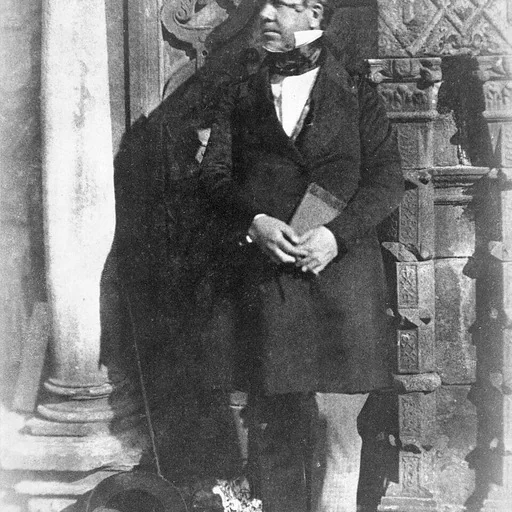
David Roberts (24 October 1796 – 25 November 1864) was a Scottish painter. He is especially known for The Holy Land, Syria, Idumea, Arabia, Egypt, and Nubia, a prolific series of detailed lithograph prints of Egypt and…

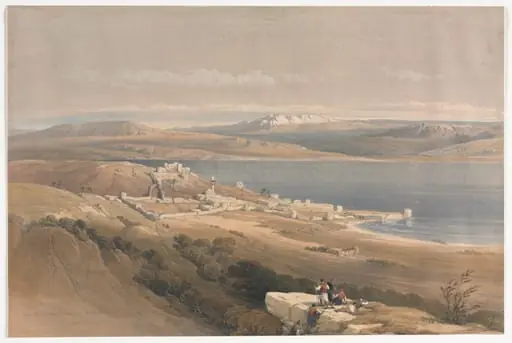 City of Tiberias on the Sea of Galilee, looking towards Hebron
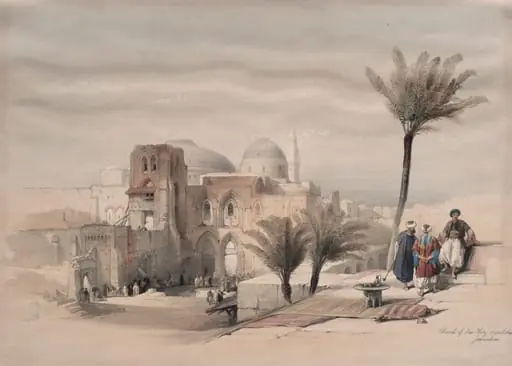 Church of the Holy Sepulchre, Jerusalem
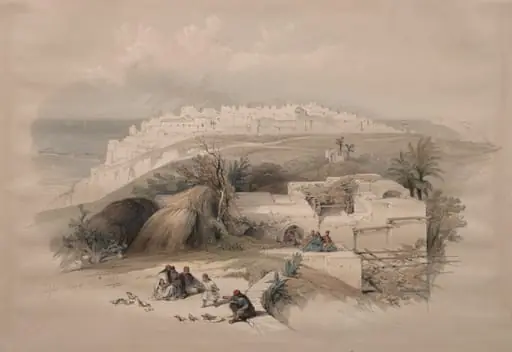 Jaffa
Jaffa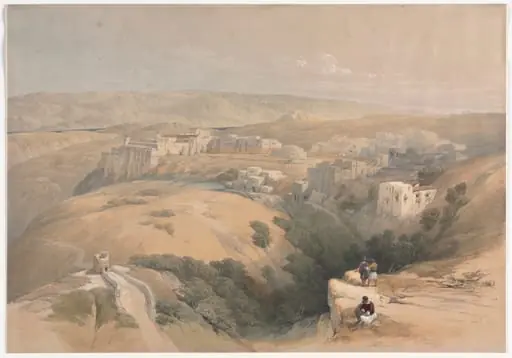 Bethlehem
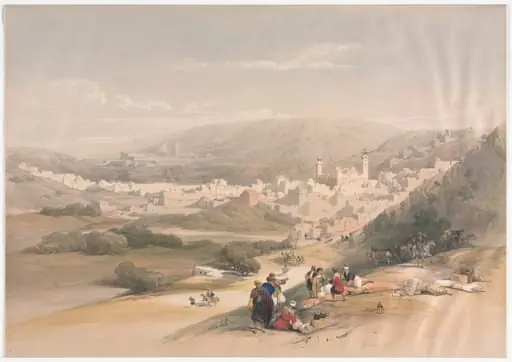 Hebron
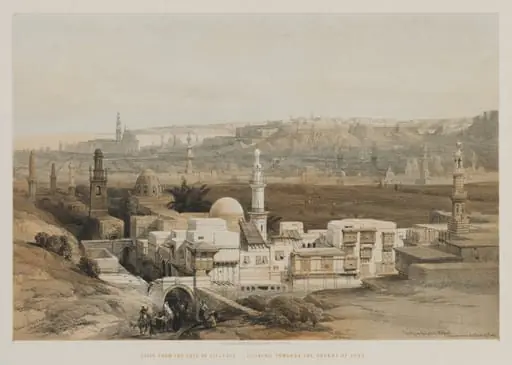 Egypt and Nubia, Volume III: Cairo from the Gate of Citzenib, Looking towards the Desert of Suez
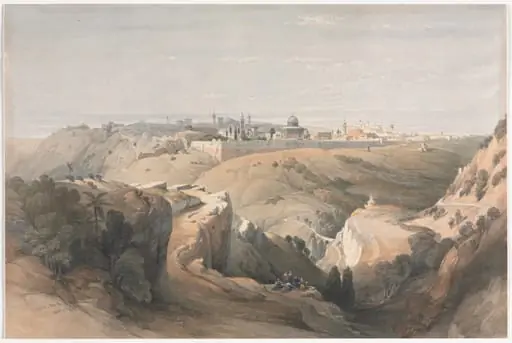 Jerusalem from the Mount of Olives
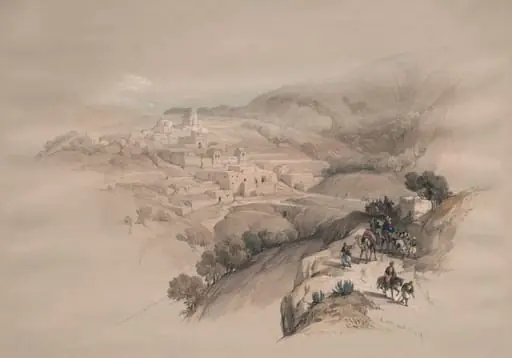 Bethany
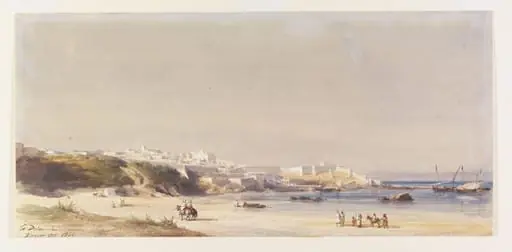 Tanger
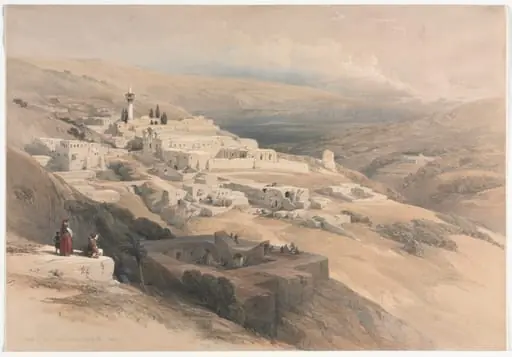 Convent of the Terra-Santa, Nazareth