Artwork
Distant View of Winchester and St. Croix
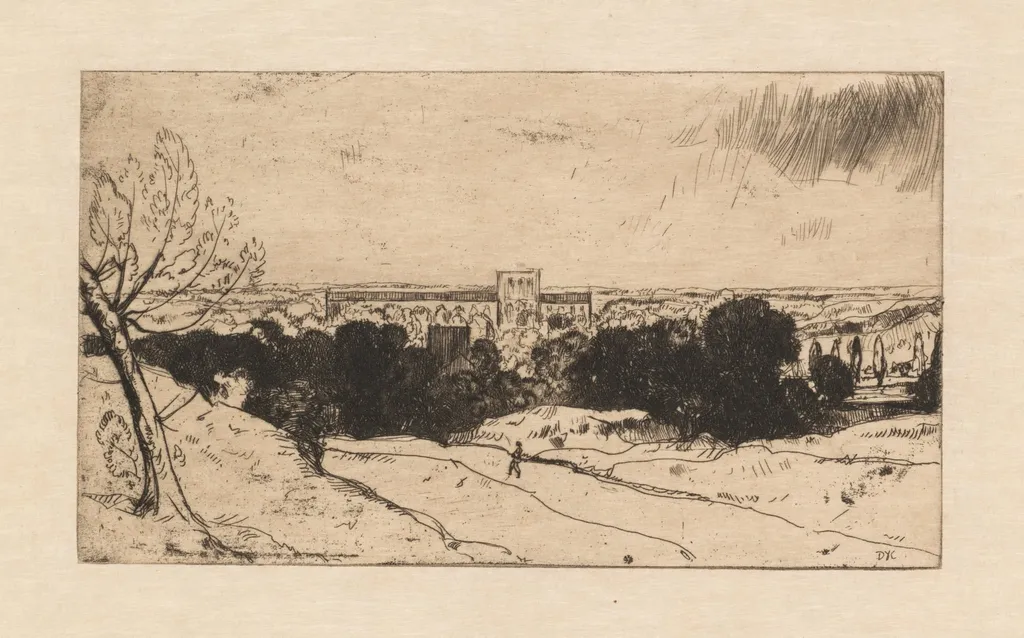
Distant View of Winchester and St. Croix is a print by David Young Cameron. It dates from 1902 and is held in the collection of the Cleveland Museum of Art. Created in 1902, *Distant View of Winchester and St.
About this work
Overview
The work captures a quiet, far-reaching perspective of two English towns, rendered with subtle tonal gradations.
Created in 1902, *Distant View of Winchester and St. Croix* is an etching by Scottish artist David Young Cameron, known for his detailed urban and landscape scenes. The work captures a quiet, far-reaching perspective of two English towns, rendered with subtle tonal gradations. As part of the late Etching Revival, Cameron’s prints emphasized mood and structure over dramatic detail, aligning with broader artistic interests in atmospheric realism.
Subject & Meaning
The scene presents a tranquil, unpopulated vista of Winchester and St. Croix, viewed from a distance across open land. A solitary figure on a path and a lone tree in the foreground suggest human presence without narrative intrusion. The composition invites contemplation of place and time, emphasizing the quiet endurance of architecture within the natural landscape rather than celebrating specific events or identities.
Technique & Style
Cameron employed etching to achieve nuanced contrasts between light and shadow, using fine lines and varied ink densities to model form. The earthy palette and soft transitions between tones create a sense of depth without sharp definition. His approach avoids theatrical lighting, instead relying on subtle chiaroscuro to guide the viewer’s eye toward the distant buildings, reinforcing the work’s meditative tone.
History & Provenance
The print entered the collection of The Cleveland Museum of Art, where it remains part of its holdings of early 20th-century British prints. Cameron’s reputation as a leading etcher of his time ensured wide institutional recognition, and this work reflects the museum’s interest in the Etching Revival’s contributions to modern printmaking. No documented provenance prior to its acquisition by the museum is publicly recorded.
Context
In the early 1900s, British artists like Cameron turned to etching as a means of reconnecting with handcrafted print traditions amid industrialization. Urban and rural scenes were favored subjects, often treated with restraint and sensitivity to light. Cameron’s focus on architectural forms aligned with contemporaries such as James McNeill Whistler and Samuel Palmer, who similarly valued atmosphere over detail.
Legacy
Cameron’s etchings, including this one, contributed to the enduring appreciation of tonal printmaking in the 20th century. His ability to convey spatial depth and quiet mood influenced later generations of British printmakers. While not widely exhibited today, his works remain studied for their technical precision and understated emotional resonance within the history of British graphic art.
Artist & collection
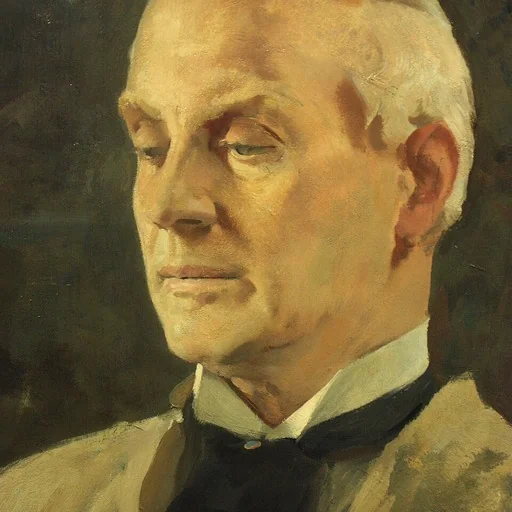
Artist
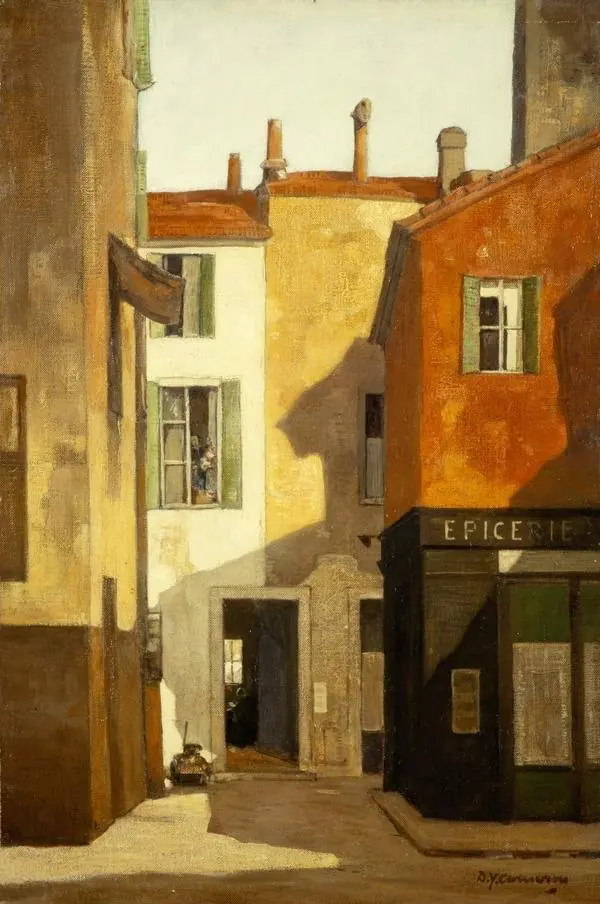
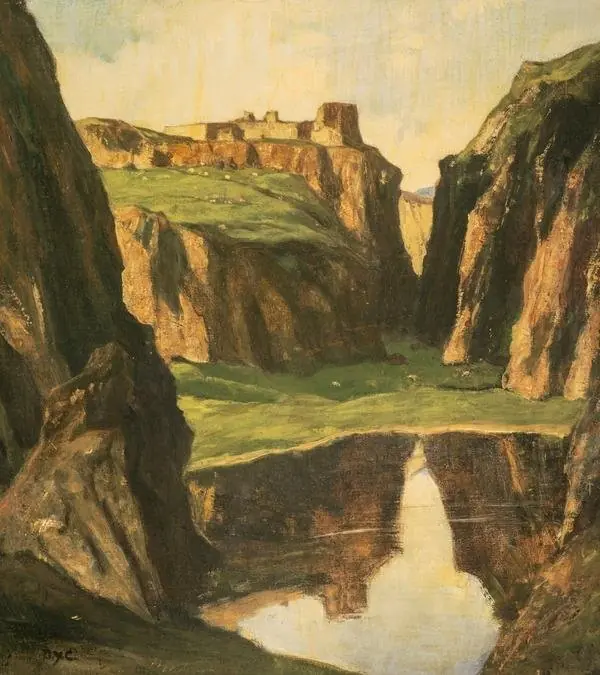
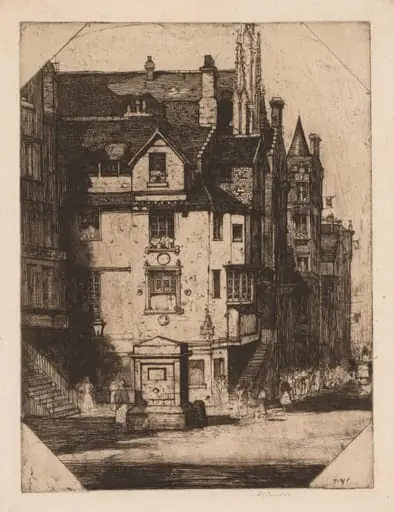
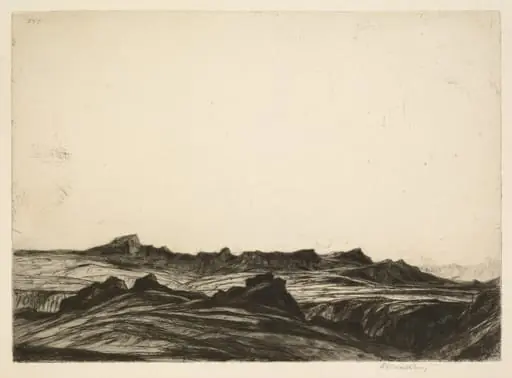
Sir David Young Cameron (28 June 1865 – 16 September 1945) was a Scottish painter and, with greater success, etcher, mostly of townscapes and landscapes in both cases. He was a leading figure in the final decades of the Etching Revival.

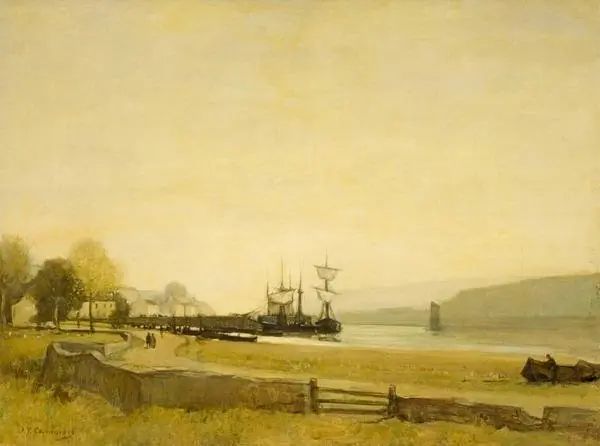
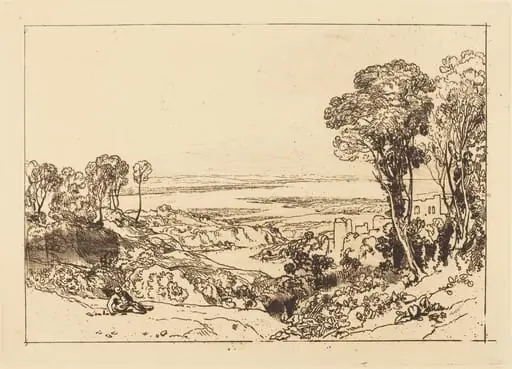 Junction of Severn and Wye
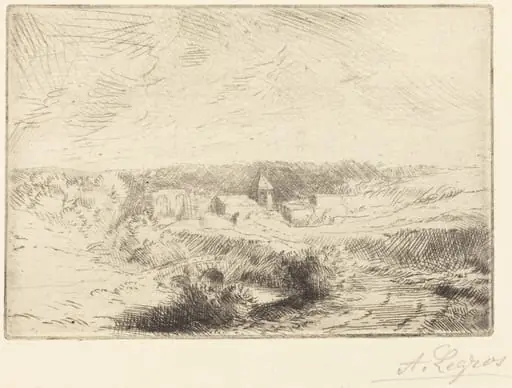 Village of Wimille, near Boulogne (Village de Wimille, pres Boulogne)
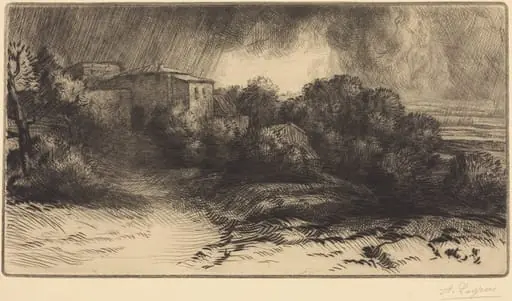 View of a Farm Seen in a Storm (La ferme de Brieux (Effet d'orage))
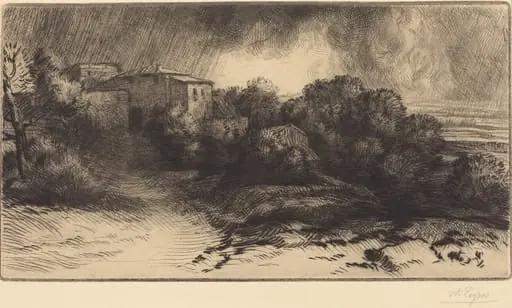 View of a Farm Seen in a Storm (La ferme de Brieux (Effet d'orage))
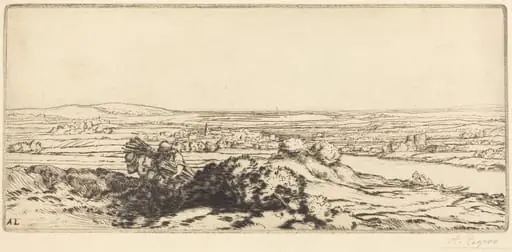 Valley of Dunes (La vallee des dunes)
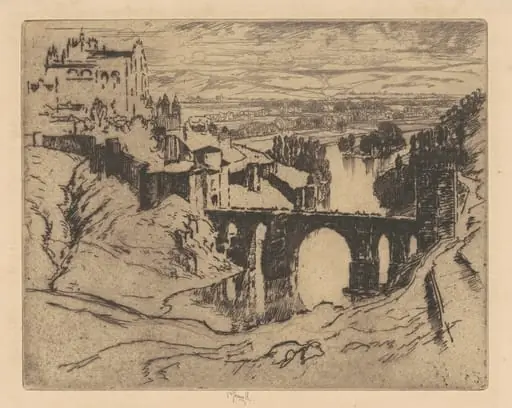 St. Martin's Bridge, Toledo
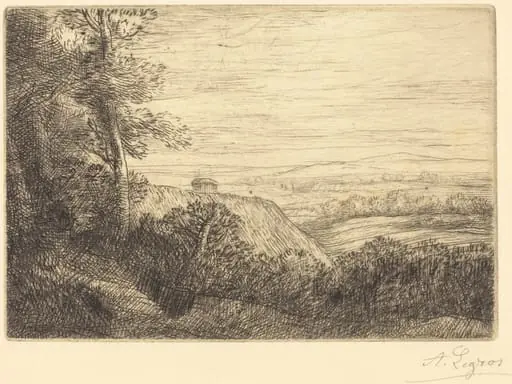 Last Rays (Les derniers rayons)
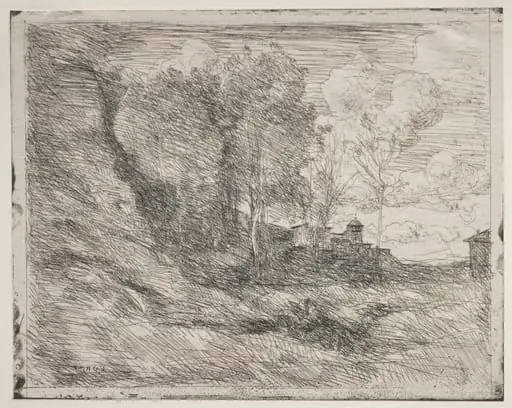 A Souvenir of Ostia
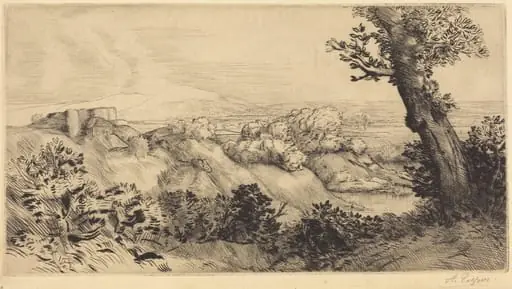 Top of the Hill (Le haut de la colline)
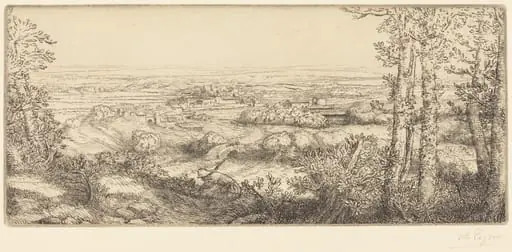 Valley in Bourgogne (Une vallee en Bourgogne)
 Cottage on a Hillside (Chaumiere sur le coteau)
 Plain near a Lake (La plaine pres du lac)