Artwork
Saint-Etienne-du-Mont
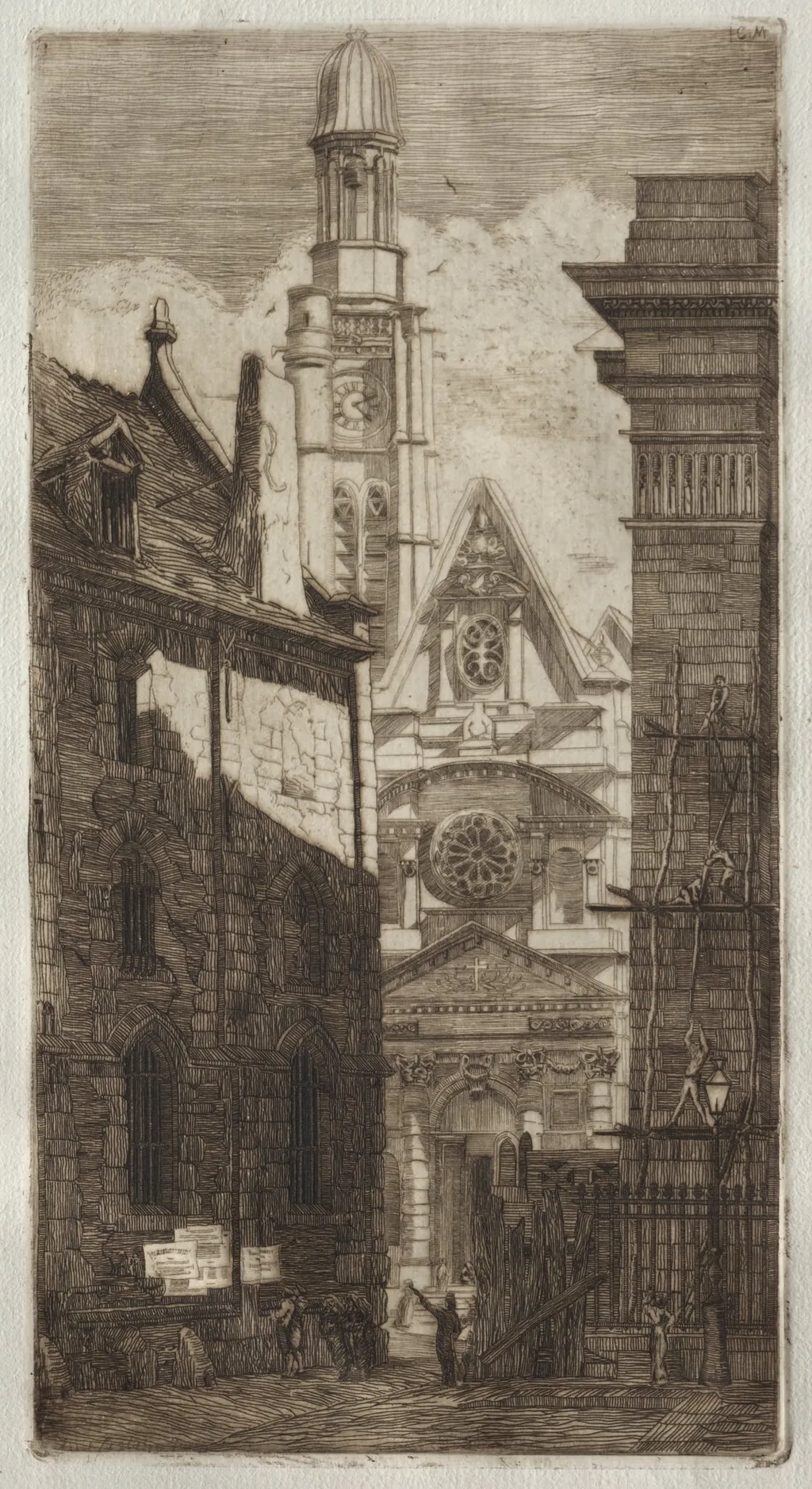
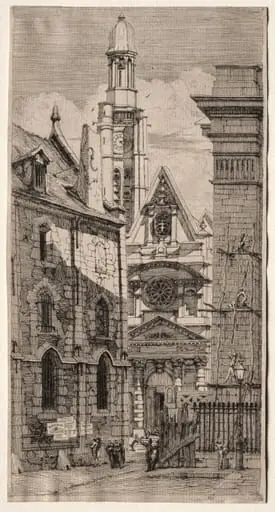
Saint-Etienne-du-Mont is a print by the Impressionist artist Edmond Gosselin. It dates from 1881 and is held in the collection of the Cleveland Museum of Art.
About this work
Overview
Rendered in fine linear ink, the print captures a quiet moment in a historic neighborhood, blending structure and human presence with subtle precision.
Created around 1881 by Edmond Gosselin, this etching depicts the Parisian church of Saint-Étienne-du-Mont. The work is part of the collection at The Cleveland Museum of Art and exemplifies the artist’s interest in architectural detail and urban atmosphere. Rendered in fine linear ink, the print captures a quiet moment in a historic neighborhood, blending structure and human presence with subtle precision.
Subject & Meaning
The scene centers on the church’s west facade, its Gothic architecture rendered with careful attention to ornamentation and proportion. Small figures near the entrance suggest daily religious life, while passersby along the adjacent street imply the church’s role within a living community. The composition avoids grandeur, instead emphasizing quiet continuity — the sacred embedded in the ordinary rhythms of city life.
Technique & Style
Gosselin employed etching to achieve fine gradations of tone and texture. Delicate lines define the roughness of stone and the grain of timbered houses, while controlled shadows enhance the three-dimensionality of surfaces. The interplay of light and dark, particularly on the church’s facade, demonstrates a mastery of chiaroscuro, lending depth without overt drama. The precision of the lines reflects a topographical interest rather than romantic embellishment.
History & Provenance
The print was made in the early 1880s, during a period of renewed interest in French architectural heritage. Gosselin, known for his topographical prints, likely produced this work as part of a series documenting Parisian landmarks. It entered the Cleveland Museum of Art’s collection through established acquisition channels, preserving its original state and historical context.
Context
In late 19th-century Paris, artists and printmakers increasingly turned to historic buildings as subjects, responding to rapid urban change. Saint-Étienne-du-Mont, one of the few churches to survive the Revolution largely intact, became a symbol of continuity. Gosselin’s depiction aligns with this cultural moment, valuing architectural integrity over idealized spectacle.
Legacy
Gosselin’s etching remains a quiet testament to the value of observational printmaking in documenting urban landscapes. While not widely reproduced, it contributes to a broader archive of architectural studies from the period. Its restrained aesthetic and technical discipline continue to inform how scholars and viewers understand the relationship between place, time, and representation in late 19th-century France.
Artist & collection

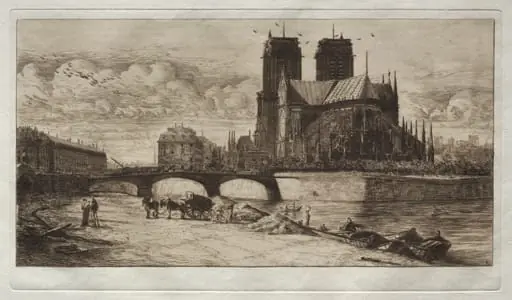
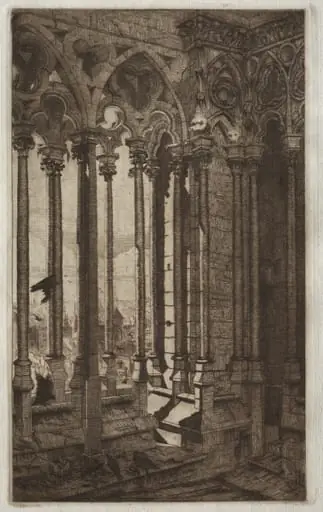
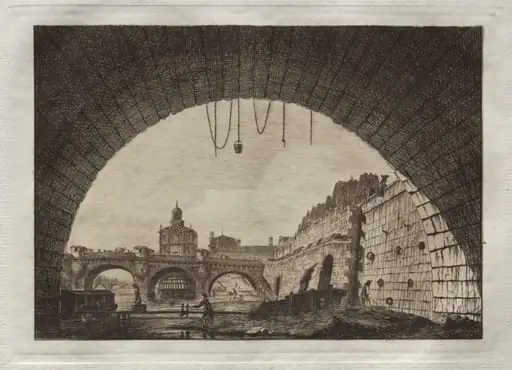
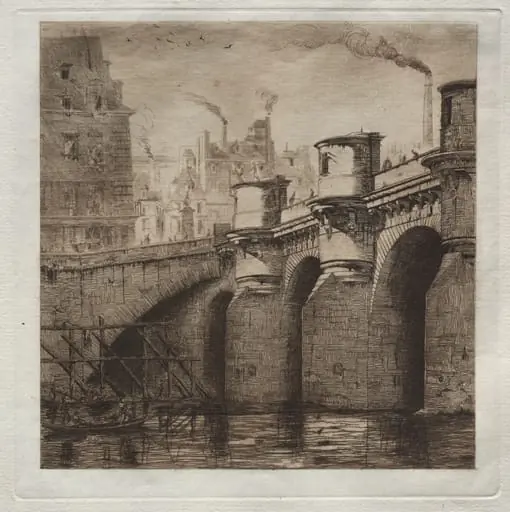
 Etchings of Paris: Church of St. Stephen of the Mount
 Tourelle, Rue de la Tixeranderie
 Chantrey Street, Paris
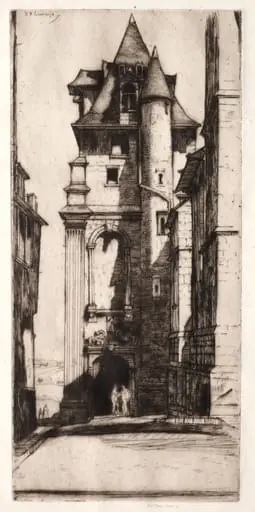 St. Aignan, Chartres
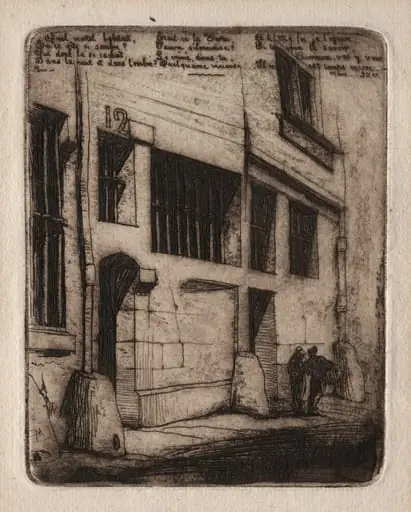 Etchings of Paris: The Street of the Bad Boys
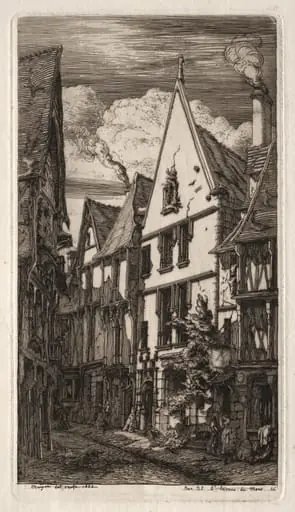 Etchings of Paris: à Bourges
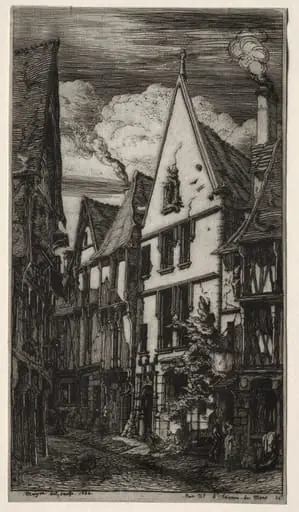 Rue des Toiles, Bourges
 In Stirling Castle or A Scottish Palace (Un Palais Ecossais)
 John Knox's House