Artwork
After Strife
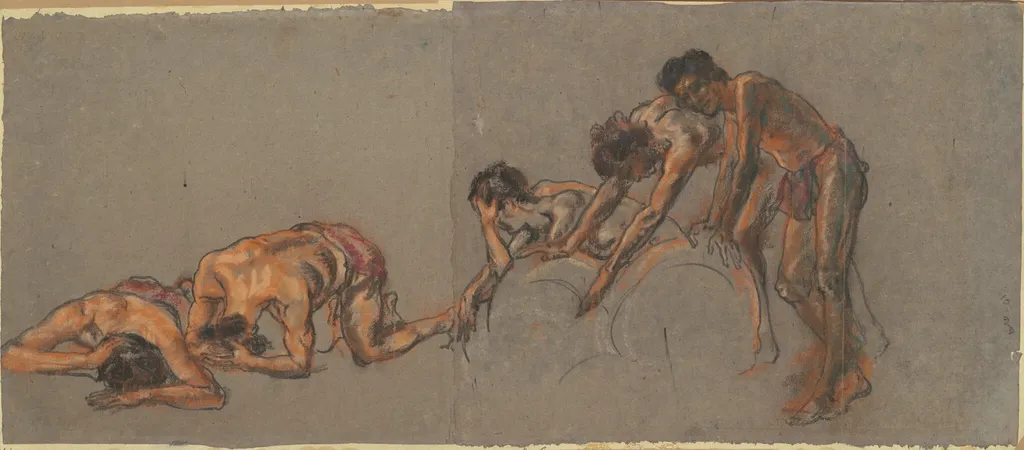
After Strife is a charcoal drawing by Arthur Bowen Davies. It dates from 1922 and is held in the collection of the National Gallery of Art.
About this work
Overview
The work’s fragile materials and tactile surface suggest intimate, immediate handling, aligning with his interest in emotional resonance over formal precision.
Created circa 1922, *After Strife* is a drawing by Arthur B. Davies executed in charcoal and pastel on gray paper, affixed to a rigid board. It reflects Davies’s late engagement with expressive, non-narrative forms, moving away from his earlier academic style. The work’s fragile materials and tactile surface suggest intimate, immediate handling, aligning with his interest in emotional resonance over formal precision.
Subject & Meaning
The composition presents three nude figures in a close, ambiguous grouping on a muted ground. Their postures—reaching, hunched, leaning—suggest physical and emotional tension without clear narrative. The absence of setting or context invites interpretation as an internal state: isolation, connection, or exhaustion. The figures appear less as individuals than as elemental forms in a private, unresolved moment.
Technique & Style
Davies employed loose, gestural strokes in charcoal and soft pastel, allowing pigment to smudge and blend unevenly across the textured paper. Forms are suggested rather than defined, with edges dissolving into the gray substrate. The limited palette of browns and blacks enhances the somber mood, while the rough handling conveys urgency, as if the image were sketched in a single, unbroken flow of thought.
History & Provenance
The work emerged during Davies’s final years, a period marked by his leadership in American modernist circles and his role in organizing the 1913 Armory Show. *After Strife* was likely made in private, away from public exhibitions, reflecting a personal shift toward introspective imagery. Its survival in near-original condition indicates careful preservation, though its provenance prior to institutional acquisition remains undocumented.
Context
In the early 1920s, Davies increasingly turned from representational subjects toward abstracted human forms, influenced by European modernism and spiritualist thought. *After Strife* aligns with contemporaneous explorations by artists like Brancusi and Modigliani, who sought emotional depth through simplified, sculptural bodies. The drawing resists clear categorization, existing between figuration and abstraction, reflecting the fluid boundaries of American modernism at the time.
Legacy
Though not widely exhibited, *After Strife* exemplifies Davies’s late artistic trajectory: a retreat from public spectacle into private, tactile expression. Its rawness and intimacy contrast with his earlier, more polished works, offering insight into his evolving sensibility. The piece contributes to understanding how American modernists used drawing not as preparation, but as a complete, personal language.
Artist & collection
Artist
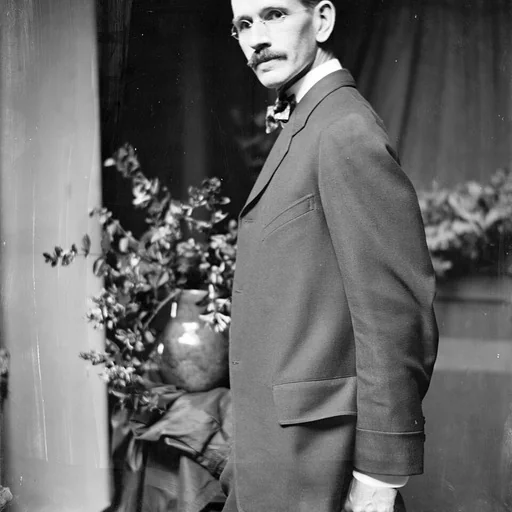
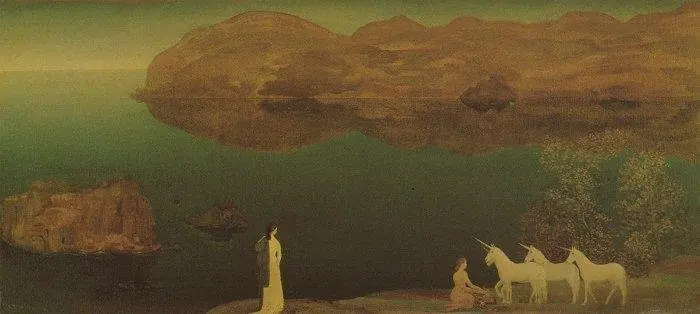
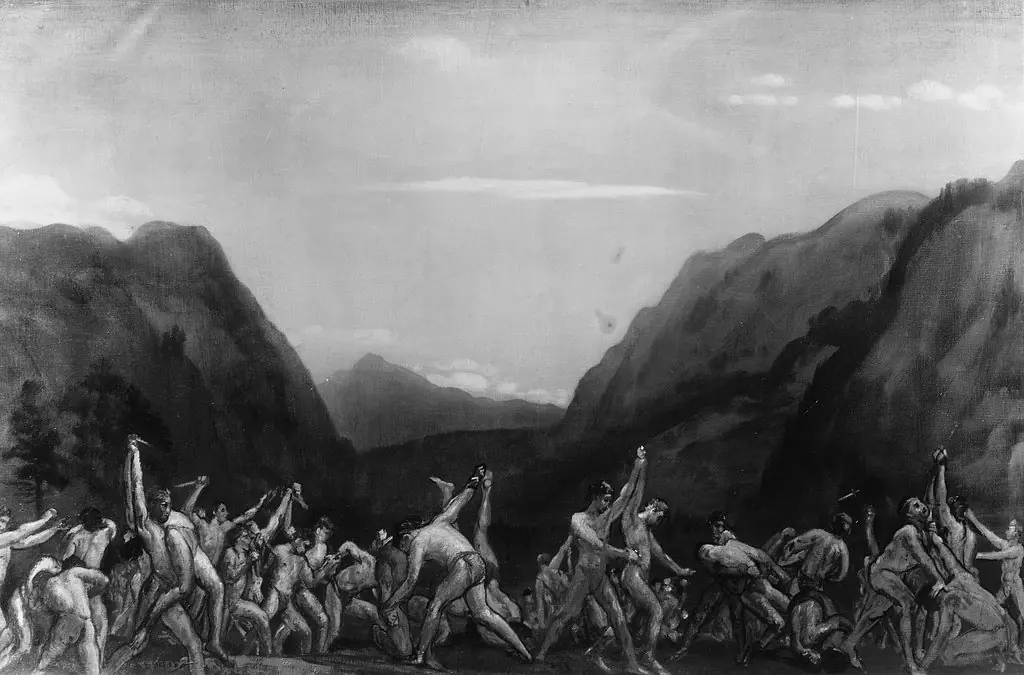
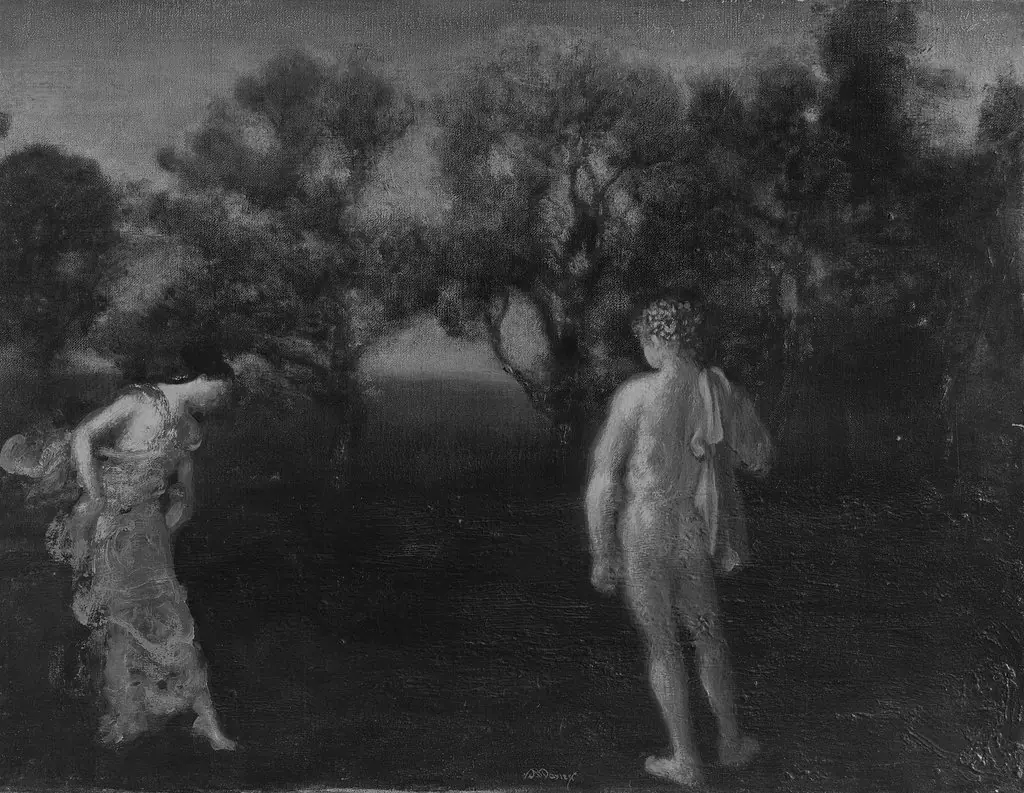
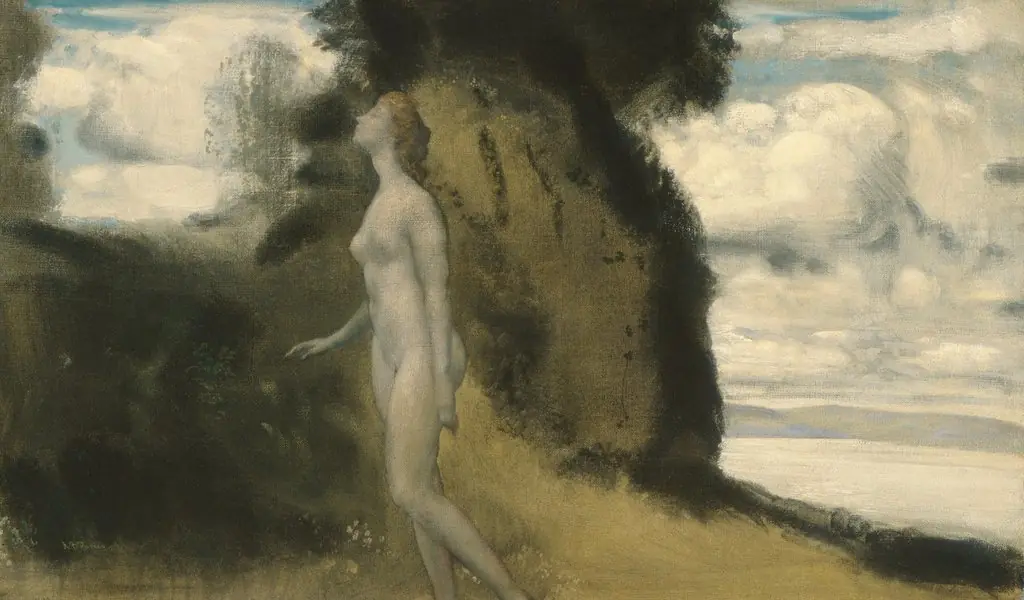
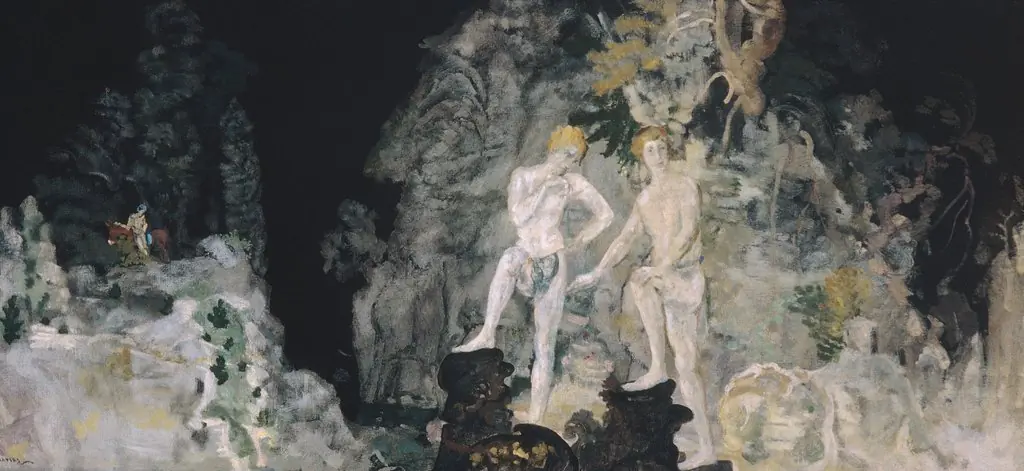
Arthur Bowen Davies (September 26, 1862 – October 24, 1928) was an avant-garde American artist and influential advocate of modern art in the United States c. 1910–1928.

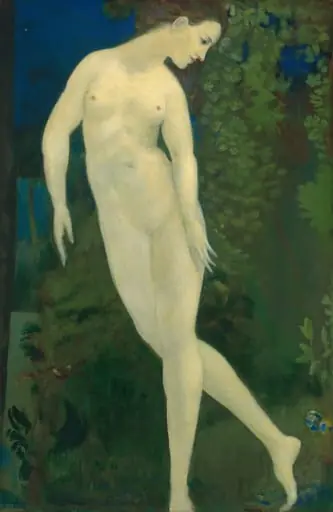
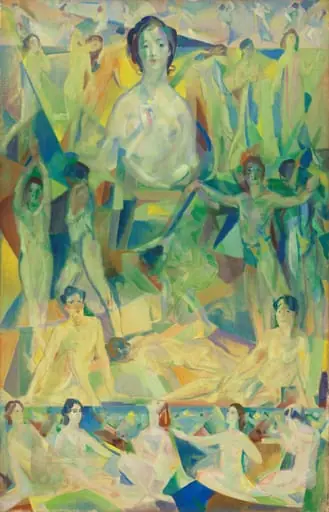
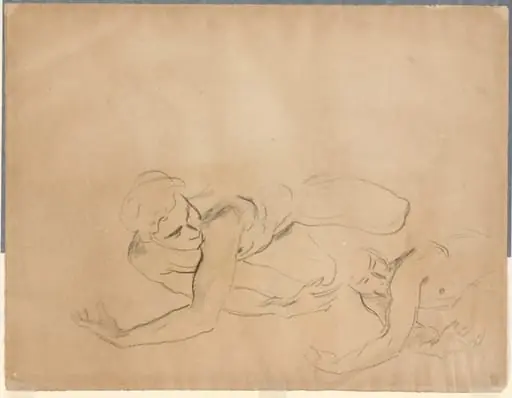 Studies of a Male Nude (verso)
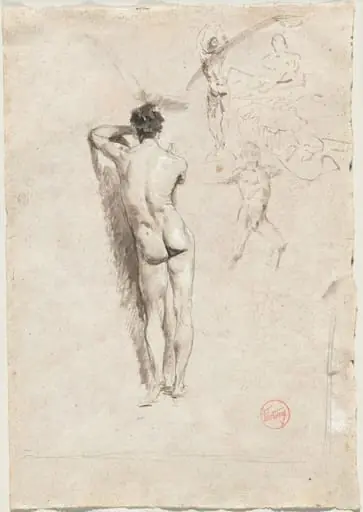 Study of a Male Nude and Other Studies
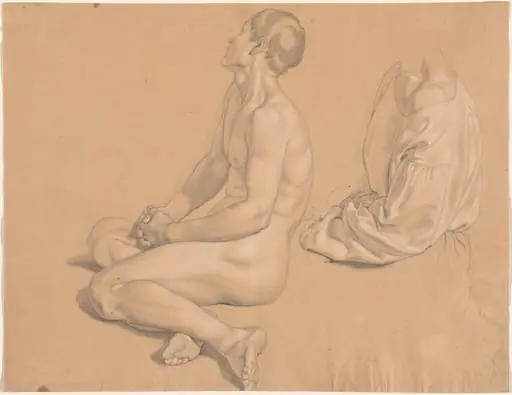 A Seated Man Nude and then Clothed
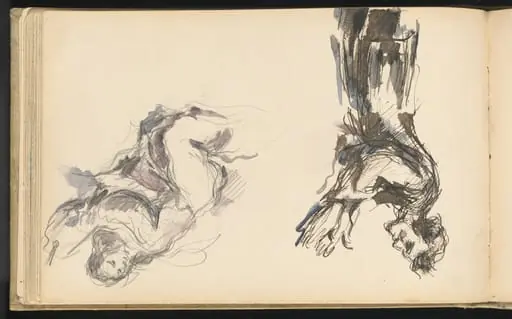 Victor Chocquet and an Angel for "The Apotheosis of Delacroix"
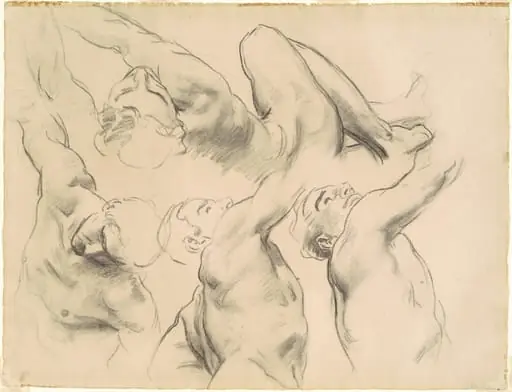 Studies for "Heaven" and "Hell"
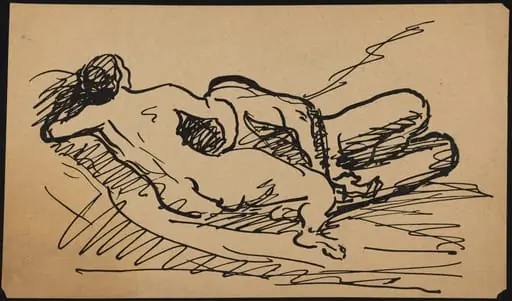 Reclining Nude
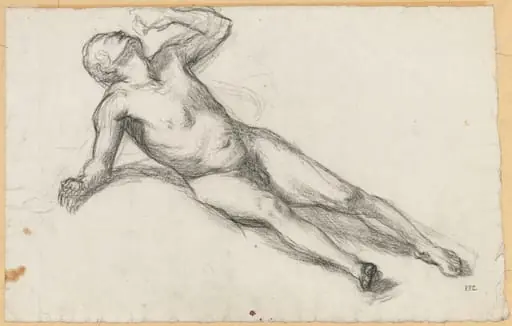 Study for The War
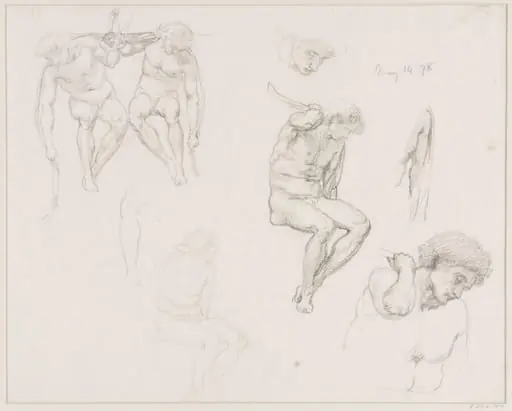 Figure studies and a head fot the mosaic decoration of the dome of St. Paul's Cathedral
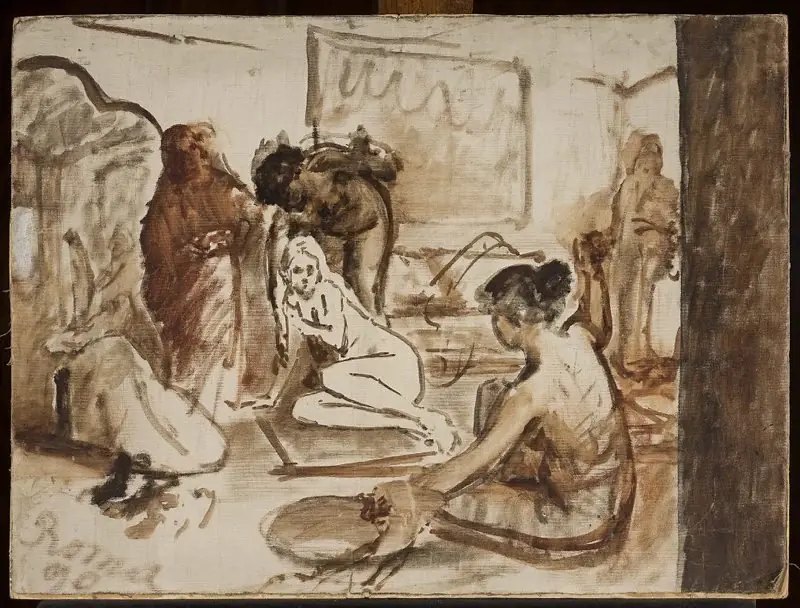 Sketch for the 1st composition of the painting “Potocka in Bakhchisaray”
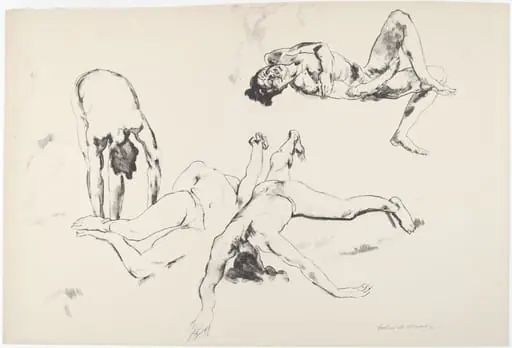 Men in Agony
 Man carrying a child
 Odysseus und die Freier (Odysseus and the Suitor)