Artwork
A Singular Rock in Dove-Dale named the Pickerell
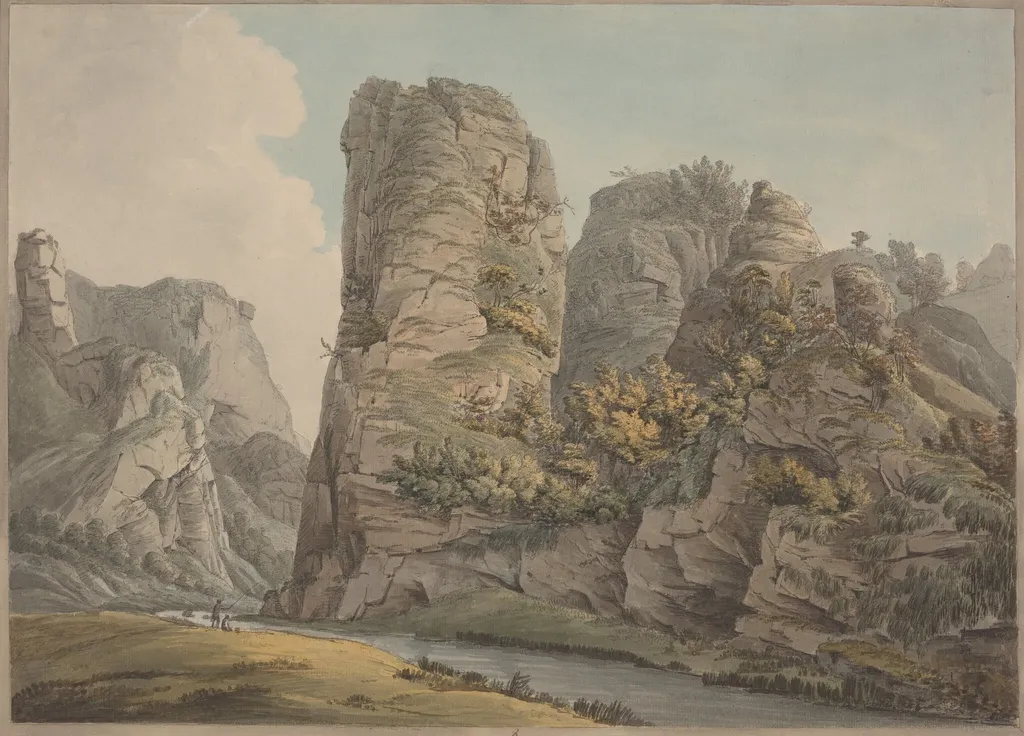
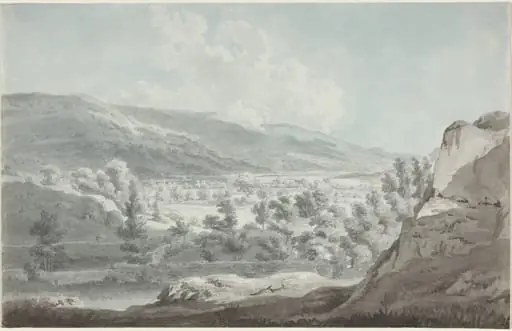
A Singular Rock in Dove-Dale named the Pickerell is a graphite drawing by the Romanticist artist William Day. It dates from 1789 and is held in the collection of the National Gallery of Art.
About this work
You can learn more about this style and period at the National Gallery of Art, Washington, or by exploring the movement: Romanticism.
The painting is titled A Singular Rock in Dove-Dale named the Pickerell.
It was made in 1789 by William Day.
The artist used graphite and watercolor on laid paper to create this work, which is a landscape.
I don't know much about the artist, but this painting is an example of early Romanticism.
You can learn more about this style and period at the National Gallery of Art, Washington, or by exploring the movement: Romanticism.
Overview
A Singular Rock in Dove‑Dale named the Pickerell is a landscape drawing executed in 1789 by the British artist William Day. Rendered in graphite and watercolor on laid paper, the work records a distinctive rock formation in the valley of Dove‑Dale, presenting a quiet, natural scene typical of late‑eighteenth‑century British topographical art.
Subject & Meaning
The composition focuses on a solitary rock, locally known as the Pickerell, set against the surrounding hills and foliage of Dove‑Dale. By isolating this natural feature, the drawing emphasizes the picturesque qualities of the English countryside, inviting contemplation of the relationship between the viewer and a singular element of the landscape.
Technique & Style
Day combined delicate graphite sketching with translucent watercolor washes, allowing the underlying drawing to remain visible beneath the pigment. The use of laid paper, with its faint ribbed texture, contributes to the work’s atmospheric effect. The piece reflects early Romantic sensibilities, favoring mood and natural grandeur over strict topographical accuracy.
History & Provenance
Created in 1789, the drawing was later mounted on its original support, preserving the artist’s intended presentation. While detailed records of its ownership are scarce, the work remains an example of William Day’s contribution to the burgeoning interest in British landscape illustration during the period.
Artist & collection


 A second drawing done from the same blot
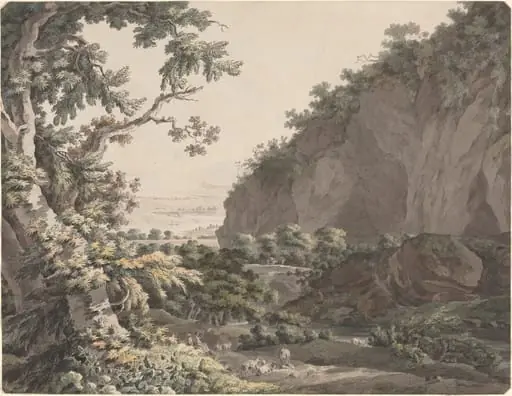 A Wooded Valley with Rocky Cliffs
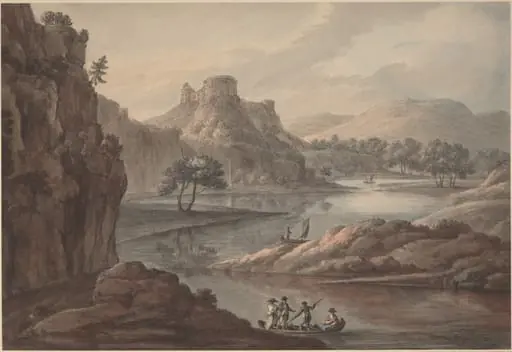 River Landscape with a Castle
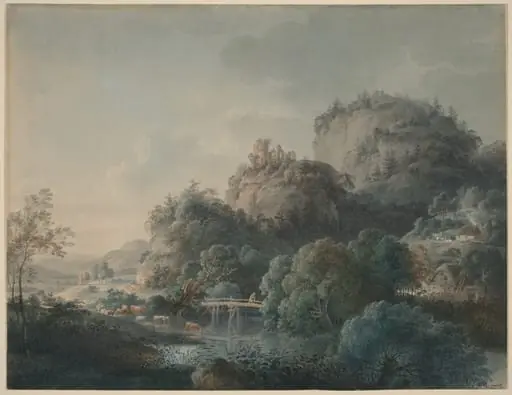 The Ruins of the Monastery of Oybin in the Zittau Mountains
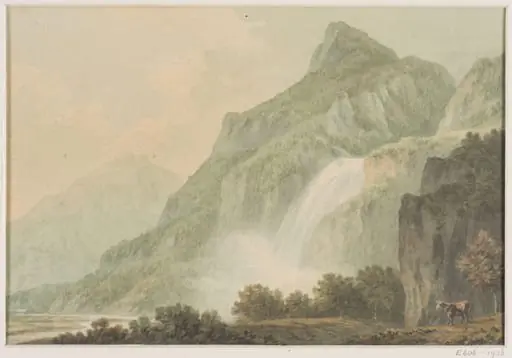 Landscape with waterfall
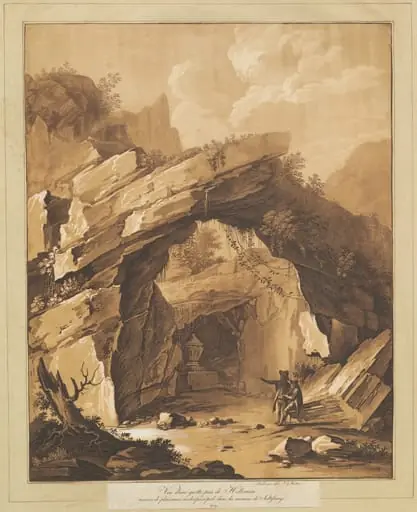 View of the Grotto by Heilbrunn, near Salzburg
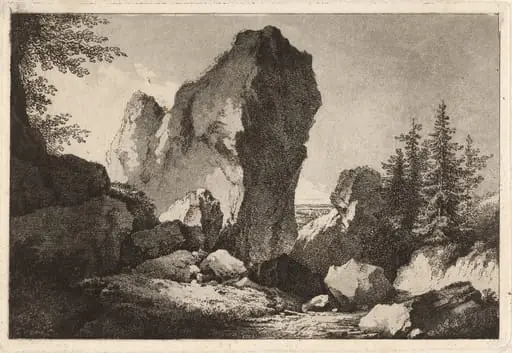 Mountain Landscape with a Rocky Outcrop
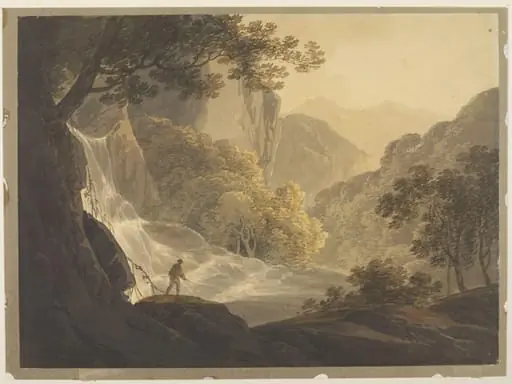 Waterfall
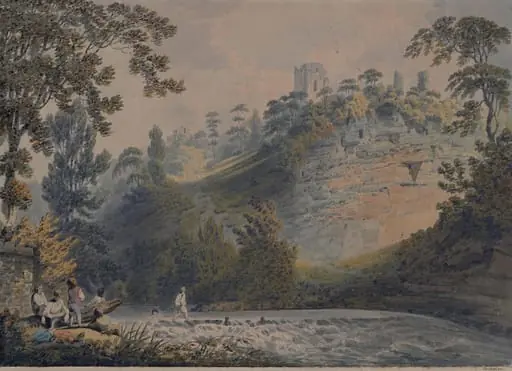 River Scene
 The Head of Ullswater
 Landscape with River and Rock