Artwork
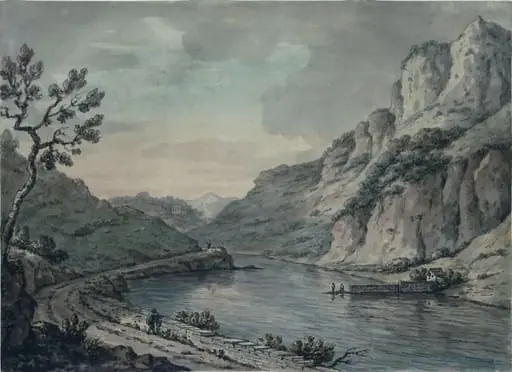
River Landscape with a Castle
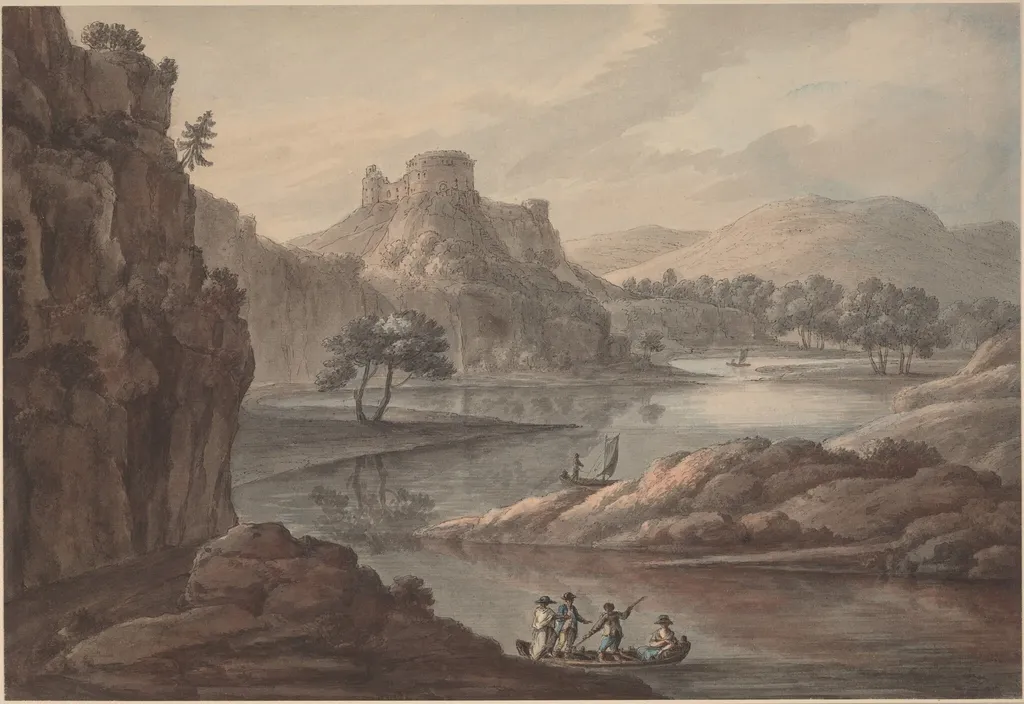
River Landscape with a Castle is an ink drawing by the Romanticist artist Robert Adam. It dates from 1784 and is held in the collection of the National Gallery of Art.
About this work
Overview
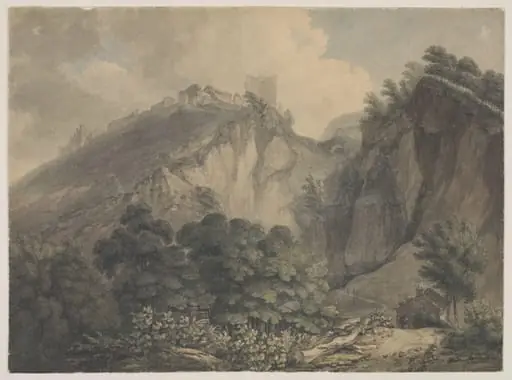
Created around 1784, this drawing by Robert Adam depicts a tranquil river valley framed by natural and architectural elements. Executed in pen, black ink, and watercolor over graphite on laid paper, it captures a quiet moment in a rural setting. The composition balances stillness and subtle movement, with figures in boats suggesting human presence without disrupting the landscape’s serenity.
Subject & Meaning
Three figures in a foreground boat gesture toward the shore, their actions intimate and unremarkable, reinforcing the quiet, contemplative tone.
The scene centers on a modest, weathered castle perched on a distant hill, its aged form evoking time and endurance. A winding river cuts through a rocky valley, flanked by trees and cliffs. Three figures in a foreground boat gesture toward the shore, their actions intimate and unremarkable, reinforcing the quiet, contemplative tone. The castle, neither grand nor fortified, suggests a lived-in past rather than a symbol of power.
Technique & Style
Adam employed thin, layered watercolor washes to model form and atmosphere, particularly in the water’s reflective surface and the hazy distance of the hills. Pen lines define structural details with precision, while graphite underdrawing guides the composition. The softness of the sky and the delicate gradations in the foliage reflect a sensitivity to light and texture, characteristic of topographical drawing of the period.
History & Provenance
The work is attributed to Robert Adam, known primarily as an architect, but who also produced numerous topographical sketches during his travels. This piece likely stems from his interest in landscape observation rather than architectural commission. Its survival as a finished drawing suggests personal or scholarly use, possibly as a study for later design projects or as a record of a journey.
Context
In the late 18th century, British artists and architects frequently documented landscapes as part of educational travel or aesthetic inquiry. Adam’s drawing aligns with this tradition, where natural scenery was studied for its compositional qualities and historical resonance. Unlike dramatic Romantic landscapes, this work favors restraint, reflecting an Enlightenment-era preference for measured observation over emotional intensity.
Legacy
Though not widely exhibited, the drawing contributes to understanding Adam’s broader artistic practice beyond architecture. It exemplifies how architects of the time engaged with landscape as both subject and source of formal ideas. Its preservation offers insight into the visual culture of amateur topographers and the quiet, personal nature of 18th-century sketching.
Own this work as a print
Artist & collection


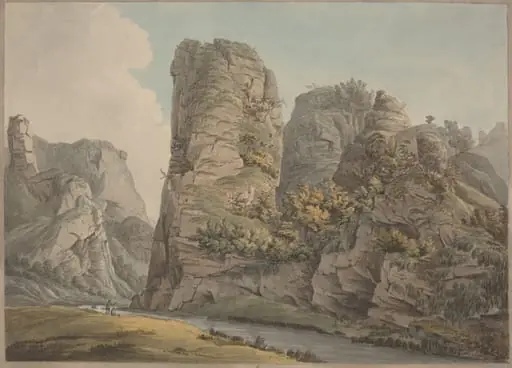 A Singular Rock in Dove-Dale named the Pickerell
 Lake Scenery
 The Head of Ullswater
 River Scene
 Derwentwater
 The Ruins of the Monastery of Oybin in the Zittau Mountains
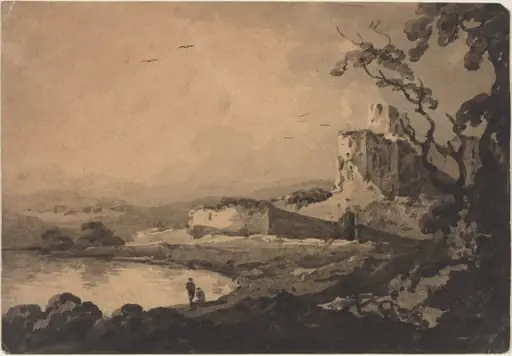 Landscape
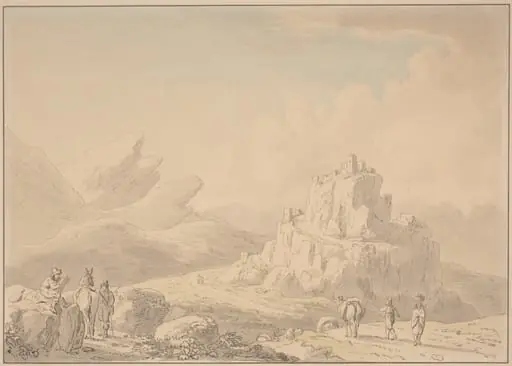 Zahara
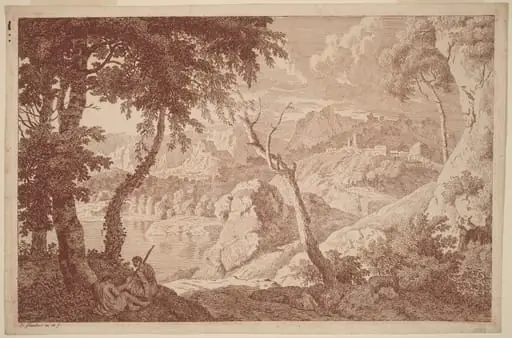 Mountain Landscape with Two Men Resting
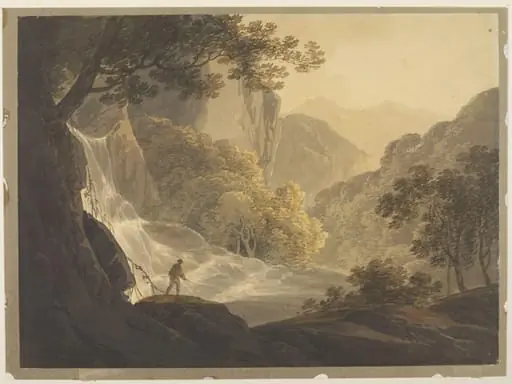 Waterfall
 Study of Butterbur (Petasites vulgaris, Desf.) the largest leaf of any English plant
 View on the Lands of the Earl of Fortescue, Castle Hill, Devon