Artwork
Shoeing a Horse
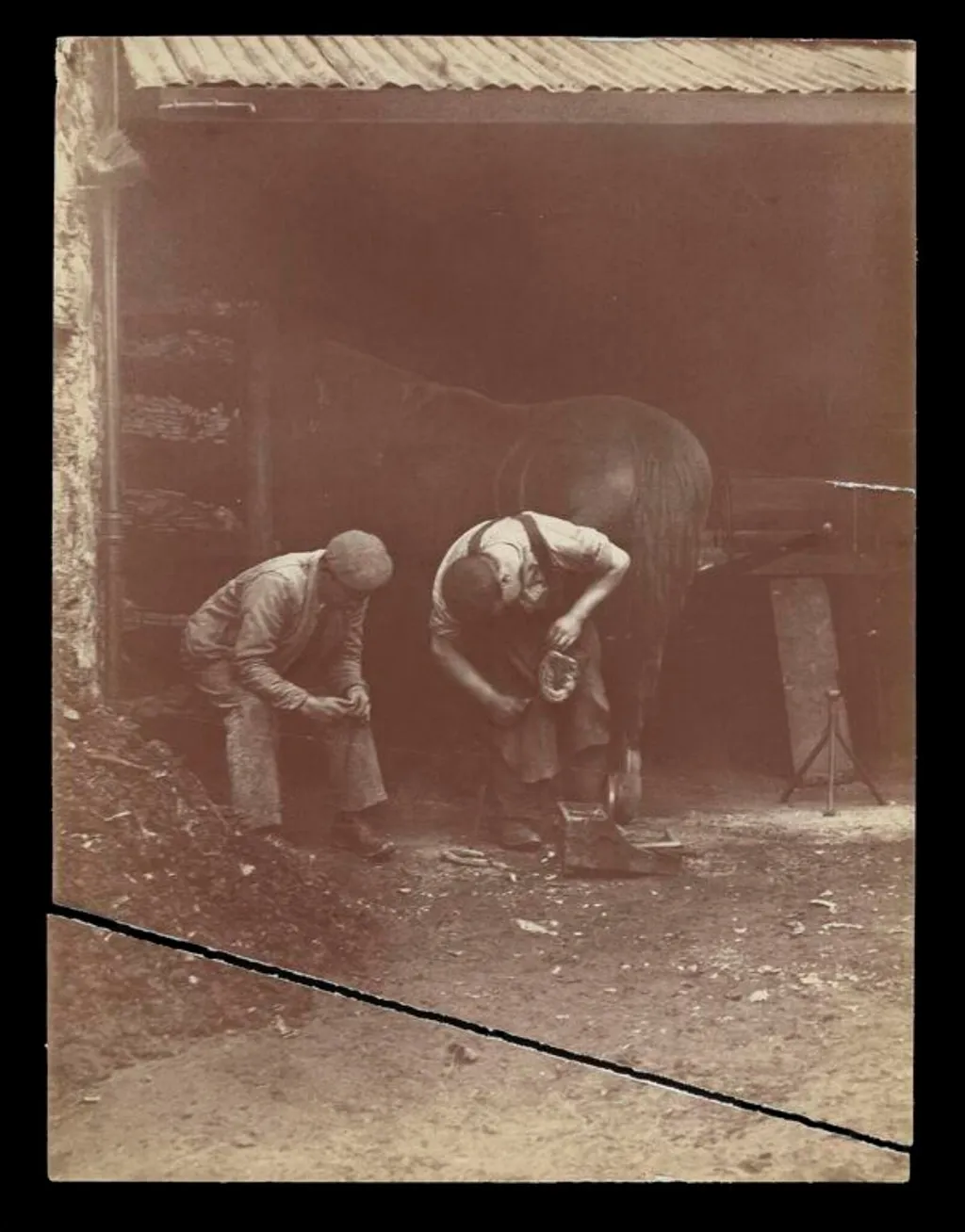
Shoeing a Horse is a photographic photography by William James Day. It dates from 1900 and is held in the collection of the Victoria and Albert Museum.
About this work
One man is bending over, holding the horse’s hoof while the other works on it with tools.
This photo shows two men working with a horse in a dimly lit space. One man is bending over, holding the horse’s hoof while the other works on it with tools. The ground is dirty, and the walls look rough, with a metal roof above. The lighting is low, making the scene feel gritty and real.
The photo was taken around 1900 and focuses on the everyday task of shoeing a horse. The details of the men’s hands and the horse’s hoof show careful work.
Next, check out the Victoria and Albert Museum to see more photos like this.
Overview
A black-and-white photograph from circa 1900 captures a moment of rural labor: two men engaged in the task of re-shoeing a horse. Taken in a modest, dimly lit stable, the image records an ordinary yet essential practice of the era. The composition centers on physical exertion and close collaboration, with no indication of the photographer’s presence. The setting suggests a working farm or blacksmith’s yard, grounded in utility rather than spectacle.
Subject & Meaning
The scene depicts the precise, hands-on work of equine care, a routine but vital aspect of pre-motorized transportation. One man stabilizes the horse’s leg while the other adjusts the iron shoe, their focus absolute. The image conveys no narrative beyond the task itself, yet it implicitly honors the skill and patience required in animal husbandry. The absence of spectators or decoration emphasizes the work’s quiet dignity and daily necessity.
Technique & Style
The photograph is rendered in sharp tonal contrast, with fine detail in the texture of the horse’s hoof, the men’s worn clothing, and the rough-hewn walls. Low natural light enhances the gritty realism, casting deep shadows that define form without drama. The framing is unadorned, centered on the action, with no attempt to idealize or stage the moment. The grain and contrast reflect the limitations and strengths of early 20th-century photographic processes.
History & Provenance
The photograph was likely taken by an amateur or commercial photographer documenting rural life around 1900. Its origin is unattributed, and no known exhibition or collection history precedes its current record. It survives as part of a broader archive of documentary images capturing industrial and agricultural labor before mechanization transformed such work. Its preservation suggests recognition of its ethnographic value, even if not initially intended as art.
Context
In 1900, horses remained indispensable for transport, farming, and trade across much of the world. Shoeing was a skilled trade, often performed by blacksmiths or stable hands with generations of inherited knowledge. This image reflects a world still reliant on animal power, where daily routines were physically demanding and rarely recorded. Similar photographs from the period offer glimpses into the unseen labor sustaining society.
Legacy
The photograph endures as a quiet testament to pre-industrial labor practices. It contributes to historical records of rural life and the material culture of animal care. While not widely exhibited, it holds value for scholars of social history, photography, and equestrian traditions. Its unembellished realism continues to inform understandings of work, skill, and daily life at the turn of the century.
Artist & collection
Artist
William James Day took sharp, well-lit photographs around the year 1900, often catching everyday moments like the blacksmith shoeing a horse.

 The Repast
 The Farrier's Shop
 The French Blacksmith
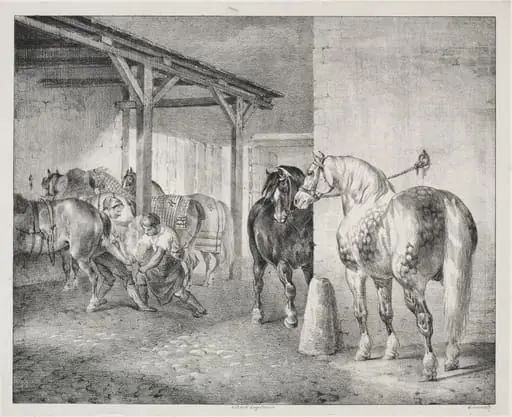 The Ferrier's Shed
 Florence Elizabeth Maude, Cornwallis Hawarden, Clementina Maude and unidentified man, Togge House, Dundrum
 At the Grindstone--A Suffolk Farmyard
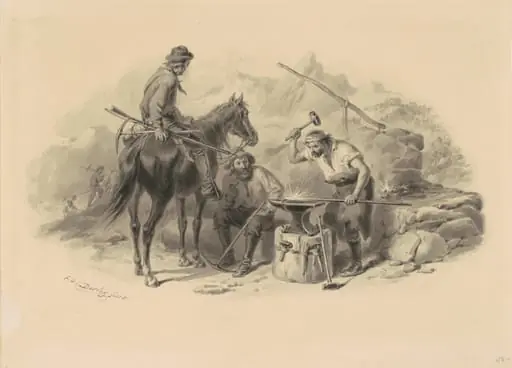 Blacksmith in the Goldfields
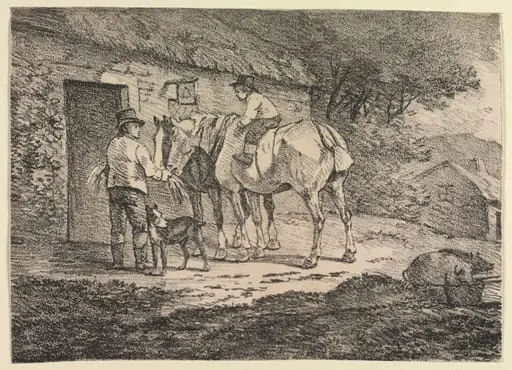 Specimens of Polyautography: Horses at a Cottage Door
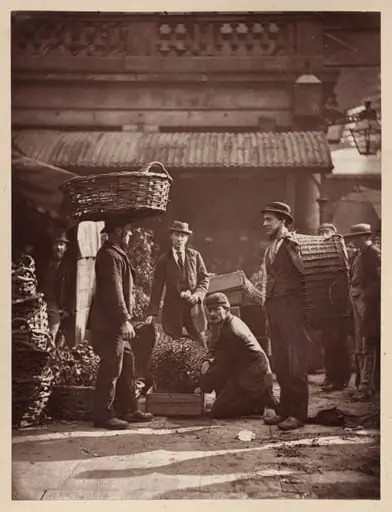 Covent Garden Labourers
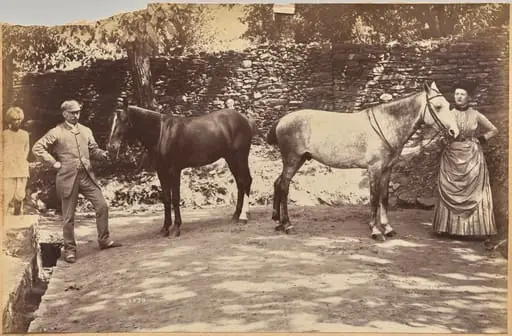 Col. F. G. Oldham (recto, top)
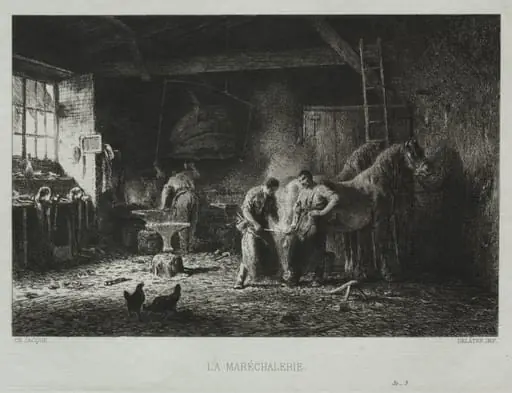 The Blacksmith Shop
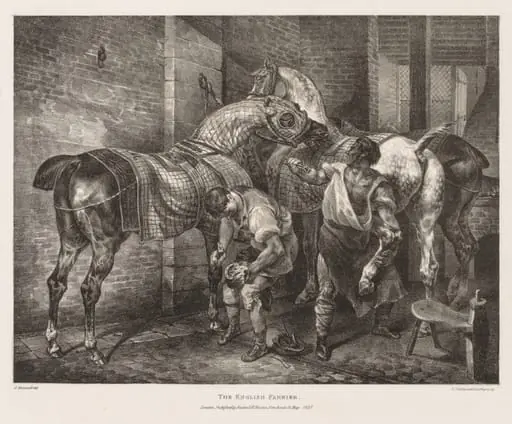 Various Subjects Drawn from Life and on Stone: The English Farrier