Artwork
The Farrier's Shop
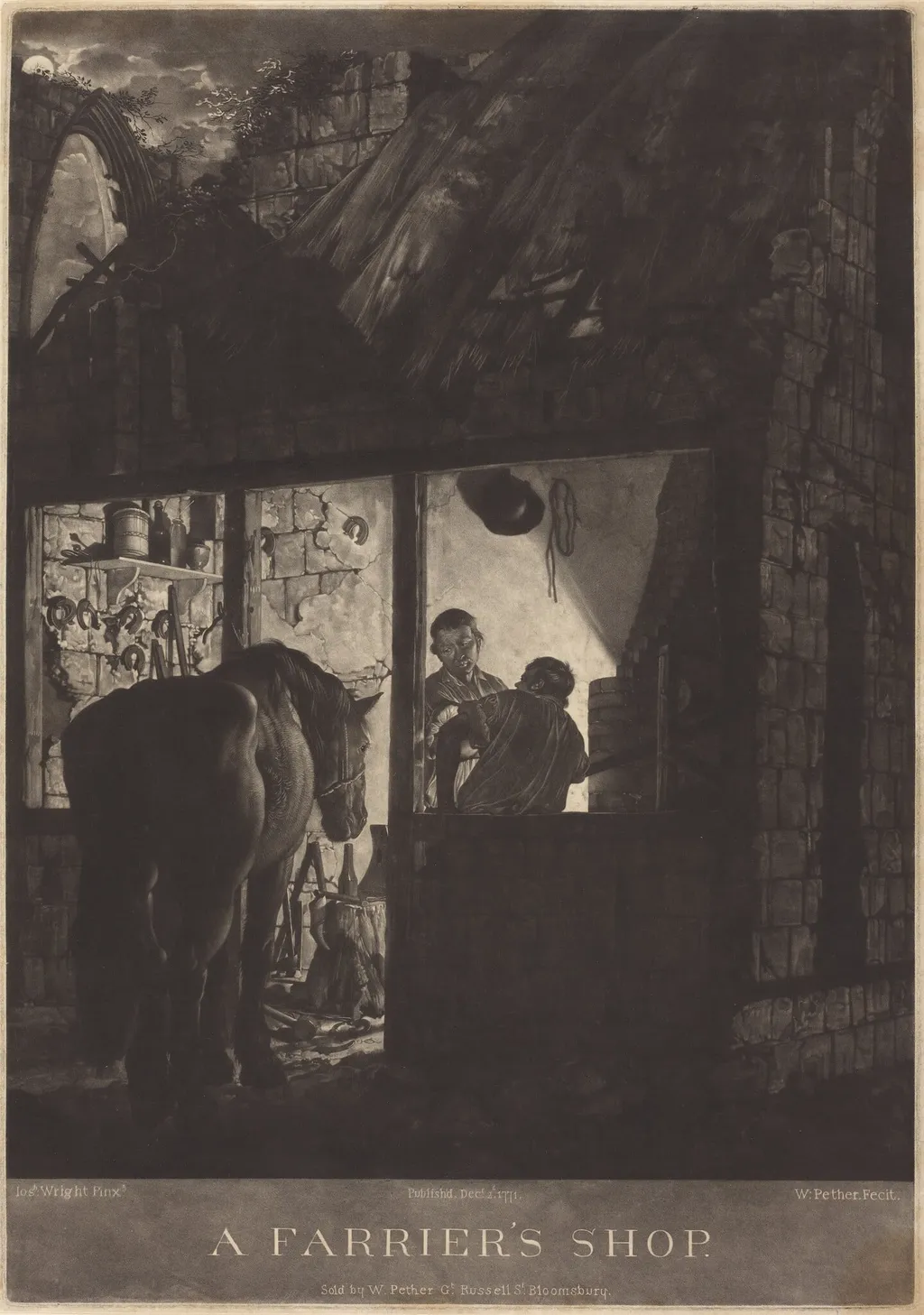
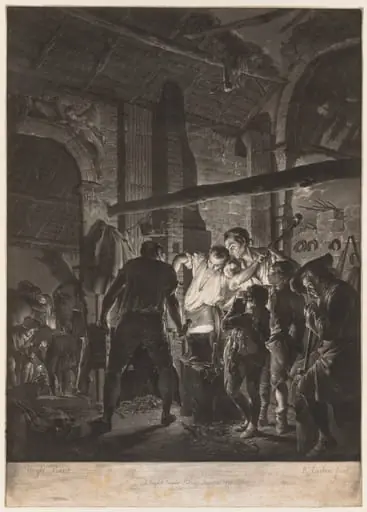
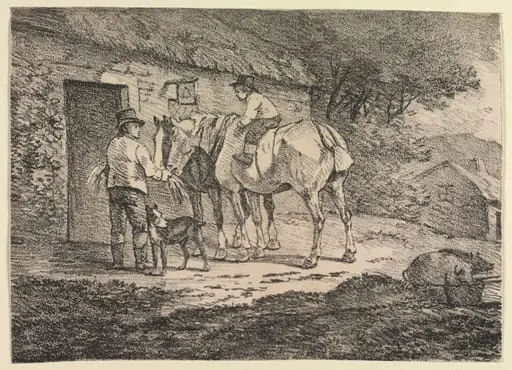
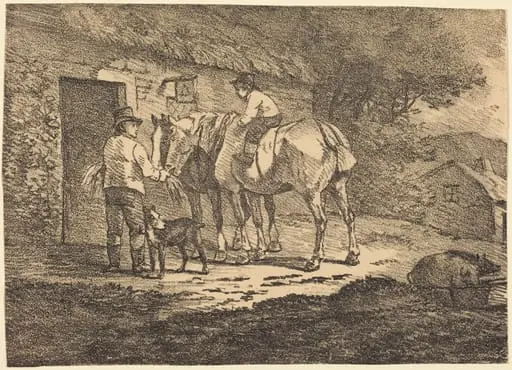
The Farrier's Shop is an ink print by the Romanticist artist William Pether. It dates from 1771 and is held in the collection of the National Gallery of Art.
About this work
Overview
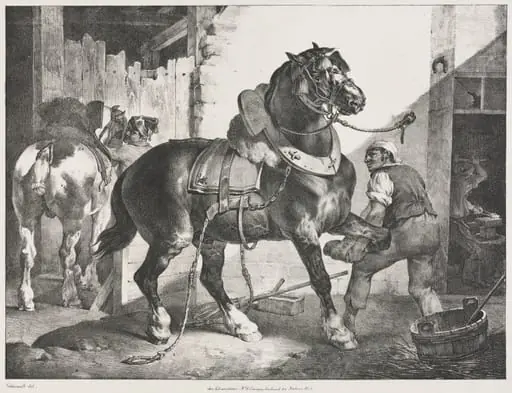
Created in 1771 by William Pether, The Farrier's Shop is a mezzotint printed on heavy laid paper. It captures a quiet moment in a rural blacksmith’s workshop, rendered in tonal gradations characteristic of the mezzotint technique. The composition centers on a horse standing outside, observed by a figure within the shop, suggesting a routine interaction between animal and artisan.
Subject & Meaning
The scene portrays the daily labor of a farrier, a tradesman essential to pre-industrial transport. The horse, poised but calm, and the unseen activity inside the shop imply a rhythm of work grounded in necessity. The figure at the window, neither engaged nor distracted, reflects a moment of pause amid labor, emphasizing dignity in ordinary tasks rather than theatrical drama.
Technique & Style
Pether employed mezzotint, a process that allows subtle transitions between light and dark, to model form and depth. The heavy laid paper enhances the texture of the print, supporting the soft contrasts of shadow and highlight. The interior tools and architecture are suggested with minimal detail, relying on tone to imply spatial recession and material presence.
History & Provenance
The print was produced during Pether’s active period as a reproductive engraver, known for translating paintings into prints for wider circulation. While the original painting it may have been based on is unconfirmed, the work reflects 18th-century interest in rural trades. Its survival in institutional collections suggests early recognition of its technical merit and genre significance.
Context
In late 18th-century Britain, prints of working life gained popularity as urban audiences sought connection to rural economies. The Farrier's Shop aligns with a broader trend of documenting trades, not as spectacle but as quiet endurance. Its setting—thatched roof, stone walls, simple tools—reflects regional architecture and craftsmanship common outside major cities.
Legacy
Though not widely reproduced today, the print remains a representative example of mezzotint’s capacity to convey atmosphere without narrative flourish. It contributes to the historical record of artisanal labor and demonstrates how printmaking could elevate everyday scenes into subjects worthy of sustained observation.
Artist & collection