Artwork
L'homme qui court apres la fortune et l'hommequi l'attend dans son lit (The Man who Courts Fortune and the Man Who Sleeps in Bed)
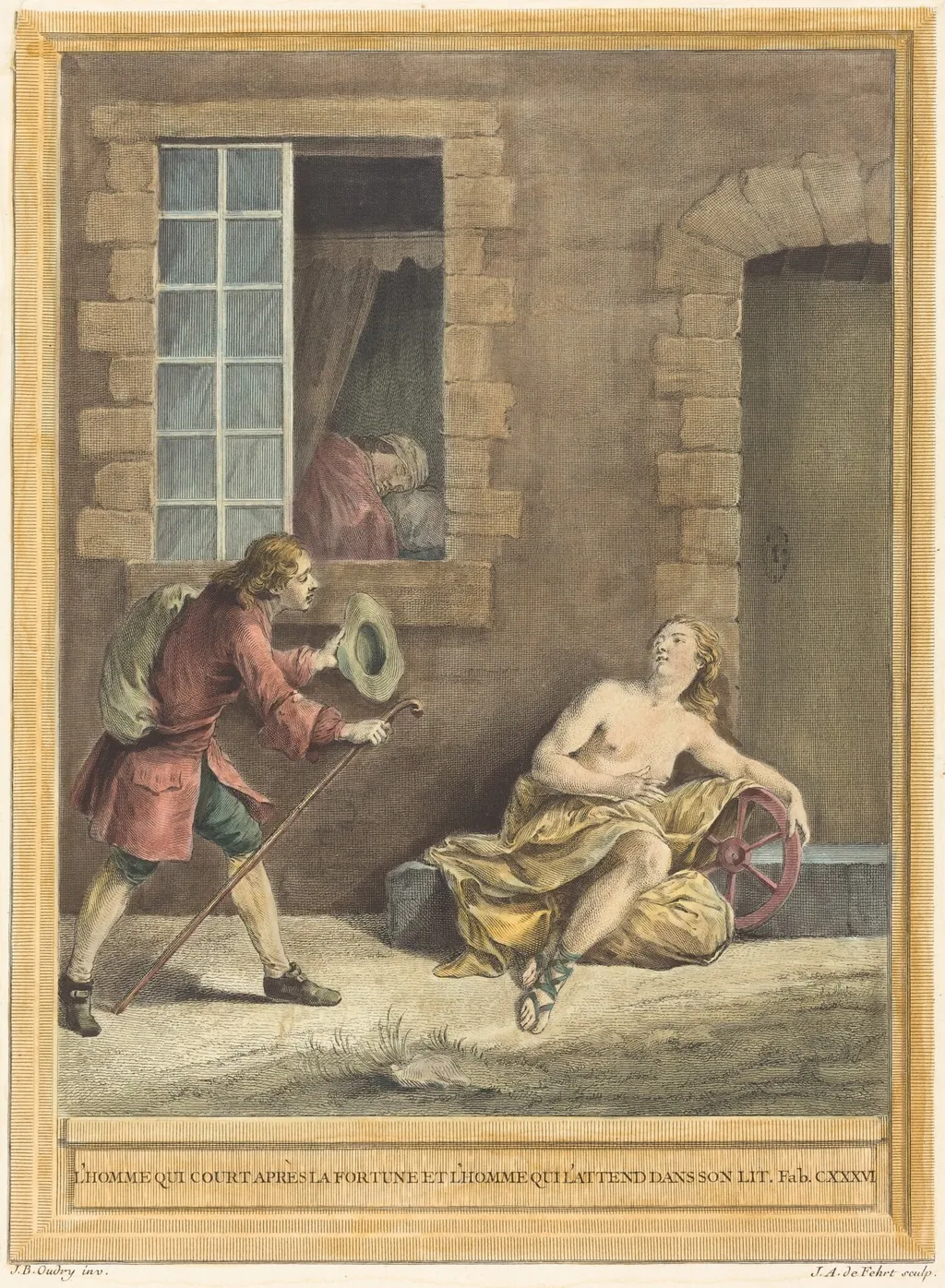
L'homme qui court apres la fortune et l'hommequi l'attend dans son lit (The Man who Courts Fortune and the Man Who Sleeps in Bed) is an ink print by the Romanticist artist A.-J. de Fehrt. It dates from 1756 and is held in the collection of the National Gallery of Art. Created in 1756 by A.
About this work
Overview
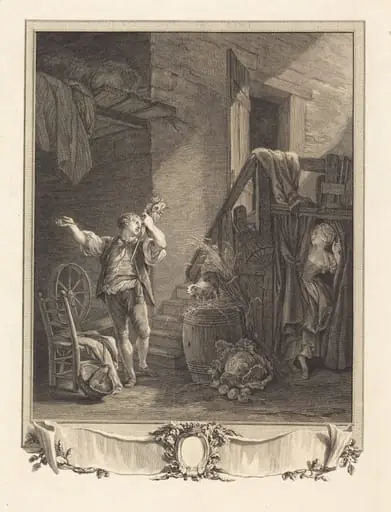
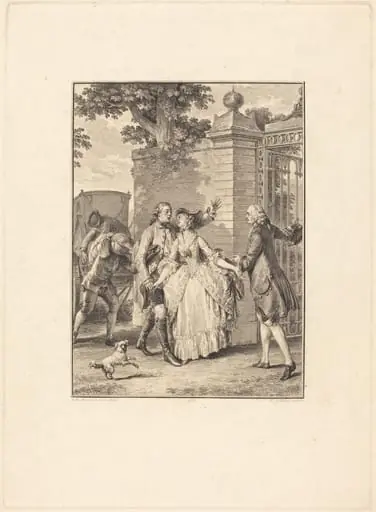
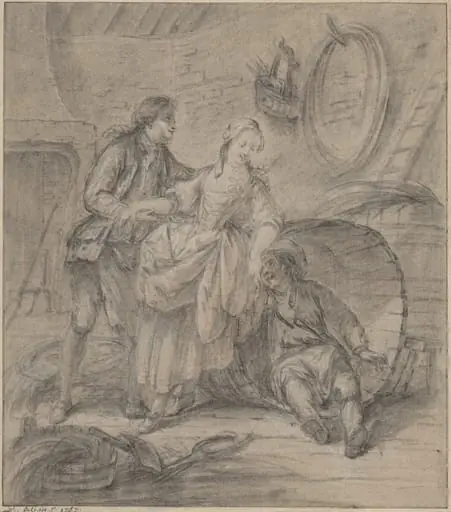
Created in 1756 by A.-J. de Fehrt, this hand-colored etching presents a quiet, symbolic scene of two men and a woman in a dim interior. The work contrasts active pursuit with passive reception, using visual cues to suggest differing relationships to fate. Its modest scale and intimate setting reflect the genre’s focus on moral allegory rather than grand narrative.
Subject & Meaning
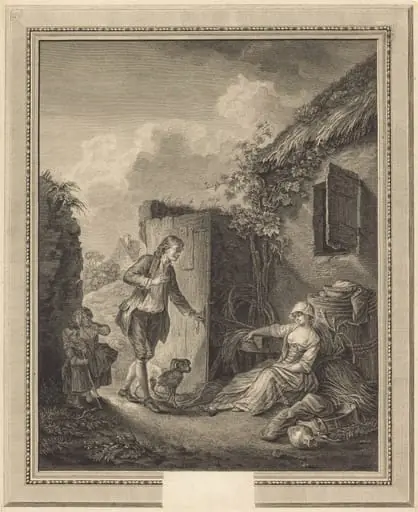
The composition juxtaposes a man in a red coat, leaning on a cane and tipping his hat toward a reclining woman, with an elderly figure watching from a window. The woman holds a red ribbon connected to a wheel, symbolizing fortune’s capricious nature. The title frames one man as an active seeker, the other as a passive observer, inviting reflection on agency and destiny.
Technique & Style
De Fehrt employed fine etched lines to render texture and form, enhanced by deliberate hand-coloring that draws attention to the red coat, ribbon, and bedding. The rough stone walls and muted light suggest a damp, confined space. The contrast between the man’s slightly torn sleeve and the woman’s languid posture reinforces the theme of effort versus ease.
History & Provenance
The print was produced during the mid-18th century, a period when moralizing genre scenes were popular in French print culture. Though little is documented about de Fehrt’s life, this work aligns with the tradition of satirical and allegorical prints circulated among educated urban audiences, likely as part of a broader series on human behavior.
Context
In 18th-century France, prints like this served as accessible commentary on social mores, often blending humor with moral warning. The imagery of fortune as a wheel, tied to a ribbon, echoes medieval and Renaissance iconography. The setting—a cluttered, dim room—rejects aristocratic grandeur, grounding the allegory in everyday, even squalid, reality.
Legacy
Though not widely reproduced or studied today, the print exemplifies how Enlightenment-era artists used printmaking to explore human psychology and fate. Its quiet irony and restrained palette influenced later genre scenes that favored psychological nuance over overt drama, contributing to a tradition of subtle social observation in print.
Artist & collection