Artwork
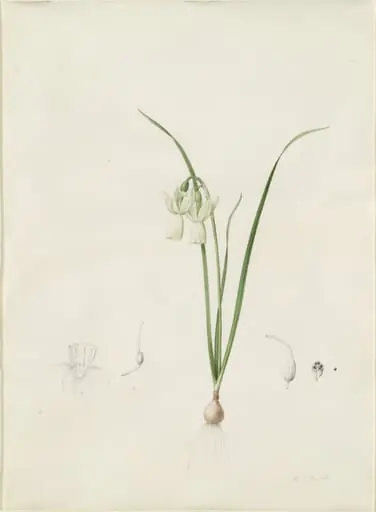
Lillium Pomponium (Turban Lily), plate 7 from Les Liliacées
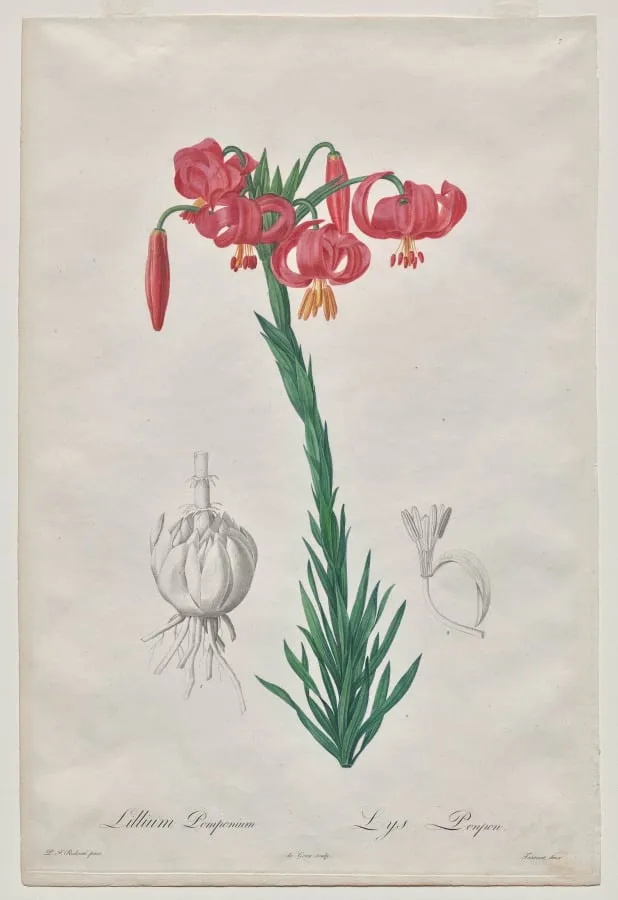
Lillium Pomponium (Turban Lily), plate 7 from Les Liliacées is a print by the Romanticist artist De Gouy. It dates from 1809 and is held in the collection of the Cleveland Museum of Art.
About this work
Overview
Lillium Pomponium (Turban Lily), plate 7, is a botanical print from Pierre-Joseph Redouté's eight-volume series Les Liliacées (1802–1816), dedicated to the lily family. This single-plant illustration showcases a turban lily in soft pink and white hues.
Subject & Meaning
The subject is a turban lily, depicted with petals curled back, evoking a sense of dynamic movement. As part of Les Liliacées, it contributes to a comprehensive botanical documentation of lilies, targeting a broad audience interested in flora.
Technique & Style
The print combines stipple engraving with color printing and subsequent hand-painting, achieving a lifelike quality. Redouté's meticulous style, earning him 'Raphaël des fleurs,' blends scientific accuracy with aesthetic appeal.
History & Provenance
Created during Redouté's tenure as court painter to French royalty (Marie Antoinette and Empress Josephine), this plate reflects his esteemed position. However, the work's accessibility suggests it was intended for a wider audience beyond the royal court.
Context
Les Liliacées was published between 1802 and 1816, a period seeing heightened interest in botanical sciences and illustration. Redouté's work catered to this trend, blending art and science for both specialists and enthusiasts.
Legacy
Lillium Pomponium, as part of Les Liliacées, contributes to Redouté's legacy as a pivotal botanical illustrator. The series remains a benchmark for the genre, influencing later botanical art and appealing to historical and botanical interests.
Artist & collection

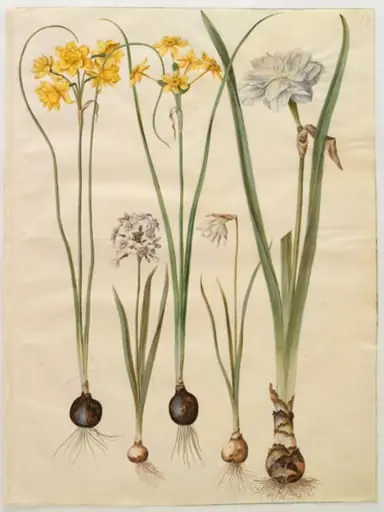 Narcissus jonquilla (siv-narcis); Narcissus tazetta (tazet); Narcissus pseudonarcissus moschatus (moskus-narcis); Narcissus poeticus (pinselilje)
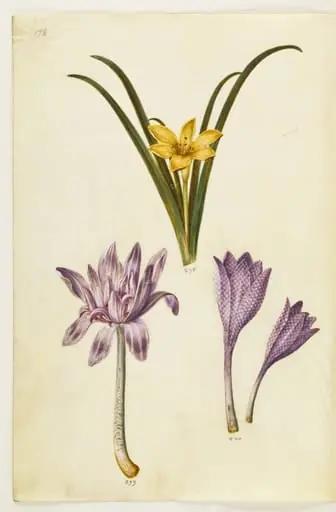 Sternbergia lutea (almindelig sternbergia); Colchicum autumnale (høst-tidløs); Colchicum variegatum (plettet tidløs)
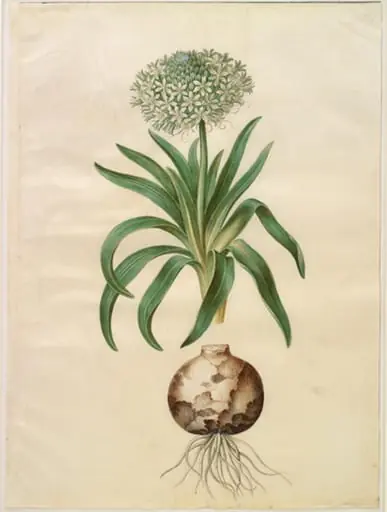 Scilla peruviana (kæmpe-skilla)
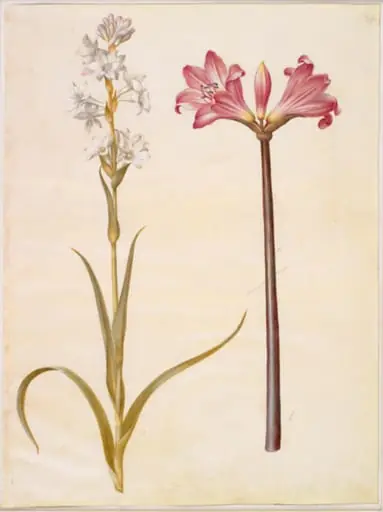 Polianthes tuberosa (tuberose); Amaryllis belladonna (belladonnalilje)
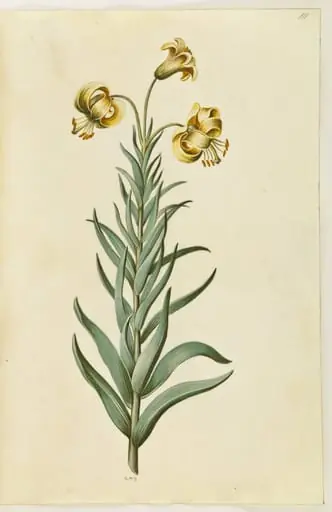 Lilium pyrenaicum (pyrenæisk lilje)
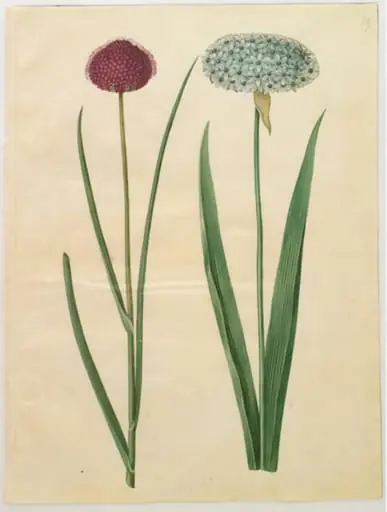 Allium sphaerocephalon (middelhavs-prydløg); Allium nigrum (sort løg)
 Narcissus calathinus