Artwork
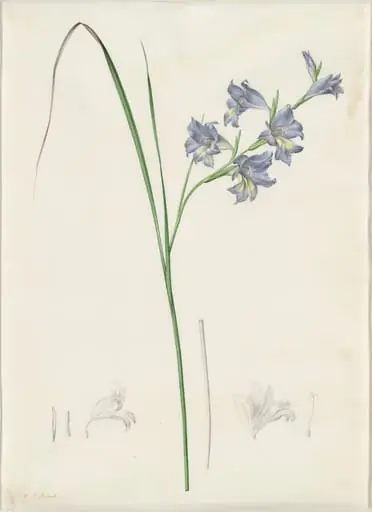
Narcissus calathinus
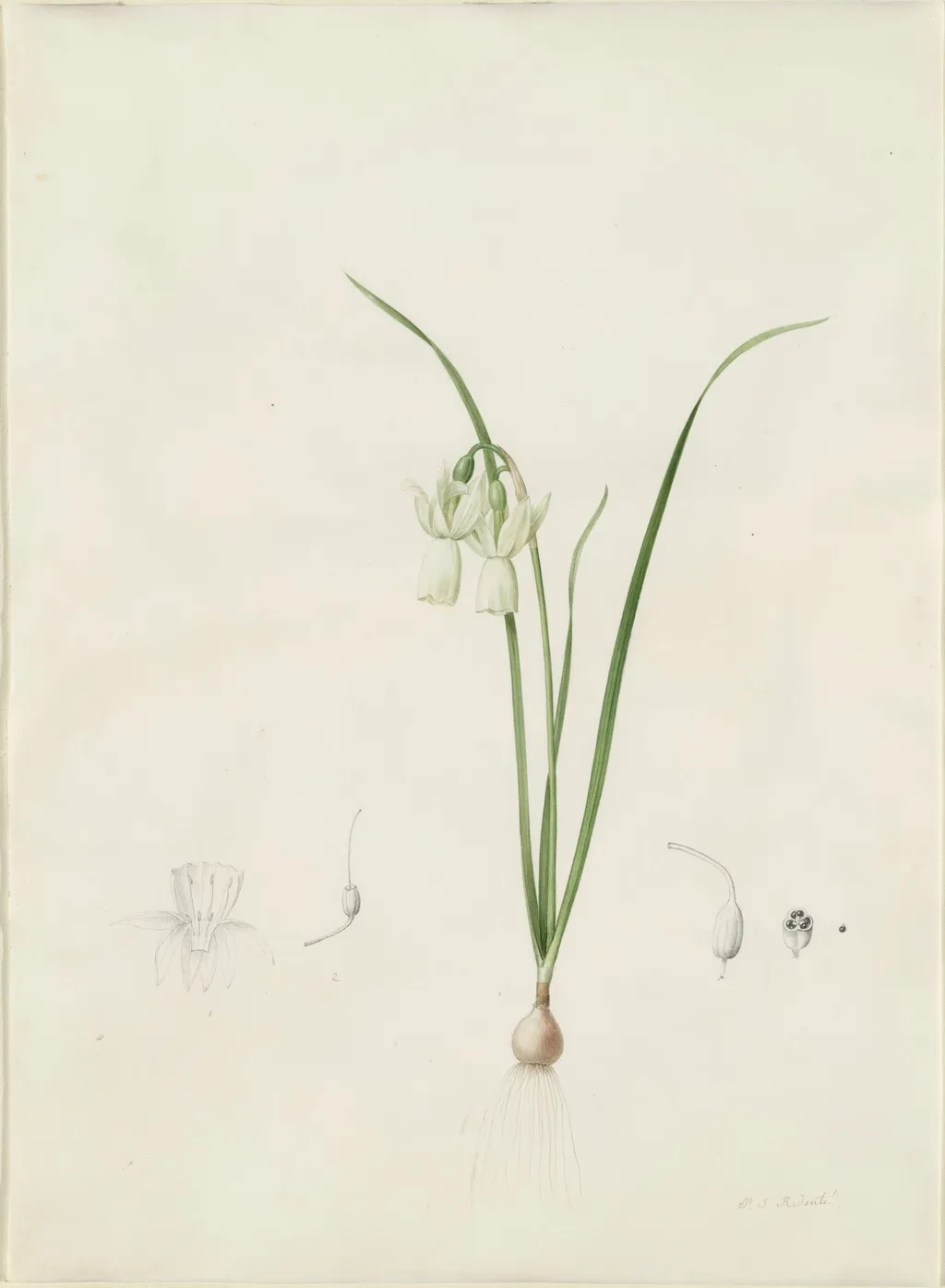
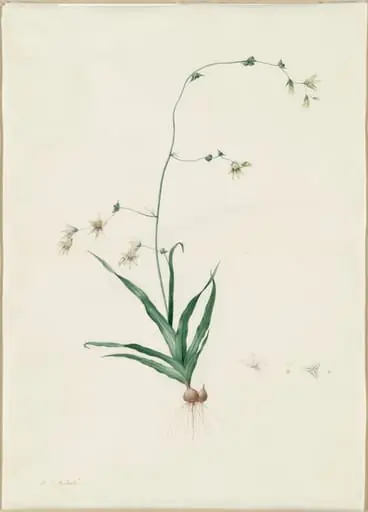
Narcissus calathinus is a watercolor drawing by the Romanticist artist Pierre Joseph Redouté. It dates from 1809 and is held in the collection of the National Gallery of Art.
About this work
Overview
Narcissus calathinus is a watercolor and graphite drawing on vellum created by Pierre-Joseph Redouté in 1809. The work depicts a single Narcissus calathinus bulb with meticulous detail, showcasing the artist's renowned botanical illustration skills.
Subject & Meaning
The subject is a Narcissus calathinus bulb, illustrated with scientific precision. As part of a larger series for Empress Joséphine, it reflects her enthusiasm for botany and the documentation of her garden at Château de Malmaison.
Technique & Style
Redouté employed watercolor and graphite on vellum, utilizing a magnifying lens to capture intricate vein details in the leaves. The petals feature pure white with thin red edges, achieved through up to 30 translucent glazes to build depth of color.
History & Provenance
Created in 1809 for Empress Joséphine's floral documentation project at Malmaison, the piece is now part of the National Gallery of Art's collection in Washington, D.C.
Context
Redouté's work, including Narcissus calathinus, was influenced by his role as a court artist, first to Marie Antoinette and later to Empress Joséphine, spanning the French Revolution and beyond.
Legacy
Narcissus calathinus contributes to Redouté's legacy as a leading botanical artist, known for detailed, scientifically accurate illustrations that also possess aesthetic appeal.
Artist & collection

Artist
Pierre-Joseph Redouté (French pronunciation: , 10 July 1759 – 19 June 1840), was a painter and botanist from the Austrian Netherlands, known for his watercolours of roses, lilies and other flowers at the Château de…

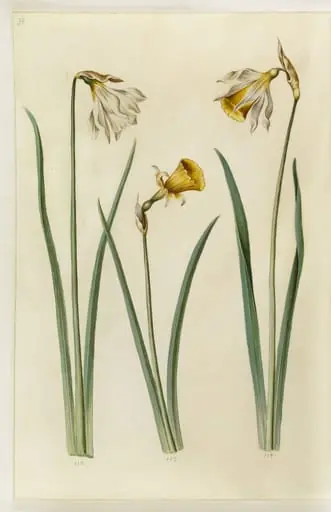 Narcissus pseudonarcissus moschatus (moskus-narcis); Narcissus bulbocodium (krinoline-narcis); Narcissus pseudonarcissus (påskelilje)
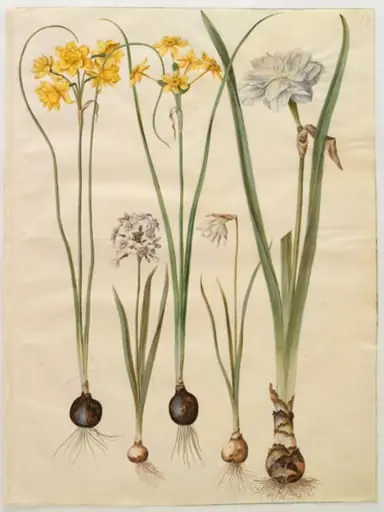 Narcissus jonquilla (siv-narcis); Narcissus tazetta (tazet); Narcissus pseudonarcissus moschatus (moskus-narcis); Narcissus poeticus (pinselilje)
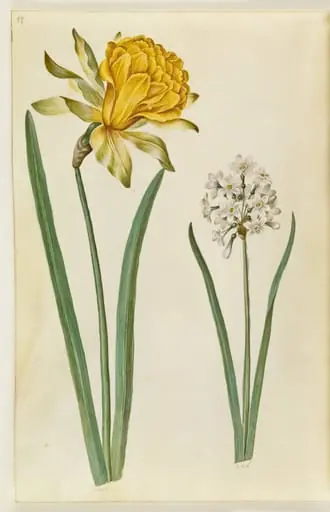 Narcissus pseudonarcissus (påskelilje); Narcissus tazetta (tazet)
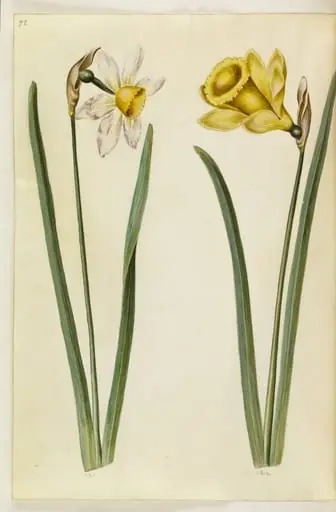 Narcissus ×incomparabilis (have-narcis); Narcissus pseudonarcissus (påskelilje)
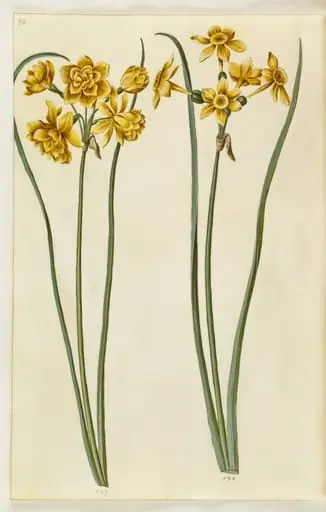 Narcissus jonquilla (siv-narcis)
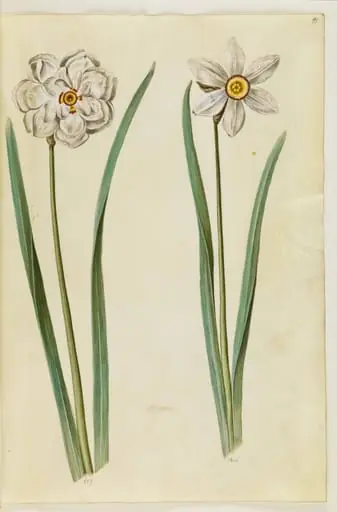 Narcissus poeticus (pinselilje)
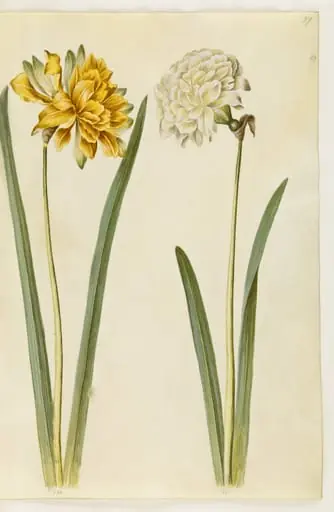 Narcissus pseudonarcissus (påskelilje)
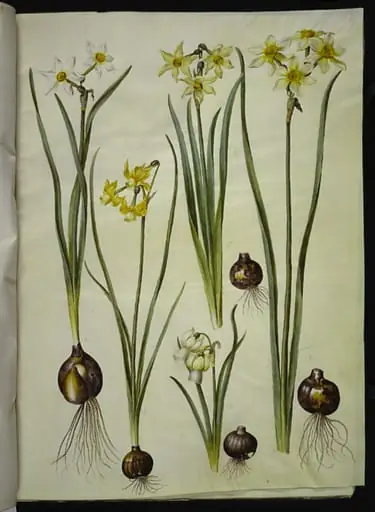 Narcissus poeticus (pinselilje); Narcissus triandrus (orkide-narcis); Narcissus ×medioluteus (toblomstret narcis)
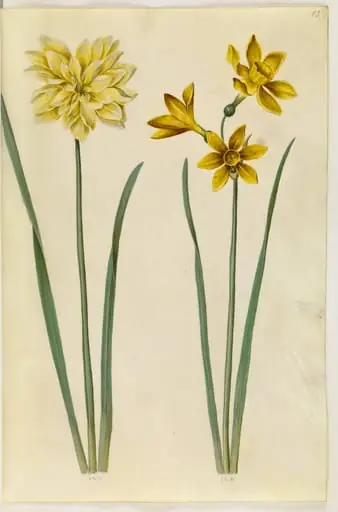 Narcissus pseudonarcissus (påskelilje); Narcissus tazetta aureus (guld-tazet)
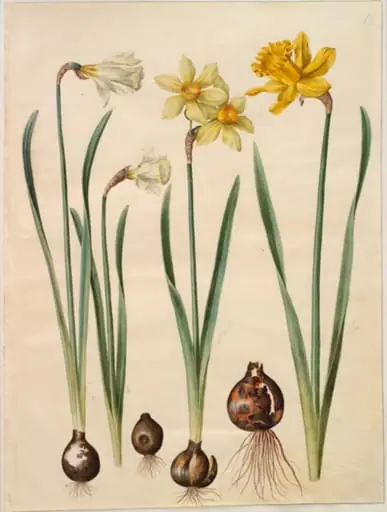 Narcissus pseudonarcissus moschatus (moskus-narcis); Narcissus ×medioluteus (toblomstret narcis); Narcissus pseudonarcissus major (stor påskelilje)