Artwork
View near Salt Hill
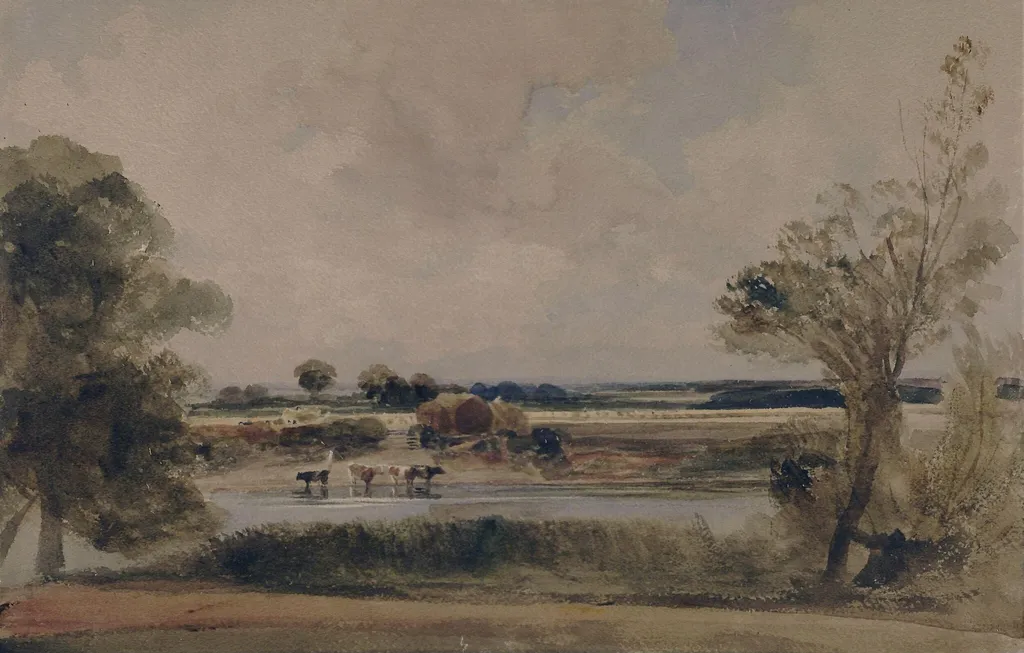
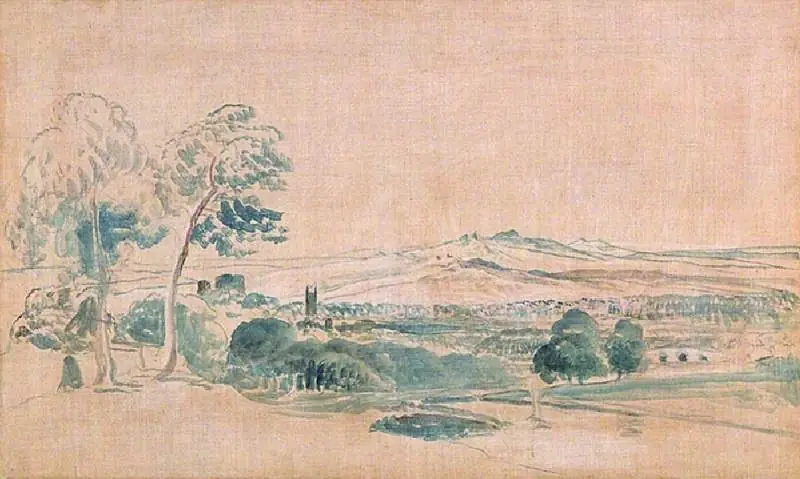
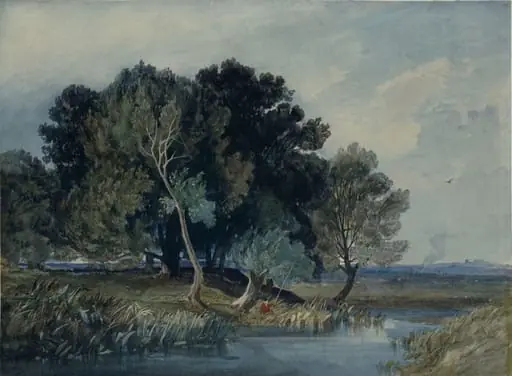
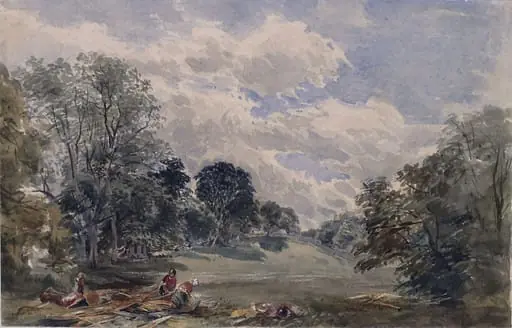
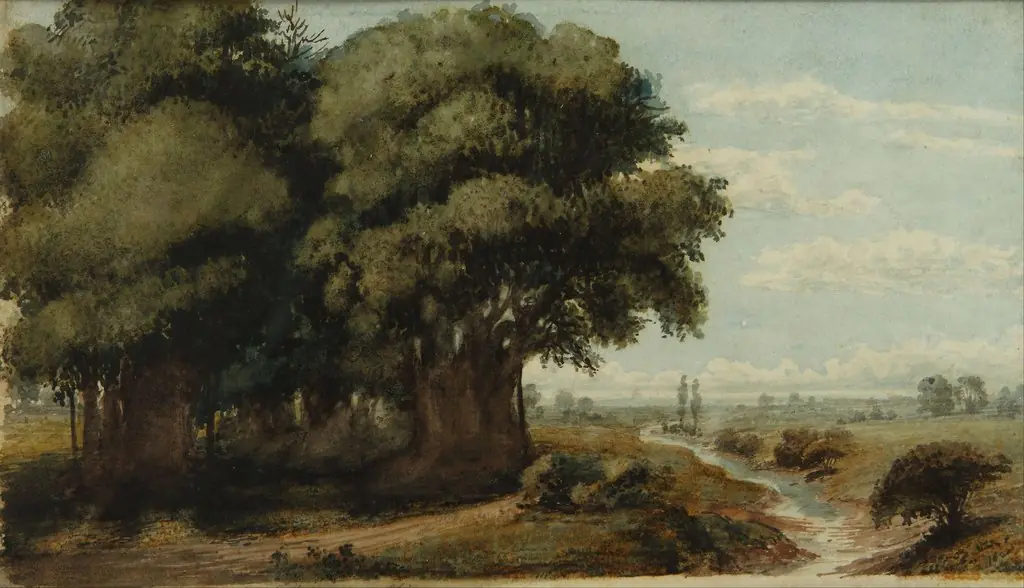
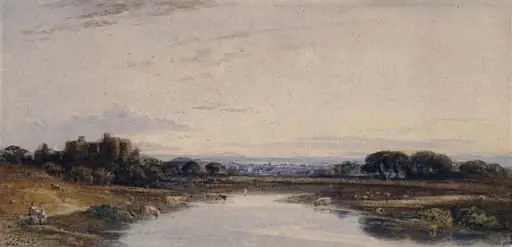
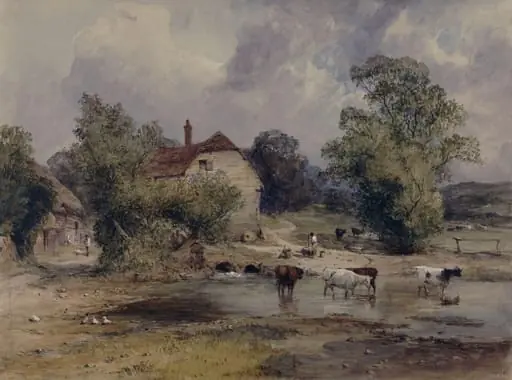
View near Salt Hill is a watercolor work on paper by the Romanticist artist Peter De Wint. It dates from 1805 and is held in the collection of the Victoria and Albert Museum.
About this work
Overview
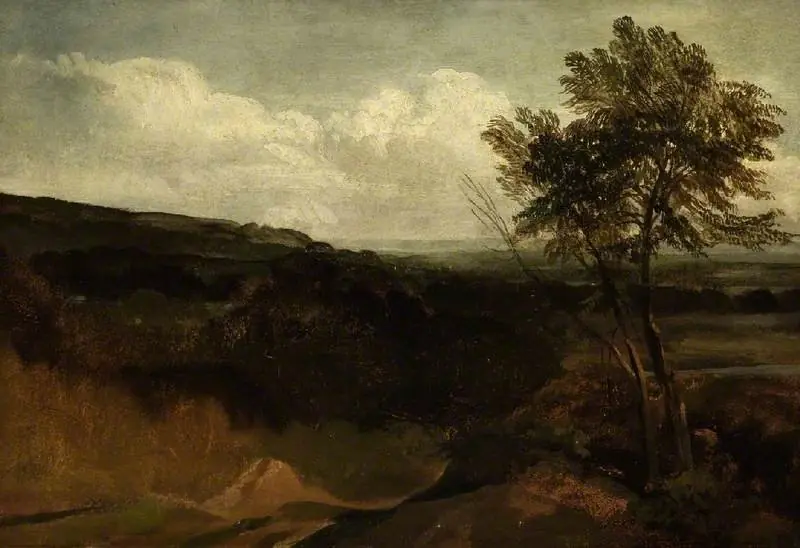
This watercolour captures a tranquil rural scene near Salt Hill in Buckinghamshire, executed in the delicate, translucent medium typical of early 19th-century British landscape art. The composition emphasizes stillness and subtle natural harmony, with no dramatic focal point, inviting quiet contemplation rather than visual spectacle.
Subject & Meaning
The painting presents an unremarkable stretch of countryside: a winding footpath, a shallow stream, a few grazing cattle, and a solitary walker. These elements suggest everyday rural life, devoid of narrative or symbolism. The absence of human activity beyond the lone figure reinforces a sense of solitude and continuity with the land.
Technique & Style
The artist employs loose, fluid brushwork and diluted pigments to create a soft, atmospheric effect. Washes blend seamlessly, suggesting mist and diffuse daylight. The watercolour’s transparency allows the paper’s texture to contribute to the sense of light and air, characteristic of the period’s preference for naturalistic, evocative rendering over precise detail.
History & Provenance
The work’s origin is tied to the British watercolour tradition of the 1800s, when artists increasingly turned to the medium for private study and portable landscape sketches. While its specific provenance is unrecorded here, such works were often made for personal collections or as preparatory studies, reflecting a growing appreciation for the English countryside as a subject worthy of artistic attention.
Context
During the early 19th century, watercolour became a respected medium among amateur and professional artists alike, particularly for capturing the English landscape. This piece aligns with a broader cultural interest in pastoral scenes, influenced by Romantic ideals and the rise of tourism and topographical art in rural England.
Legacy
Though unsigned and unattributed, the painting exemplifies a widespread practice of quiet, observational landscape work that helped shape British watercolour’s reputation for sensitivity and restraint. Its modest scale and unassuming subject reflect a tradition that valued nuance over grandeur, influencing later generations of landscape artists.
Artist & collection
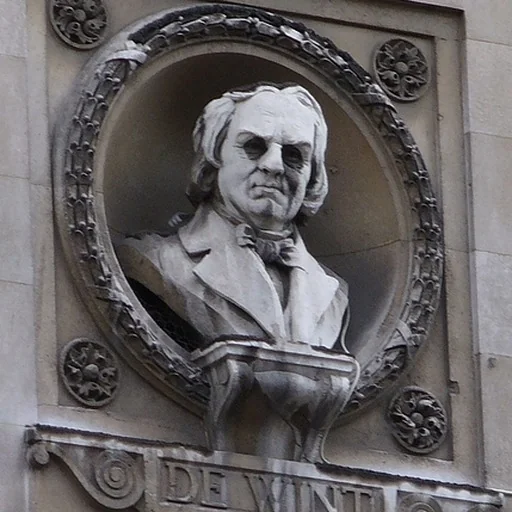
Artist
Peter De Wint was a prolific English painter, mostly in landscape painting in oils and watercolour. A number of his pictures are in Tate Britain, the Victoria and Albert Museum and The Collection, Lincoln. He died in London.