Artwork
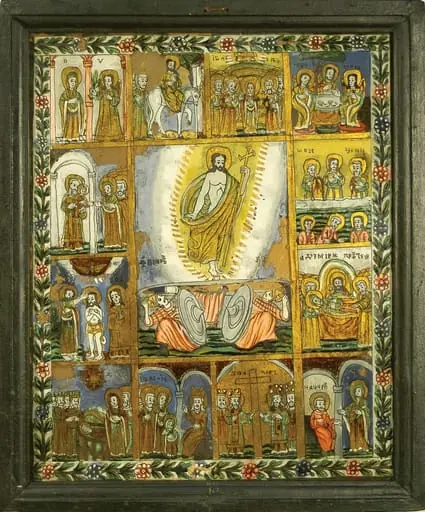
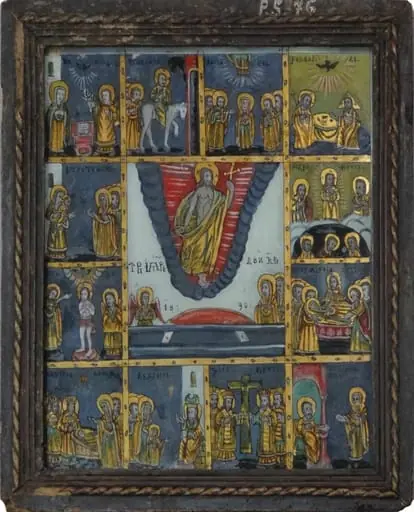
Învierea lui Iisus, cu 12 scene de praznic
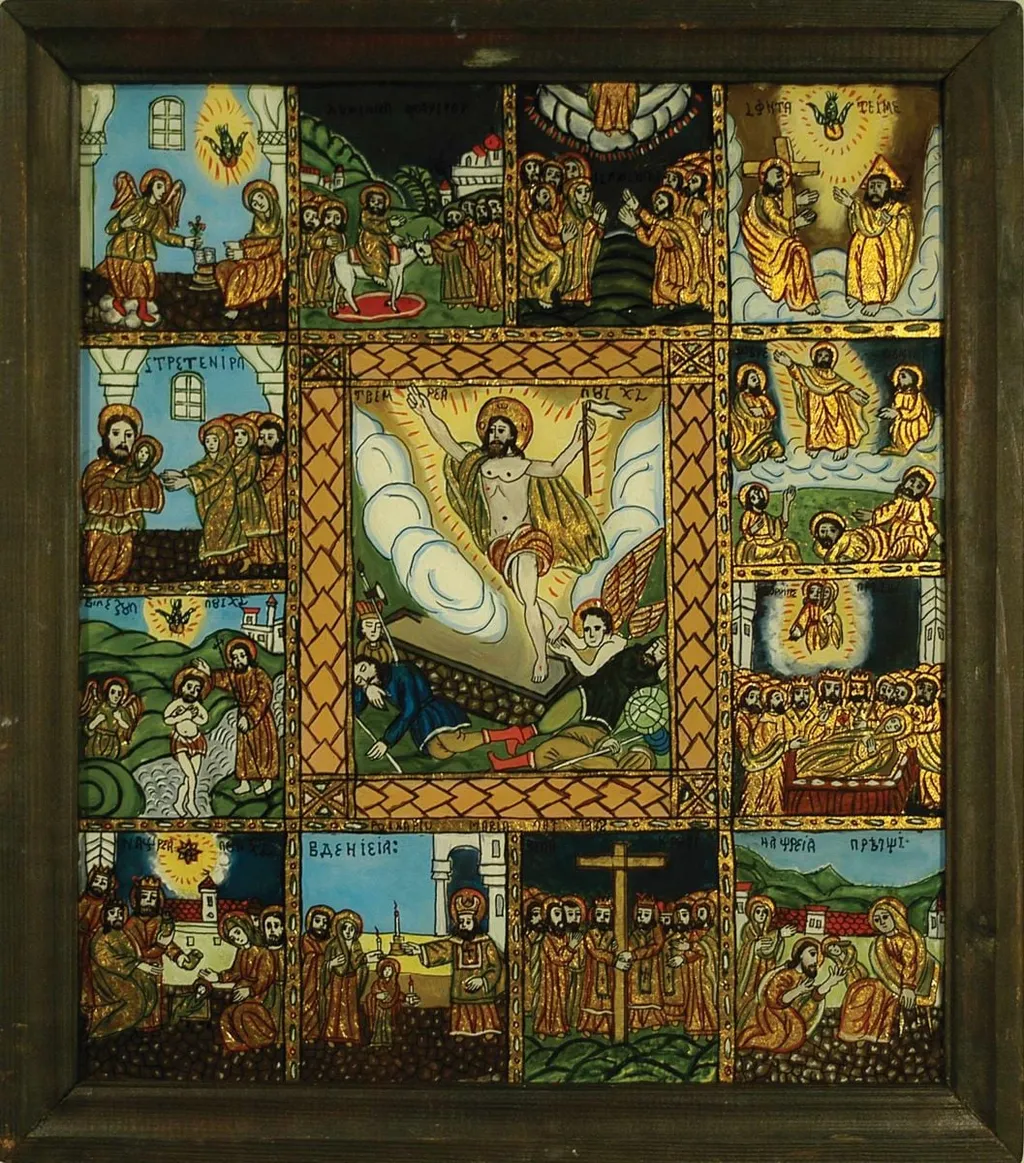
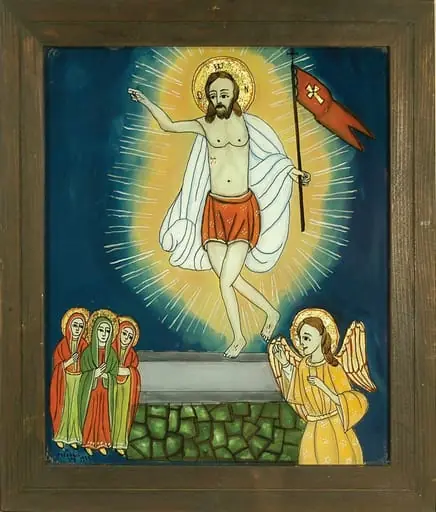
Învierea lui Iisus, cu 12 scene de praznic is a drawing by Maria Deac Poenariu. It dates from 1972 and is held in the collection of the Alba Iulia Unification National Museum.
About this work
Overview
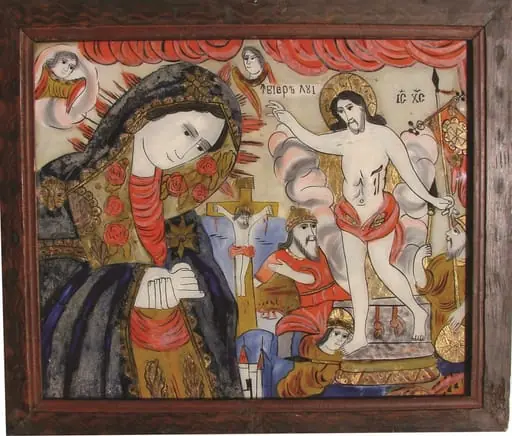
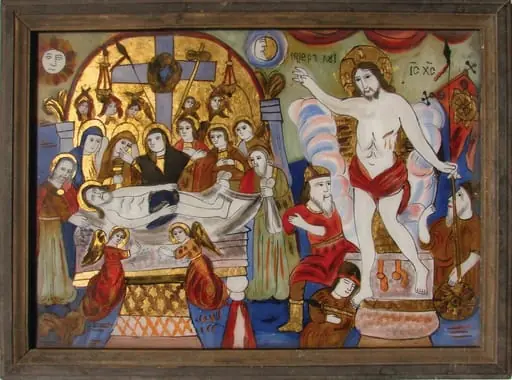
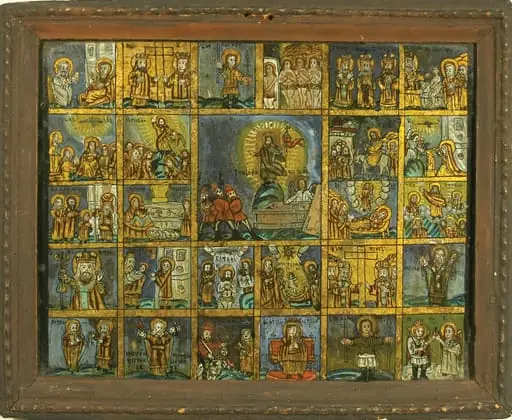
Created in 1972 by Maria Deac Poenariu, this painted panel depicts the Resurrection of Christ alongside twelve additional liturgical scenes. Executed in a structured grid format, the work combines devotional imagery with folk artistic conventions. It resides in the Museum of Ethnography, where it is recognized for its synthesis of religious narrative and regional visual traditions.
Subject & Meaning
Figures are identified by halos and traditional robes, reinforcing their spiritual roles within Orthodox Christian devotion.
The central scene portrays Christ rising from the tomb, attended by an angel holding a banner, while surrounding panels illustrate key events from the Christian liturgical calendar. Each miniature scene functions as a visual prayer or teaching aid, intended to guide contemplation of sacred moments. Figures are identified by halos and traditional robes, reinforcing their spiritual roles within Orthodox Christian devotion.
Technique & Style
The composition uses flat, saturated colors—gold, blue, and earth tones—applied with minimal shading, creating a stylized, two-dimensional effect. Figures are rendered with simplified forms and uniform postures, evoking ecclesiastical icons. Fine cross-hatching defines folds in garments and textures, while inscriptions in each panel resemble liturgical labels, anchoring each image in ritual context.
History & Provenance
The panel was produced in the early 1970s by Maria Deac Poenariu, an artist active in Romania’s rural artistic communities. It entered the collection of the Museum of Ethnography shortly after its creation, where it was preserved as an example of contemporary religious folk art. Its survival reflects ongoing interest in vernacular expressions of faith during a period of state-enforced secularization.
Context
Made during Romania’s communist era, when public religious expression was restricted, the work represents a quiet persistence of Orthodox traditions in private and folk settings. Its grid format echoes medieval altarpieces and iconostases, adapting sacred visual language for domestic or small-scale devotional use. The style bridges ecclesiastical iconography with rural artistic practices.
Legacy
The panel remains a significant example of 20th-century Romanian religious folk art, illustrating how traditional iconography was sustained outside institutional churches. It informs scholarly understanding of how faith was visually maintained under political pressure. Its preservation in a national museum underscores its value as a cultural artifact rather than merely a devotional object.
Artist & collection
Artist
Romanian sacred-art drawings and paintings, 1970s–1990s, show biblical figures and local saints in clear line and flat color.
Museum
Alba Iulia Unification National Museum
Continue through works from the same source collection.