Artwork
Arborele genealogic al pictorilor din familia Poienaru
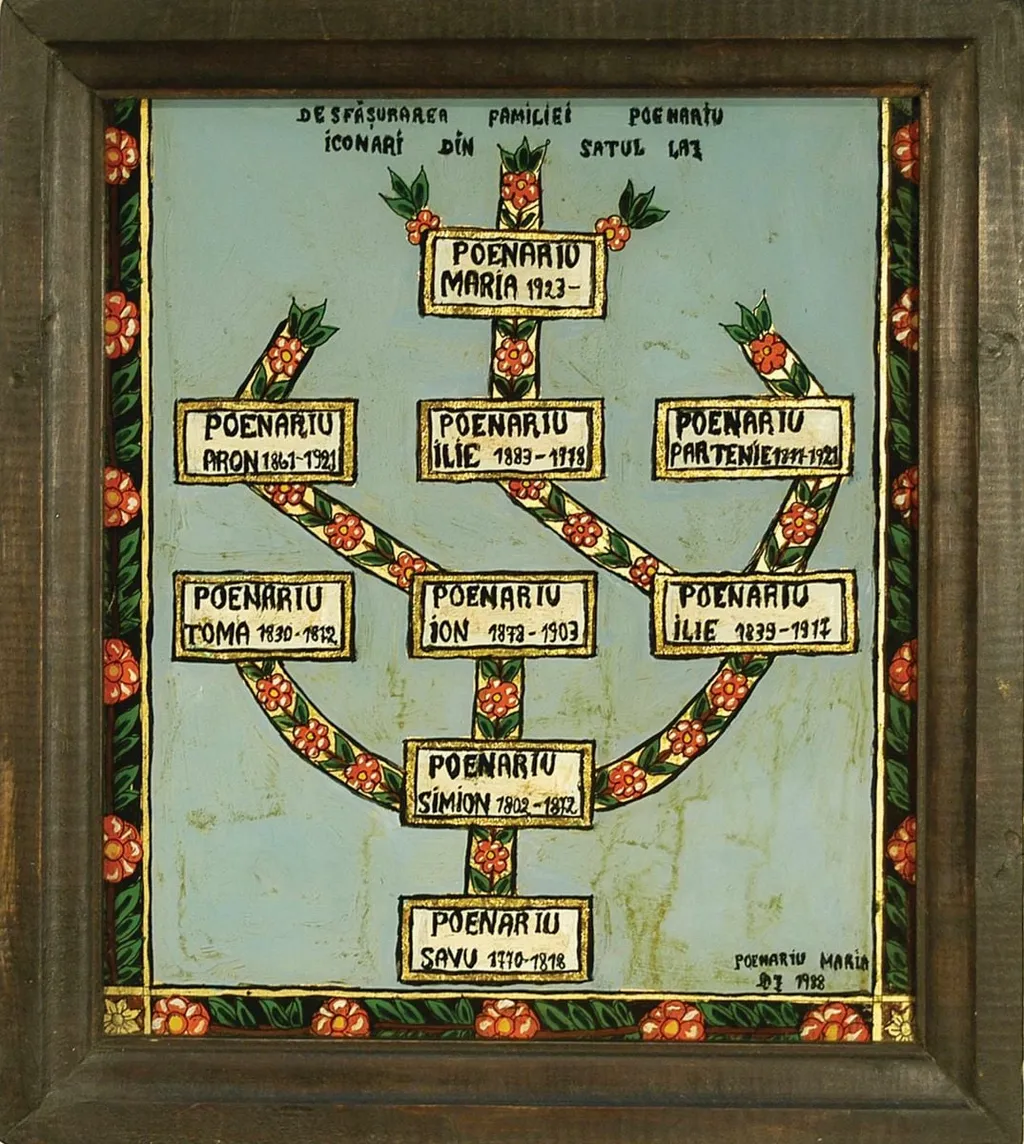
Arborele genealogic al pictorilor din familia Poienaru is an unspecified painting by Maria Deac Poenariu. It dates from 1988 and is held in the collection of the Alba Iulia Unification National Museum.
About this work
Overview
Rendered as a decorative tree structure, it links generations through interconnected boxes bearing names and dates.
Created in 1988 by Maria Deac Poenariu, this work is a visual genealogy of the Poienaru family of painters. Rendered as a decorative tree structure, it links generations through interconnected boxes bearing names and dates. The composition is framed in dark brown with an ornamental edge, set against a pale blue background. Though structured like a family tree, its emphasis lies in aesthetic harmony rather than documentary clarity.
Subject & Meaning
The piece traces the lineage of artists within the Poienaru family, identifying individuals through inscribed names and birth or death years. It functions as both a personal memorial and a tribute to artistic continuity. The absence of portraits or biographical details shifts focus from individual achievement to familial legacy, suggesting reverence for lineage over individual notoriety.
Technique & Style
The artist employed flat, even brushwork and restrained color to create a clean, graphic composition. Floral vines and leaf motifs connect the genealogical nodes, replacing conventional lines with organic, decorative elements. The style blends folk ornamentation with schematic design, prioritizing visual rhythm over realism. Text is carefully placed within uniform boxes, ensuring legibility without disrupting the overall pattern.
History & Provenance
The work was completed in 1988 and entered the collection of the Museum of Ethnography shortly thereafter. Its preservation in this institution reflects its cultural value as a domestic artifact transformed into a public record. No prior exhibitions or ownership history beyond the artist’s family are documented, suggesting it was conceived as a private project later recognized for its ethnographic significance.
Context
Made during the final years of communist Romania, the piece quietly resists official narratives by centering familial, rather than political, identity. In a climate where state-sanctioned art dominated public spaces, this intimate, handcrafted genealogy offered an alternative form of cultural memory—rooted in craft, tradition, and personal history rather than ideology.
Legacy
The work remains a rare example of a female artist documenting her own artistic lineage in a male-dominated field. Its presence in a national ethnographic museum underscores its role as a cultural artifact that bridges private heritage and public history. It continues to invite reflection on how artistic identity is preserved beyond formal training or public recognition.
Artist & collection
Artist
Romanian sacred-art drawings and paintings, 1970s–1990s, show biblical figures and local saints in clear line and flat color.
Museum
Alba Iulia Unification National Museum
Continue through works from the same source collection.
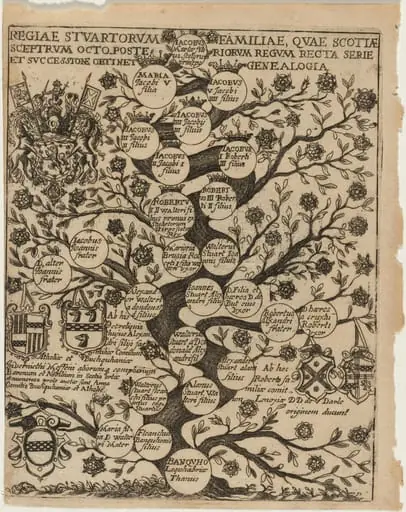 Family Tree of the Stuarts Stemming From Banquho
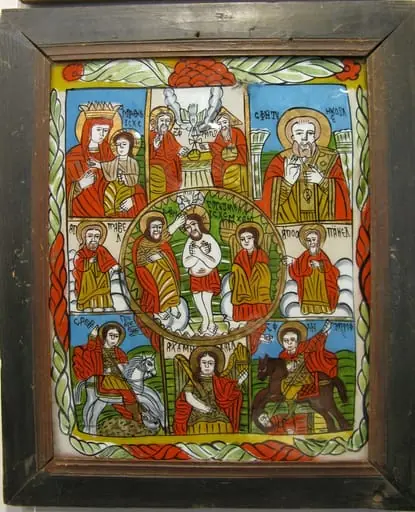 Prăznicar – Botezul lui IS HS
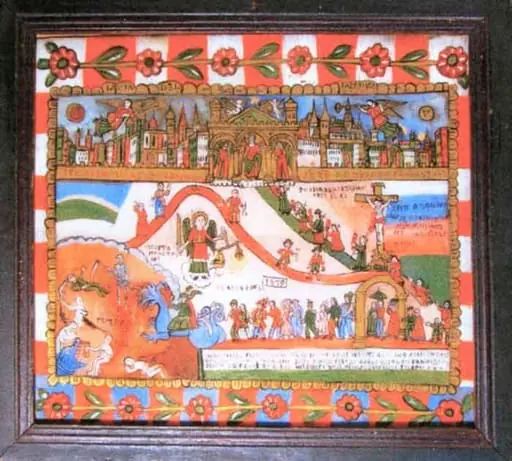 Judecata de Apoi
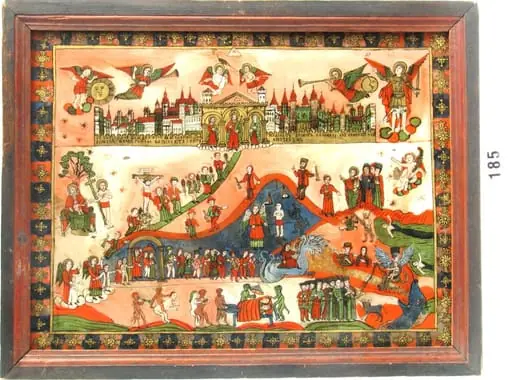
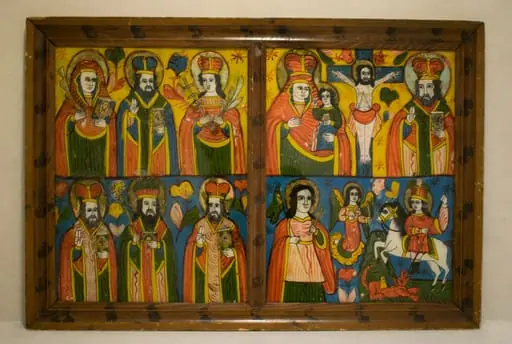 Icoana este pictată în oglindă, pe un suport de sticlă de formă dreptunghiulară în ax orizontal. Sunt reprezentate patru scene, despărțite orizontal printr-o linie neagră iar vertical printr-o stinghie îngustă de lemn, datorită lățimii mari a sticlei. În primul câmp apare un sfânt ierarh, tânăr(posibil sf. Nicolae, deși nu e reprezentarea canonică),, binecuvîntînd cu dreapta, în stânga ținînd Evanghelia, flancat de două sfinte. Cea din dreapta corespunde reprezentării sf. Paraschiva, cu o cruce în mâna dreaptă și o ramură în stânga. Cea din dreapta, cu o carte în stânga și o ramură în cealaltă, ar corespunde Maicii Domnului. A doua scenă îl are în centru pe Isus Hristos răstignit pe cruce, de o parte și de alta pe Maica Domnului Hodighitria cu Pruncul, iar de cealaltă pe Sfântul Ioan Evanghelistul în postura de ierarh.Registrele de jos: stânga. Sfinții trei ierarhi(Grigorie, Vasile și Ioan) în veșminte arhierești, cu mitră pe cap, dreapta: sfântul Gheorghe, în costum ostășesc, omorînd balaurul(de formă canină) Alături de acesta mai apare o sfântă cu o cruce în mână și un steag în cealaltă, probabil o confuzie(fata de împărat pe care o salvează sfântul asimilată unei sfinte. În fața calului, pe un nor, Arhanghelul Gavriil. Chipurile sunt expresive, contururile destul de precise, compoziția foarte încărcată, de la densitatea personajelor la abundența detaliilor(falduri dese, realizate prin linii drepte și ondulate, transversale și verticale, câmpul umplut cu motive florale și astrale). Câmp de culoare galbenă în registrele superioare și de culoare albastră în cele inferioare, împodobit cu stele albe și roșii și motive florale. Paleta cromatică este variată:alb, roșu, galben, verde, albastru La aureole, cărți, ramuri, etc, este folosită foița de aur. Rama lăcuită, de culoare brun roșcat, decorată cu puncte mari,negre. Dosul este alcătuit din două bucăți de placaj.
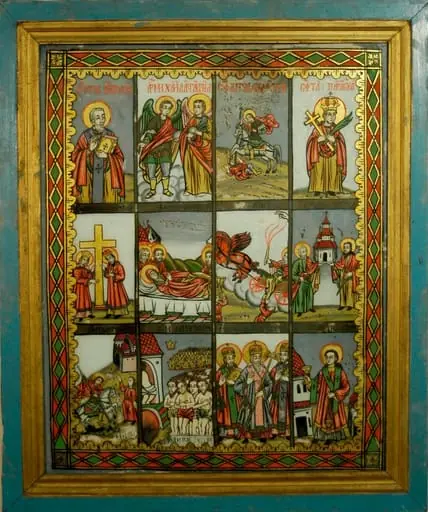 prăznicar cu sfinți
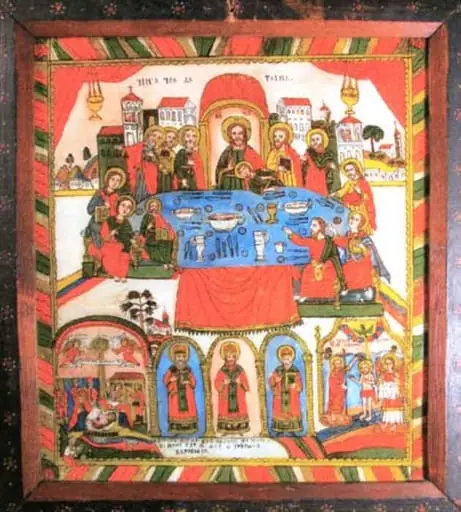 Cina cea de Taină
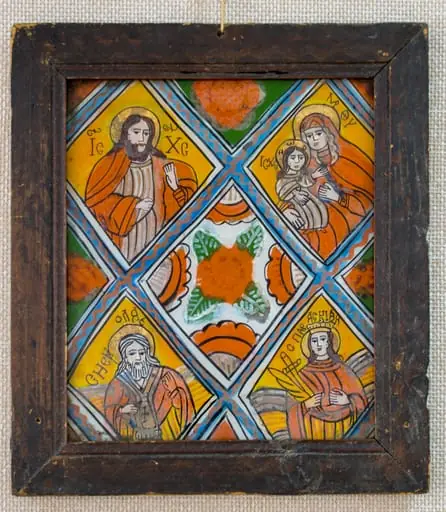 Icoa cu
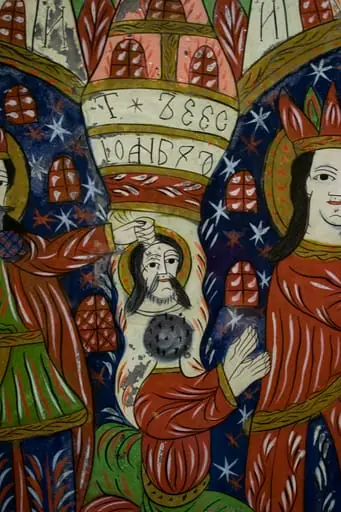 Icoaiv v
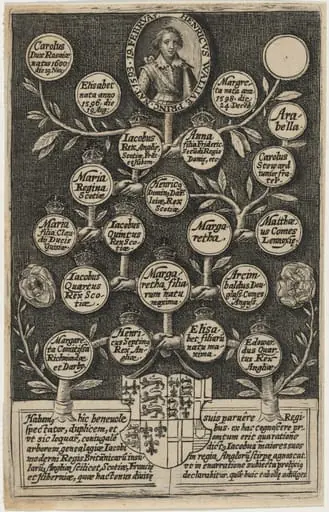 Henry Frederick, Prince of Wales
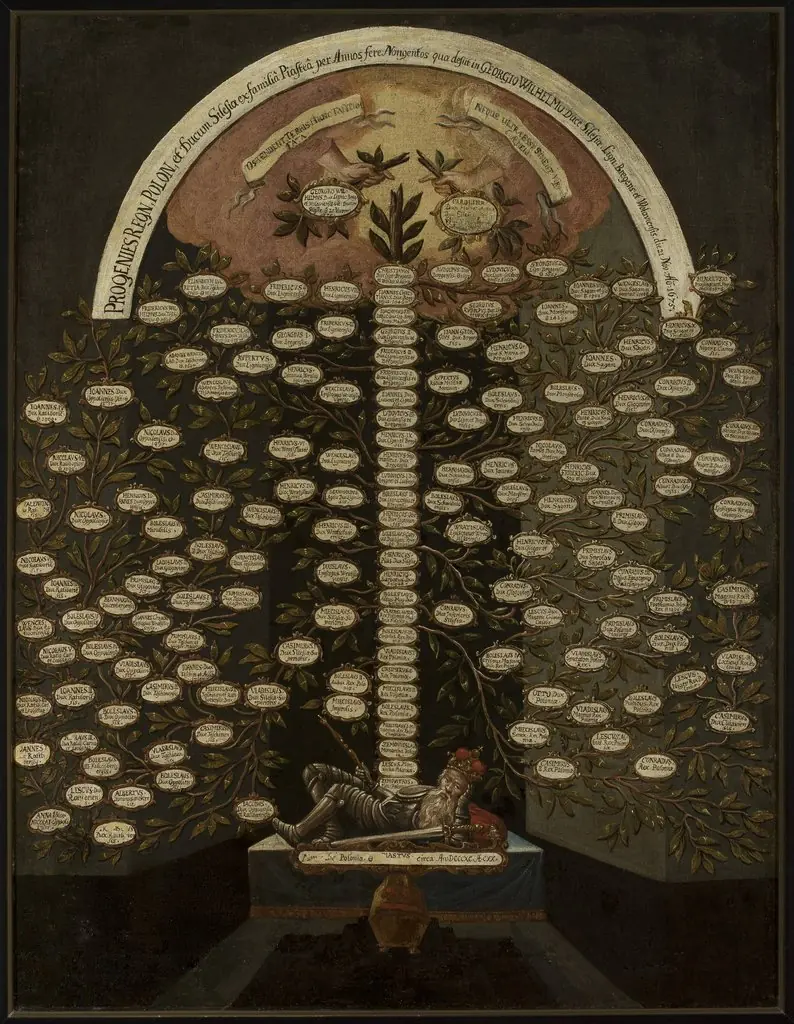 Family tree of the Piasts of Brieg-Liegnitz
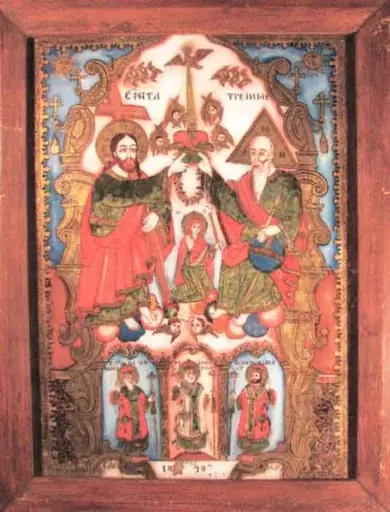 Sfânta Treime
 Înfricoșătoarea judecată de apoi