Artwork
The Little Boat, or The Happy Union
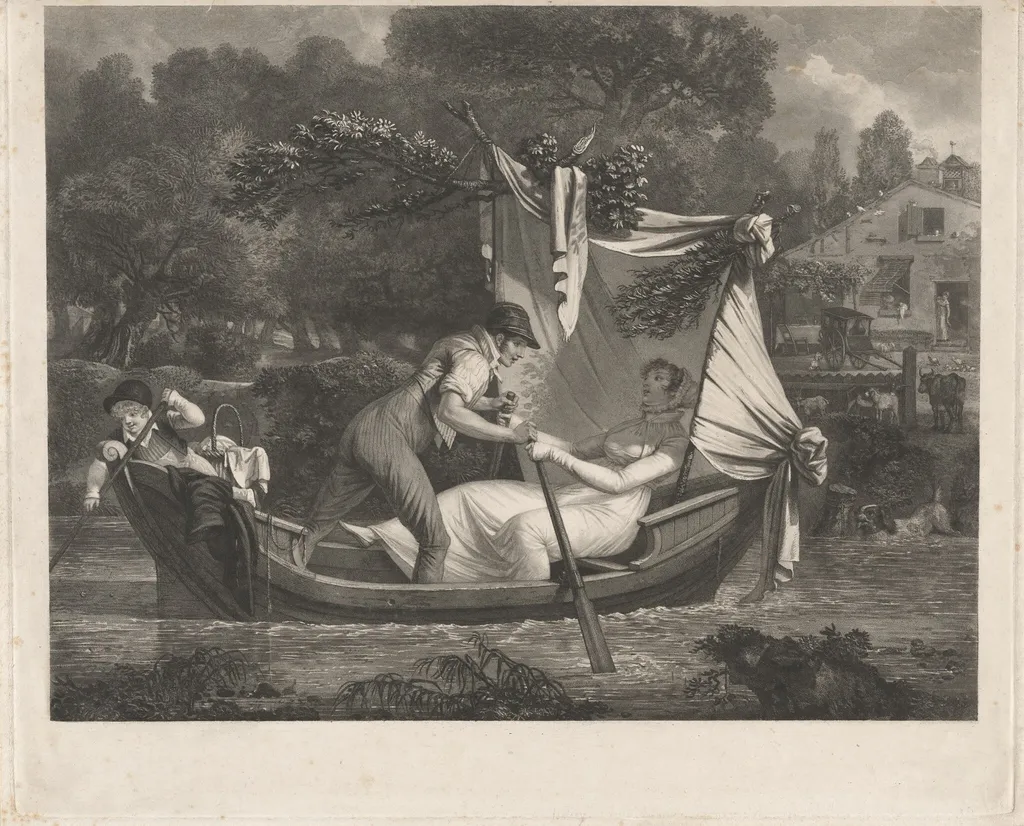
The Little Boat, or The Happy Union is an ink print by the Romanticist artist Philibert-Louis Debucourt. It dates from 1804 and is held in the collection of the National Gallery of Art.
About this work
Overview
The work titled The Little Boat, or The Happy Union is an early‑19th‑century print executed in 1804 by French artist Philibert‑Louis Debucourt. It combines etching, drypoint and aquatint on wove paper, and is presently part of the collection of the National Gallery of Art in Washington, D.C.
Subject & Meaning
The image depicts a modest boat gliding on tranquil water, carrying four figures: two women and a child seated together, and a hat‑clad man positioned at the bow. A striped canopy shelters the passengers, and a flag bearing a coat of arms tops the vessel. In the distance a garden, trees, houses and strolling pedestrians suggest a leisurely, domestic scene.
Technique & Style
Debucourt employed a combination of intaglio methods. The primary outlines were drawn with drypoint, producing soft, velvety lines, while the broader forms were incised by traditional etching. Aquatint was applied to achieve tonal washes that render the water, sky and foliage with subtle gradations, giving the print a painterly quality despite its graphic origins.
History & Provenance
Created during the Napoleonic era, the print reflects the period’s interest in genre scenes of everyday life. It entered the National Gallery of Art’s holdings through acquisition in the 20th century, though earlier ownership records are limited.
Context
Debucourt was known for his finely detailed prints that often illustrated social customs and domestic interiors. This work aligns with his broader output, which frequently combined narrative content with technical virtuosity, catering to a market for affordable, decorative images.
Artist & collection
Artist
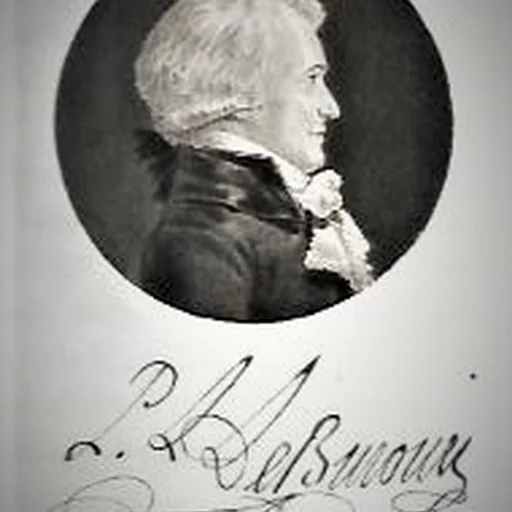
Philibert-Louis Debucourt (1755–1832) was a French artist, born in Paris.

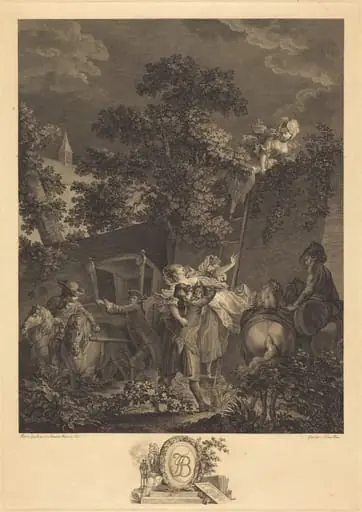 L'enlevement nocturne
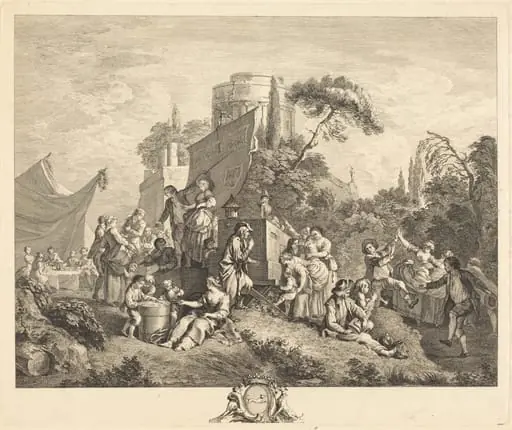 Village Fair
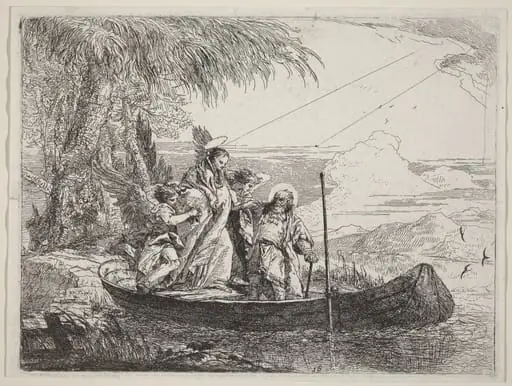 The Madonna, Child, and Angels Entering the Boat
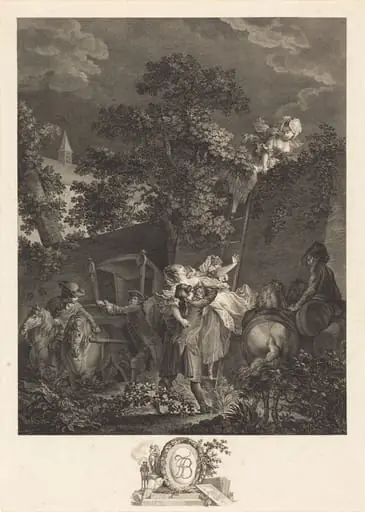 L'enlevement nocturne
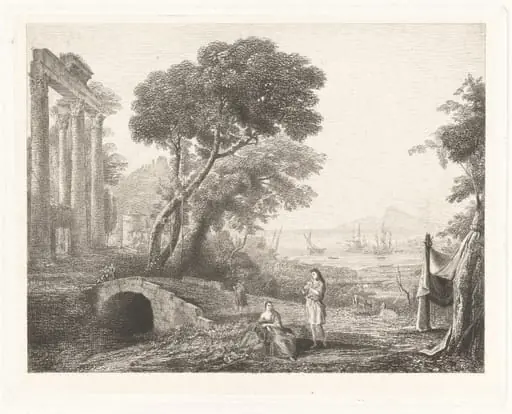 Italian Landscape
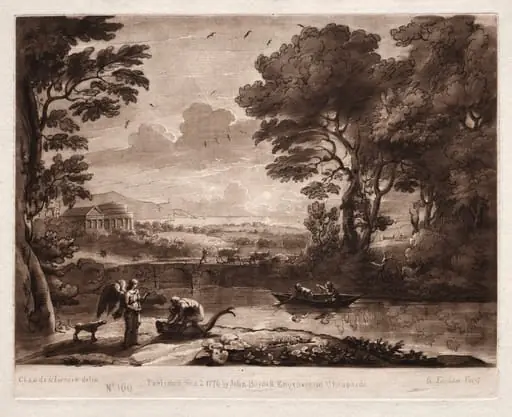 Liber Veritatis: No. 160, Tobias and the Angel
 The Green Plot
 Les Voeux acceptees
 Landpartie
 The Holy Family Being Ferried Across the River
 Les présents du berger
 Two Beached Fishing Boats