Artwork
Liber Veritatis: No. 160, Tobias and the Angel
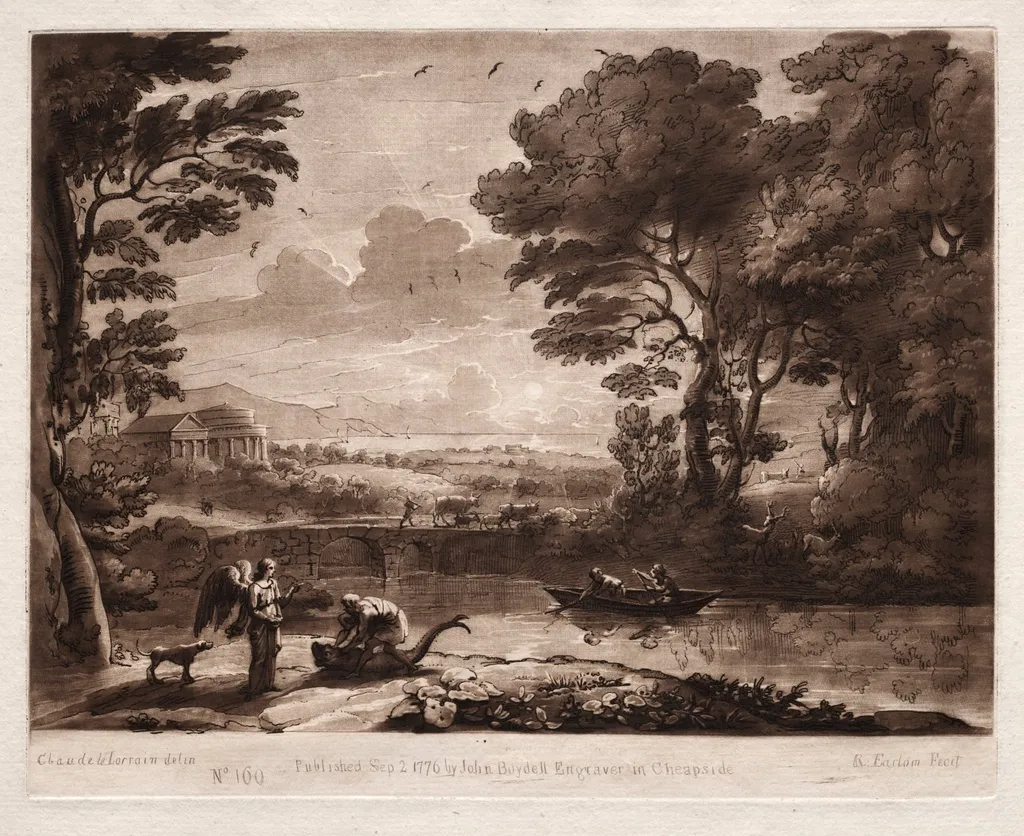
Liber Veritatis: No. 160, Tobias and the Angel is a print by the Romanticist artist Richard Earlom. It dates from 1774 and is held in the collection of the Cleveland Museum of Art.
About this work
Overview
This print, numbered 160 in Richard Earlom’s Liber Veritatis, was produced in 1774 as a reproductive engraving after a drawing by Claude Lorrain.
This print, numbered 160 in Richard Earlom’s Liber Veritatis, was produced in 1774 as a reproductive engraving after a drawing by Claude Lorrain. It depicts a tranquil riverside moment drawn from the biblical Book of Tobit. The work belongs to a series documenting Claude’s paintings, commissioned to preserve their compositions. The Cleveland Museum of Art holds this impression, one of many in the complete set.
Subject & Meaning
The scene illustrates Tobias and the Archangel Raphael, as recounted in the Apocrypha. Tobias, guided by the angel, is shown retrieving a fish from the river—a creature whose organs later heal his father’s blindness. The angel, standing and gesturing, directs the action while the dog and fish on the bank hint at the narrative’s outcome. The distant temple and grazing sheep evoke a sacred landscape, reinforcing the divine presence within the natural world.
Technique & Style
Earlom employed soft, graduated tonal transitions to render the landscape, using chalk and ink on paper to mimic the atmospheric effects of Claude’s original. Subtle chiaroscuro defines the figures and terrain, creating depth without harsh outlines. The sky, rendered with delicate cloud forms, balances the composition, while the quiet interplay of light and shadow enhances the serenity of the moment, reflecting Claude’s signature poetic realism.
History & Provenance
Earlom’s Liber Veritatis was commissioned by the Duke of Devonshire to document Claude Lorrain’s paintings, many of which were dispersed or deteriorating. Between 1774 and 1777, Earlom produced 200 prints from surviving drawings. This particular plate was made from Claude’s original study, now lost. The Cleveland Museum of Art acquired its copy as part of a broader collection of British reproductive prints from the 18th century.
Context
In late 18th-century Britain, there was growing interest in classical landscape painting and its preservation. Earlom’s project aligned with antiquarian efforts to catalog and disseminate works by admired artists like Claude. The Liber Veritatis served both as a scholarly record and a tool for artists studying composition and light. Its publication coincided with rising appreciation for the sublime in nature, influencing landscape aesthetics across Europe.
Legacy
The Liber Veritatis remains a vital resource for understanding Claude Lorrain’s oeuvre, as many of his original paintings have since been altered or lost. Earlom’s prints preserved the integrity of these compositions for future generations. The series influenced later printmakers and landscape artists, establishing a model for the faithful reproduction of Old Master works. Its scholarly value endures in art-historical research and museum collections worldwide.
Artist & collection

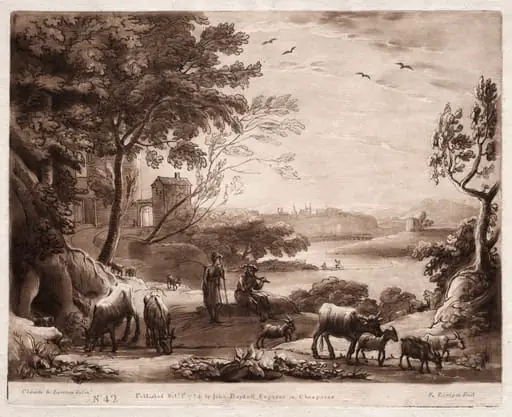 Liber Veritatis: No. 42, A River Landscape with a Shepherd and Shepherdess and a Herd of Cattle
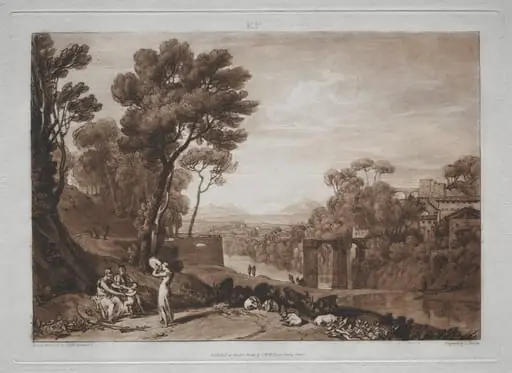 Liber Studiorum: The Woman and the Tambourine
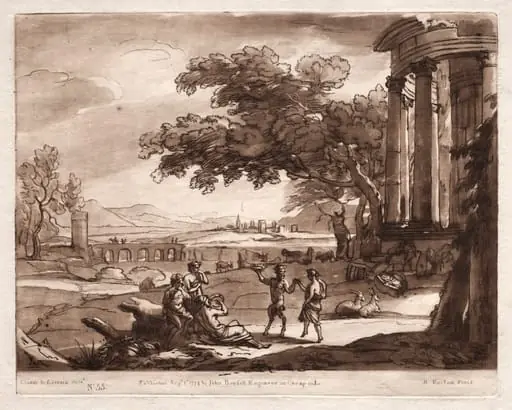 Liber Veritatis: No. 55, A Landscape with a Temple and a Nymph and Satyr Dancing
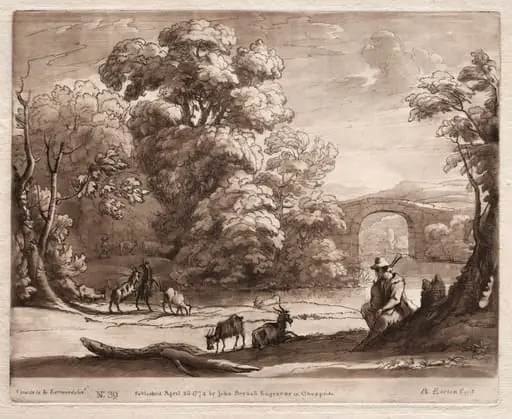 Liber Veritatis: No. 39, A Landscape with Herdsman Playing a Bagpipe and Goats Browsing
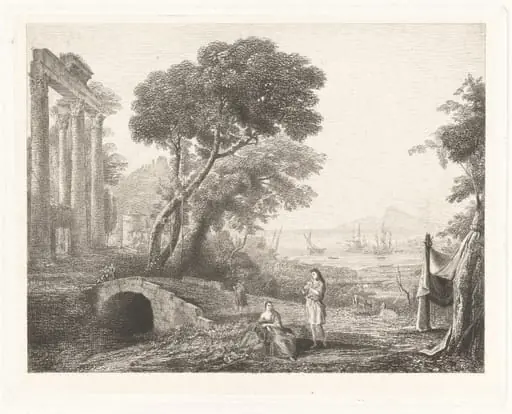 Italian Landscape