Artwork
Enthroned Virgin and Child, with Saints John the Evangelist, Catherine of Alexandria, and Anthony Abbot, and a Saint Reading a Book
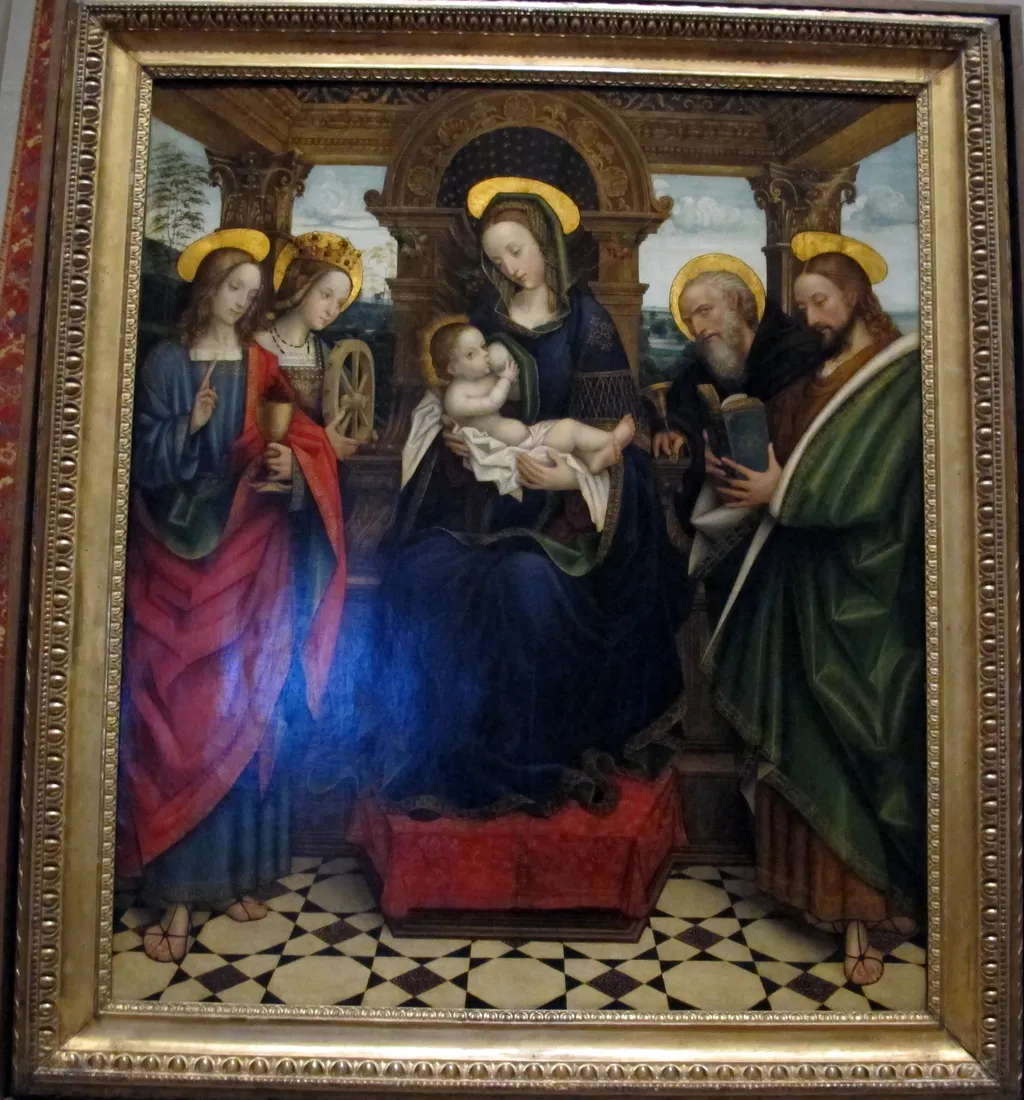
Enthroned Virgin and Child, with Saints John the Evangelist, Catherine of Alexandria, and Anthony Abbot, and a Saint Reading a Book is an unspecified painting by the Mannerist artist Defendente Ferrari. It dates from 1525 and is held in the collection of the Philadelphia Museum of Art.
About this work
Overview
Enthroned Virgin and Child, with Saints John the Evangelist, Catherine of Alexandria, and Anthony Abbot, and a Saint Reading a Book is a 1525 painting by Defendente Ferrari, an Italian artist active in Piedmont. The work features the Virgin Mary and the Christ Child enthroned, surrounded by four saints.
Subject & Meaning
The painting depicts a devotional scene with the Virgin and Child at its center, accompanied by identifiable saints: John the Evangelist, Catherine of Alexandria (symbolized by a wheel), Anthony Abbot, and an unidentified saint engaged in reading, emphasizing contemplation and reverence.
Technique & Style
Characterized by bright, vibrant robes and a golden throne, the painting reflects Mannerist influences. The composition incorporates a checkerboard-patterned floor and a distant, subdued landscape background, with the use of golden halos and soft, glowing light contributing to a serene, sacred atmosphere.
History & Provenance
Created in 1525, the painting is now part of the Philadelphia Museum of Art's collection, though its history prior to acquisition is not detailed here.
Artist & collection
Artist
Defendente Ferrari (c. 1480/1485 – c. 1540) was an Italian painter active in Piedmont. His work marks the transition from late Gothic traditions to Renaissance art in the region.

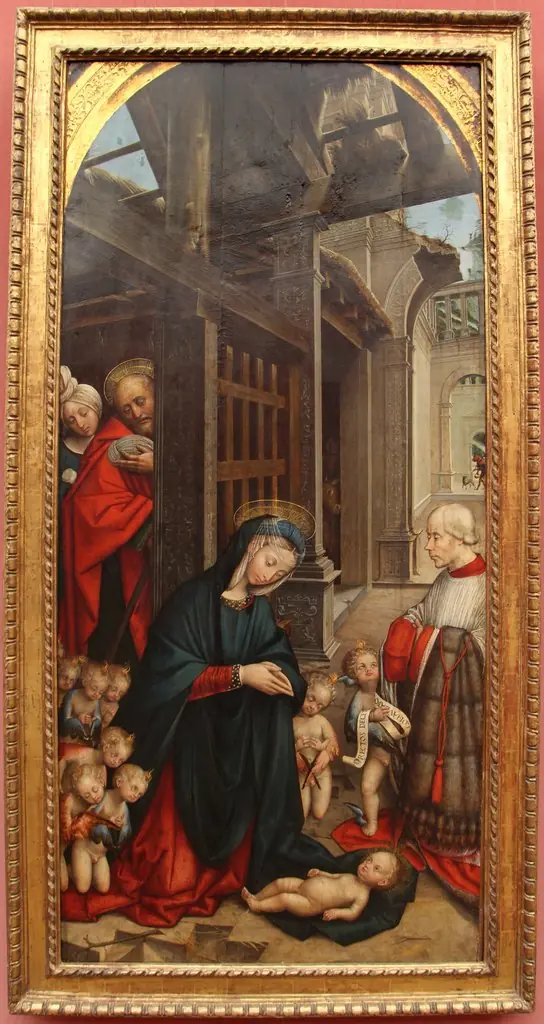
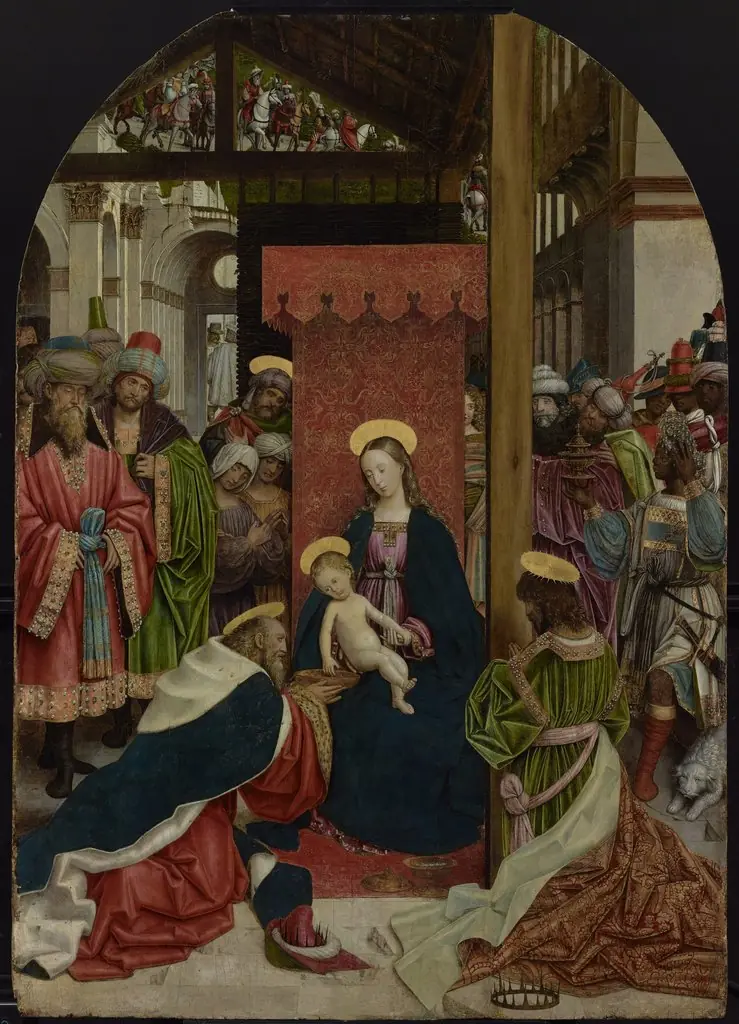
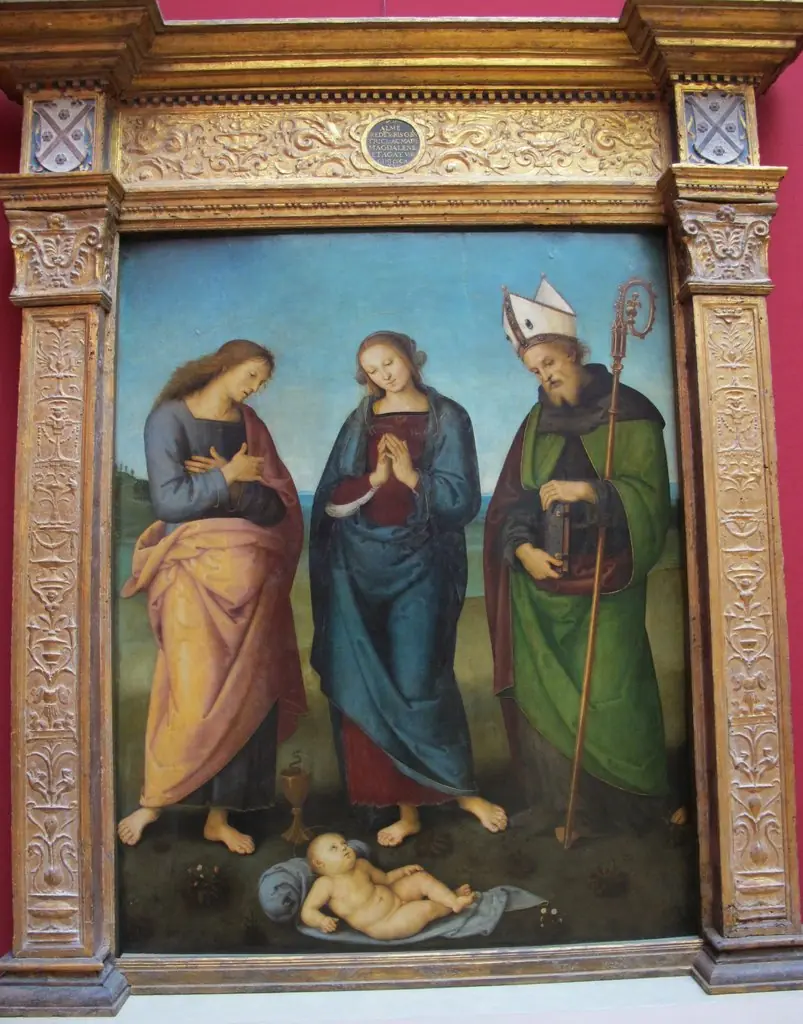 adorazione del bambino
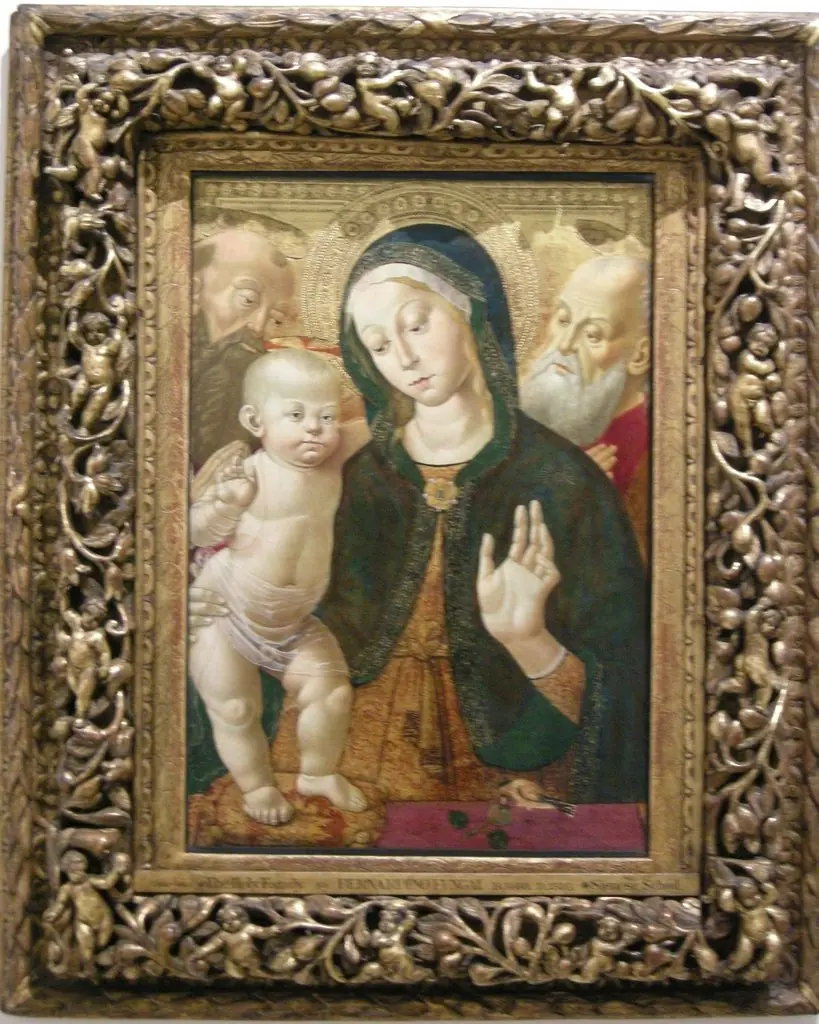 Madonna mit Kind
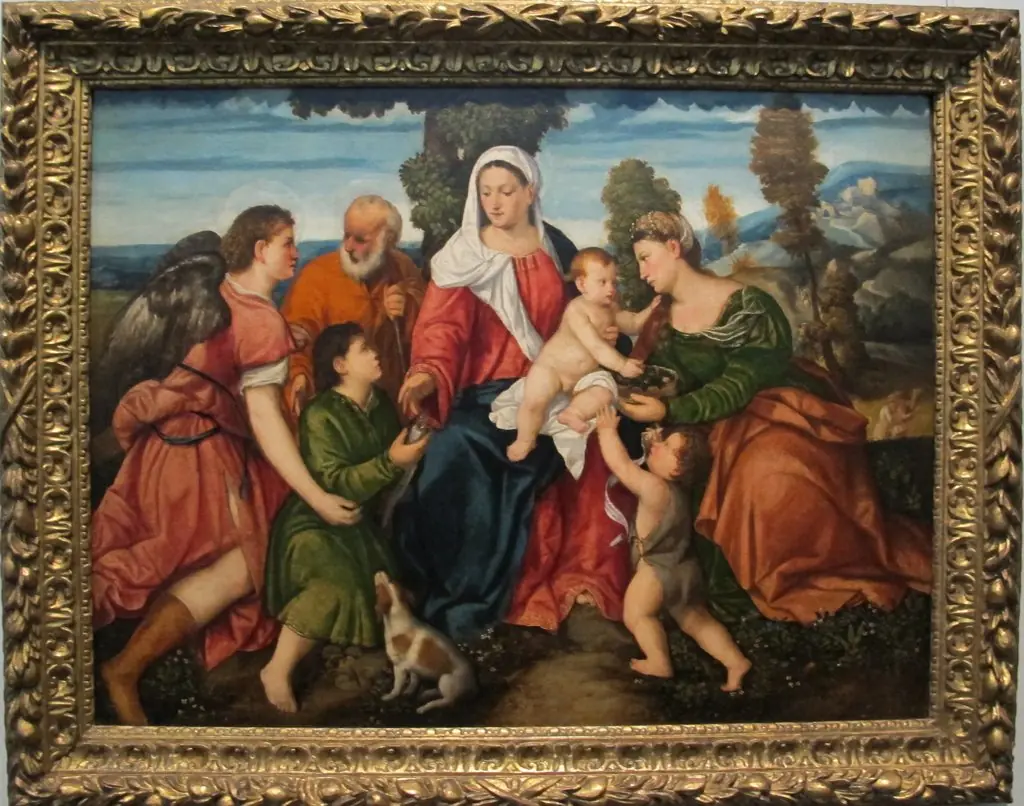 The Holy Family with Tobias and the Angel, Sts. Dorothy, and Infant John the Baptist
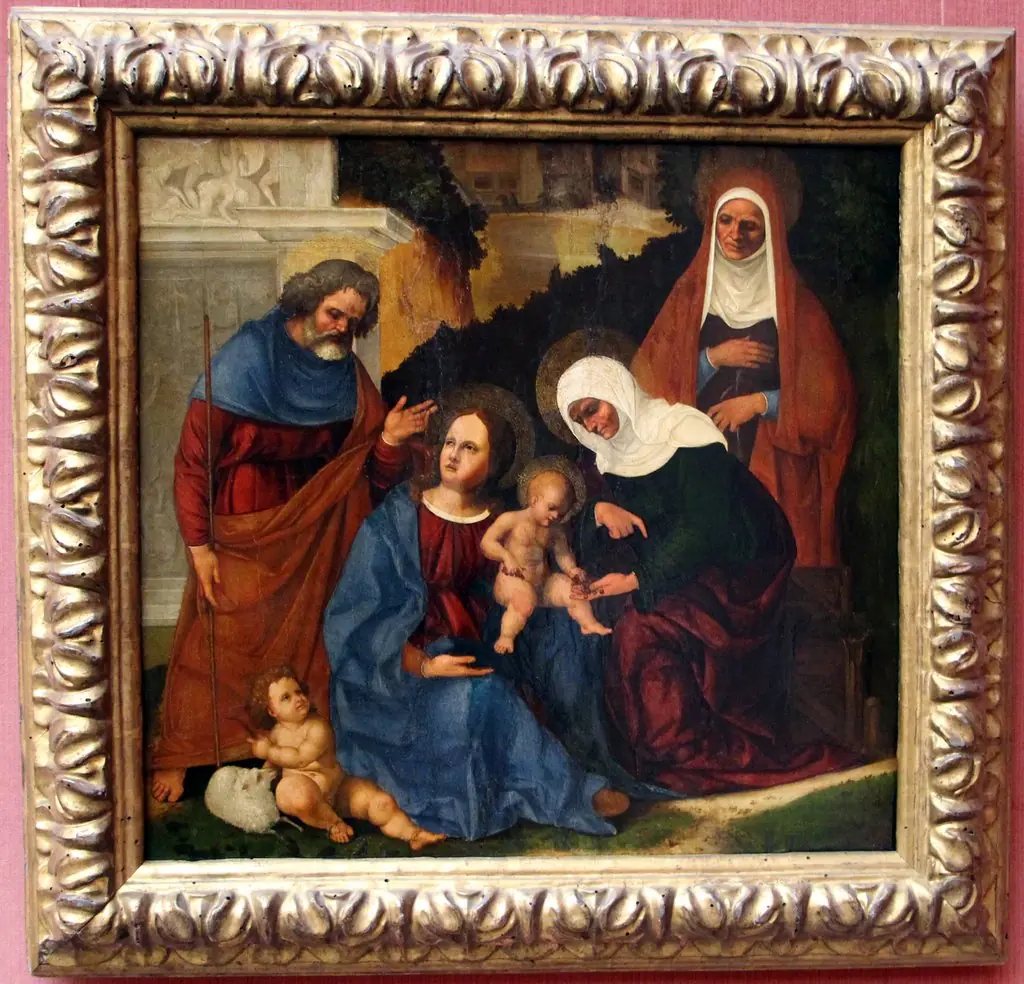 Die Heilige Familie mit Elisabeth, Anna und dem Johannesknaben
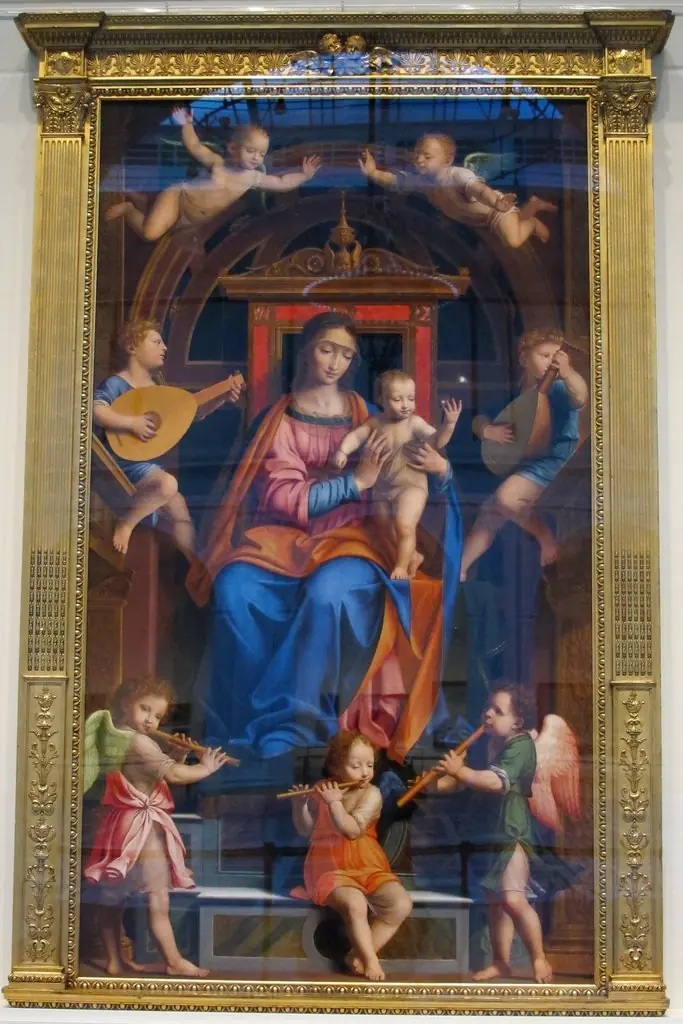 madonna in trono col bambino e santi
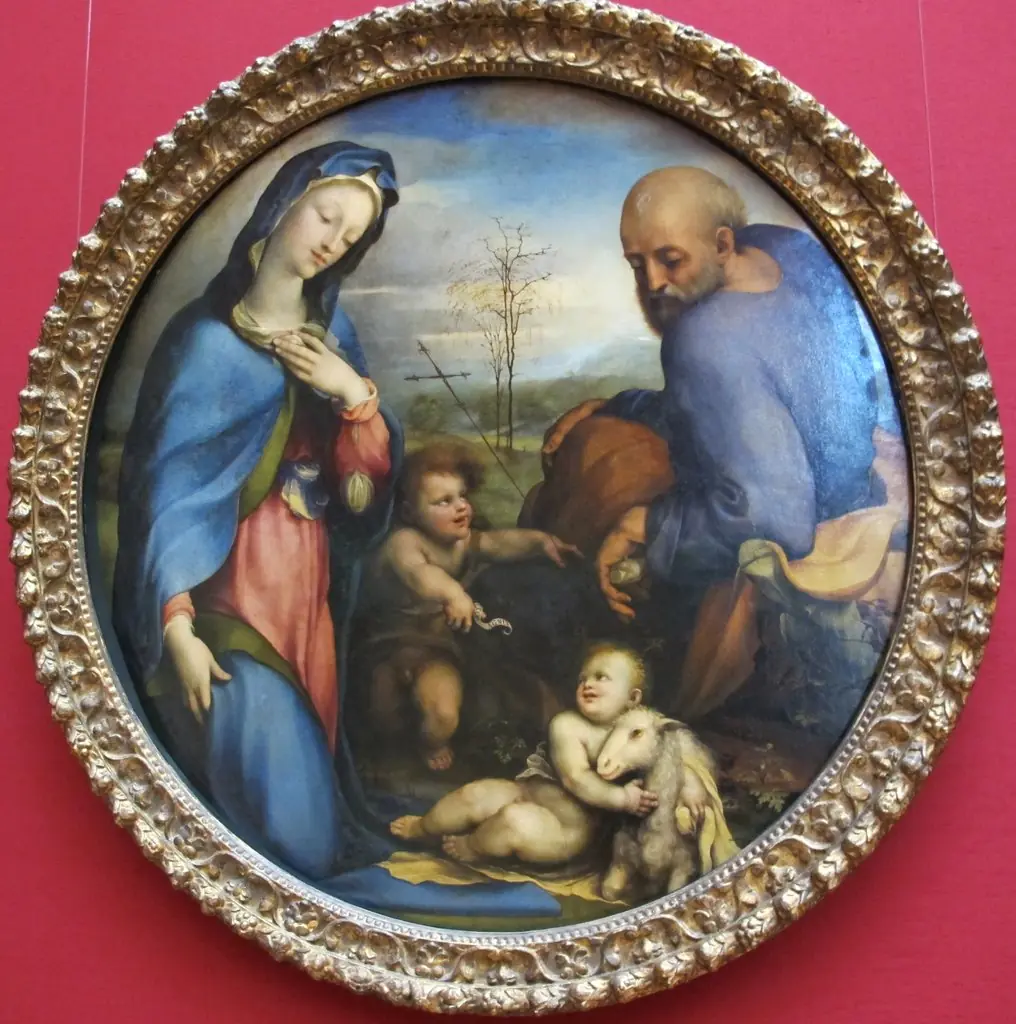 Holy Family with the Infant Saint John the Baptist and a Sheep
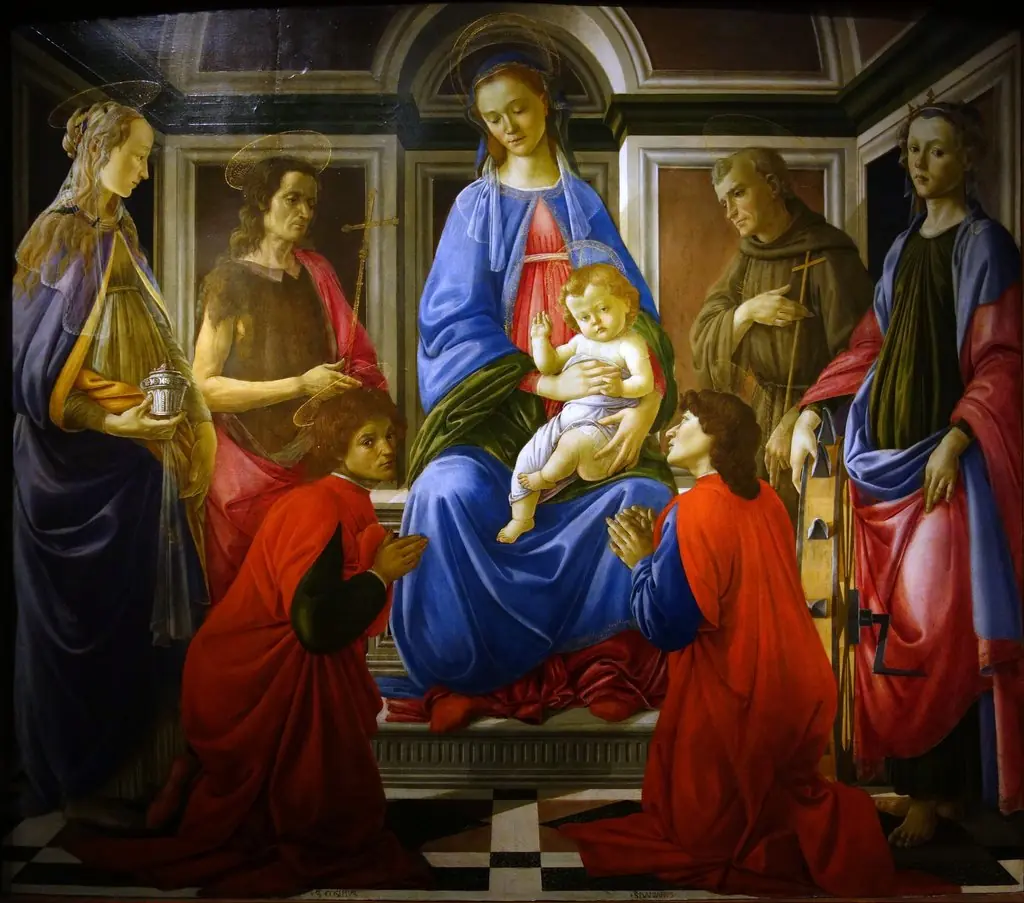 Sant'Ambrogio Altarpiece
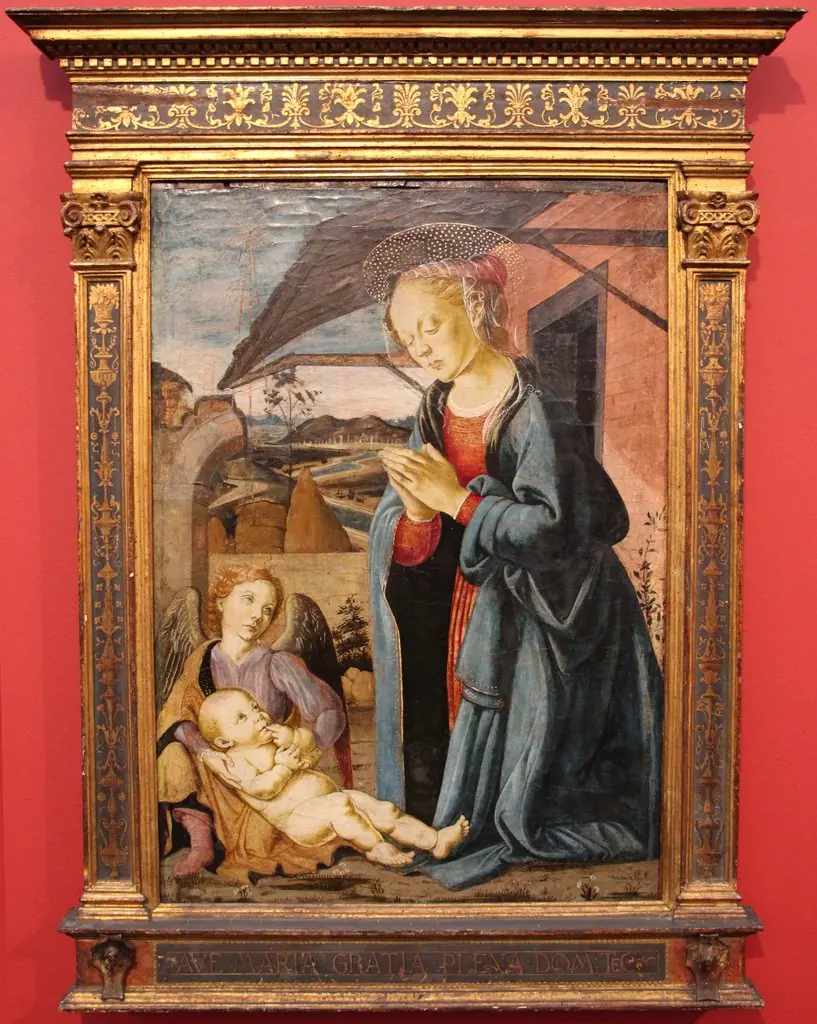 Madonna and Child and an Angel
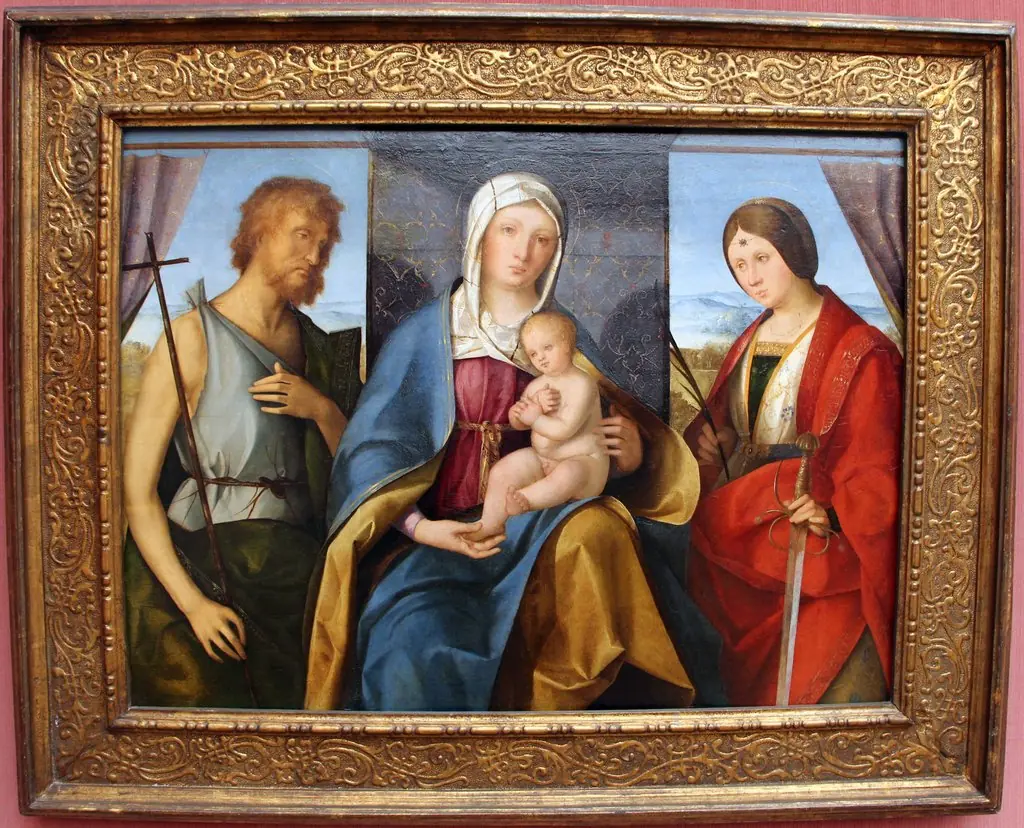 Thronende Maria mit d. Kind und den Heiligen Johannes dem Täufer und Katharina von Alexandrien
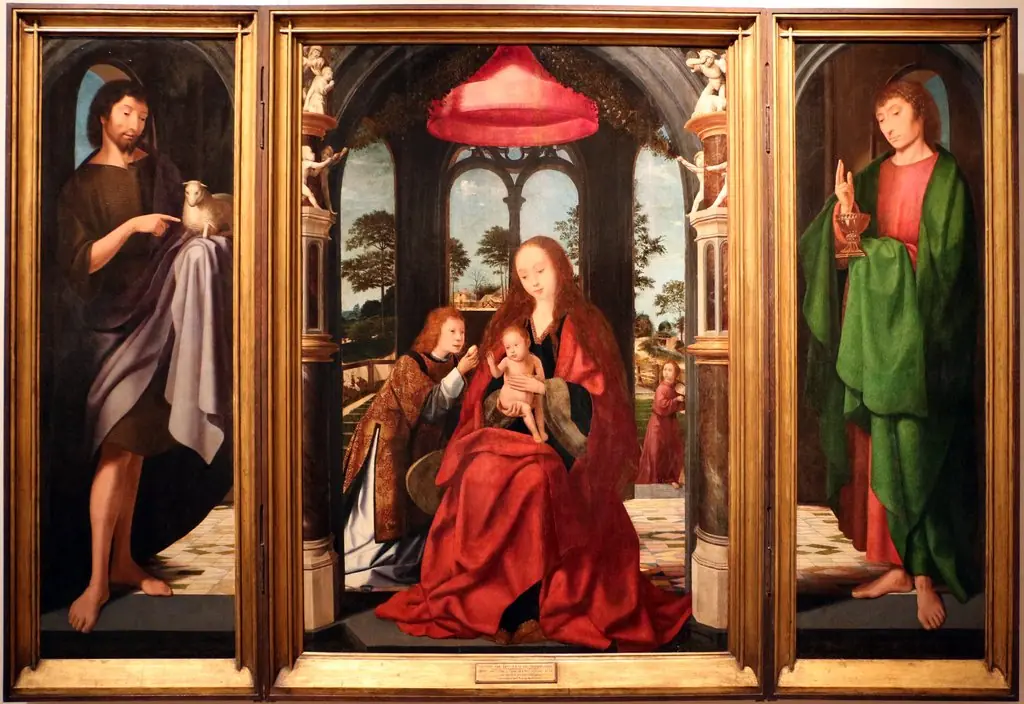 Triptych of the Virgin with the Child and Angels, St. John the Baptist and St. John the Evangelist
 Die Heilige Famillie
 Virgin and Child, with Saints Mary Magdalene, John the Baptist, Jerome, and Catherine of Alexandria