Artwork
Die Heilige Familie mit Elisabeth, Anna und dem Johannesknaben
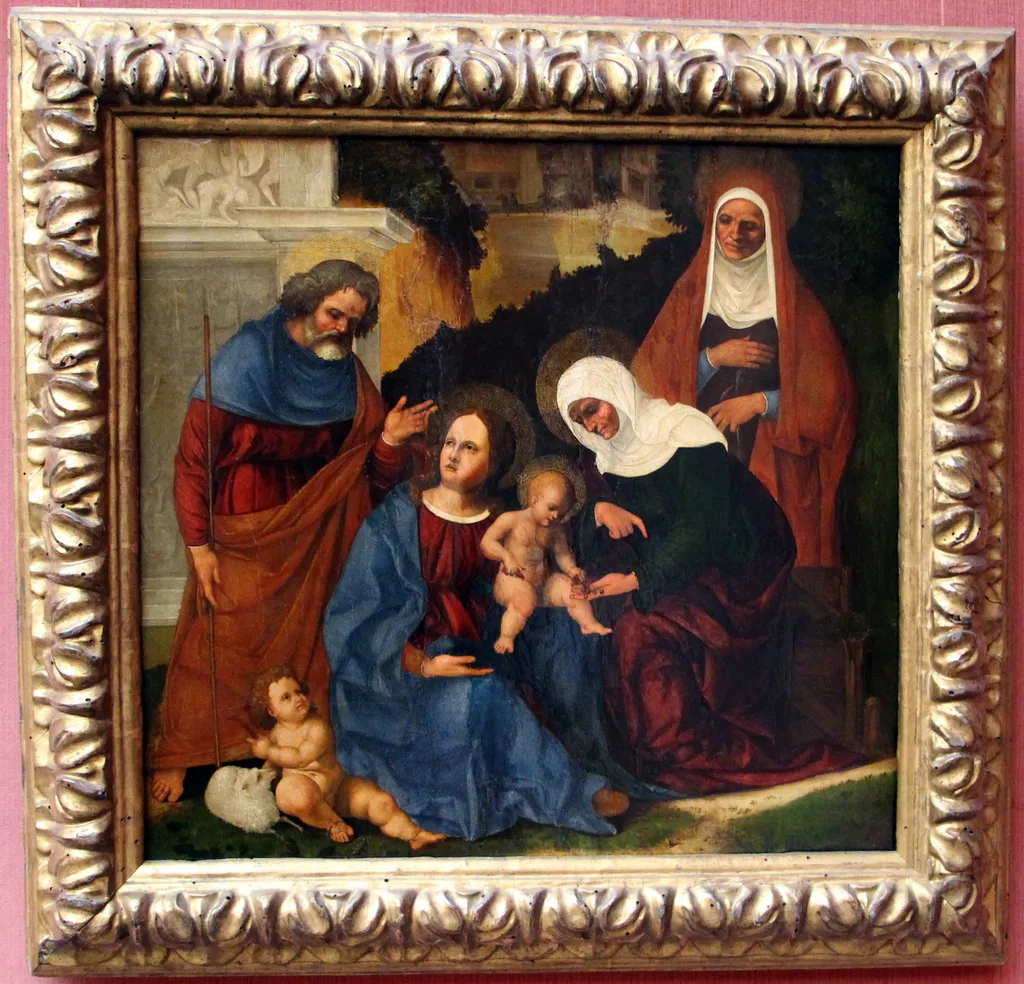
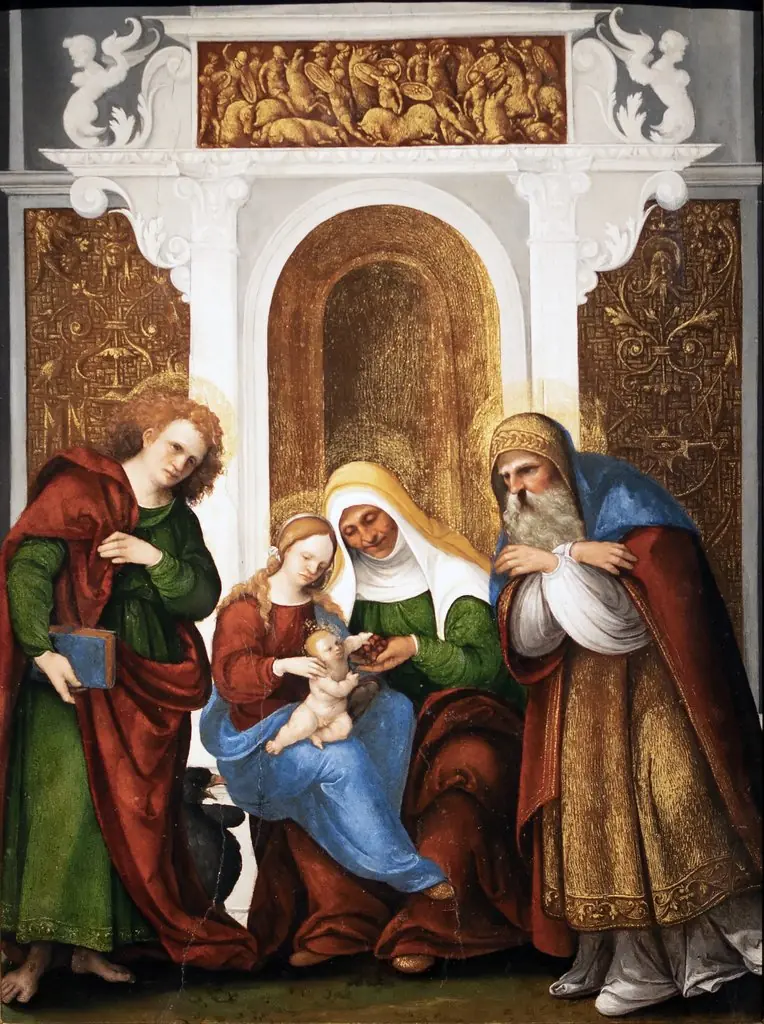
Die Heilige Familie mit Elisabeth, Anna und dem Johannesknaben is an unspecified painting by the Early Renaissance artist Ludovico Mazzolino. It dates from 1511 and is held in the collection of the Gemäldegalerie Berlin.
About this work
Overview
The composition centers on maternal connection and spiritual contemplation, typical of Mazzolino’s focus on tender human moments within religious narratives.
Painted in 1511 by Ludovico Mazzolino, this work is an early Renaissance devotional image originating from northern Italy. It portrays a quiet, intimate gathering of sacred figures: the Virgin Mary, Saint Anne, Saint Elizabeth, and the infant John the Baptist. The composition centers on maternal connection and spiritual contemplation, typical of Mazzolino’s focus on tender human moments within religious narratives. The painting resides today in the Gemäldegalerie, Berlin.
Subject & Meaning
The scene unites three generations of women—Mary, her mother Anne, and her cousin Elizabeth—alongside the young John the Baptist. Elizabeth, gesturing toward the Christ child, acknowledges his divine role, while Anne observes with quiet reverence. The presence of a small book in Mary’s hand suggests contemplation of scripture, reinforcing the theological weight of the moment. The grouping reflects familial piety and the continuity of sacred lineage in Christian tradition.
Technique & Style
Mazzolino employs soft modeling and muted tones to create a sense of intimacy. Figures are rendered with gentle contours, their robes rendered in layered pigments that suggest texture without excessive detail. The dark, indistinct background isolates the group, directing focus to their interactions. The brushwork is deliberate but unobtrusive, favoring emotional resonance over dramatic flair, characteristic of Ferrarese painting of the period.
History & Provenance
The painting was created during Mazzolino’s active years in Ferrara and Bologna, likely commissioned for private devotion. It entered the Gemäldegalerie Berlin’s collection in the 19th century, following the broader consolidation of Italian Renaissance works in European public museums. Its documented history remains limited, but its preservation suggests consistent recognition of its devotional and artistic value.
Context
In early 16th-century northern Italy, devotional imagery often emphasized familial bonds to make sacred stories accessible. Mazzolino’s work aligns with regional trends that favored quiet, domestic scenes over grand altarpieces. His style reflects influences from Correggio and the Emilian school, blending emotional subtlety with restrained composition, catering to patrons seeking personal spiritual engagement.
Legacy
Though not widely known outside specialized circles, Mazzolino’s painting exemplifies the quiet intensity of small-scale Renaissance devotional art. It contributes to the understanding of how religious narratives were personalized in private settings. Its presence in a major museum ensures continued scholarly attention, preserving its role as a testament to the human dimension of sacred imagery.
Artist & collection
Artist
Ludovico Mazzolino (1480 – c. 1528) - also known as Mazzolini da Ferrara, Lodovico Ferraresa, and Il Ferrarese - was an Italian Renaissance painter active in Ferrara and Bologna.

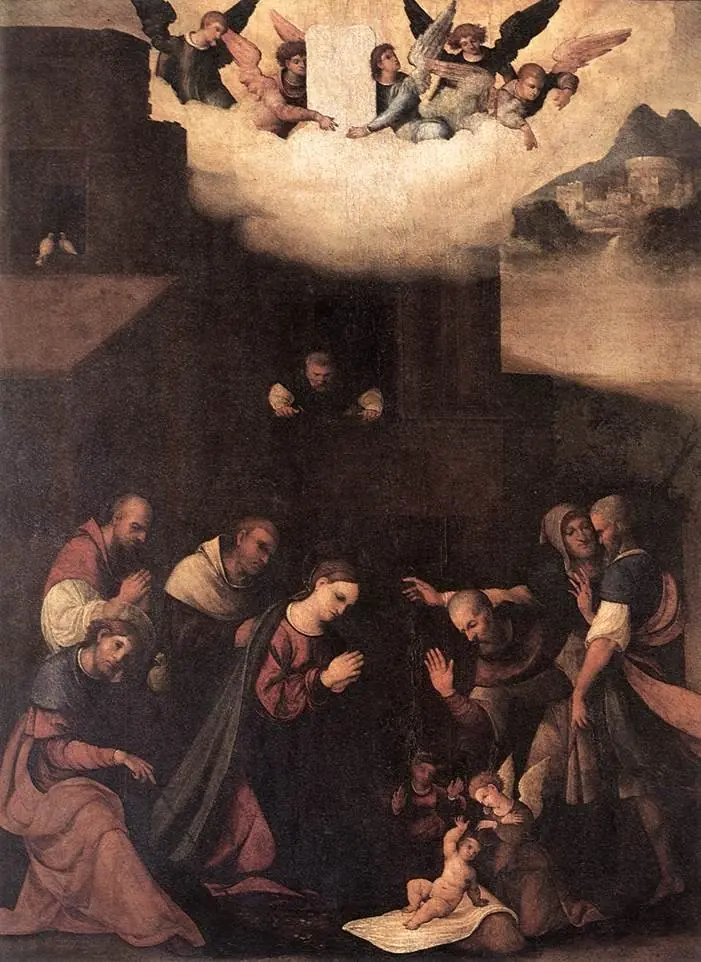
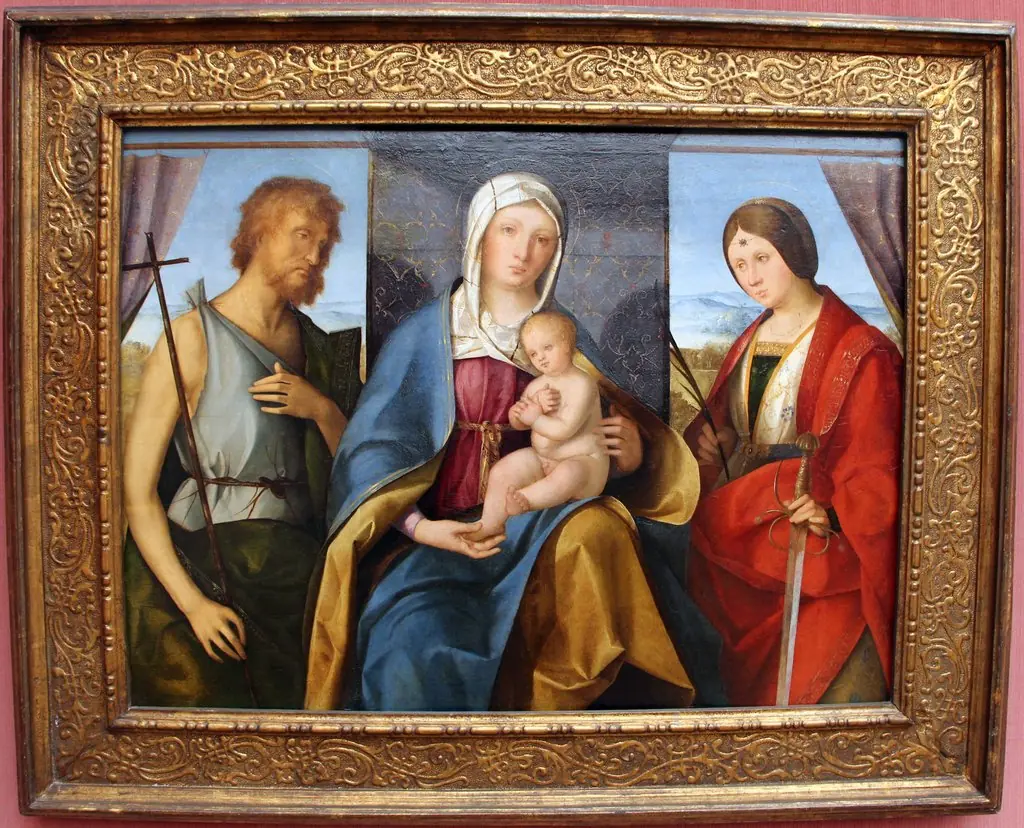 Thronende Maria mit d. Kind und den Heiligen Johannes dem Täufer und Katharina von Alexandrien
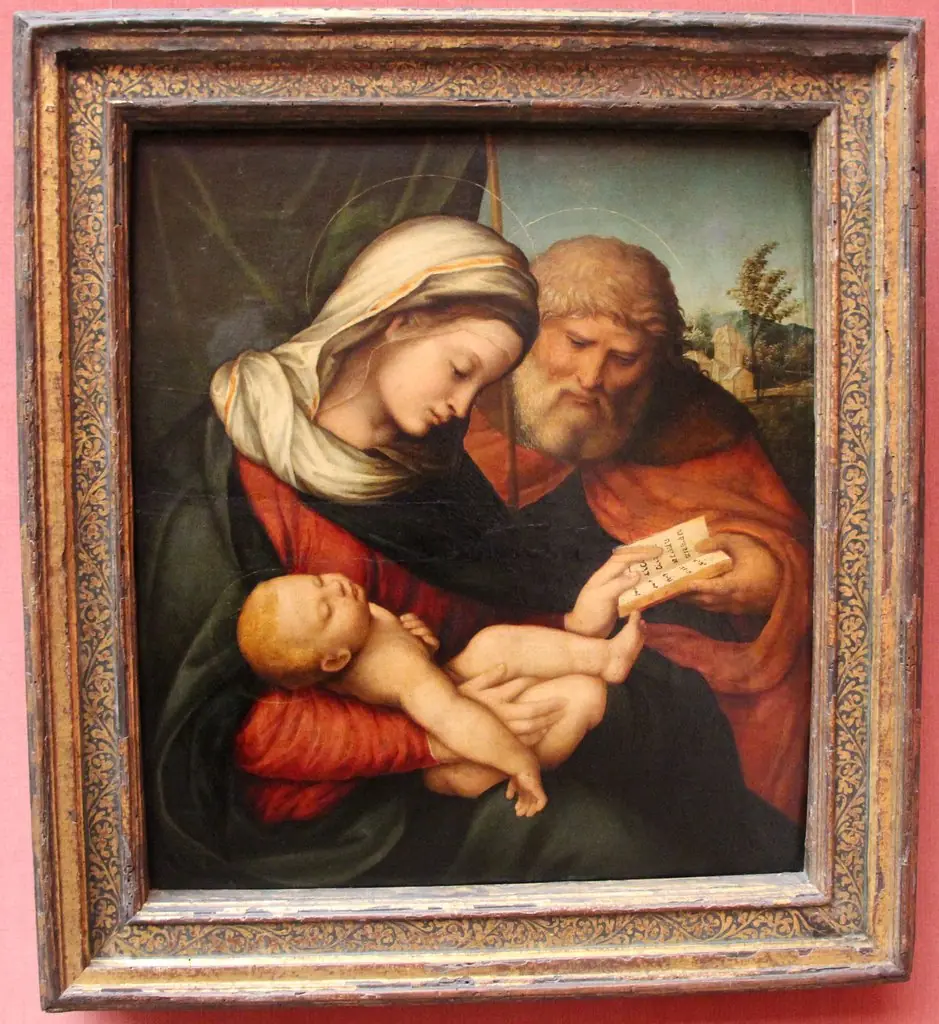 Die Heilige Famillie
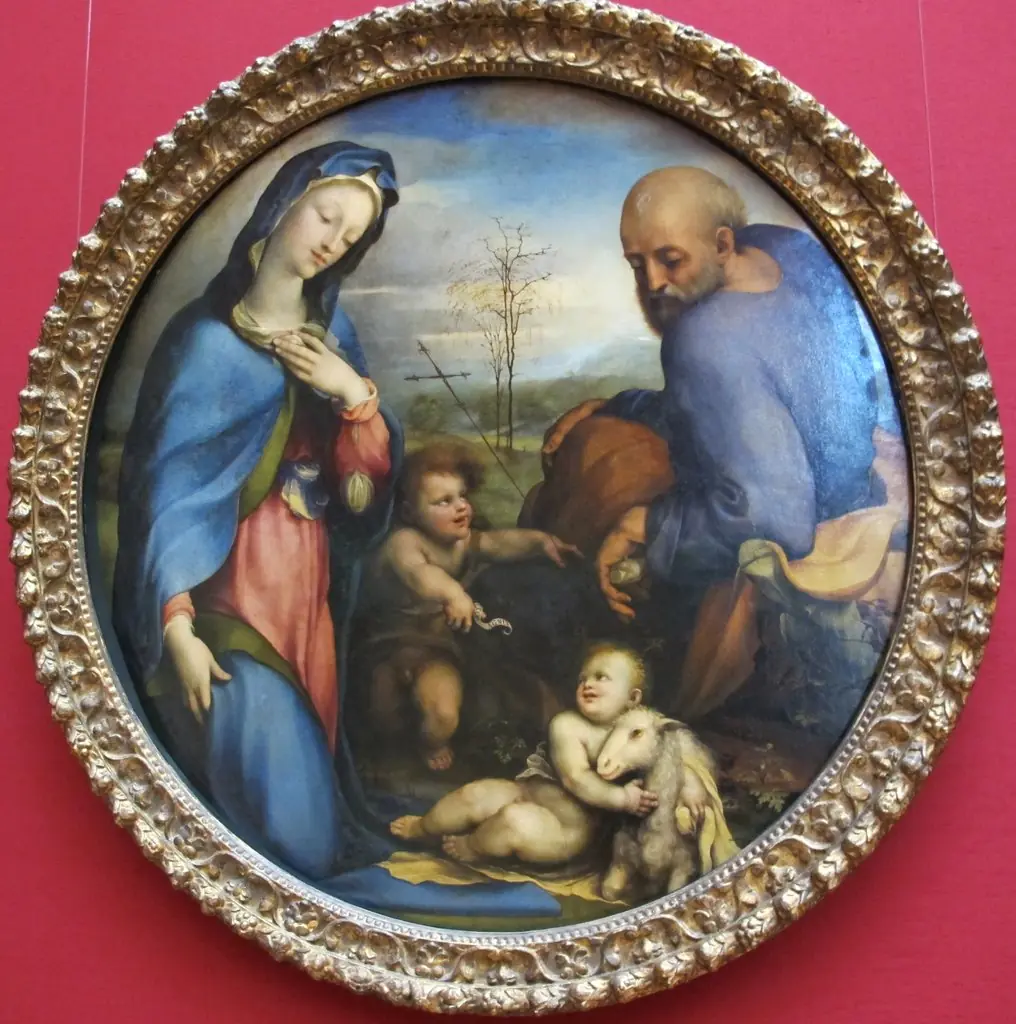 Holy Family with the Infant Saint John the Baptist and a Sheep
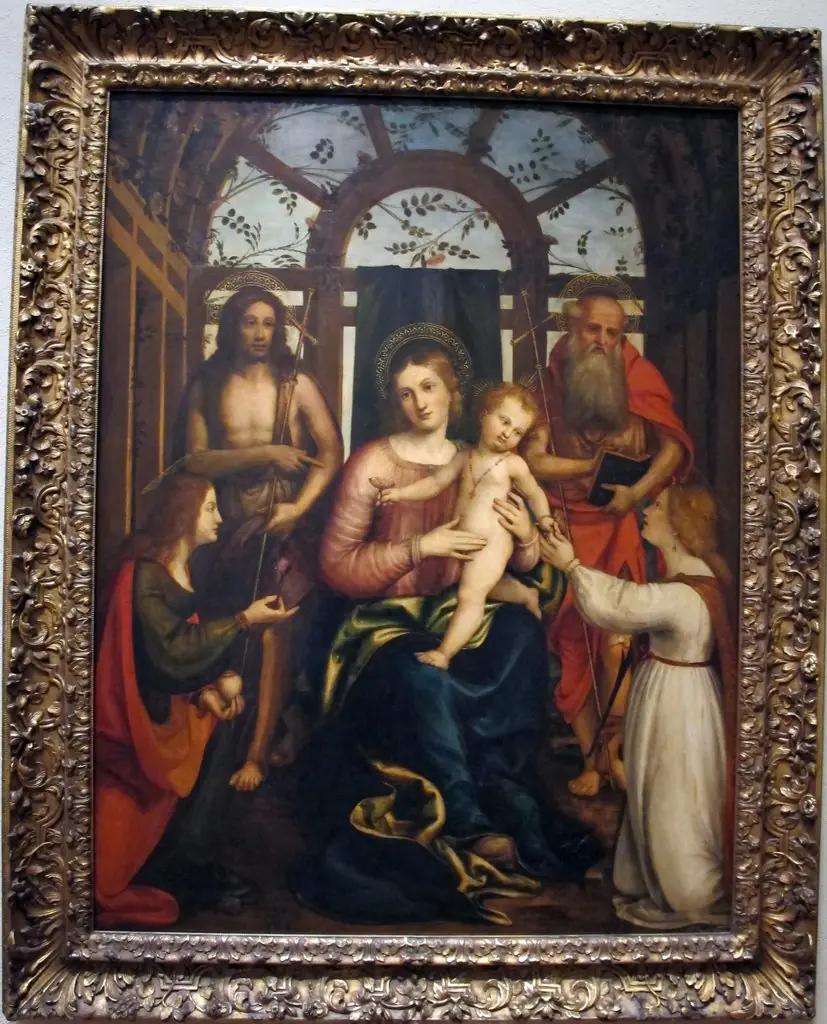 Virgin and Child, with Saints Mary Magdalene, John the Baptist, Jerome, and Catherine of Alexandria
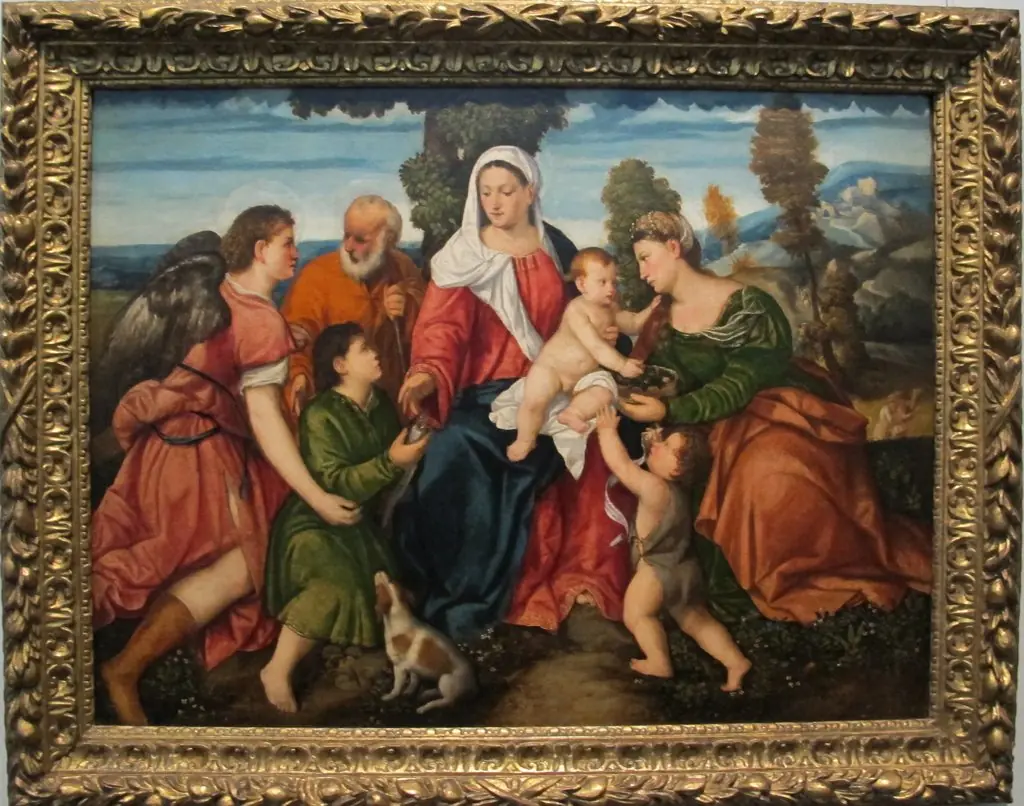 The Holy Family with Tobias and the Angel, Sts. Dorothy, and Infant John the Baptist
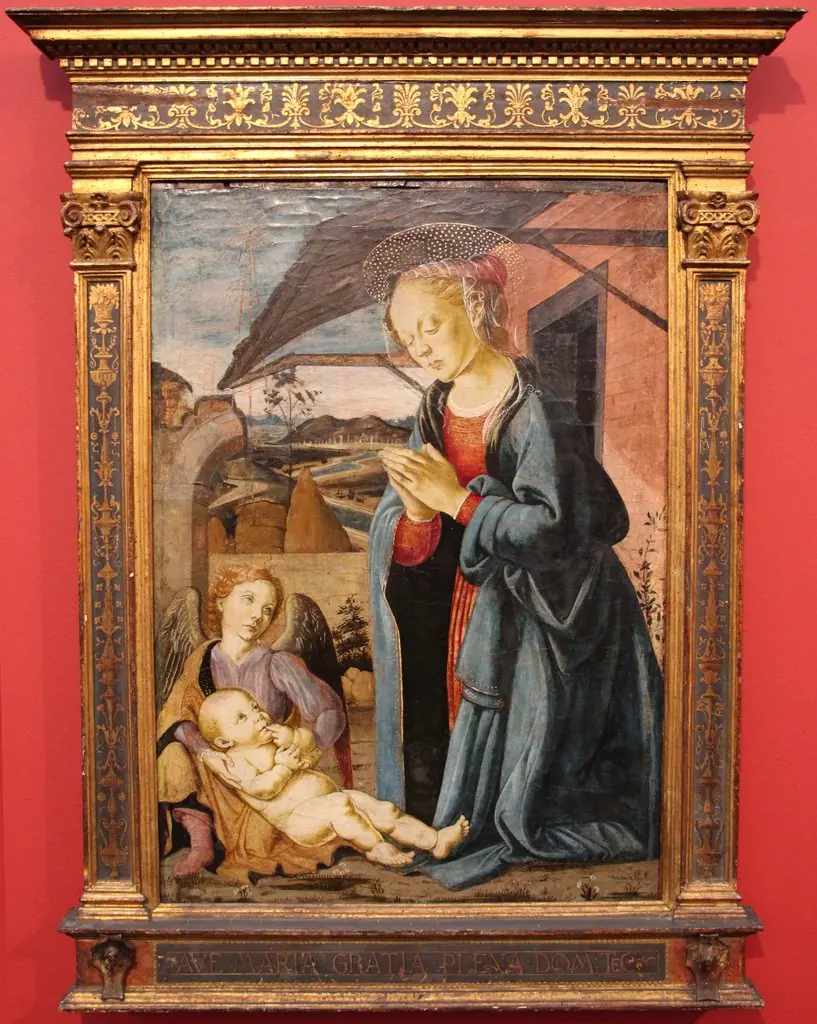 Madonna and Child and an Angel
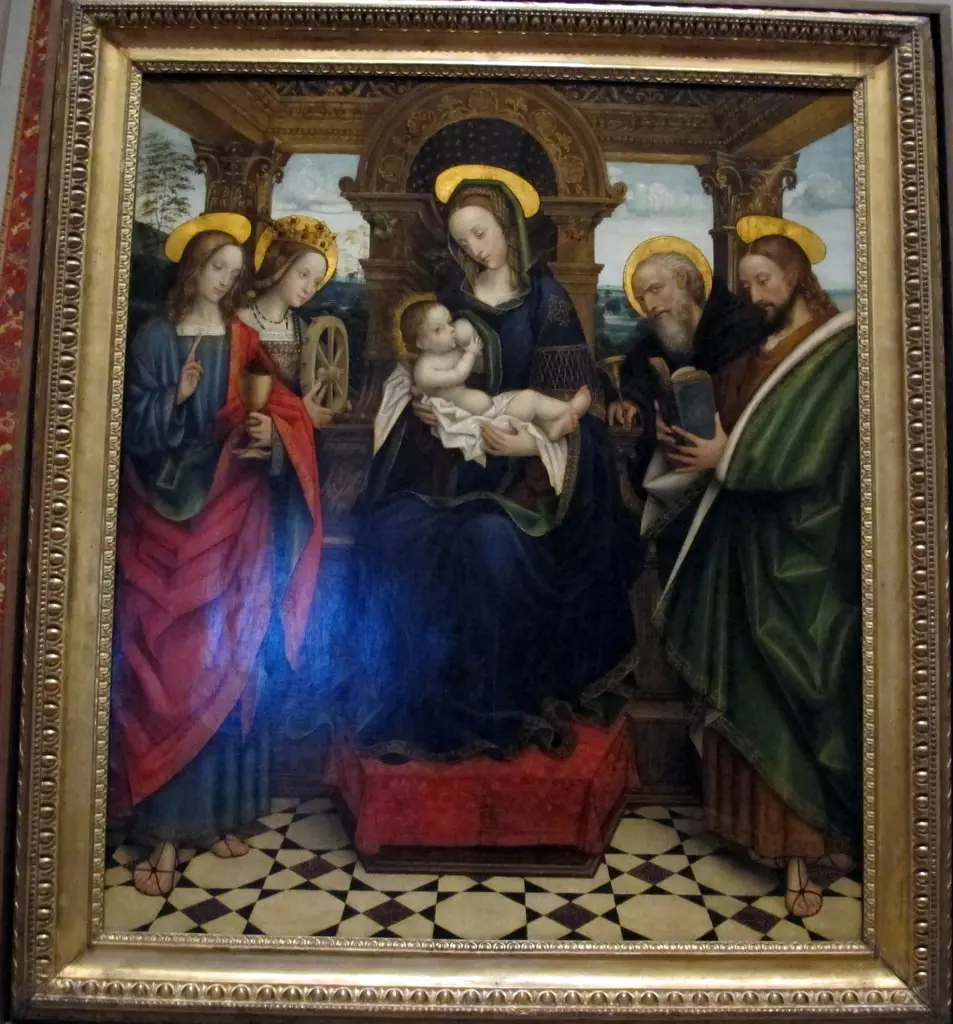 Enthroned Virgin and Child, with Saints John the Evangelist, Catherine of Alexandria, and Anthony Abbot, and a Saint Reading a Book
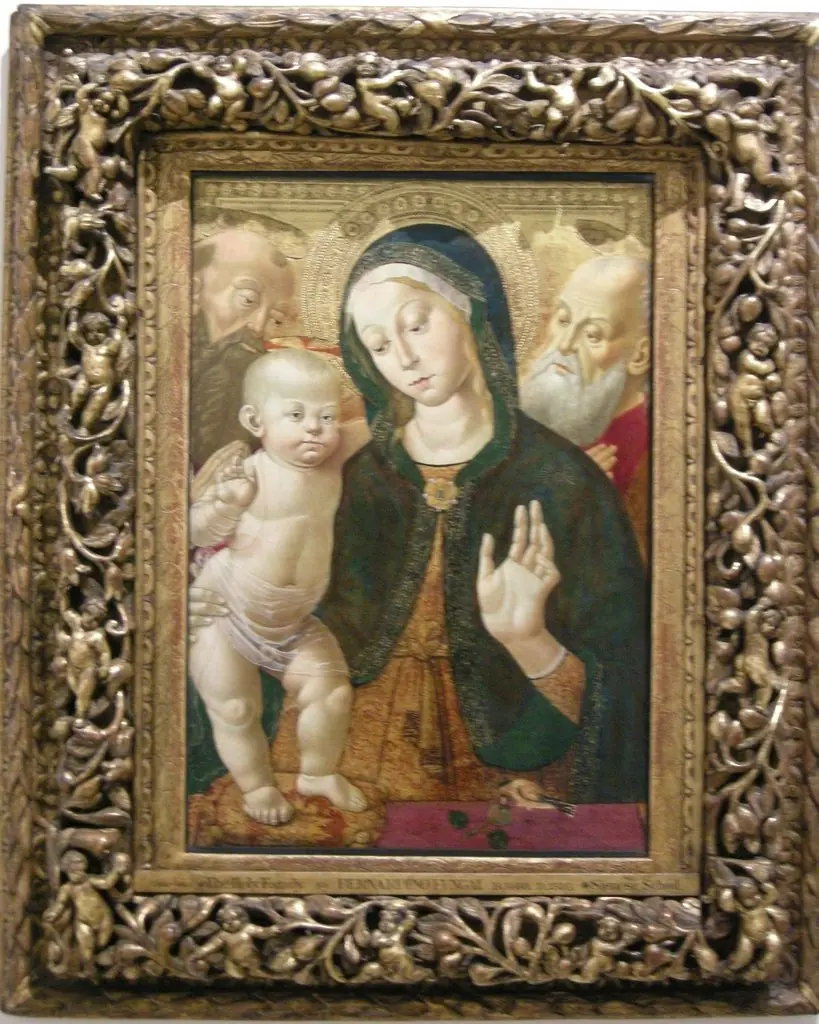 Madonna mit Kind