Artwork
The Engraver Joseph Tourny (Le graveur Joseph Tourny)
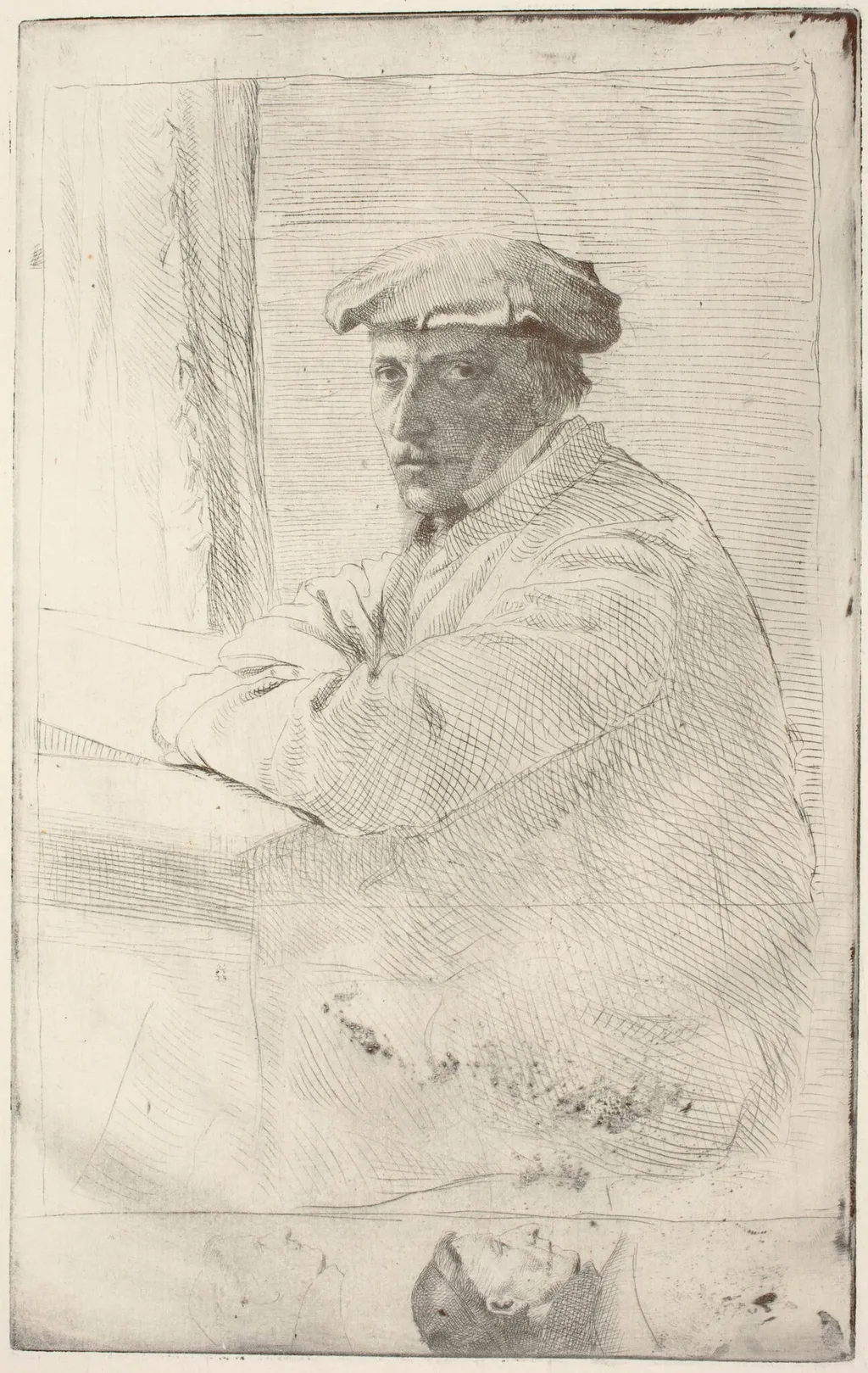
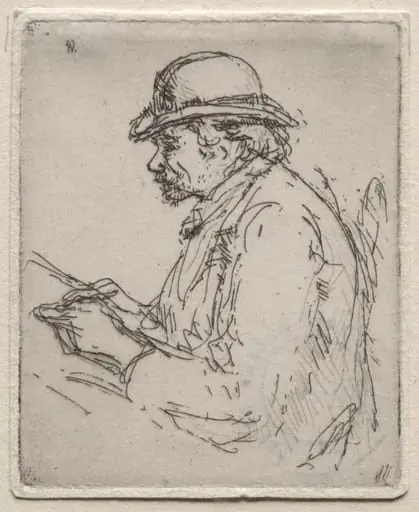
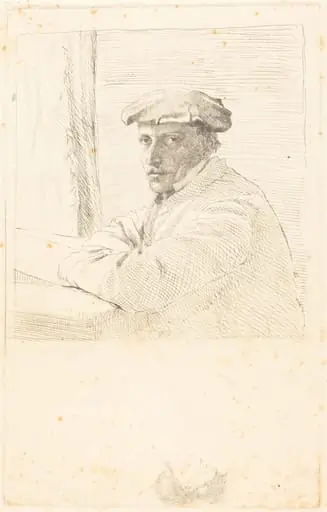
The Engraver Joseph Tourny (Le graveur Joseph Tourny) is an ink print by the Impressionist artist Edgar Degas. It dates from 1857 and is held in the collection of the National Gallery of Art.
About this work
Overview
Created in 1857, *The Engraver Joseph Tourny* is an etching by Edgar Degas on laid paper. Though later known for his depictions of dancers, Degas early in his career explored portraiture and printmaking. This work belongs to a phase where he engaged deeply with the technical possibilities of etching, using the medium to capture the quiet intensity of a fellow artist at work.
Subject & Meaning
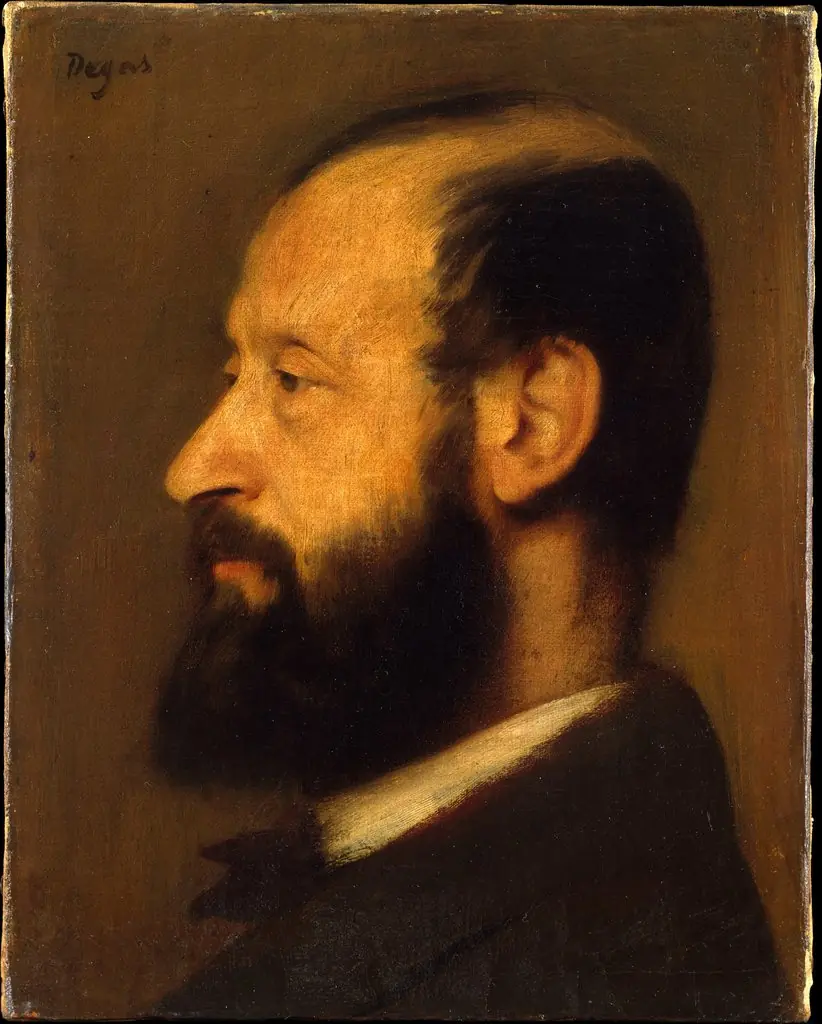
The portrait portrays Joseph Tourny, a professional engraver, seated and dressed in a loose jacket and cap. His gaze is directed toward the viewer, one hand resting near his chest, suggesting a moment of pause between tasks. Degas does not idealize his subject; instead, he presents him as a thoughtful craftsman, emphasizing the dignity of labor and the quiet concentration of artistic practice.
Technique & Style
Degas employed etching to create a dense network of incised lines, allowing ink to pool in grooves and produce textured, uneven tones.
Degas employed etching to create a dense network of incised lines, allowing ink to pool in grooves and produce textured, uneven tones. The surface bears visible smudges and irregular strokes, giving the image a spontaneous, almost sketchlike quality. Rather than refining the plate to a polished finish, Degas preserved the rawness of the process, aligning the medium’s imperfections with the immediacy of observation.
History & Provenance
This print was made during Degas’s formative years, before his association with the Impressionists solidified. It reflects his early interest in depicting artists at their craft, a theme that would recur in his later works. The etching remained in private hands for much of the 19th century and entered public collections in the 20th century, where it is now studied as an early example of his printmaking experimentation.
Context
In the 1850s, French artists were reevaluating traditional academic approaches, turning toward everyday subjects and direct observation. Degas, influenced by Old Master prints and contemporary realist tendencies, used etching to explore character and environment with minimal means. This portrait aligns with a broader interest among artists in portraying the lives of skilled laborers, not as symbols but as individuals.
Legacy
Though less known than his ballet scenes, *The Engraver Joseph Tourny* illustrates Degas’s foundational commitment to drawing and printmaking. Its unpolished aesthetic anticipated later modernist embraces of process over finish. The work remains a quiet testament to his early exploration of how technique could convey psychological presence without theatricality.
Artist & collection
Artist
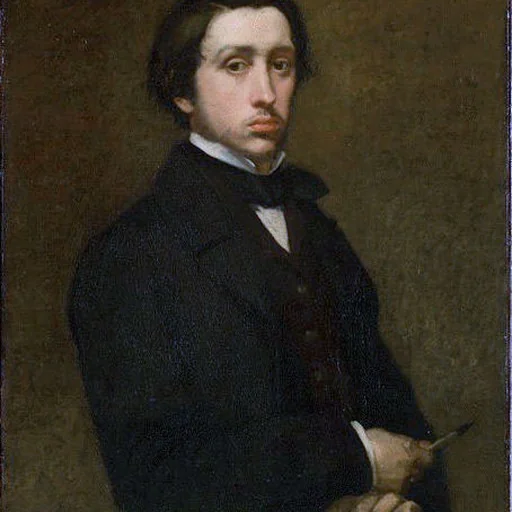
Born Hilaire-Germain-Edgar De Gas on 19 July 1834 in Paris, Edgar Degas came from an affluent banking family with aristocratic roots and spent his childhood among the cultivated circles of the French capital.