Artwork
Mephisto Appears to Faust
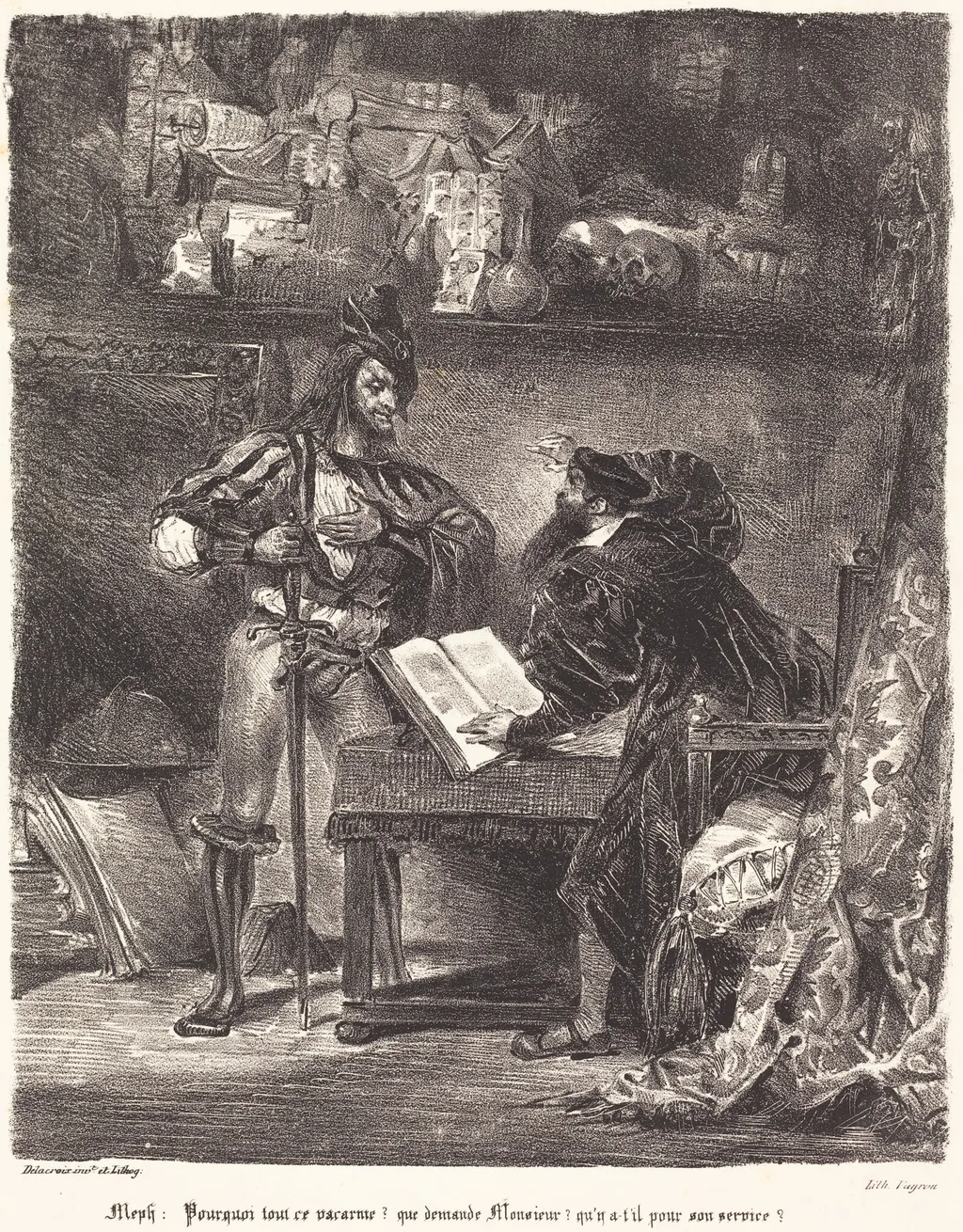
Mephisto Appears to Faust is an ink print by the Romanticist artist Eugène Delacroix. It dates from 1830 and is held in the collection of the National Gallery of Art.
About this work
Overview
Mephisto Appears to Faust is a 1830 lithograph by Eugène Delacroix, a prominent French Romantic artist. The print captures a pivotal moment from Goethe's Faust, showcasing Delacroix's expressive style.
Subject & Meaning
The lithograph depicts the devil Mephisto's appearance before the scholar Faust, conveying intense drama and tension through the contrast between the standing, staff-wielding Mephisto and the seated, book-engrossed Faust.
Technique & Style
Delacroix employed lithography to achieve deep tones and bold lines, emphasizing movement and emotional intensity over classical precision, reflecting influences from Rubens and Venetian Renaissance art.
History & Provenance
Created in 1830, the work exemplifies Delacroix's Romantic era output, with specific provenance details not provided in available information.
Context
Part of a broader artistic trend emphasizing dramatic themes and expressive techniques, Mephisto Appears to Faust sits within Delacroix's exploration of literary subjects through Romantic aesthetics.
Legacy
As a characteristic work by Delacroix, it contributes to the artist's reputation for dynamic, emotionally charged interpretations of literary classics, influencing subsequent Romantic and expressive printmaking traditions.
Own this work as a print
Artist & collection
Artist
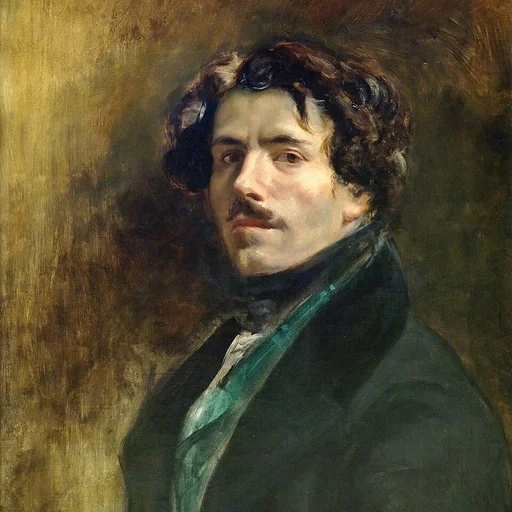
Ferdinand Victor Eugène Delacroix ( DEL-ə-krwah, -KRWAH; French: ; 26 April 1798 – 13 August 1863) was a French Romantic artist who was regarded as the leader of the French Romantic school.

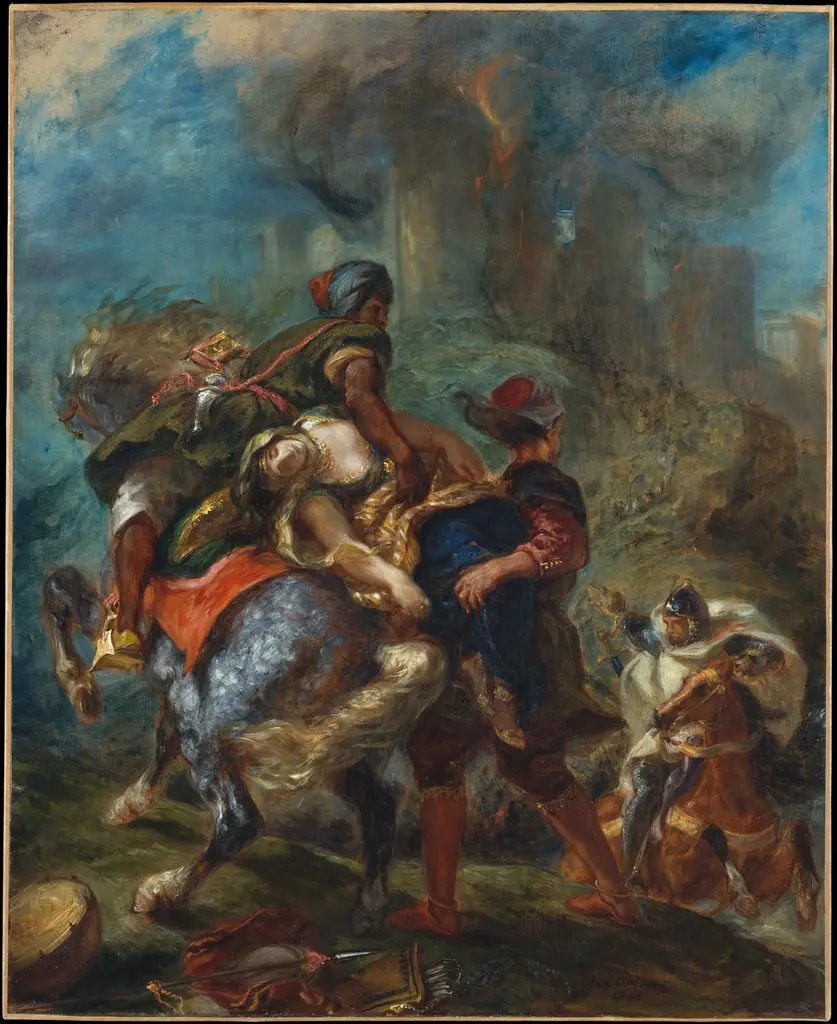
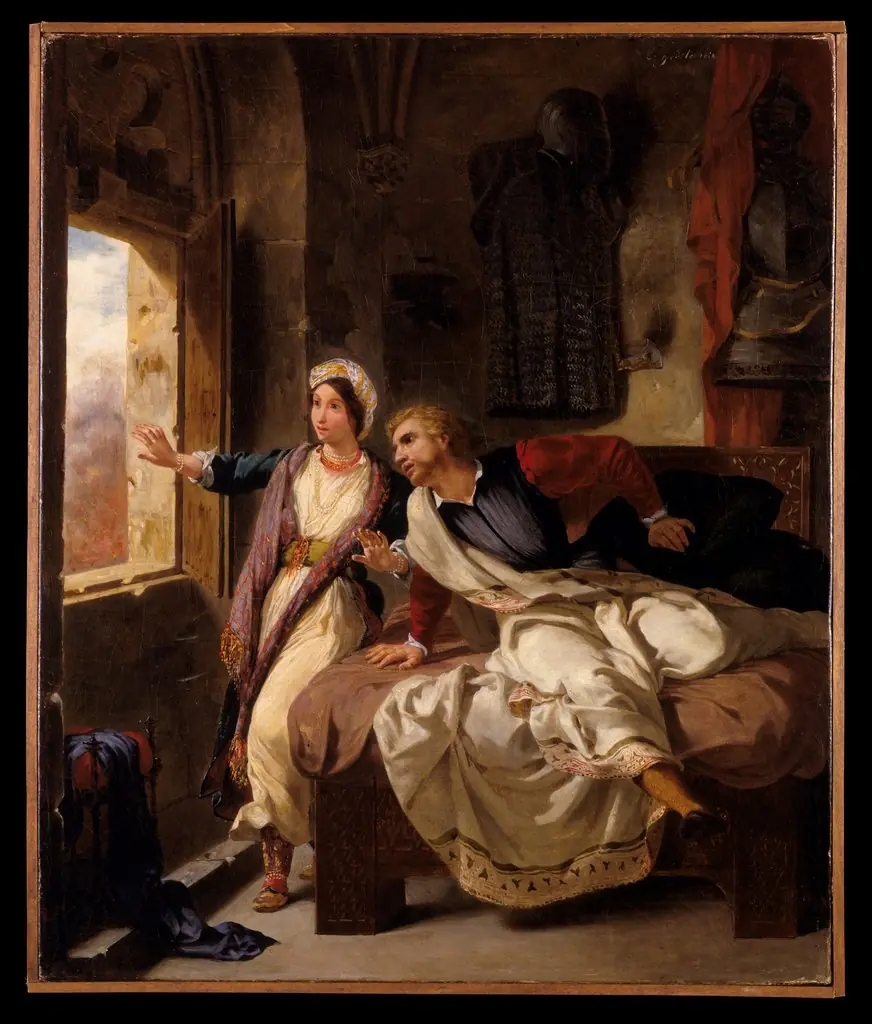
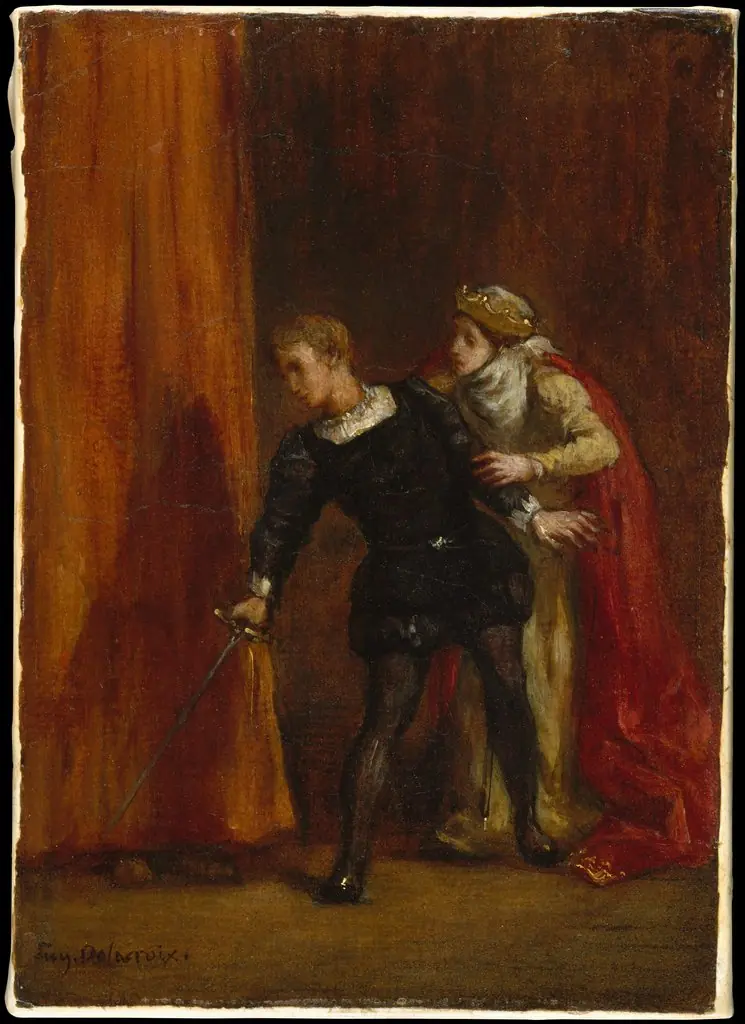
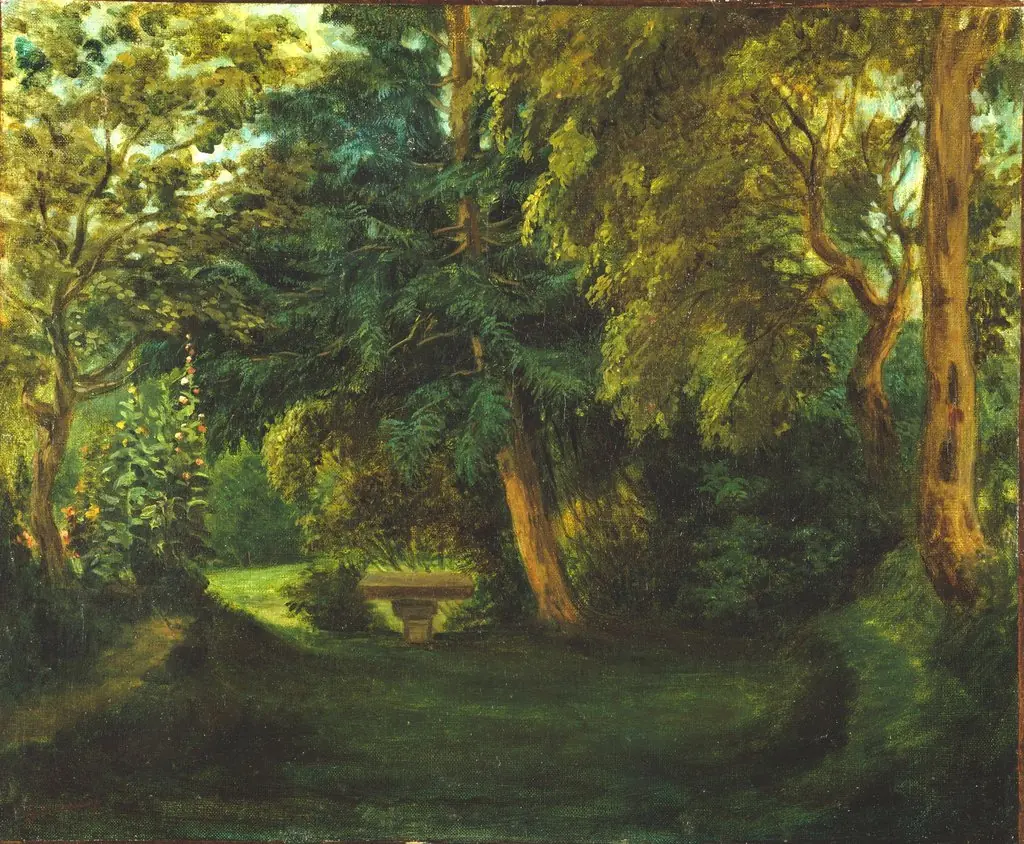
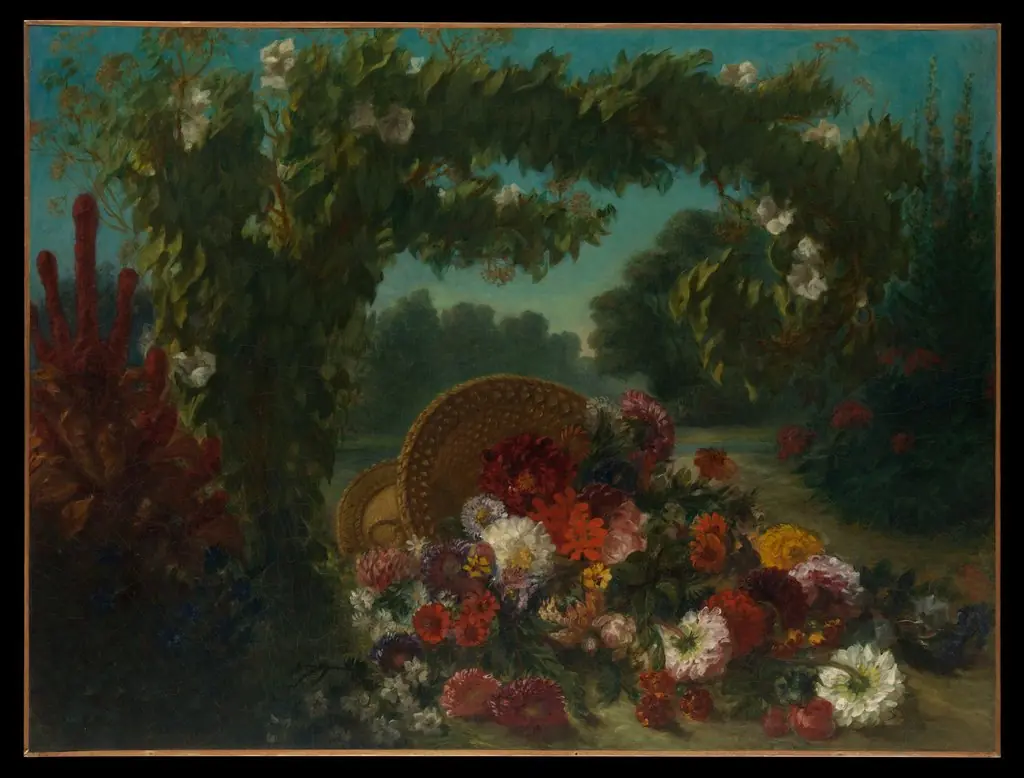
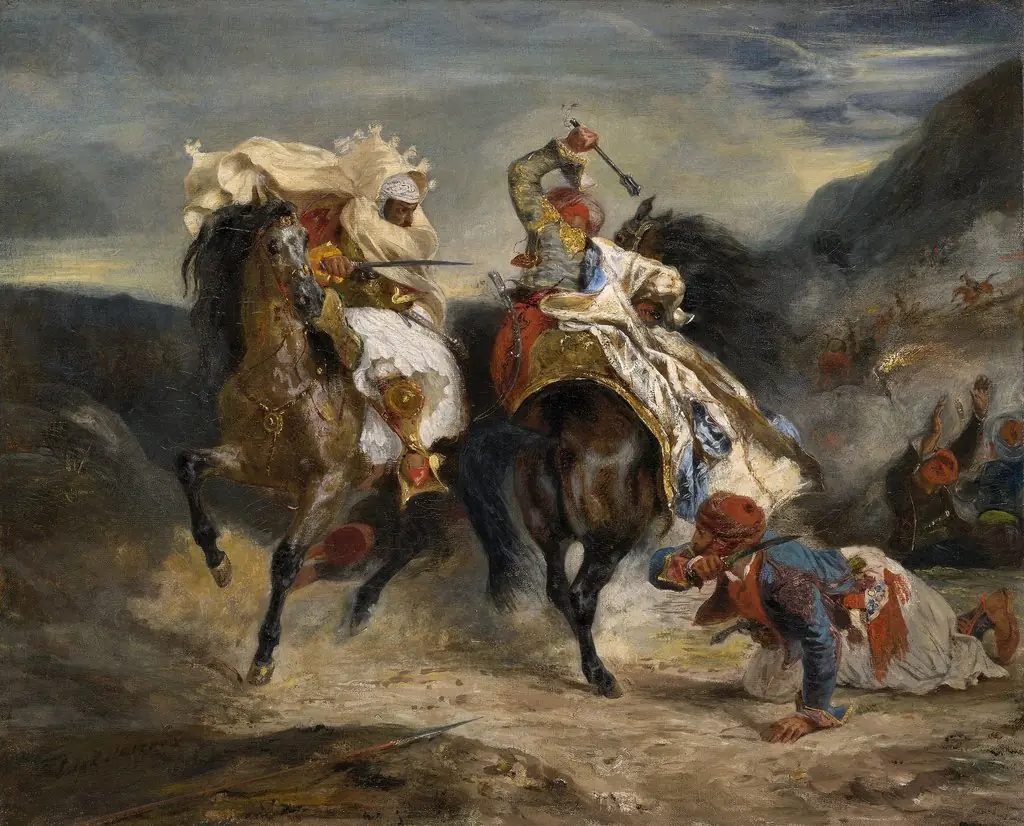
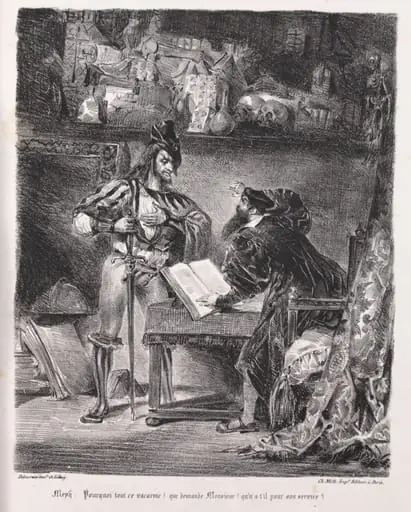 Illustrations for Faust: Méphistophélés visits Faust
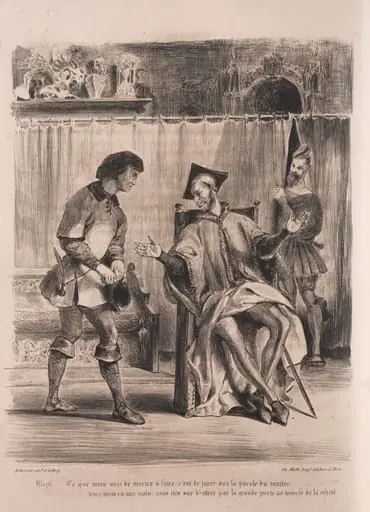 Illustrations for Faust: Méphistophélé receives the schoolboy
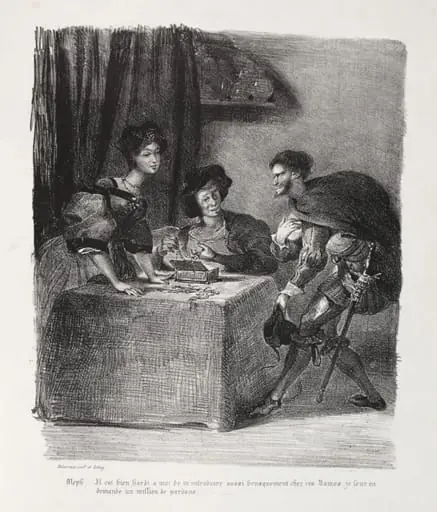 Illustrations for Faust: Méphistophelés is at Marthe
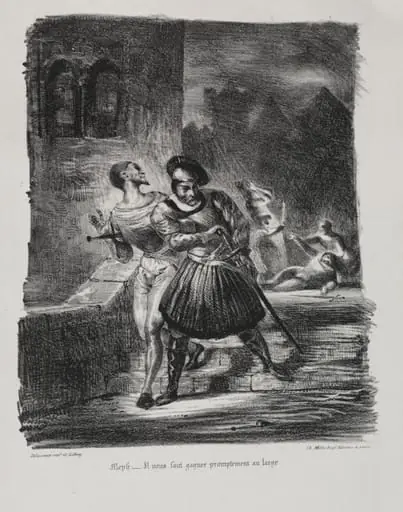 Illustrations for Faust: Méphistophélés and Faust flee after the duel
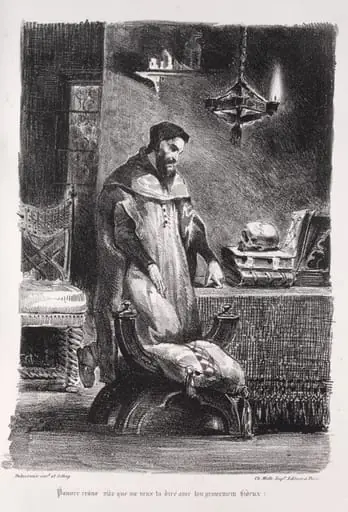 Illustrations for Faust: Faust in his dressing-room
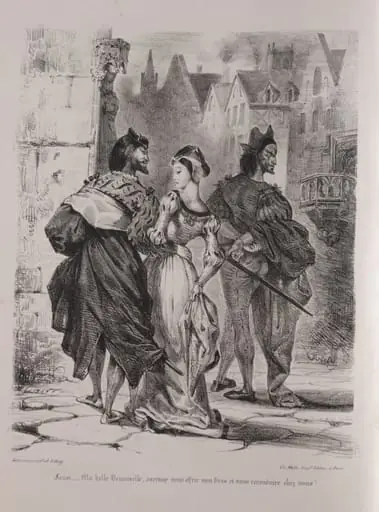 Illustrations for Faust: Faust seeks to allure Marguerite
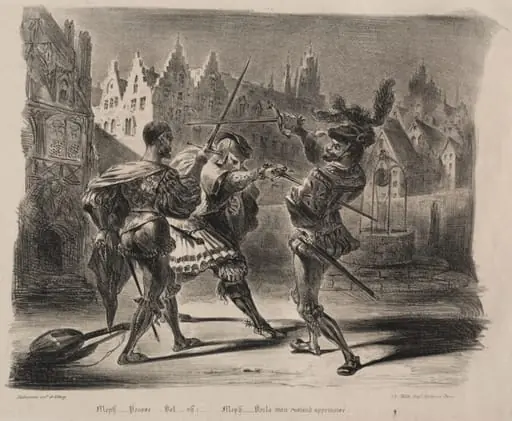 Illustrations for Faust: Duel of Faust and of Valentin
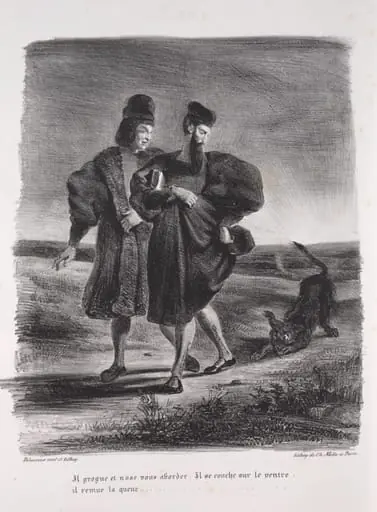 Illustrations for Faust: Faust, Méphistophélé and the barbet
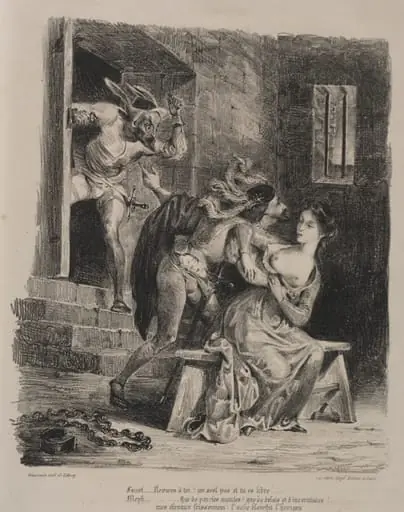 Illustrations for Faust: Faust in the prison of Marguerite
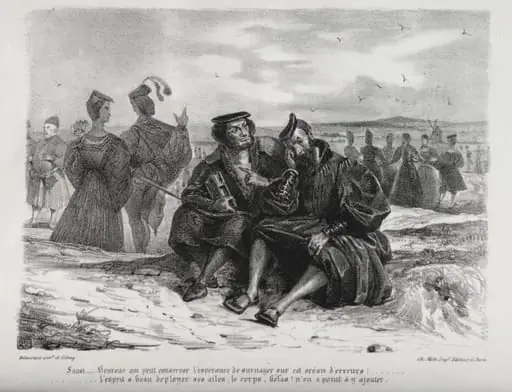 Illustrations for Faust: Faust and Wagner