Artwork
The Death of Ophelia (Act IV, Scene VII)
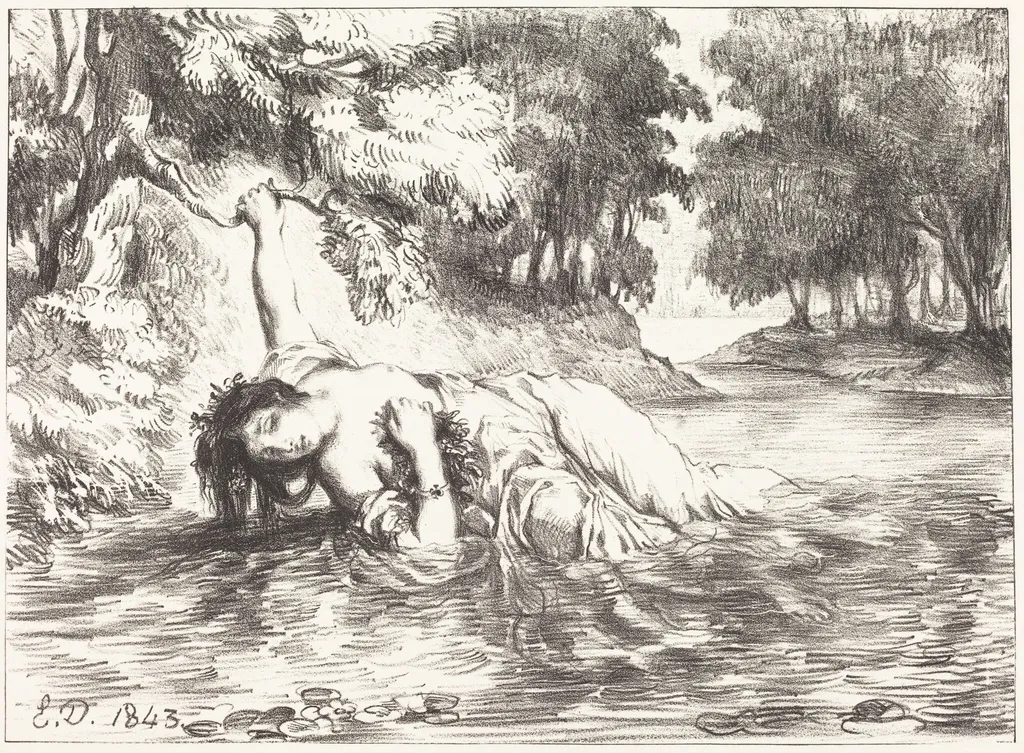
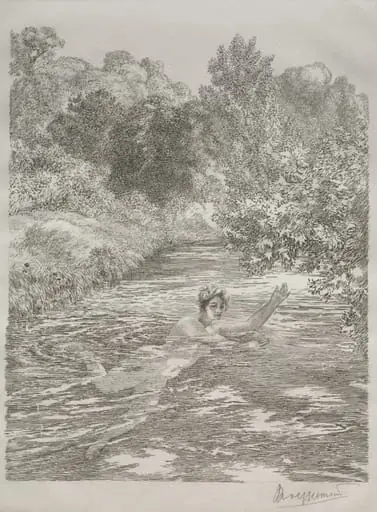
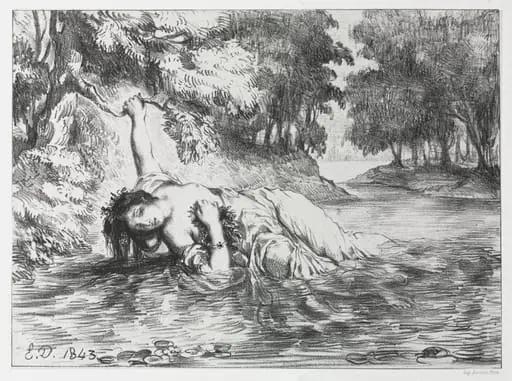
The Death of Ophelia (Act IV, Scene VII) is an ink print by the Romanticist artist Eugène Delacroix. It dates from 1843 and is held in the collection of the National Gallery of Art.
About this work
Overview
As a central figure in French Romanticism, he favored emotional intensity and dynamic composition over the rigid forms of Neoclassicism.
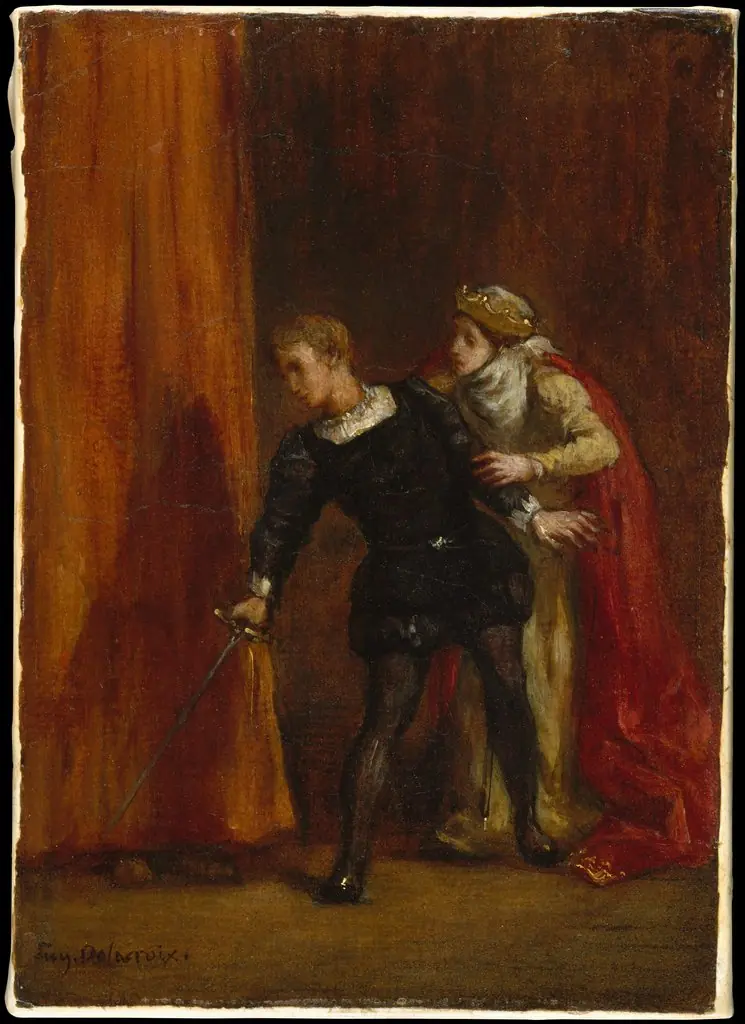
Eugène Delacroix produced this lithograph in 1843 as part of a series illustrating Shakespeare’s Hamlet. As a central figure in French Romanticism, he favored emotional intensity and dynamic composition over the rigid forms of Neoclassicism. The print captures a moment from Act IV, Scene VII, when Ophelia’s death is recounted by Gertrude. Delacroix translated the textual tragedy into a visual meditation on nature and loss.
Subject & Meaning
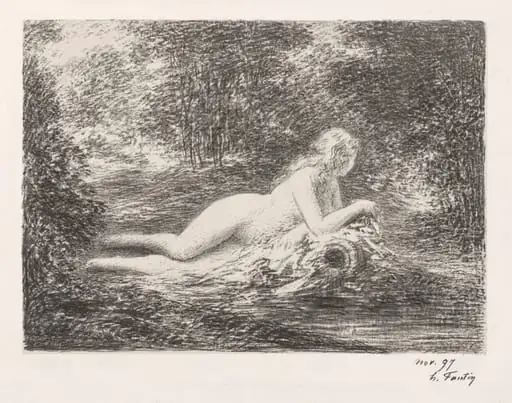
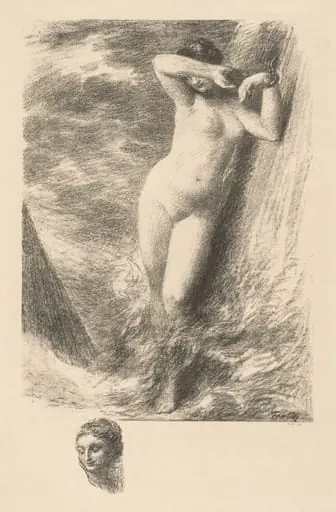
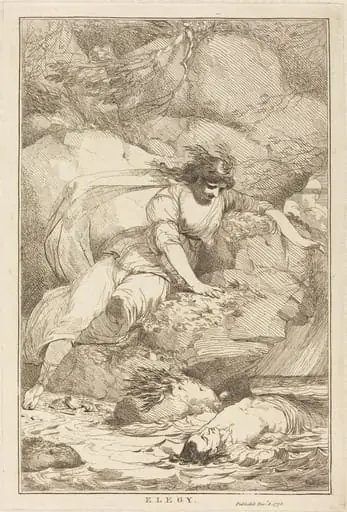
The image portrays Ophelia floating lifeless in a river, her body suspended in stillness amid overgrown vegetation. Her posture, with arms gently extended and head tilted back, suggests surrender rather than struggle. The faint suggestion of a smile and the abundance of flowers evoke a quiet, almost sacred acceptance of death. Delacroix emphasizes the convergence of human fragility and the indifferent beauty of the natural world.
Technique & Style
Executed in lithography, the work employs fluid lines and tonal gradations to suggest texture and movement. Delacroix avoided sharp contours, instead allowing forms to merge with the surrounding foliage through soft transitions. His use of ink and wash mimics the atmospheric effects of Venetian painting, prioritizing mood over detail. The composition’s asymmetry and organic flow reflect Romantic ideals of emotional resonance over formal symmetry.
History & Provenance
Created for a deluxe edition of Shakespeare’s plays published in France, the lithograph was one of several illustrations Delacroix made for literary subjects. Though not widely exhibited in his lifetime, it entered institutional collections in the late 19th century. Its survival in multiple impressions reflects its role as a scholarly and artistic reference, rather than a commercial print.
Context
In the 1840s, French artists increasingly turned to literature for subject matter, seeking emotional depth beyond historical or mythological themes. Delacroix’s engagement with Shakespeare aligned with a broader European fascination with the Bard’s psychological complexity. His interpretation diverged from literal narrative, focusing instead on the lyrical and symbolic dimensions of Ophelia’s demise.
Legacy
Delacroix’s Ophelia influenced later Symbolist and Pre-Raphaelite artists who explored similar themes of feminine mortality and natural melancholy. The lithograph’s emphasis on atmosphere over detail prefigured modernist tendencies toward emotional abstraction. Though less known than his oil paintings, this print remains a significant example of how Romantic ideals were adapted to the graphic arts.
Artist & collection
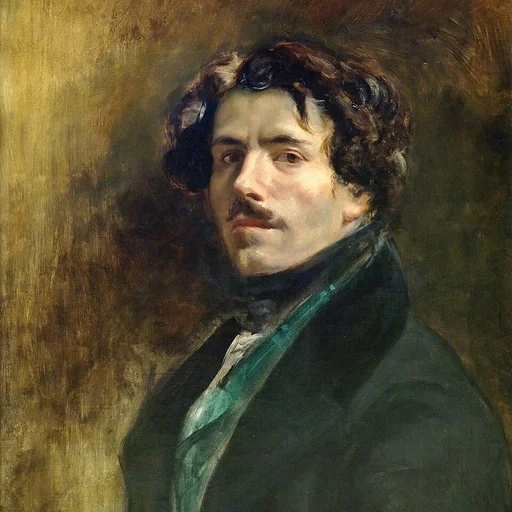
Artist
Ferdinand Victor Eugène Delacroix ( DEL-ə-krwah, -KRWAH; French: ; 26 April 1798 – 13 August 1863) was a French Romantic artist who was regarded as the leader of the French Romantic school.