Artwork
Hamlet: The Death of Ophelia
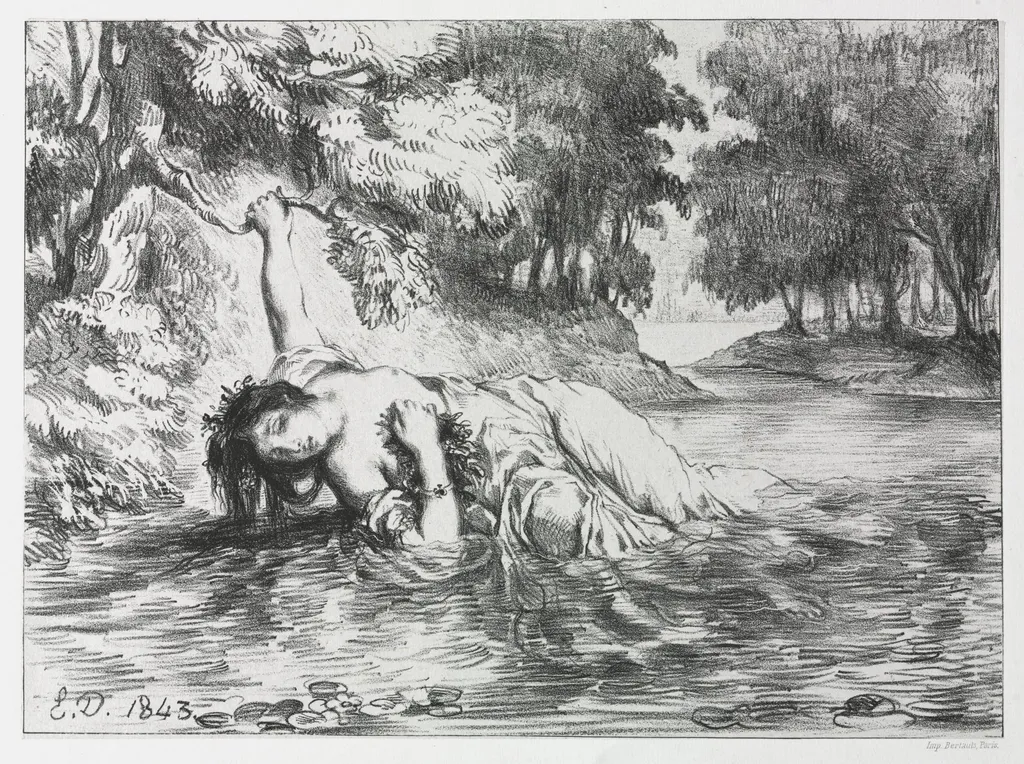
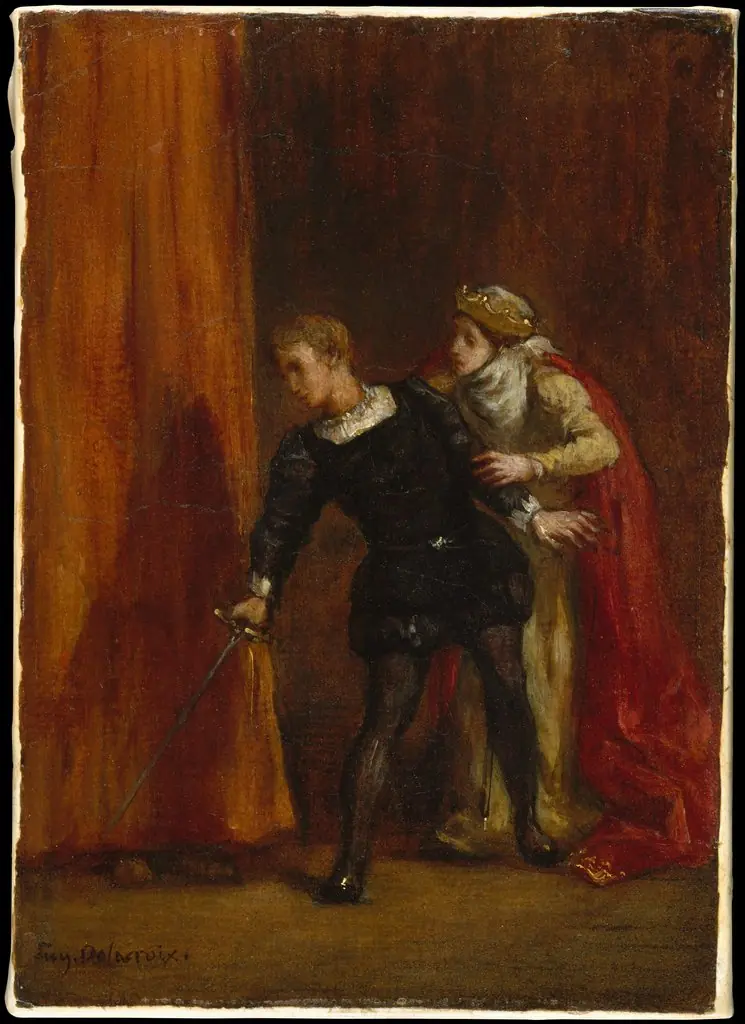
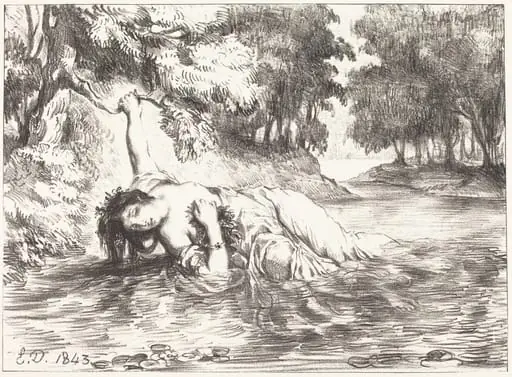
Hamlet: The Death of Ophelia is a print by the Romanticist artist Eugène Delacroix. It dates from 1843 and is held in the collection of the Cleveland Museum of Art.
About this work
Overview
Hamlet: The Death of Ophelia is an 1843 print by Eugène Delacroix, a prominent French Romantic artist. The work depicts a pivotal scene from Shakespeare's Hamlet, showcasing Delacroix's characteristic emphasis on emotional intensity and dynamic movement.
Subject & Meaning
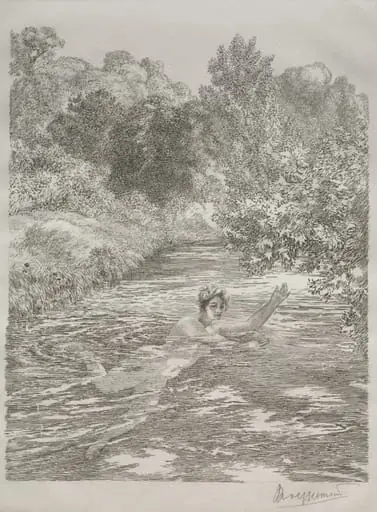
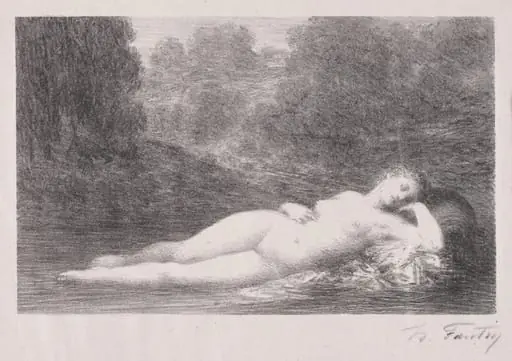
The print illustrates Ophelia's serene and peaceful death in a river, surrounded by lush vegetation. Despite the tragic context, the composition conveys a sense of calm, juxtaposing the turmoil of the narrative with the tranquility of the depicted moment.
Technique & Style
Delacroix's bold, expressive brushstrokes and a predominantly green and blue palette dominate the work. These elements, along with the emphasis on emotion, align with Romantic ideals, diverging from the Neoclassical tradition in favor of a more expressive, imaginative approach.
History & Provenance
Created in 1843, the print is now part of The Cleveland Museum of Art's collection. Delacroix's inspiration drew from the Venetian Renaissance and artists like Rubens, reflecting his divergence from contemporary Neoclassical influences.
Context
This work embodies the Romantic movement's focus on emotion and imagination. It stands alongside other Romantic works in exploring the sublime and the emotional depth of literary subjects, in this case, Shakespeare's tragic heroine.
Legacy
Hamlet: The Death of Ophelia contributes to Delacroix's legacy as a leading Romantic artist, illustrating the movement's influence on interpreting literary themes through vivid, emotionally charged visuals.
Artist & collection
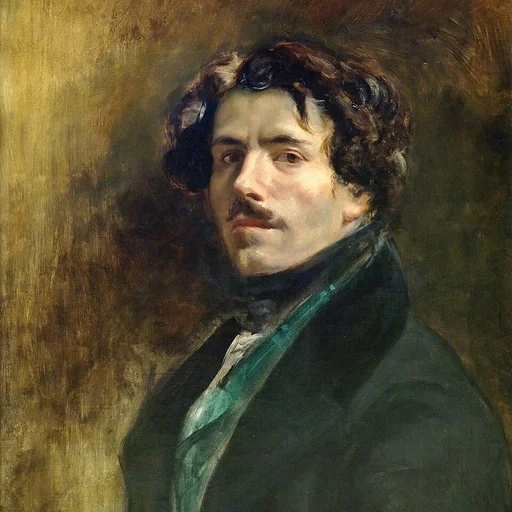
Artist
Ferdinand Victor Eugène Delacroix ( DEL-ə-krwah, -KRWAH; French: ; 26 April 1798 – 13 August 1863) was a French Romantic artist who was regarded as the leader of the French Romantic school.