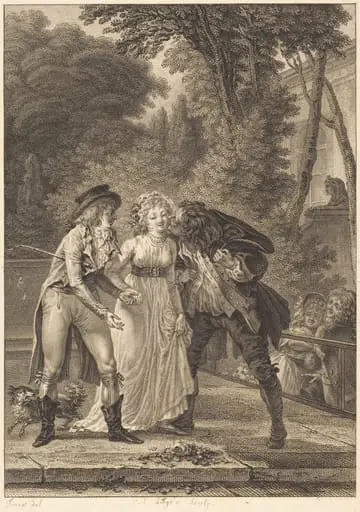
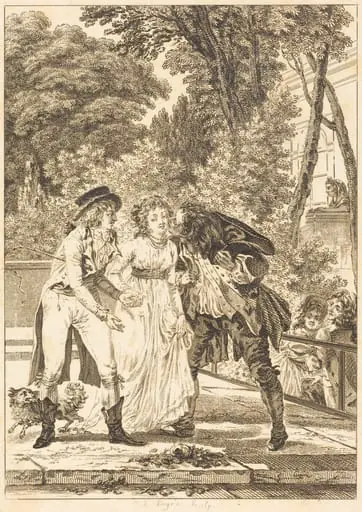
Artwork
Le cocu battu et content
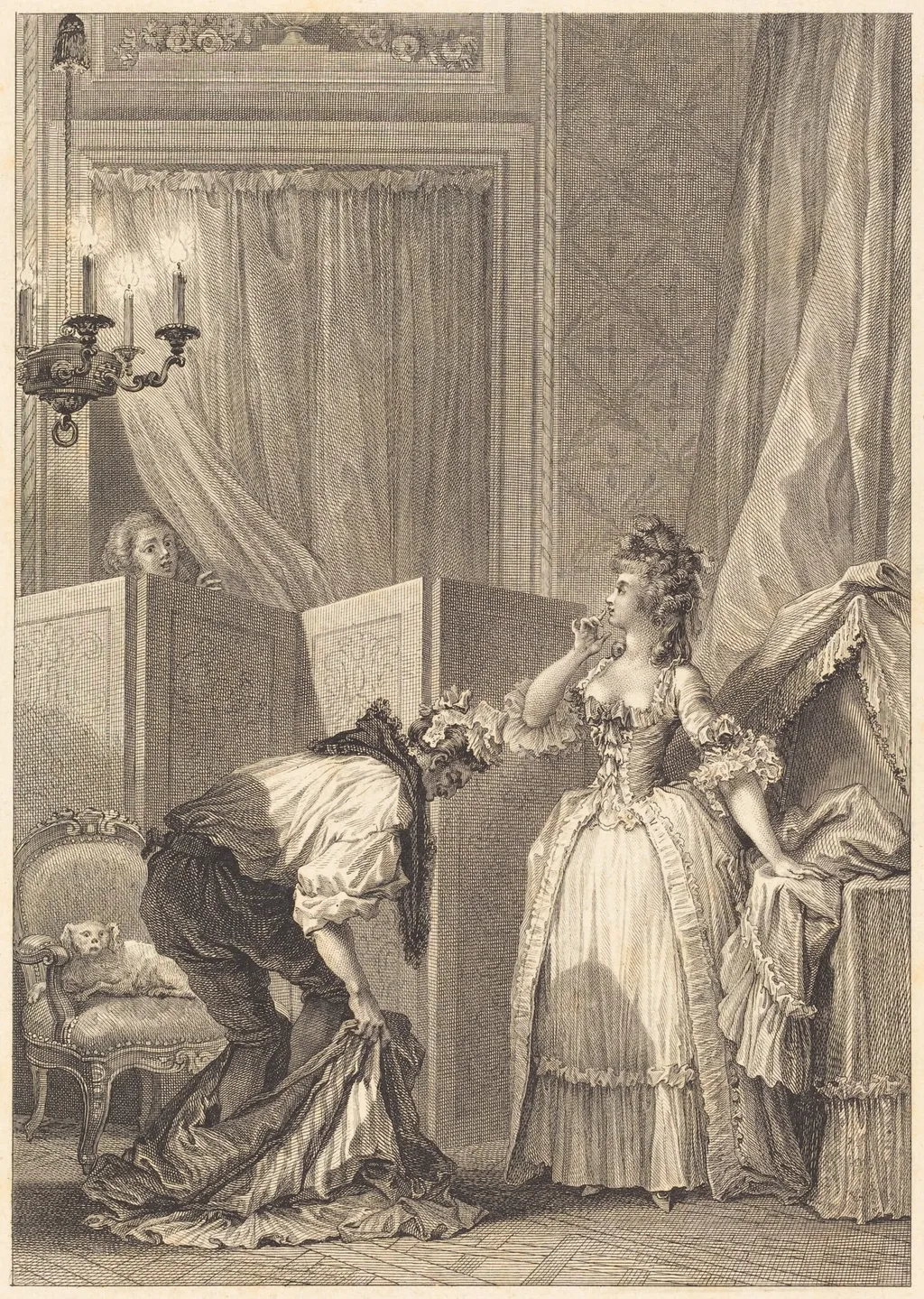
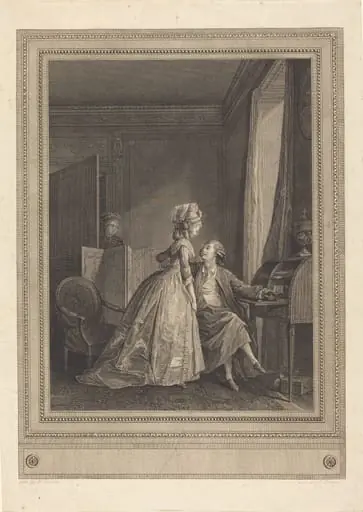
Le cocu battu et content is an ink print by the Romanticist artist Jean-Louis Delignon. It dates from 1780 and is held in the collection of the National Gallery of Art.
About this work
Overview
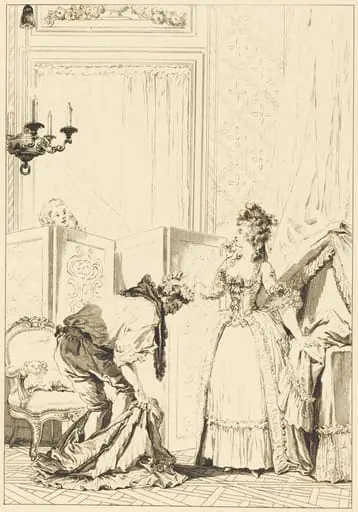
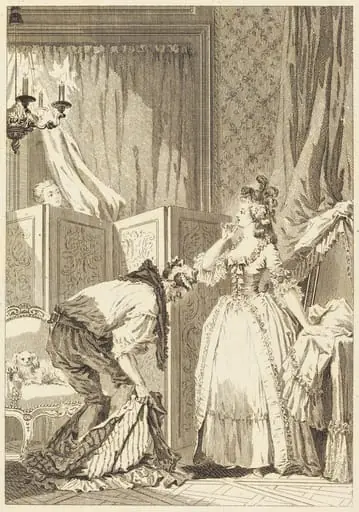
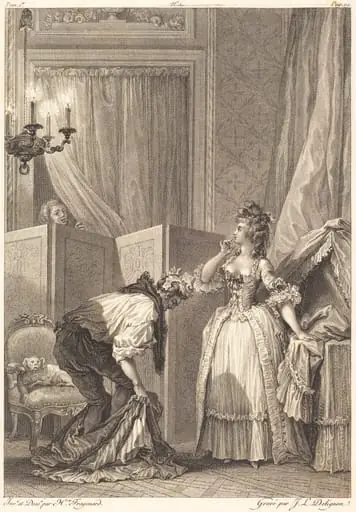
Jean‑Louis Delignon’s print Le cocu battu et content, executed in 1780, is an engraving that combines line work with tonal shading. The work measures a modest size typical of eighteenth‑century French prints and presents a domestic interior populated by three figures and a pet cat, rendered with careful attention to clothing, furnishings, and light sources.
Subject & Meaning
The title, suggesting a “cuckold who is beaten yet content,” hints at a satirical narrative about marital infidelity and the complex emotions it engenders.
The composition depicts a woman in an elaborate gown, standing beside a window and fanning herself, while a kneeling man holds a miniature portrait that appears to provoke her irritation. A cat reclines on a nearby chair, and a candle casts a warm glow. The title, suggesting a “cuckold who is beaten yet content,” hints at a satirical narrative about marital infidelity and the complex emotions it engenders.
Technique & Style
Delignon employed the traditional engraving method, incising fine lines into a copper plate and using cross‑hatching to achieve depth and texture. The artist’s handling of light—particularly the candle’s illumination and the soft shadows behind the curtains—demonstrates a mastery of chiaroscuro within the print medium. The detailed rendering of fabrics and the subtle expression of the figures reflect the late Rococo’s penchant for elegant yet narrative scenes.
History & Provenance
Created in the final decade of the Ancien Régime, Le cocu battu et content was likely produced for the private market of collectors interested in genre prints that combined humor with social commentary. The work has been documented in several nineteenth‑century catalogues of French prints and is presently held in the collection of a European museum, where it continues to be cited in studies of Delignon’s oeuvre.
Artist & collection