Artwork
La matrone d'Ephese
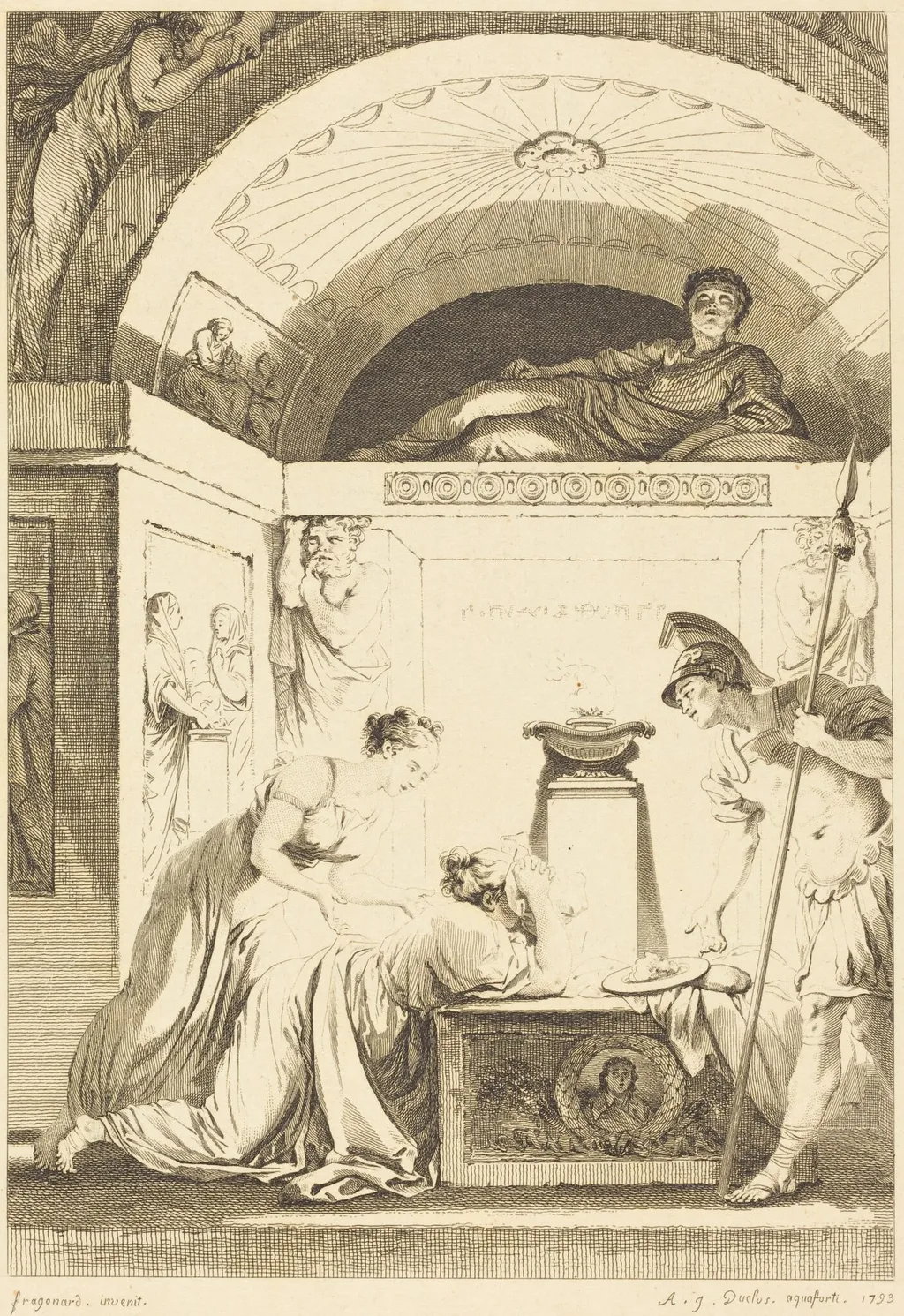
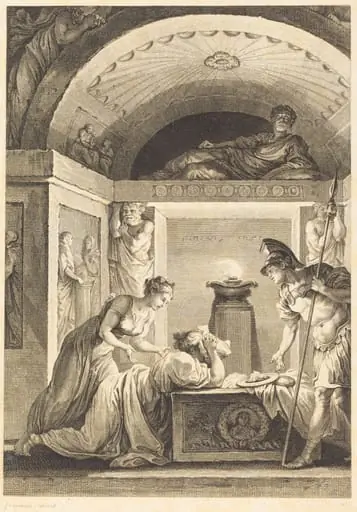
La matrone d'Ephese is an ink print by the Romanticist artist Jean-Louis Delignon. It dates from 1793 and is held in the collection of the National Gallery of Art.
About this work
Overview
The technique of etching allows for precise control over tone and form, emphasizing the emotional gravity of the scene.
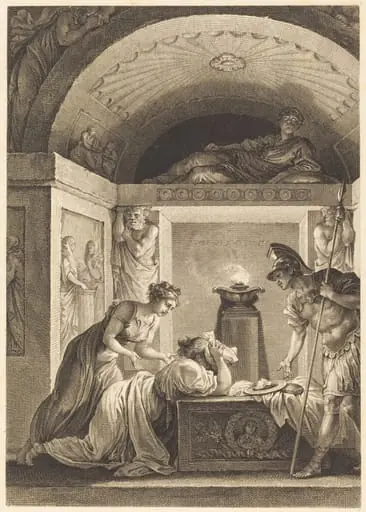
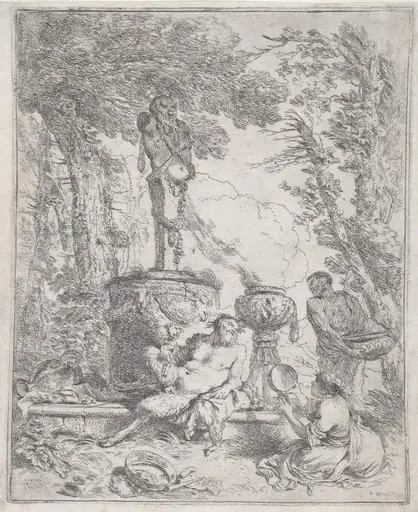
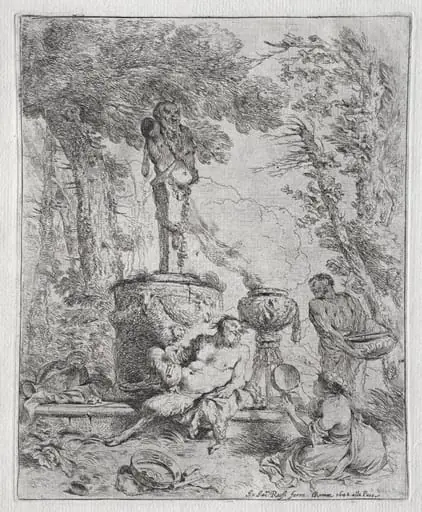
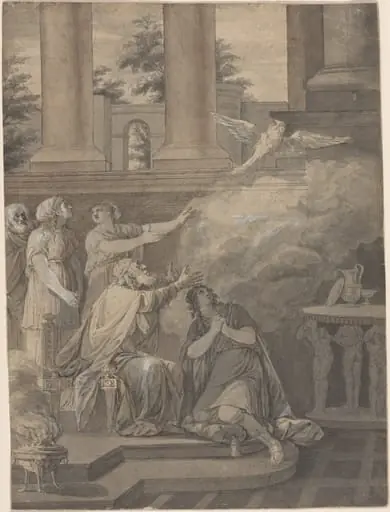
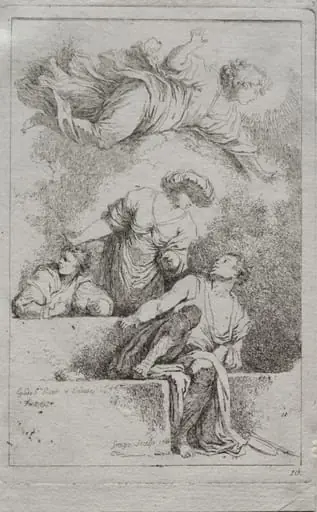
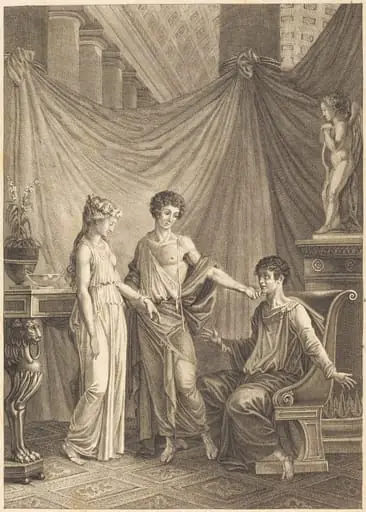
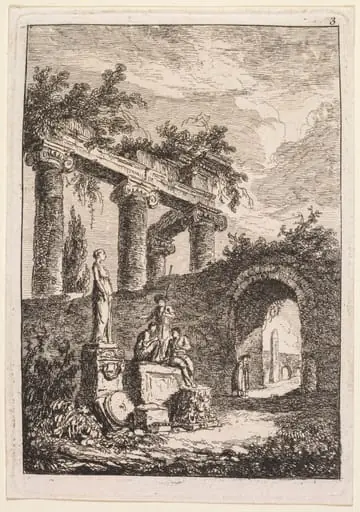
La matrone d'Ephese is an 1793 etching by French artist Jean-Louis Delignon. The print depicts a group gathered around a sculpted tomb, with a reclining woman at its center. Rendered in fine, incised lines, the composition uses contrast and sharp detail to convey a moment of solemn ritual. The technique of etching allows for precise control over tone and form, emphasizing the emotional gravity of the scene.
Subject & Meaning
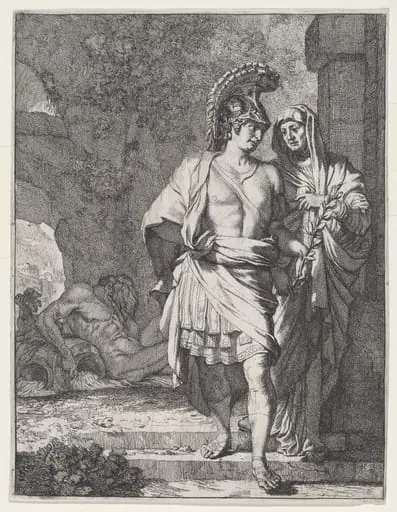
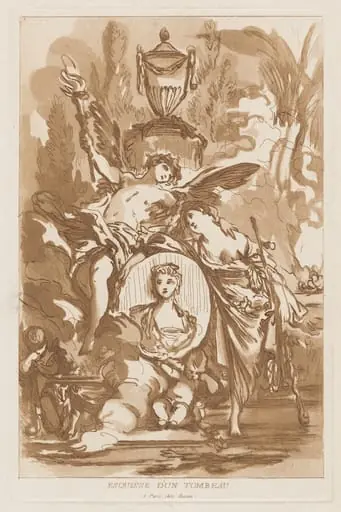
The scene references the legendary figure of the Ephesian matron, traditionally associated with mourning and devotion. The woman lying atop the tomb appears to gaze upward, suggesting contemplation or supplication. Surrounding figures kneel or stand in quiet reverence, some holding offerings. The presence of carved ornamentation and a small statue on the tomb implies a funerary cult or religious custom, reinforcing themes of loss and remembrance.
Technique & Style
Delignon employed etching to achieve crisp, linear definition and nuanced shading. The plate was incised with acid-resistant grounds, allowing for fine, controlled lines that model the figures and architecture. Deep shadows contrast with lighter areas to create volume and spatial depth. The style is restrained yet expressive, favoring clarity of form over ornamental flourish, typical of late 18th-century academic printmaking.
History & Provenance
Created in 1793, the etching emerged during a period of intense cultural reevaluation in France, as classical antiquity was revisited amid revolutionary ideals. Delignon, active in Parisian artistic circles, likely produced this work for a private or scholarly audience interested in antiquarian themes. No documented early ownership records survive, but its subject aligns with contemporary fascination with Greco-Roman funerary practices.
Context
In the late 1700s, European artists increasingly drew from classical sources to explore moral and emotional narratives. The Ephesian matron, rooted in ancient legend, symbolized fidelity and grief. Delignon’s print reflects this trend, merging archaeological interest with sentimental representation. The work belongs to a broader movement that used historical subjects to engage with contemporary values of duty, memory, and stoicism.
Legacy
Though not widely reproduced or exhibited today, La matrone d'Ephese remains a representative example of French academic etching from the Revolutionary era. It illustrates how classical themes were adapted to convey universal human experiences. The print contributes to the historical record of printmaking’s role in disseminating mythological and funerary imagery beyond painting and sculpture.
Artist & collection