Artwork
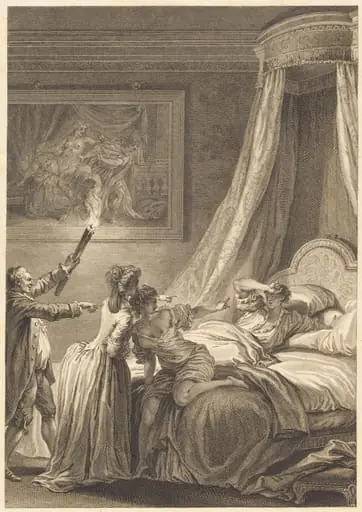
Le cocu battu et content
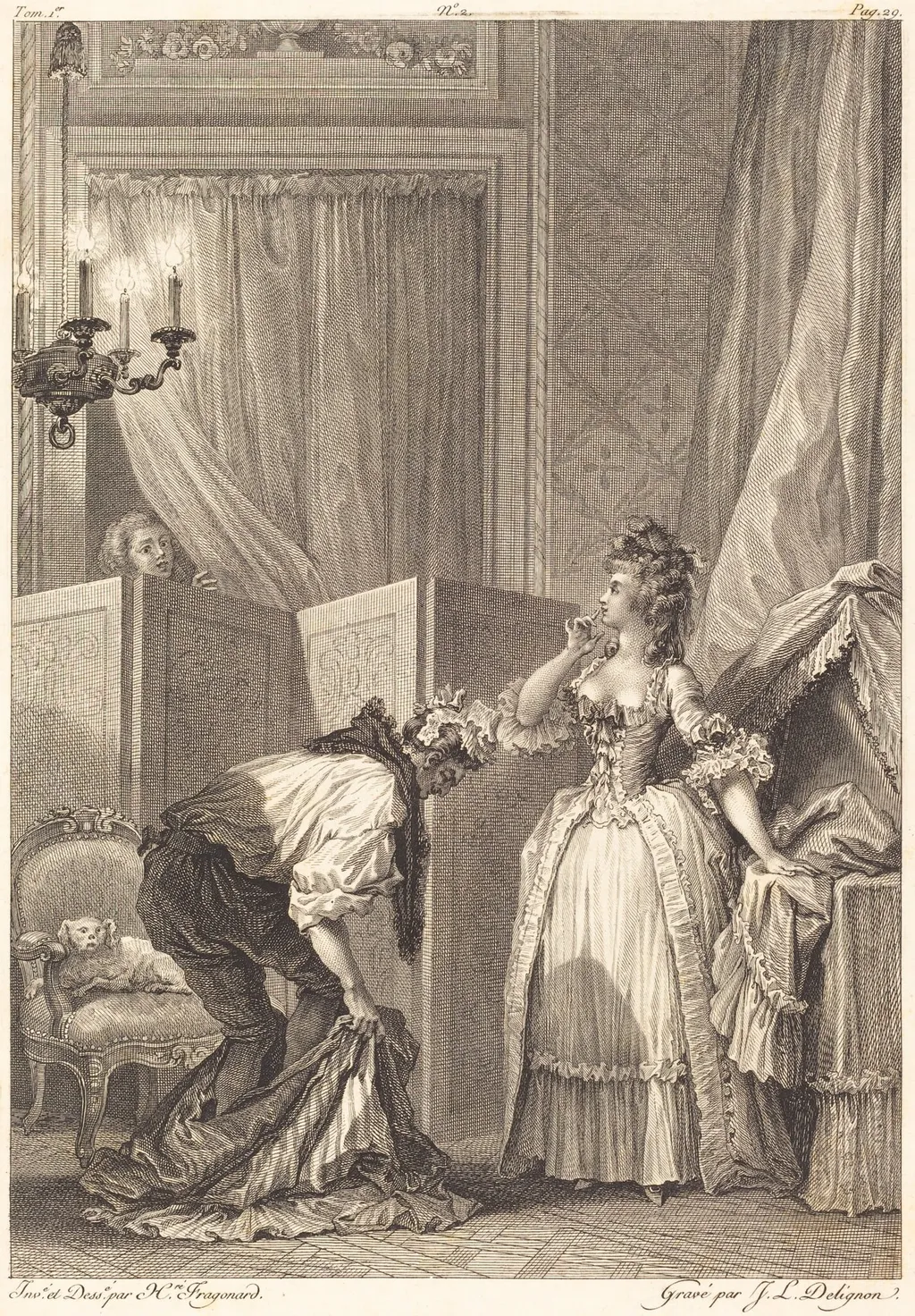
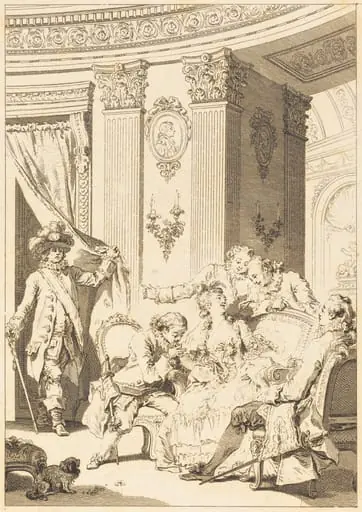
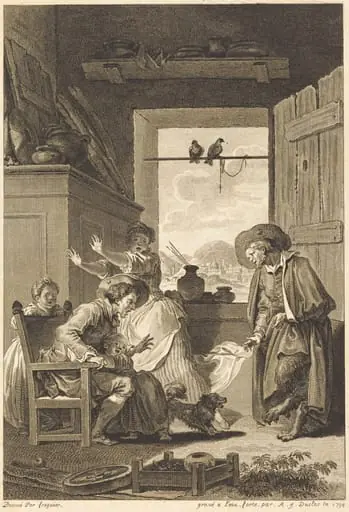
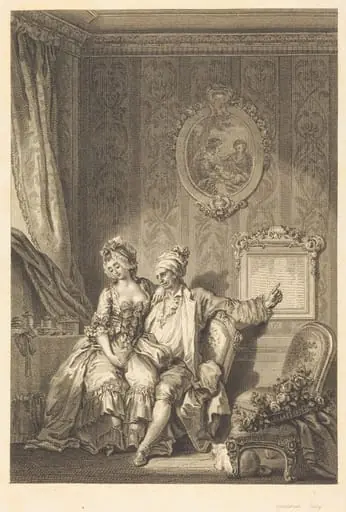
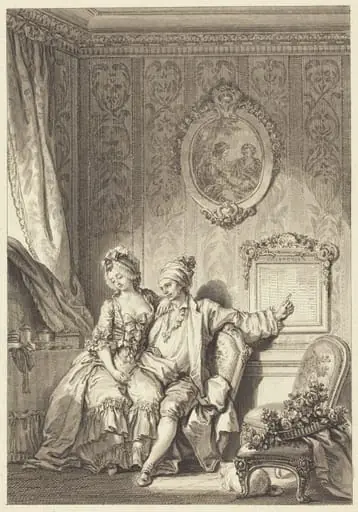
Le cocu battu et content is an ink print by the Romanticist artist Antoine-Jean Duclos. It dates from 1780 and is held in the collection of the National Gallery of Art.
About this work
Overview
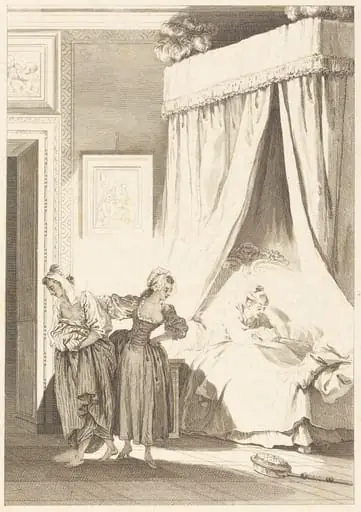
Antoine‑Jean Duclos produced the print Le cocu battu et content in 1780. Executed as an engraving, the work presents a domestic interior rendered in black‑and‑white. The composition centers on a woman in an elaborate dress, a despondent man on the floor, and a curious child holding a lit candle, all set within a cluttered room illuminated by soft candlelight.
Subject & Meaning
The juxtaposition of calm and melancholy hints at themes of infidelity, neglect, or social satire common in late‑eighteenth‑century genre prints.
The scene suggests a quiet domestic conflict: the woman, poised by a window with a feather duster, appears indifferent, while the man lies slumped, clutching a pillow in apparent sorrow. The child's inquisitive glance over the sill adds a note of observation. The juxtaposition of calm and melancholy hints at themes of infidelity, neglect, or social satire common in late‑eighteenth‑century genre prints.
Technique & Style
Duclos combined etching, drypoint, and aquatint to achieve a range of line and tonal effects. Etching provides the precise outlines of figures and furnishings, drypoint adds rich, velvety lines for texture, and aquatint supplies subtle washes that model the shadows and candlelight. This layered approach yields a nuanced chiaroscuro within the monochrome medium, emphasizing depth and atmosphere.
History & Provenance
Created in 1780, the print belongs to the period of pre‑revolutionary French printmaking, when genre scenes were popular among both connoisseurs and the broader public. While specific ownership records are scarce, the work has appeared in several catalogues of Duclos’s oeuvre and is held in the collections of European museums specializing in eighteenth‑century prints.
Artist & collection