Artwork
Le cocu battu et content
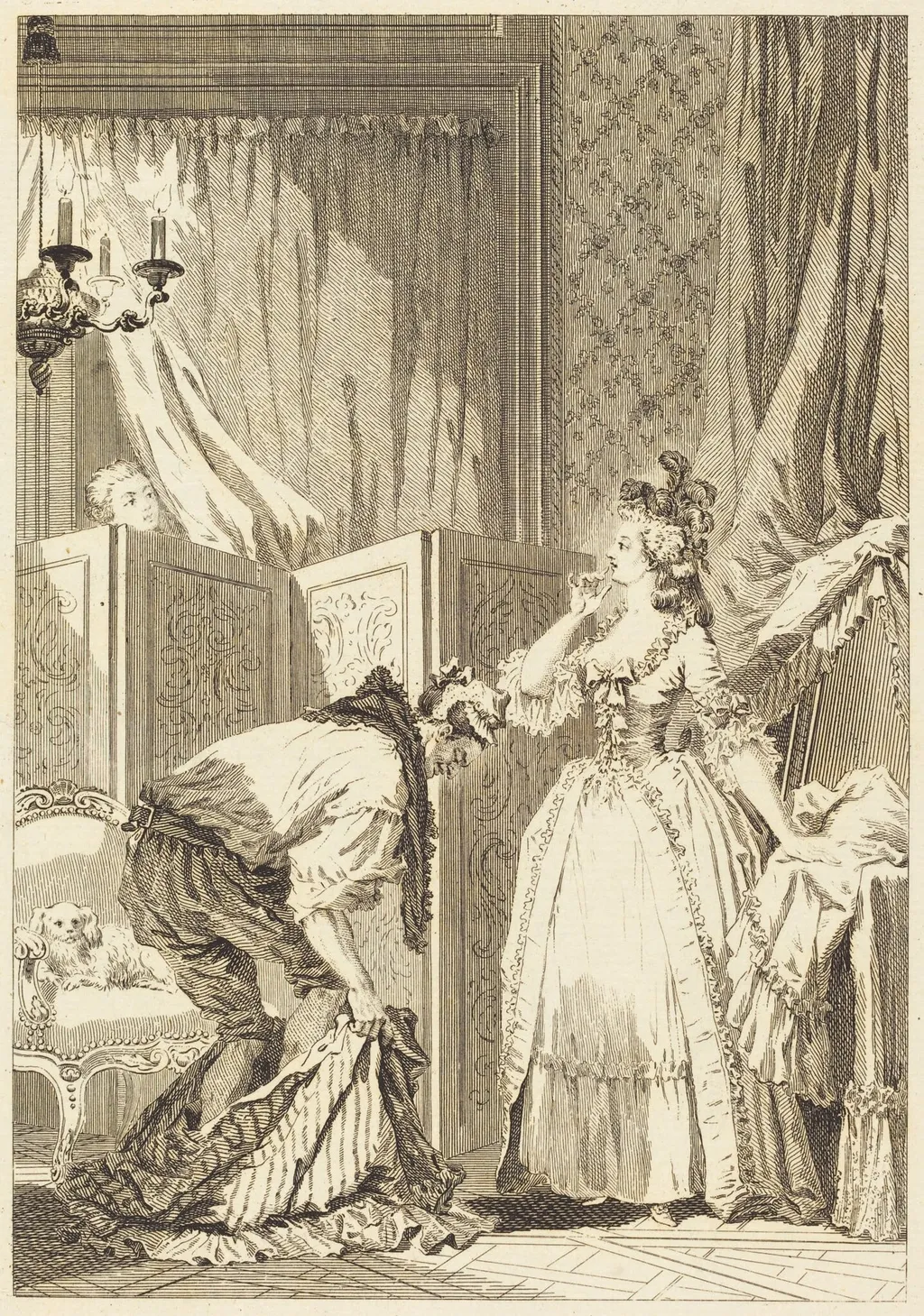
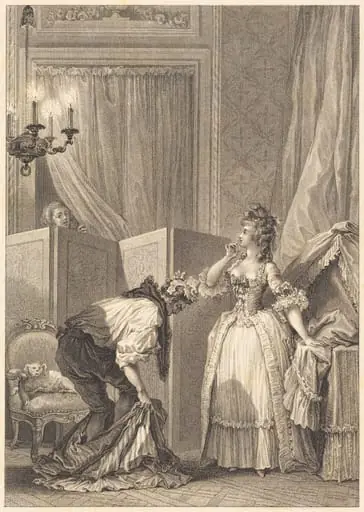
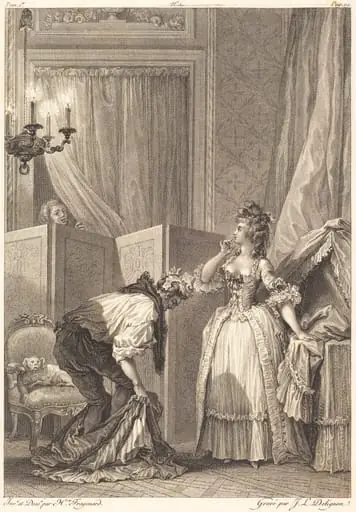
Le cocu battu et content is an ink print by the Romanticist artist Jean-Louis Delignon. It dates from 1780 and is held in the collection of the National Gallery of Art. Created in 1780, this etching—identified as a rejected plate—was produced by French printmaker Jean‑Louis Delignon.
About this work
Overview
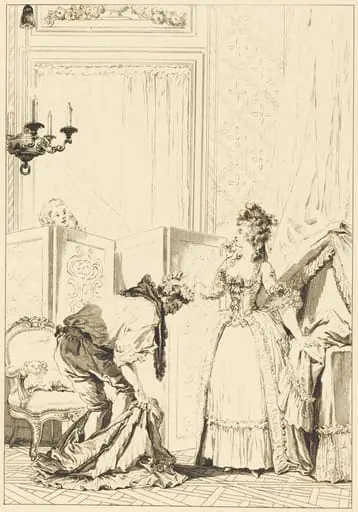
Created in 1780, this etching—identified as a rejected plate—was produced by French printmaker Jean‑Louis Delignon. The work presents a domestic interior where a man assists a woman in stepping into a voluminous dress, capturing a moment of quiet preparation.
Subject & Meaning
The scene focuses on a couple engaged in an intimate ritual: the kneeling male holds up the garment while the female, poised in a corseted bodice and ruffled skirt, prepares to don it. A seated dog and modest furnishings underscore the everyday nature of the encounter, suggesting themes of partnership and domestic routine.
Technique & Style
Executed in etching, the image displays Delignon’s fine line work and careful shading, typical of late‑18th‑century French printmaking. Though predating the height of Romanticism, its emphasis on personal emotion and ordinary life anticipates the movement’s interest in sentiment and the private sphere.
History & Provenance
The plate was never issued as a final impression, indicating it was likely set aside during Delignon’s production process. Its survival as a rejected plate offers insight into the artist’s workshop practices and the decisions governing print publication in the period.
Context
Delignon worked during a transitional era when French art was shifting from Rococo frivolity toward the more emotionally charged sensibilities that would define Romanticism. This work’s focus on a simple, affective domestic scene reflects that broader cultural movement toward portraying genuine feeling in everyday settings.
Artist & collection