Artwork
Galloping Horsemen
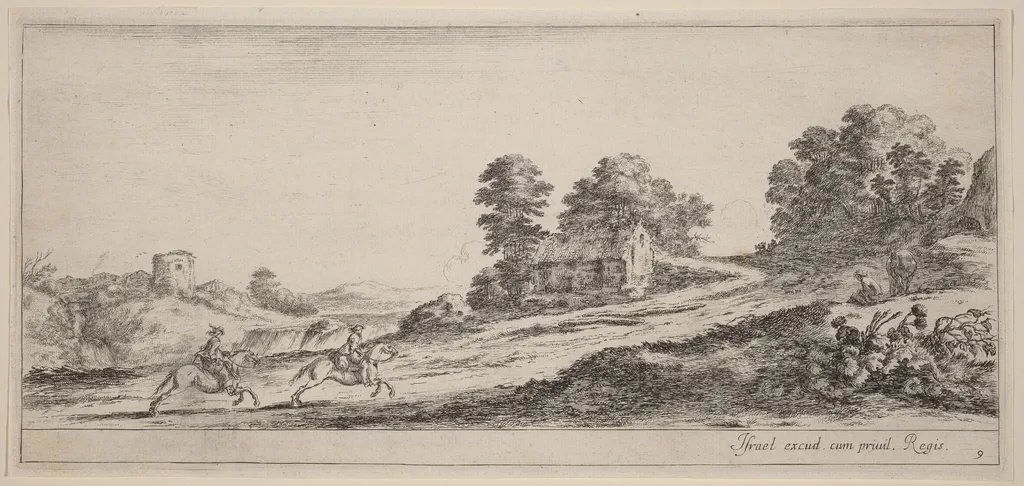
Galloping Horsemen is an ink print by the Baroque artist Stefano Della Bella. It dates from 1647 and is held in the collection of the National Gallery of Art.
About this work
Overview
The work is rendered entirely in black ink on paper, using the etching technique to achieve fine, expressive lines without color or shading beyond line weight.
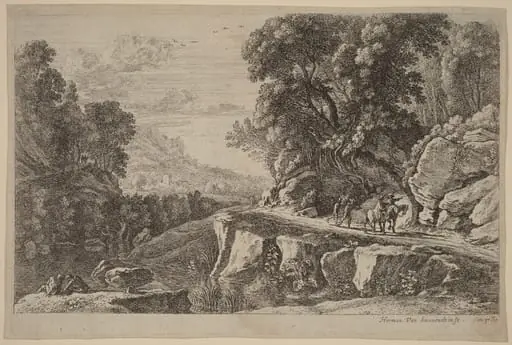
Created in 1647 by the Florentine artist Stefano della Bella, this etching captures two horsemen in motion across a rural landscape. As one of over a thousand prints he produced, it exemplifies his focus on equestrian themes and dynamic composition. The work is rendered entirely in black ink on paper, using the etching technique to achieve fine, expressive lines without color or shading beyond line weight.
Subject & Meaning
The scene portrays two riders galloping along a winding path, their forms blurred to suggest speed rather than individual identity. A distant stone tower and sparse trees frame the landscape, grounding the action in a quiet, unpopulated countryside. The absence of facial detail and narrative context shifts focus from story to movement, emphasizing the energy of motion over specific event or person.
Technique & Style
Della Bella employed etching to render fluid, rhythmic lines that convey velocity and texture. The horses' hooves disturb the earth with jagged strokes, while the riders' bodies dissolve into simplified silhouettes. Background elements are rendered with lighter, more attenuated lines, creating spatial depth through contrast rather than tone. The entire image relies on line alone, demonstrating mastery of minimalism within a detailed medium.
History & Provenance
Produced during della Bella’s mature period in Florence, this print reflects his engagement with contemporary military and equestrian subjects. Though its early ownership is unrecorded, it aligns with a broader European interest in print circulation among collectors and artists. The work entered institutional collections in the 19th century, where it remains as part of studies on Baroque graphic art.
Context
In mid-17th-century Italy, etching was a favored medium for artists seeking to explore movement and transient moments. Della Bella’s work responded to a growing appetite for prints that captured action—military parades, hunting scenes, and equestrian studies—outside the constraints of formal portraiture or religious narrative. His prints circulated widely, influencing draftsmen across Europe.
Legacy
This etching exemplifies della Bella’s contribution to the evolution of printmaking as a vehicle for kinetic expression. His ability to suggest motion with minimal means influenced later artists working in graphic media. Though not widely exhibited today, it remains a reference point in academic studies of Baroque draftsmanship and the expressive potential of line in monochrome print.
Artist & collection
Artist
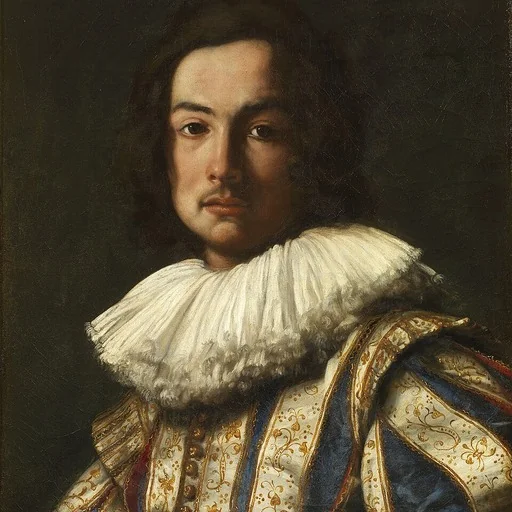
Stefano della Bella (18 May 1610 – 12 July 1664) was an Italian draughtsman and printmaker known for etchings of a great variety of subjects, including military and court scenes, landscapes, and lively genre scenes.

![The Flight into Egypt [verso], by Stefano Della Bella](https://artifactworldgallery.com/img/stefano-della-bella--the-flight-into-egypt-verso--3a100db72e6d25e3-w320.webp)
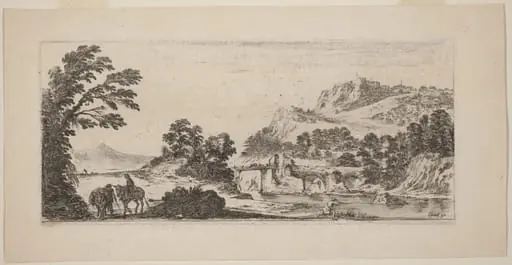 Landscape with Bridge
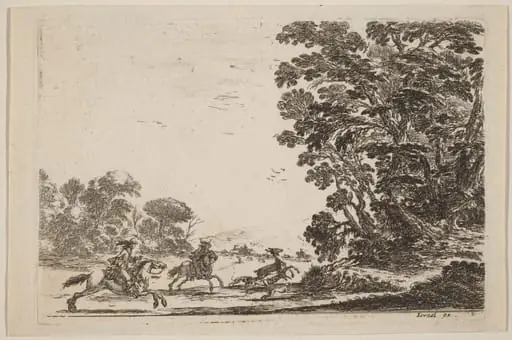 Forest with Deer Hunt
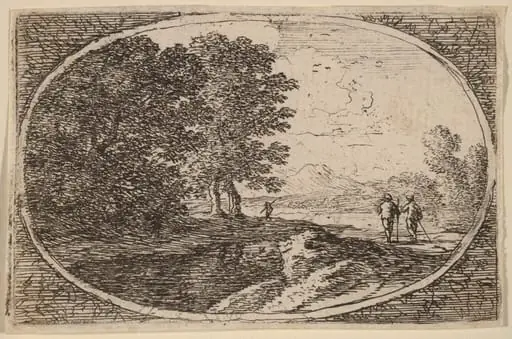 Three Men Carrying Staffs
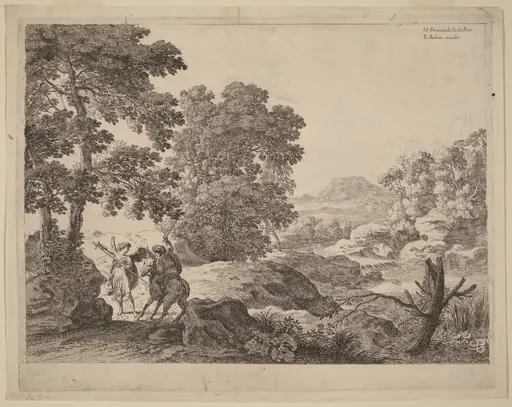 Balaam and the Ass
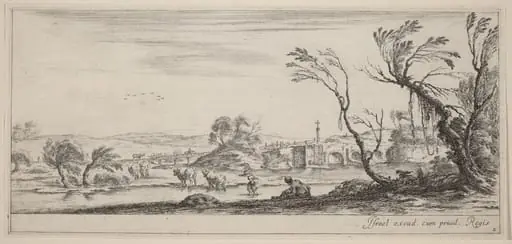 Landscape with Peasant Preparing to Cross a Stream
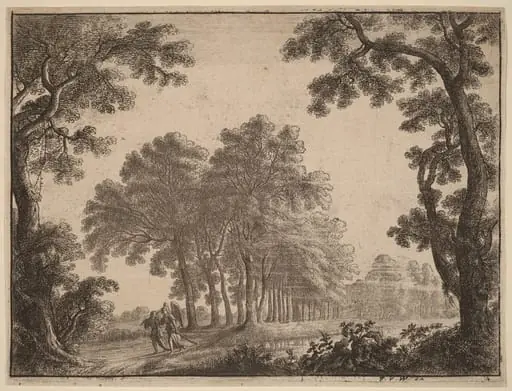 Landscape with Tobias and the Angel
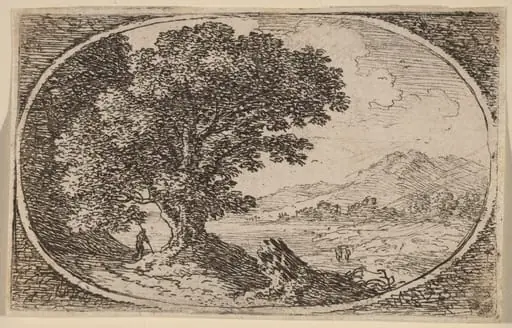 Path to Left of a Large Tree and a Stump
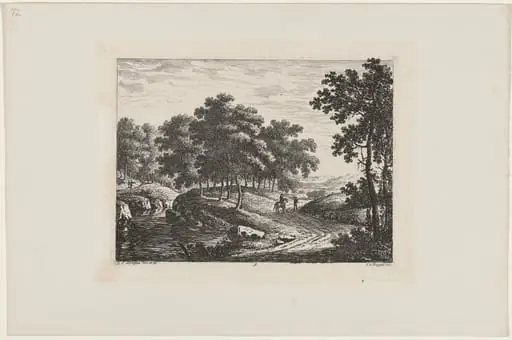 Rider on a Path
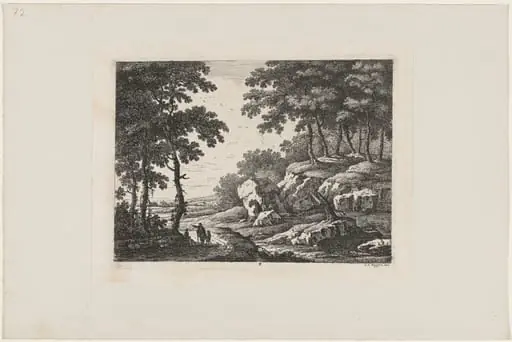 Traveler Pointing the Way
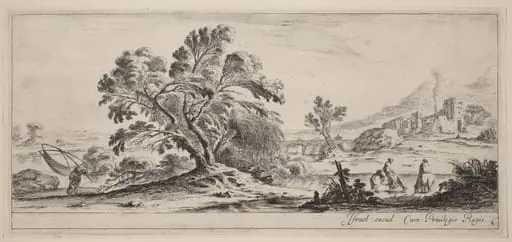 Landscape with Fisherman Carrying his Net
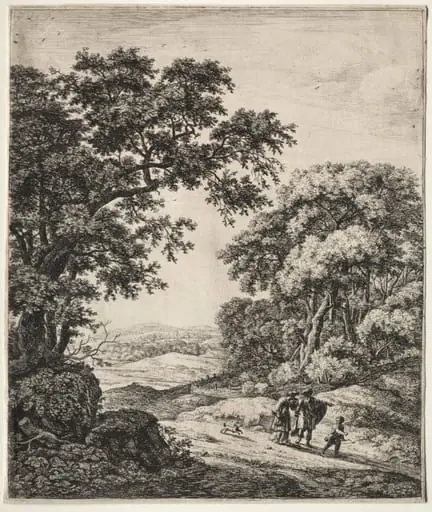 Six large upright landscapes with scenes from the Old Testament: Abraham Dismissing Hagar and Ishmael
 The Two Horsemen