Artwork
Parade with a Chariot Having the Form of a Ship
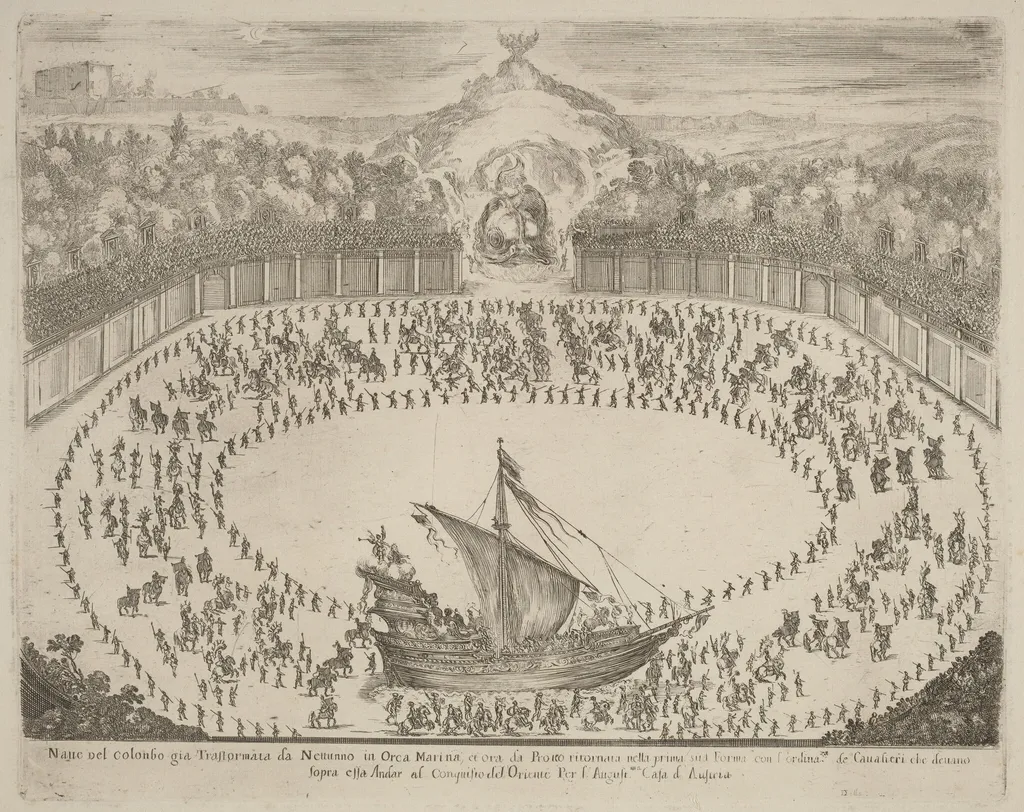
Parade with a Chariot Having the Form of a Ship is an ink print by the Baroque artist Stefano Della Bella. It dates from 1652 and is held in the collection of the National Gallery of Art.
About this work
Overview
Stefano della Bella created this etching in 1652 as a restrike on laid paper, part of his extensive output of over a thousand prints.
Stefano della Bella created this etching in 1652 as a restrike on laid paper, part of his extensive output of over a thousand prints. Though primarily known for drawings and etchings, he rarely worked in painting. This piece belongs to a series of ceremonial scenes, capturing a public procession with unusual architectural spectacle. The work reflects his skill in rendering movement and crowd dynamics through fine linear detail.
Subject & Meaning
The scene depicts a ceremonial parade centered on a ship-shaped chariot, likely symbolizing maritime power or a mythological allegory. Figures surround the vehicle in orderly arrays, suggesting civic or royal celebration. Trees and distant architecture frame the event, grounding it in a real urban setting. The ship’s form may reference naval triumphs or allegorical journeys, common in Baroque iconography, though no specific historical event is confirmed.
Technique & Style
Della Bella employed fine etching lines to convey texture, depth, and motion. The crowd is rendered with varied densities of hatching, distinguishing individual postures while maintaining compositional flow. The ship-chariot is detailed with architectural precision, contrasting with the looser handling of background elements. This blend of precision and spontaneity exemplifies his Baroque approach: dynamic, observational, and rich in atmospheric detail.
History & Provenance
The original etching was produced in Florence during della Bella’s mature period, when he was active in both Italian and French courts. This version is a later restrike, made from the original plate after his death. Such restrikes were common among printmakers to meet continued demand. The work entered public collections in the 19th century, where it is now preserved as part of the broader European print tradition.
Context
Created during the height of the Baroque era, the work aligns with contemporary interests in spectacle and public ritual. Florence, under Medici patronage, hosted elaborate processions to display political and religious authority. Della Bella’s prints often documented such events, serving as visual records for elite audiences. The ship motif may echo naval victories or allegories tied to Tuscany’s maritime ambitions, even if indirect.
Legacy
Della Bella’s etchings influenced later generations of printmakers through their observational clarity and compositional inventiveness. While not widely replicated, this piece contributes to the understanding of 17th-century civic pageantry in Italy. His ability to translate ephemeral events into enduring prints helped preserve the visual culture of his time, offering insight into public life beyond formal portraiture or religious themes.
Artist & collection
Artist
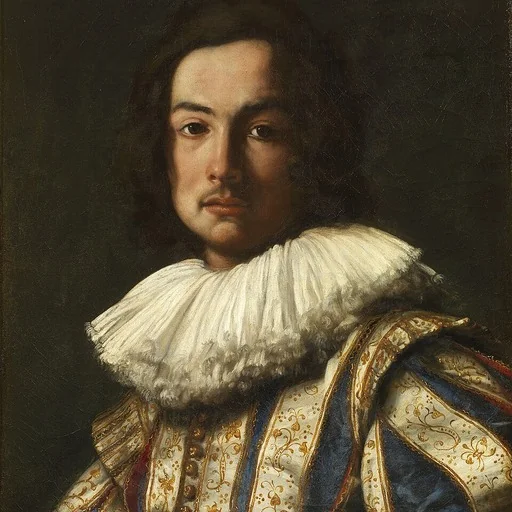
Stefano della Bella (18 May 1610 – 12 July 1664) was an Italian draughtsman and printmaker known for etchings of a great variety of subjects, including military and court scenes, landscapes, and lively genre scenes.

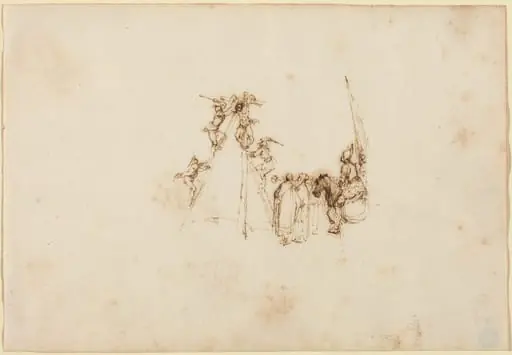
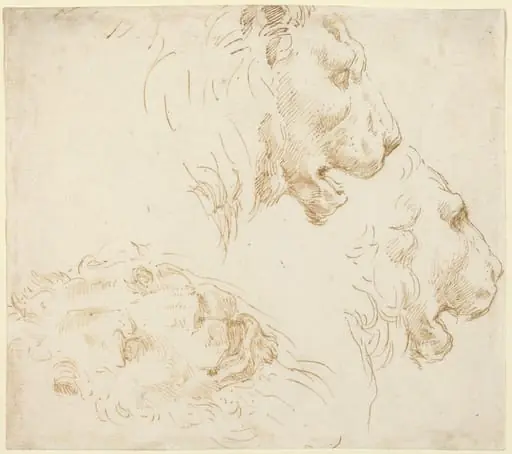
![The Flight into Egypt [verso], by Stefano Della Bella](https://artifactworldgallery.com/img/stefano-della-bella--the-flight-into-egypt-verso--3a100db72e6d25e3-w320.webp)
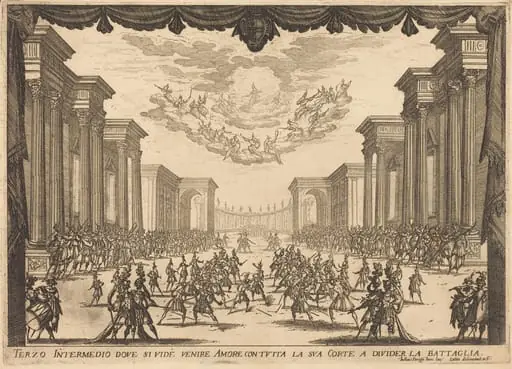 Third Intermezzo
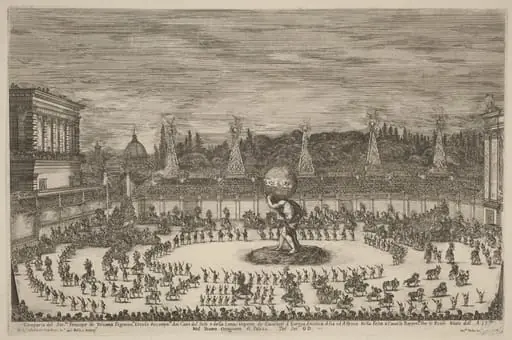 Entrance of the Prince of Tuscany
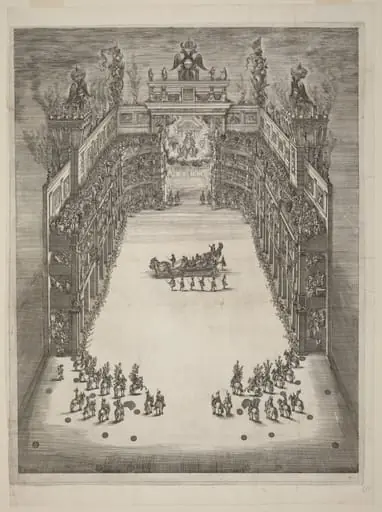 Aerial View of Theatre
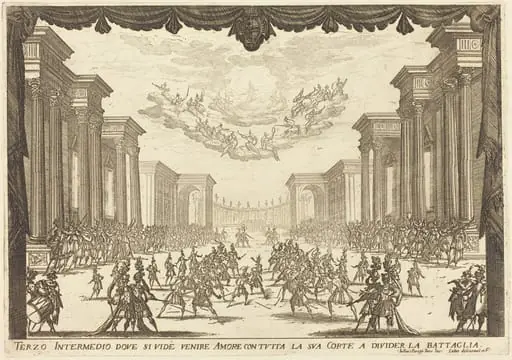 Third Intermezzo
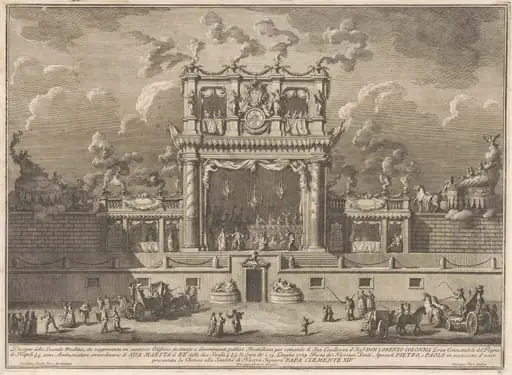 The Seconda Macchina for the Chinea of 1769: A Building for Public Entertainment
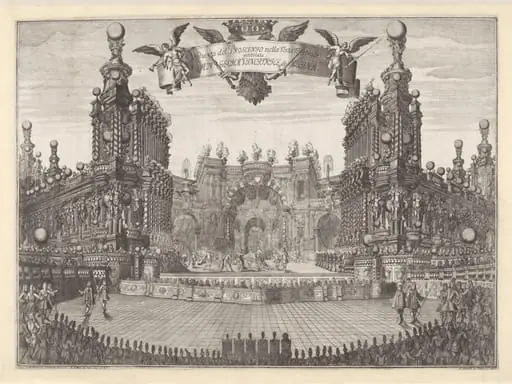 H Beard Print Collection
![Monstra della Giostra [A Tournament in the Cortile Belvedere], by Monogrammist HCB](https://artifactworldgallery.com/img/monogrammist-hcb--monstra-della-giostra-a-tournament-in-the-cortile-belvedere--80edf45a76d301fc-w320.webp) Monstra della Giostra [A Tournament in the Cortile Belvedere]
Monstra della Giostra [A Tournament in the Cortile Belvedere]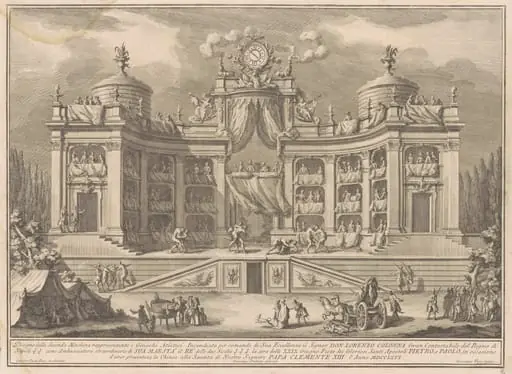 The Seconda Macchina for the Chinea of 1766: A Theater for Athletic Games
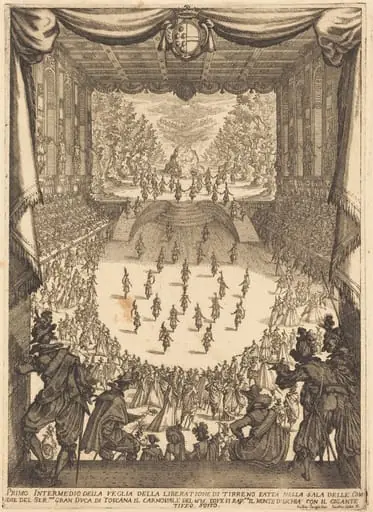 First Intermezzo
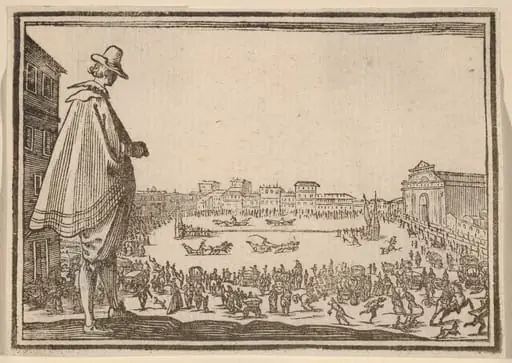 Piazza Santa Maria Novella, Florence
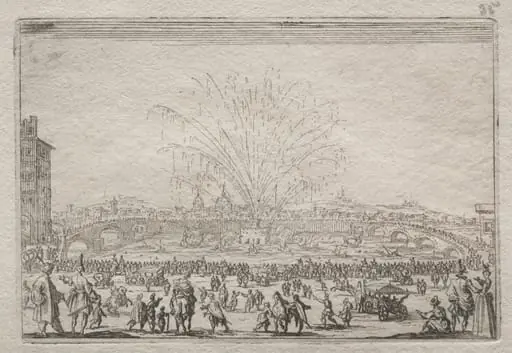 Fireworks on the Arno
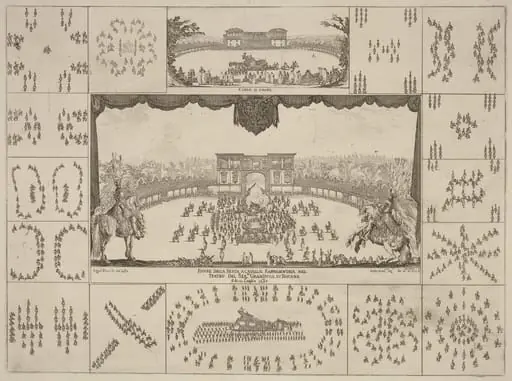 Tournament Executed in Florence for the Marriage of Grand Duke Ferdinand I