Artwork
The Seconda Macchina for the Chinea of 1769: A Building for Public Entertainment
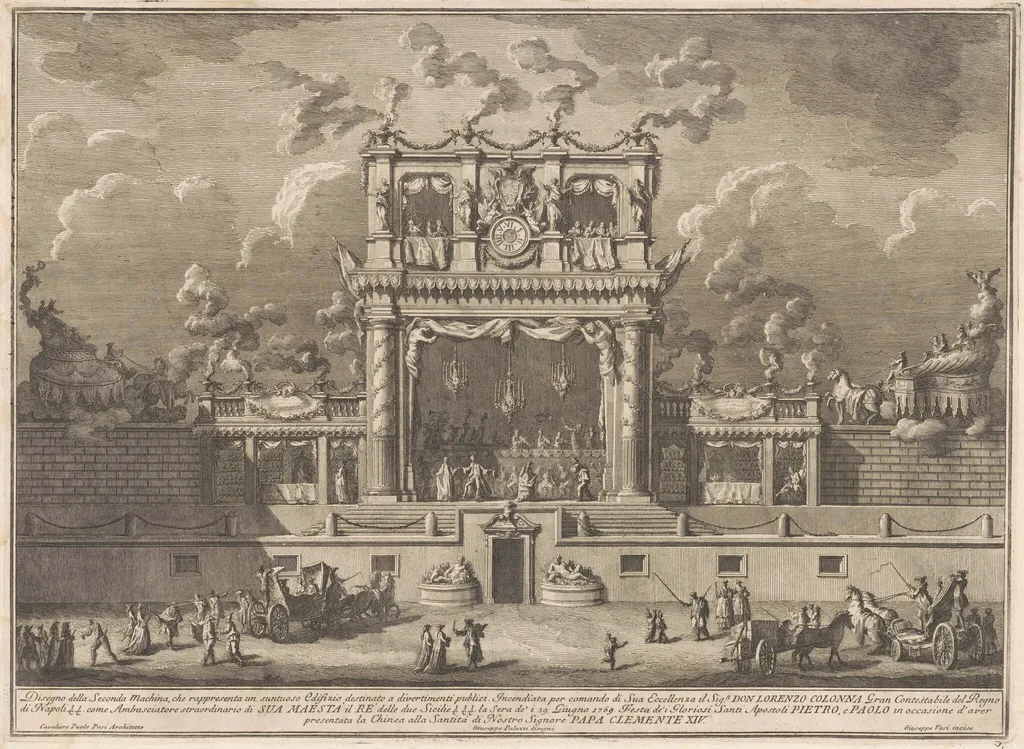
The Seconda Macchina for the Chinea of 1769: A Building for Public Entertainment is an ink print by the Romanticist artist Giuseppe Vasi. It dates from 1769 and is held in the collection of the National Gallery of Art.
About this work
Overview
Giuseppe Vasi’s 1769 etching, titled The Seconda Macchina for the Chinea of 1769: A Building for Public Entertainment, records a temporary, three‑storey theatrical structure erected for the annual Chinea festivities in Rome. The print captures the elaborate façade, its ornamental details, and the surrounding urban scene populated by spectators and passing carriages.
Subject & Meaning
Beneath, a large curtained aperture conceals the interior performance space, while the middle tier displays smaller windows and further decorative motifs.
The composition centers on a stage‑like edifice composed of three distinct levels. The upper tier features a clock, sculptural figures and a balcony framed by heavy drapery, suggesting a ceremonial platform. Beneath, a large curtained aperture conceals the interior performance space, while the middle tier displays smaller windows and further decorative motifs. The lower register shows a crowd in contemporary dress gathered around a street with a fountain and horse‑drawn carriages, illustrating the public’s engagement with the spectacle.
Technique & Style
Vasi employed the etching process, incising lines into a copper plate and using tonal shading to render depth and volume. Cross‑hatching and varied line density create the illusion of three‑dimensional architecture and atmospheric perspective, while the fine detailing of figures and urban elements demonstrates the artist’s skill in combining topographical accuracy with theatrical dramatization.
History & Provenance
Created for the 1769 edition of the Chinea—a tribute procession from the Kingdom of Naples to the Pope—the print served both as a record of the event and as a promotional image for the festivities. Copies of the etching circulated among collectors of Vasi’s vedute, and the work remains documented in several European print collections, reflecting its role as a visual testimony of 18th‑century Roman public celebrations.
Artist & collection

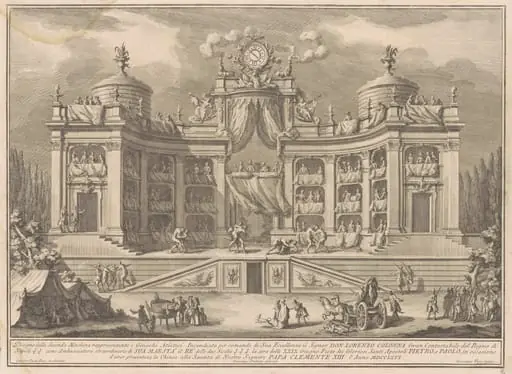 The Seconda Macchina for the Chinea of 1766: A Theater for Athletic Games
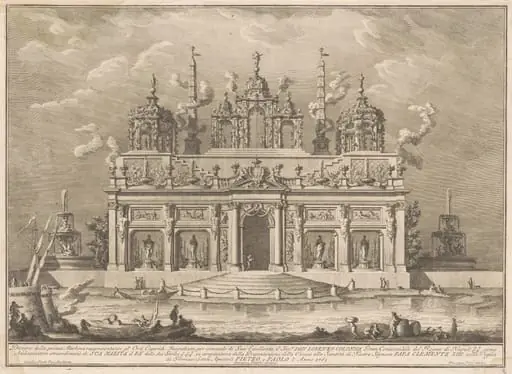 The Prima Macchina for the Chinea of 1765: The Garden of the Hesperides
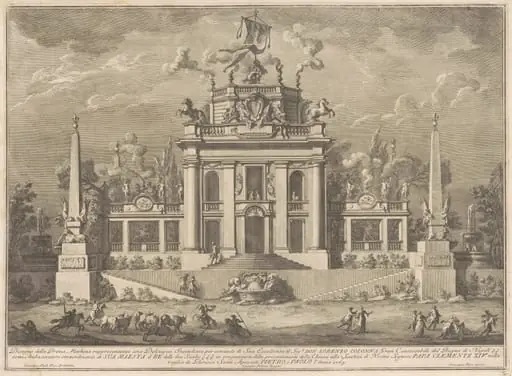 The Prima Macchina for the Chinea of 1769: A "Deliziosa"
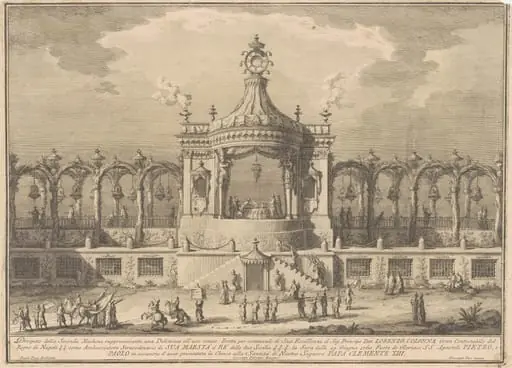 The Seconda Macchina for the Chinea of 1760: A Chinoiserie Pavilion
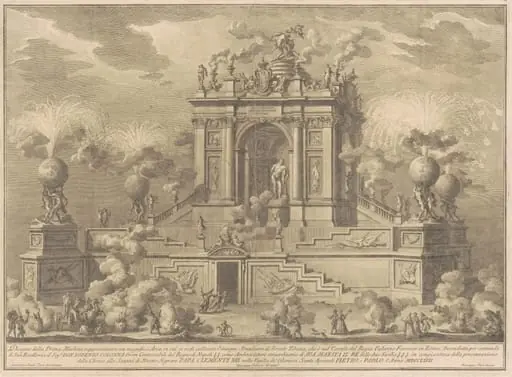 The Prima Macchina for the Chinea of 1767: A Triumphal Arch with the Farnese Hercules
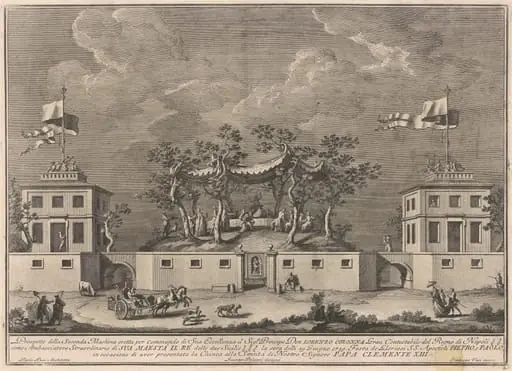 The Seconda Macchina for the Chinea of 1759: A "Deliziosa" with a Bacchanal
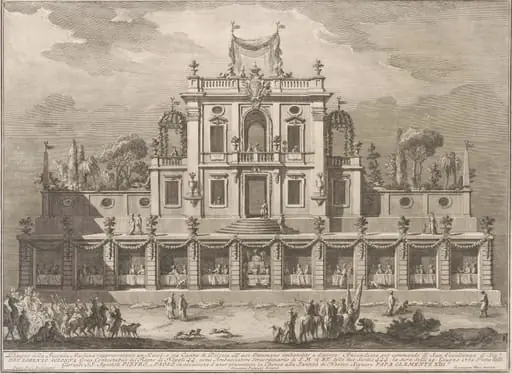 The Seconda Macchina for the Chinea of 1762: A Kiosk, or Pleasure-House in Ottoman Style
 The Seconda Macchina for the Chinea of 1763: The Grape Harvest
 The Prima Macchina for the Chinea of 1772: A Building Dedicated to Chinese Philosophy
 The Seconda Macchina for the Chinea of 1761: A Magnificent Theater
 The Seconda Macchina for the Chinea of 1770: The Fish Market Portico
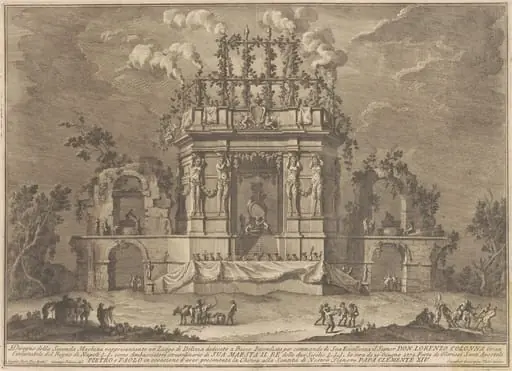 The Seconda Macchina for the Chinea of 1771: A Pleasure Palace Dedicated to Bacchus
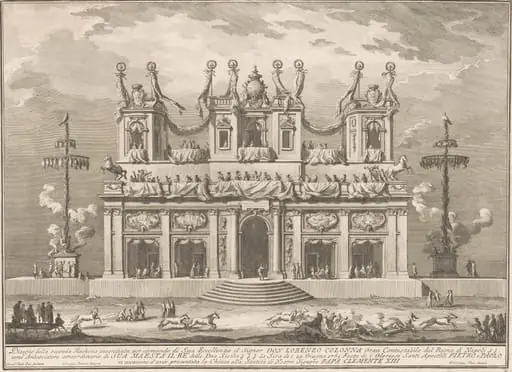 The Seconda Macchina for the Chinea of 1765: A Decorated Building with Cockaigne Poles
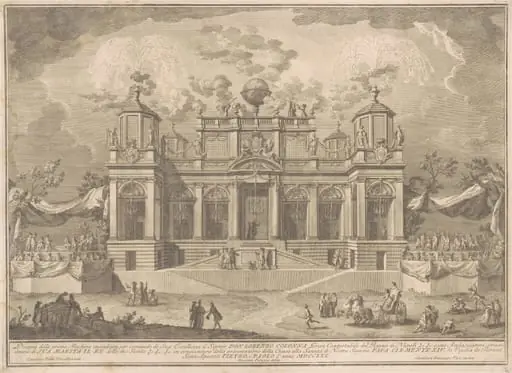 The Prima Macchina for the Chinea of 1770: An Roman Building for Commerce
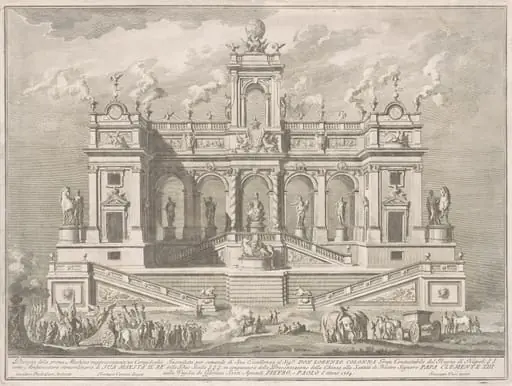 The Prima Macchina for the Chinea of 1764: A Capitol Building
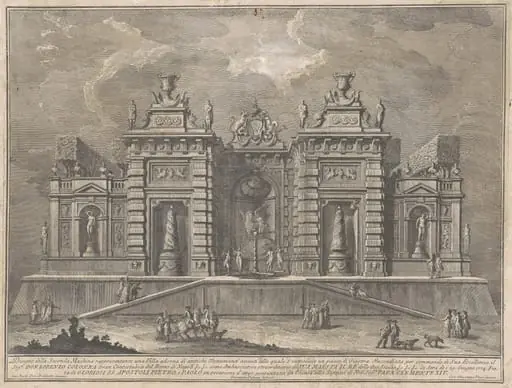 The Seconda Macchina for the Chinea of 1774: A Villa with Ancient Monuments and a Game of "Giostra"
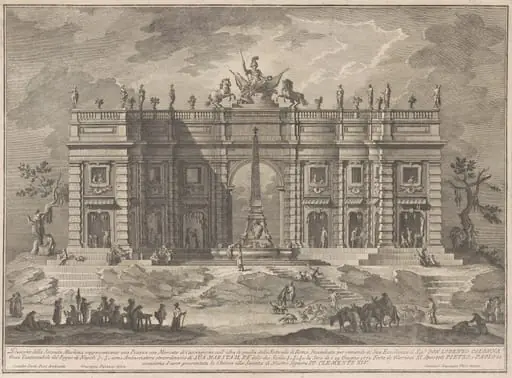 The Seconda Macchina for the Chinea of 1772: A Square with a Game Market and the Pantheon Fountain
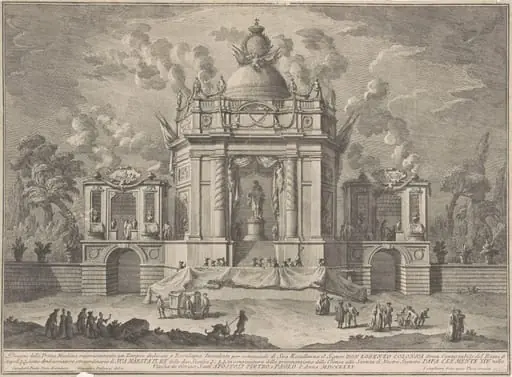 The Prima Macchina for the Chinea of 1771: The Temple of Asclepius