Artwork
Young Satyr at the Bank of a Stream
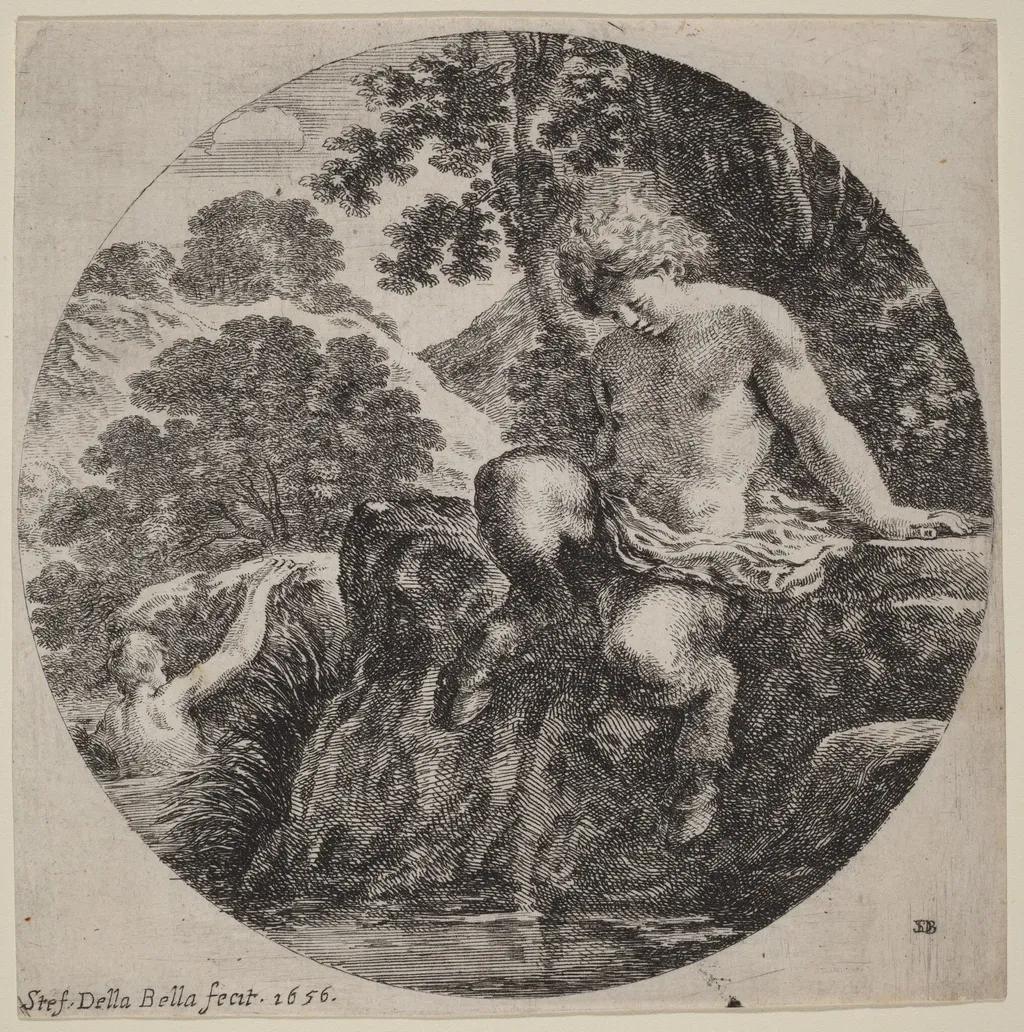
Young Satyr at the Bank of a Stream is an ink print by the Baroque artist Stefano Della Bella. It dates from 1656 and is held in the collection of the National Gallery of Art.
About this work
Overview
This piece exemplifies his mastery of the etching technique, using fine incised lines to render texture and atmosphere with precision and restraint.
Created in 1656 by Stefano della Bella, this etching on laid paper captures a solitary young satyr beside a quiet stream. Della Bella, a prolific Florentine printmaker, produced over a thousand works across varied subjects, from battle scenes to pastoral moments. This piece exemplifies his mastery of the etching technique, using fine incised lines to render texture and atmosphere with precision and restraint.
Subject & Meaning
The figure is a youthful satyr, identified by his curly hair and small wings, seated in repose along the water’s edge. His posture—leaning on one arm, gazing downward—suggests contemplation rather than revelry, subverting the creature’s traditional association with wildness. The tranquil setting, framed by dense foliage, evokes a quiet moment of transition between myth and nature, inviting quiet reflection rather than narrative drama.
Technique & Style
Della Bella employed etching to carve delicate lines into a metal plate, which, when inked and pressed, produced the image on laid paper. He used varied line weights and dense hatching to model form and depth, creating rich shadows among the trees and brush. The background is filled with thick, dark strokes that contrast with the lighter, more fluid contours of the satyr, enhancing the sense of spatial intimacy and tactile detail.
History & Provenance
The print was made during della Bella’s mature period in Florence, after years of working in Paris and other European courts. Though the exact early ownership is undocumented, the work aligns with his broader output of genre scenes intended for collectors and connoisseurs. Its survival in multiple institutional collections suggests it was valued early for its technical finesse and poetic tone.
Context
In mid-17th-century Italy, etching was increasingly used for intimate, non-religious subjects, moving beyond traditional religious or historical themes. Della Bella’s focus on mythological figures in natural settings reflected a broader interest in the pastoral and the individual’s relationship with landscape. His work stood apart from grander Baroque styles, favoring quiet observation over theatricality.
Legacy
Della Bella’s etchings, including this one, influenced later generations of printmakers through their nuanced handling of light, texture, and mood. His ability to infuse mythological subjects with quiet humanity helped redefine the genre in printmaking. While not widely reproduced in his time, his works gained recognition in the 18th and 19th centuries as exemplars of the medium’s expressive potential.
Artist & collection
Artist
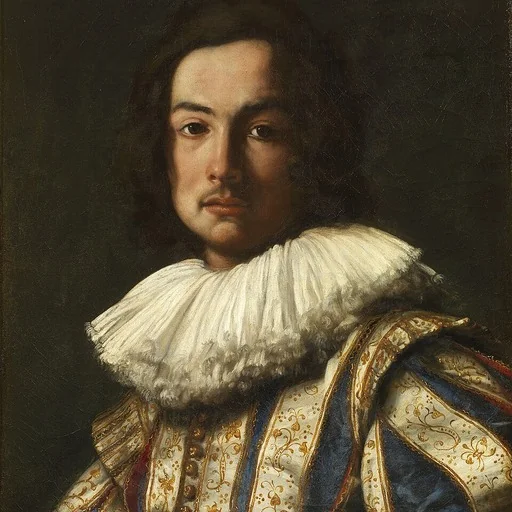
Stefano della Bella (18 May 1610 – 12 July 1664) was an Italian draughtsman and printmaker known for etchings of a great variety of subjects, including military and court scenes, landscapes, and lively genre scenes.

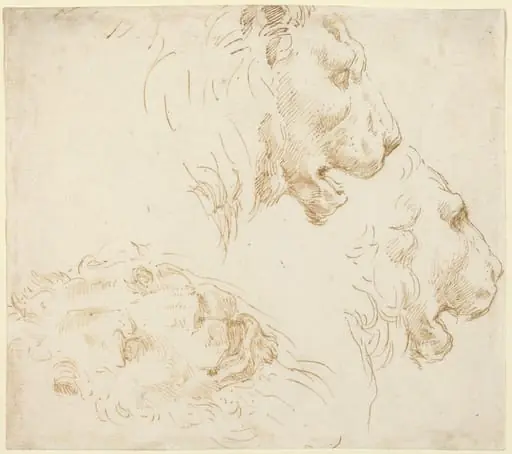
![The Flight into Egypt [verso], by Stefano Della Bella](https://artifactworldgallery.com/img/stefano-della-bella--the-flight-into-egypt-verso--3a100db72e6d25e3-w320.webp)
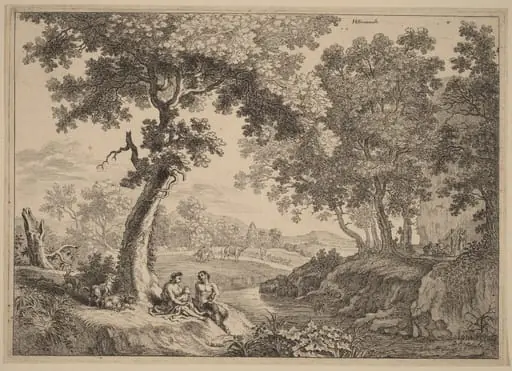 Satyr Family Seated under a Tree
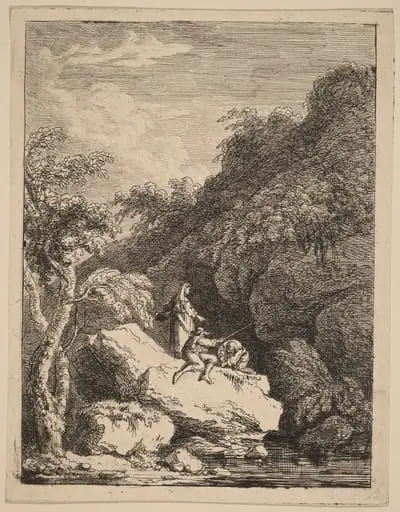 The Outskirts of Florence, on the Way to Rome
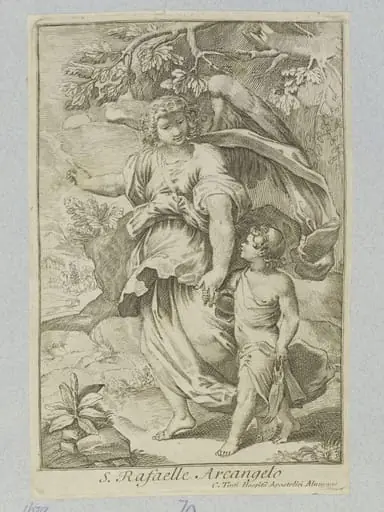 Raphael conducting Tobias
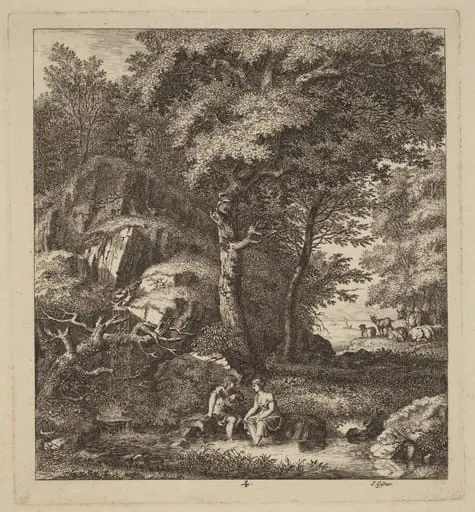 A Shepherd and a Young Woman With Their Feet in a Brook
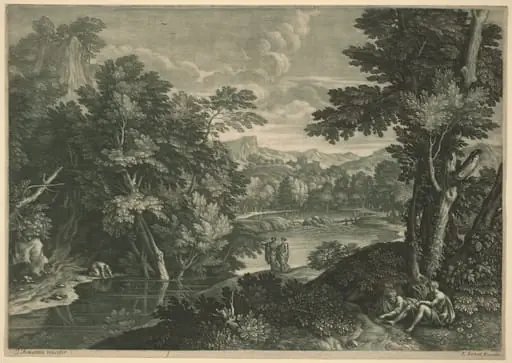 Landscape
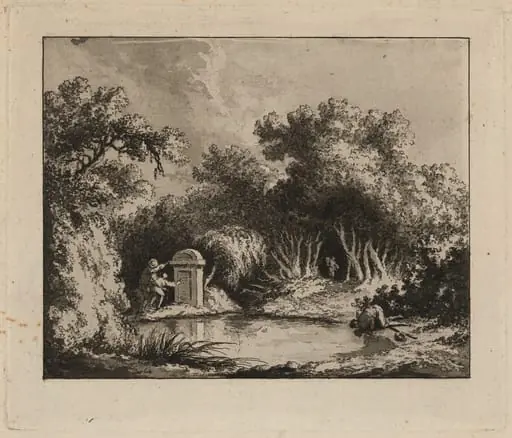 Landscape with Figures
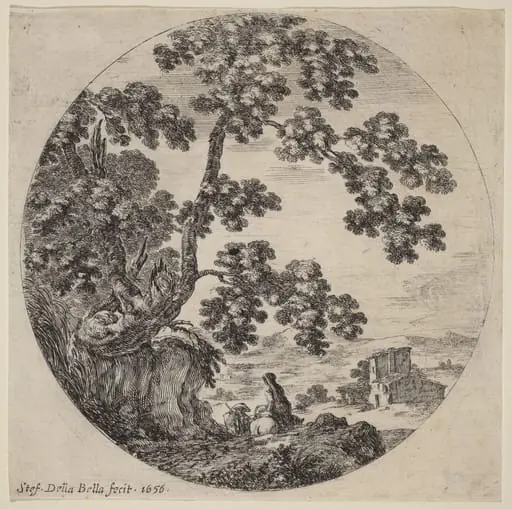 Two Travelers Passing by an Old Oak Tree
 Saint John the Baptist
 Four Bacchic Children
 Landscape with Shepherds
 Mercury Lulling Argus to Sleep
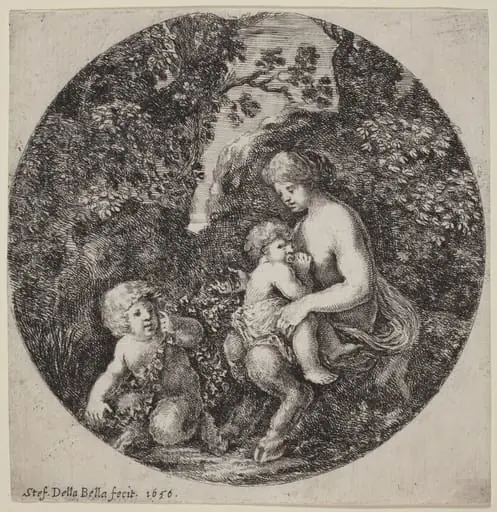 Female Satyr Nursing a Child in a Wooded Landscape