Artwork
Allegorical Portrait of Jean-Baptiste Hüet
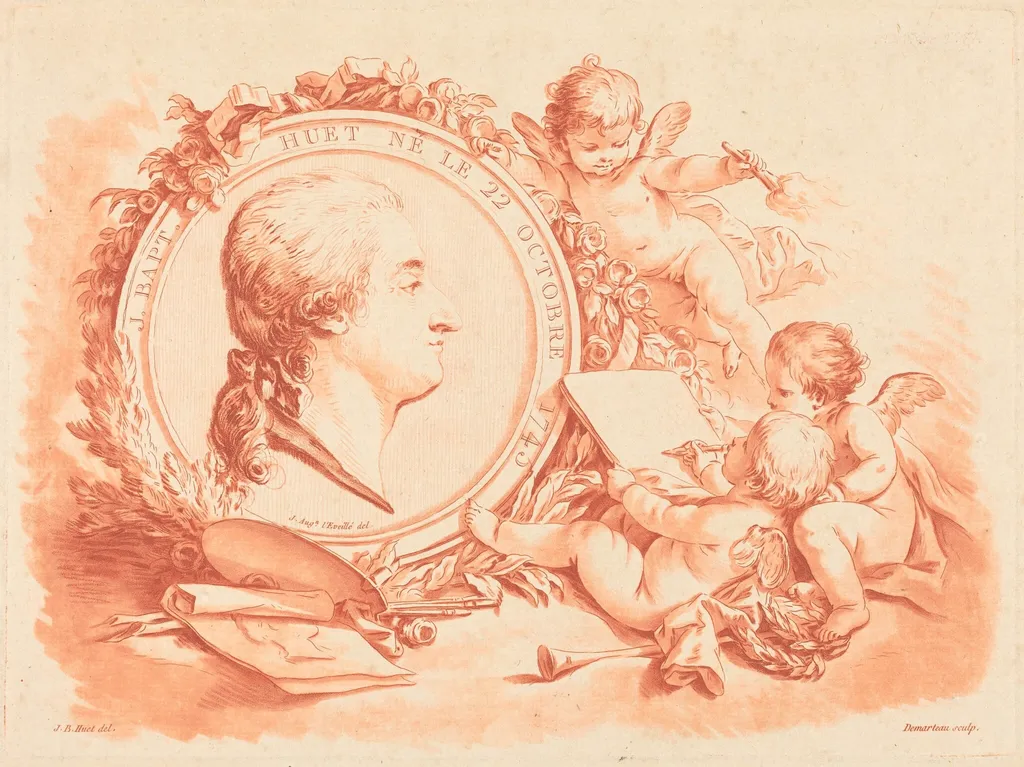
Allegorical Portrait of Jean-Baptiste Hüet is a chalk print by the Romanticist artist Gilles Demarteau the Elder. It dates from 1775 and is held in the collection of the National Gallery of Art.
About this work
Overview
This chalk-printed portrait on laid paper, created around 1775 by Gilles Demarteau the Elder, depicts Jean-Baptiste Hüet within a circular border.
This chalk-printed portrait on laid paper, created around 1775 by Gilles Demarteau the Elder, depicts Jean-Baptiste Hüet within a circular border. Rendered in red chalk, the image blends portraiture with allegorical elements, distinguishing it from straightforward likenesses. The composition emphasizes intellectual identity through symbolic accessories rather than naturalistic detail, typical of 18th-century print traditions that elevated scholarly figures.
Subject & Meaning
Jean-Baptiste Hüet, a French engraver and art administrator, is portrayed not merely as a man but as a personification of scholarly pursuit. The cherubs holding a book and quill, surrounded by scattered papers, symbolize literary and artistic labor. The floral and ribboned frame reinforces refinement, aligning Hüet with the cultivated ideals of the French Enlightenment, where intellectual achievement was visually sanctified.
Technique & Style
Demarteau employed red chalk on laid paper, a method favored for its softness and tonal range in portrait prints. The delicate lines and subtle shading evoke a sense of intimacy, while the circular format echoes classical medallions. Decorative elements like vines and ribbons are rendered with precision, balancing ornamental elegance with the restrained realism of the face, reflecting the era’s preference for harmonious, symbolic composition.
History & Provenance
Created during Demarteau’s tenure as a leading engraver for Parisian publishers, the print likely served as a commemorative piece for Hüet’s role in the Académie Royale. It circulated among art circles and collectors, valued for its tribute to cultural stewardship. No definitive early ownership records survive, but its survival in institutional collections suggests early recognition of its typological significance in French print culture.
Context
In mid-to-late 18th-century France, allegorical portraiture flourished as a means to honor professionals in arts and letters. This work aligns with a broader trend of elevating engravers and scholars through symbolic imagery, countering the dominance of aristocratic portraiture. The imagery reflects Enlightenment values—reason, learning, and refinement—while the print medium ensured wider dissemination among educated audiences.
Legacy
Though not widely known today, the print exemplifies how French printmakers translated intellectual identity into visual language. It influenced later depictions of artists and writers as cultural figures, bridging portraiture and emblematic representation. Its preservation in major collections underscores its role as a document of how scholarly merit was visually codified in pre-Revolutionary France.
Artist & collection


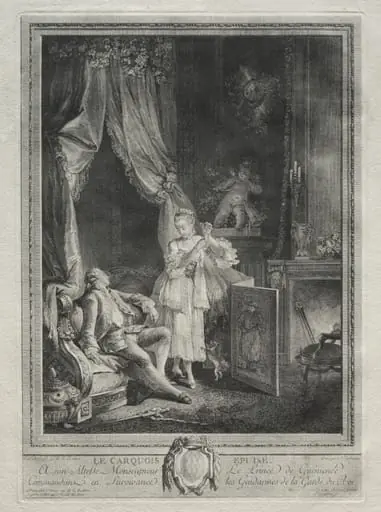 The Empty Quiver
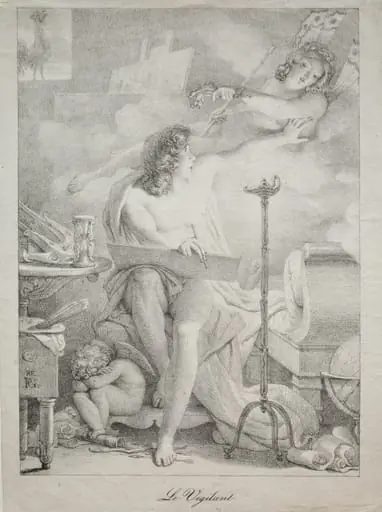 The Vigil
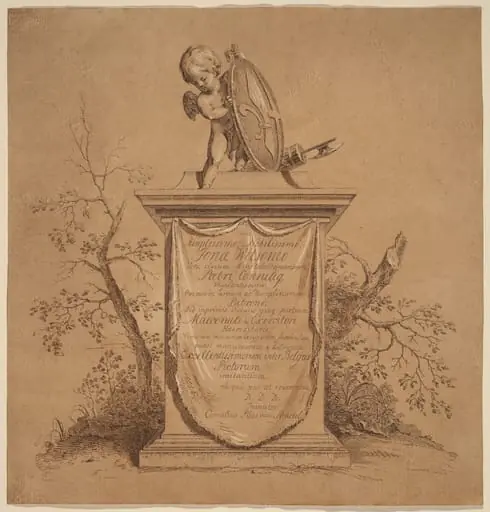 Title Page
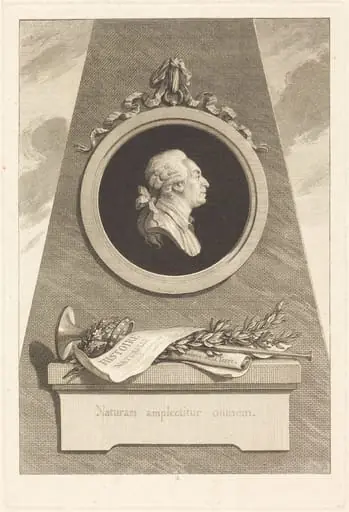 Comte de Buffon
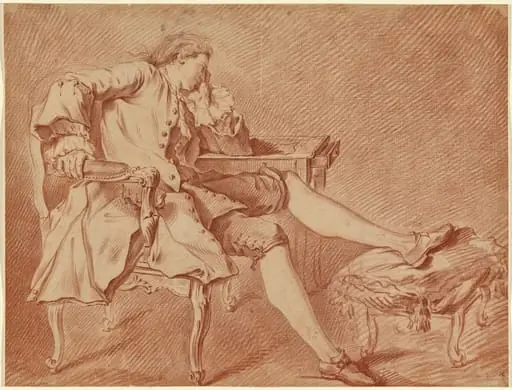 Gentleman Lounging in a Chair
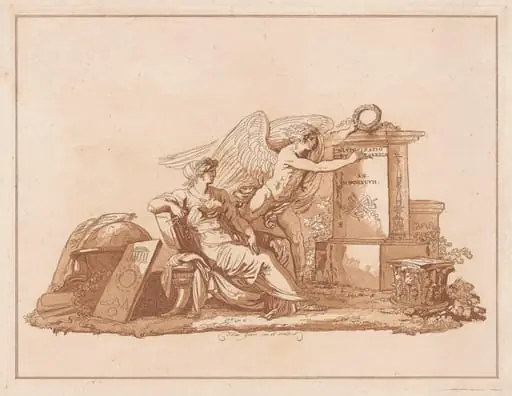 Personification of Architecture with the Genius of the Fine Arts
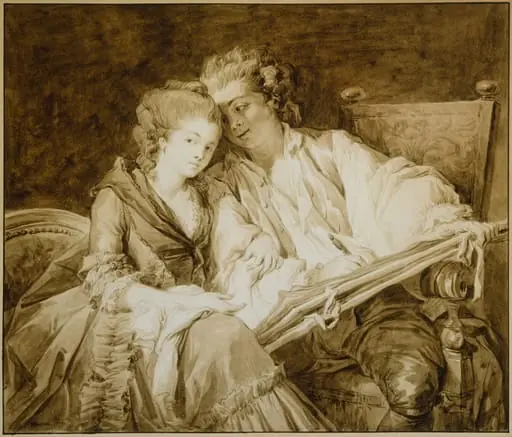 The Drawing Lesson
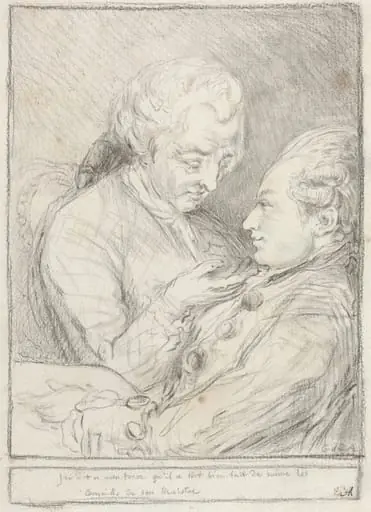 Portrait of the Artist with His Younger Brother, Augustin Saint-Aubin
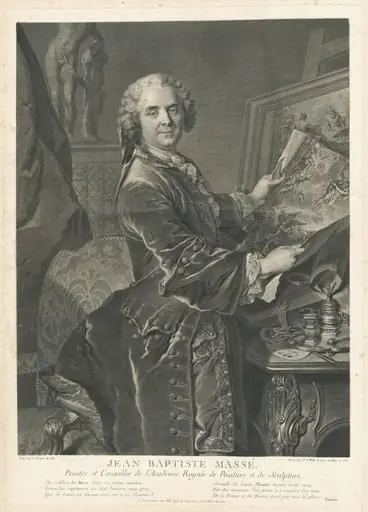 Jean Baptiste Massé
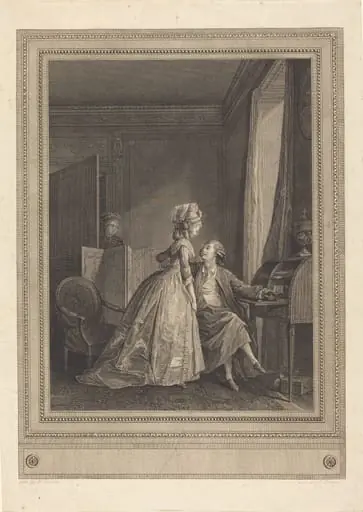 Les offres seduisantes
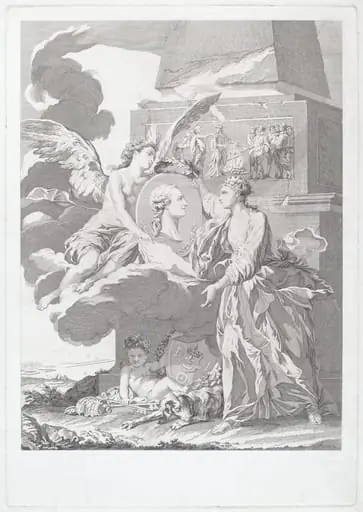 Allegorical Portrait of Pierre Buirette de Belloy
 Le Maraudeur (The Thief)