Artwork
The Holy Family with Saint Sebastian and Saint Roch
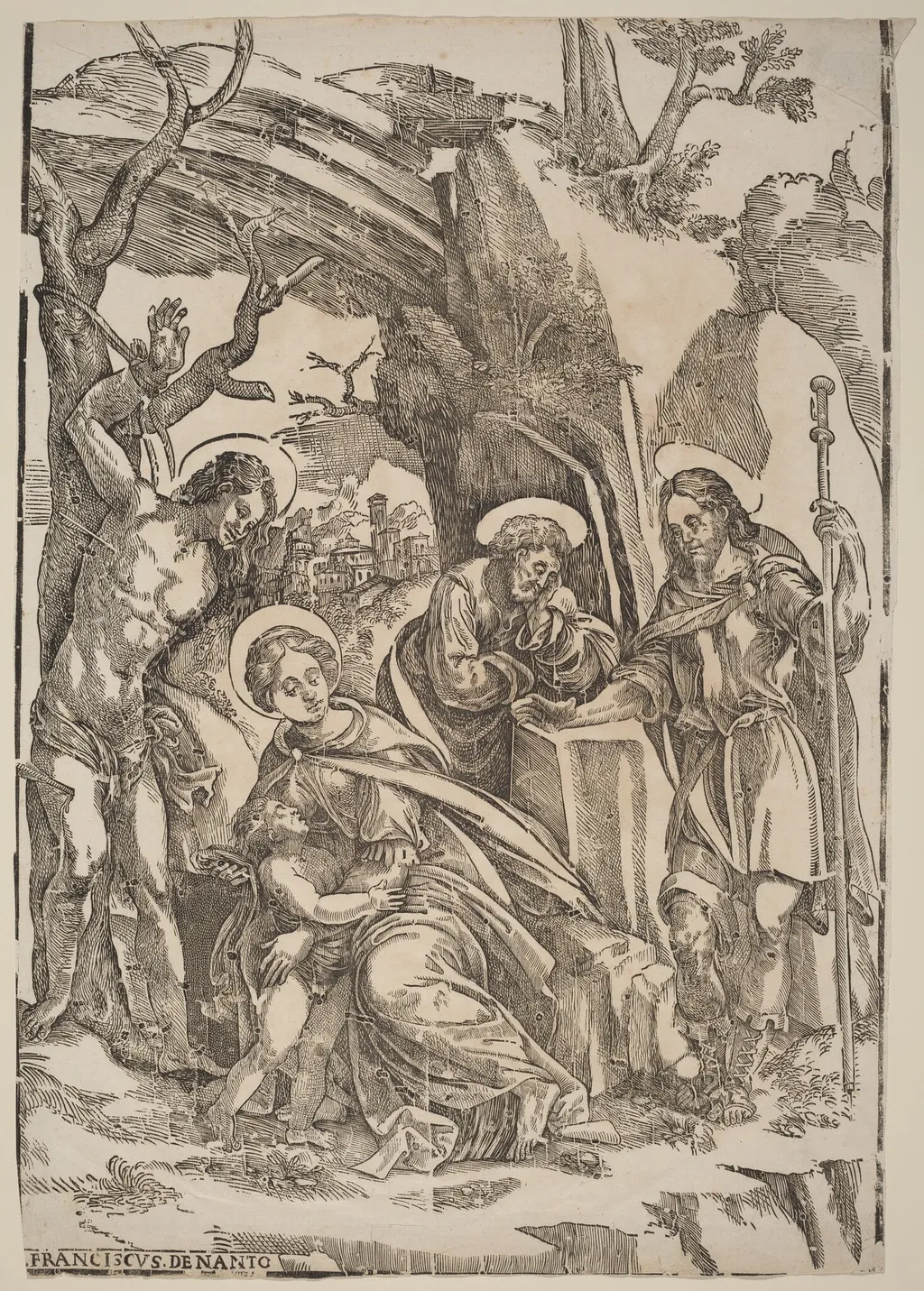
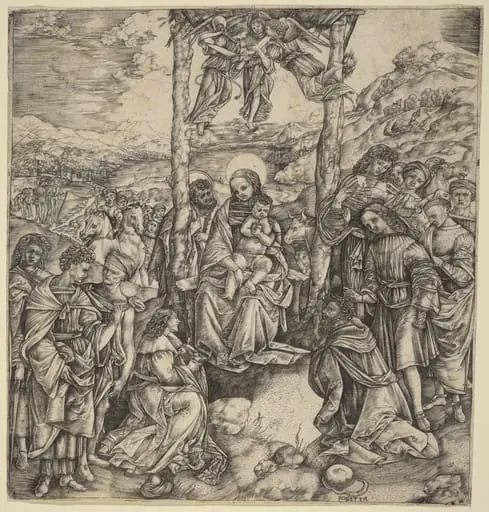
The Holy Family with Saint Sebastian and Saint Roch is an ink print by the Renaissance artist Francesco Denanto. It dates from 1522 and is held in the collection of the National Gallery of Art.
About this work
Overview
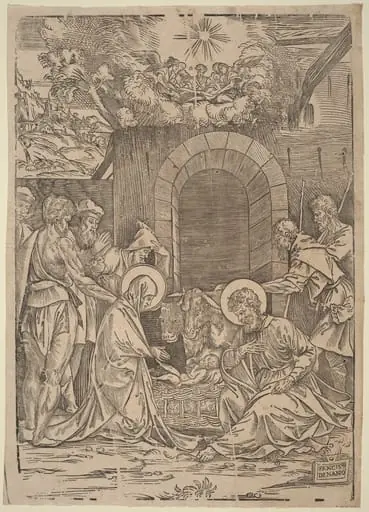
Francesco Denanto’s 1522 woodcut, titled *The Holy Family with Saint Sebastian and Saint Roch*, presents a compact religious tableau rendered in black-and-white line work. The print combines the intimate domestic scene of the Virgin and Child with the presence of two saintly intercessors, set against a stylised woodland backdrop.
Subject & Meaning
At the centre, a seated woman cradles an infant, identified as the Virgin and the Christ Child. A young boy kneels beside them, while Saint Sebastian and Saint Roch stand to either side—Sebastian with a staff and a calm, upward gesture, Roch pointing gently upward. Their inclusion reflects the period’s appeal to protective saints during times of plague and hardship.
Technique & Style
Denanto employs the woodcut’s characteristic crisp incisions and cross‑hatching to model volume and suggest depth. The interlacing of fine lines creates subtle shading on faces and drapery, while the surrounding trees are rendered with sweeping, almost theatrical, contours that frame the figures like a stage set.
History & Provenance
The print was produced in the early sixteenth century, a time when woodcut served both devotional and didactic purposes across Europe. While specific ownership records are scarce, the work is attributed to Denanto, an Italian printmaker active in the Venetian sphere, known for his religious subjects.
Context
The composition reflects contemporary Counter‑Reformation concerns, pairing the Holy Family with saints associated with healing. The inclusion of a distant town on a hill situates the sacred scene within a recognizable, everyday landscape, bridging the divine and the ordinary for viewers of the period.
Legacy
Denanto’s print exemplifies the use of woodcut to disseminate religious imagery to a broad audience before the rise of oil painting dominance. Its clear line work and narrative clarity influenced later printmakers who sought to combine devotional content with accessible visual storytelling.
Artist & collection