Artwork
The Annunciation
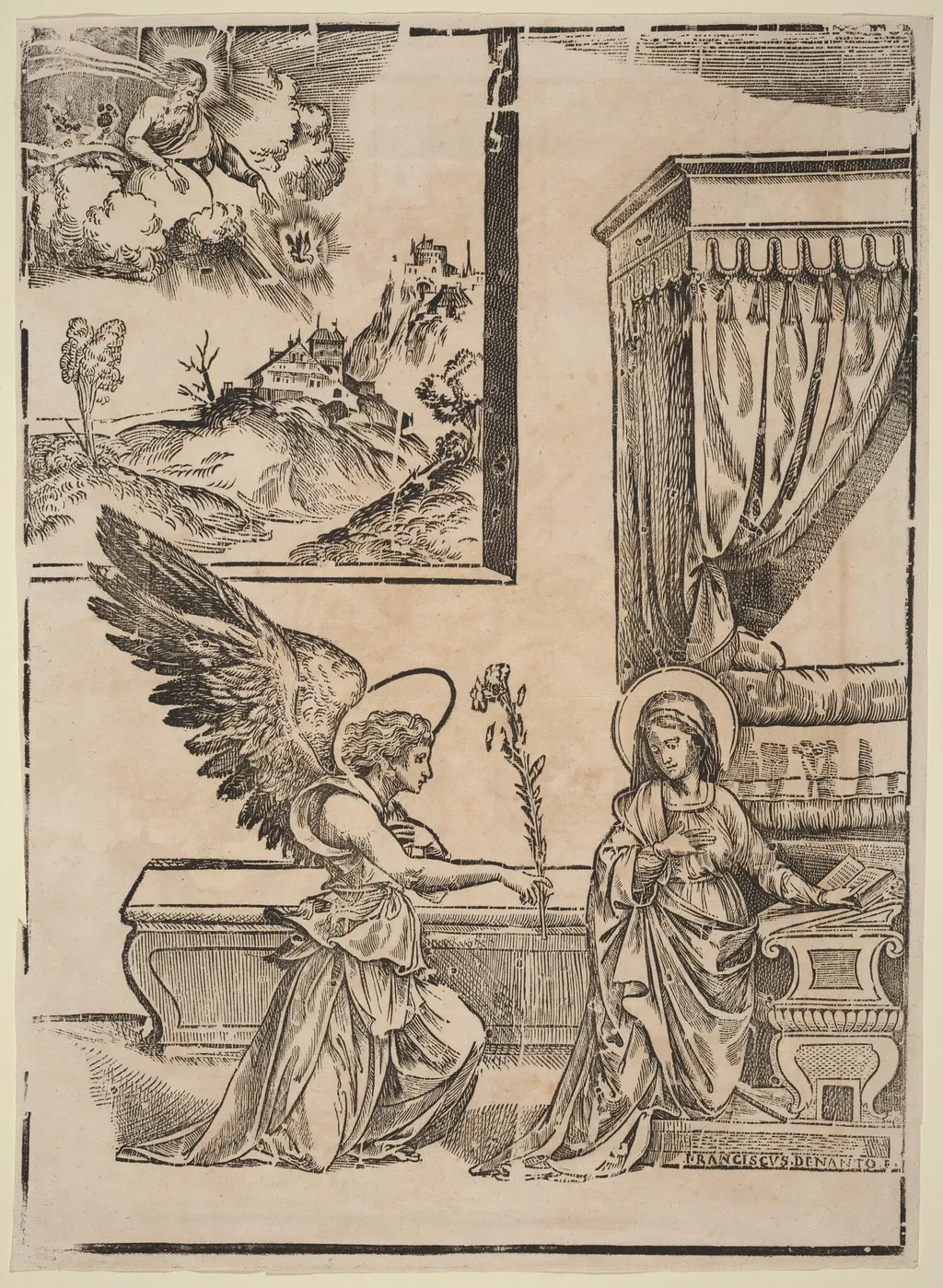
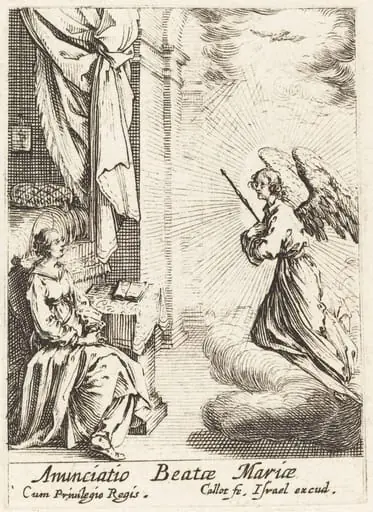
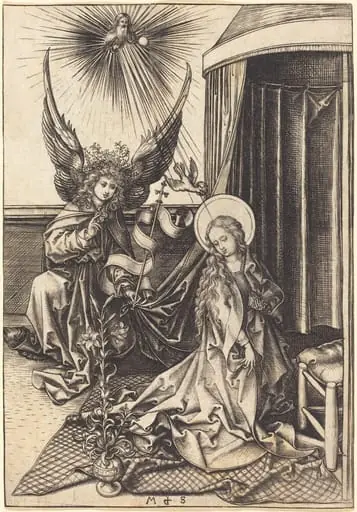
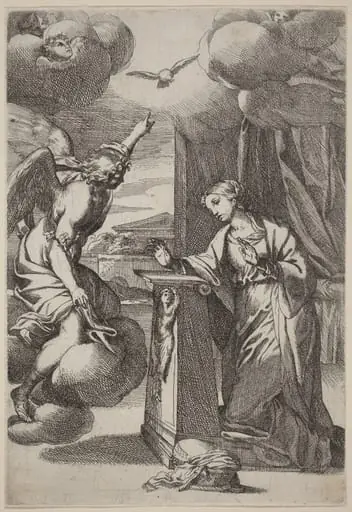
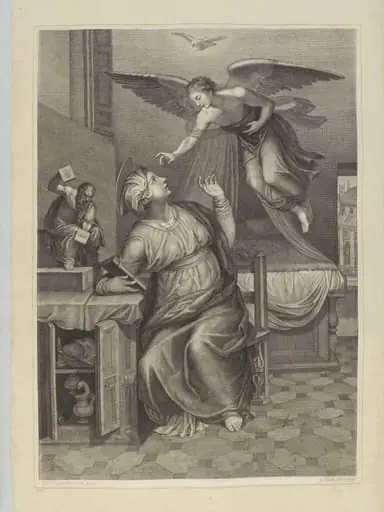
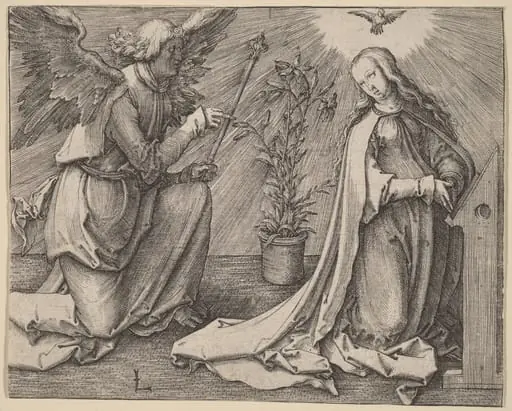
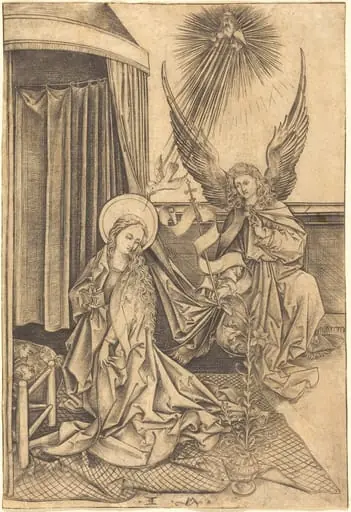
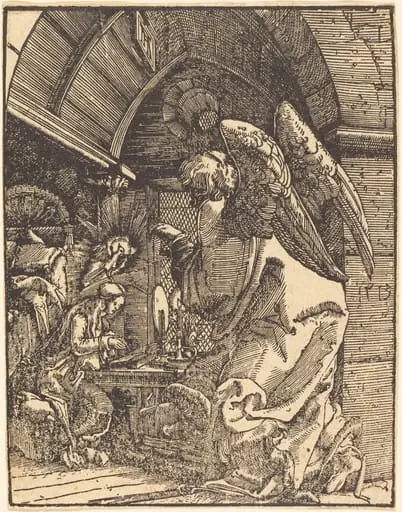
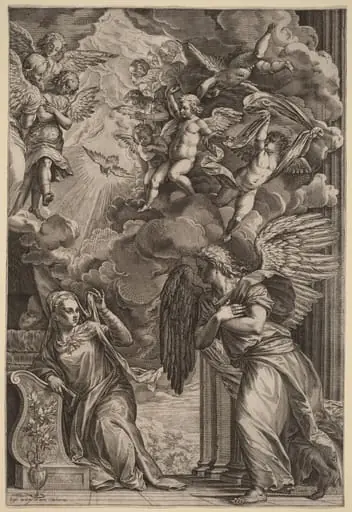
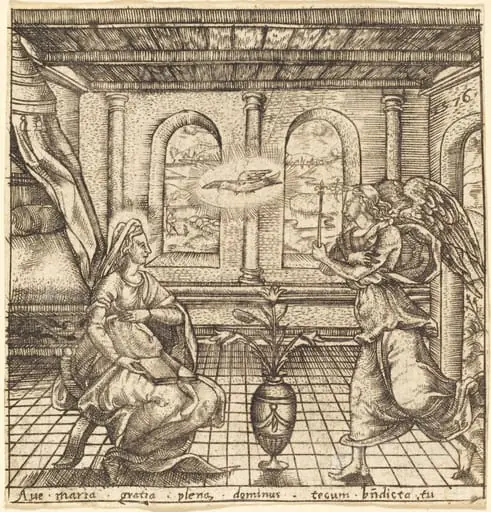
The Annunciation is an ink print by the Renaissance artist Francesco Denanto. It dates from 1522 and is held in the collection of the National Gallery of Art.
About this work
Overview
Rendered in black ink on paper, the print uses precise linear carving to define form and space.
Created in 1522, this woodcut by Francesco Denanto depicts the biblical Annunciation, a moment when the angel Gabriel announces to Mary that she will bear the Son of God. Rendered in black ink on paper, the print uses precise linear carving to define form and space. Its compact composition focuses on the two central figures, with minimal background detail, emphasizing the spiritual gravity of the encounter through clarity and restraint.
Subject & Meaning
The scene captures Gabriel kneeling on a stone ledge, offering a lily branch as a symbol of purity, while Mary stands near a window, her gaze lowered to a book—likely the Hebrew Scriptures—suggesting contemplation. The angel’s wings dominate the upper space, framing the moment as divine intervention. Small vignettes in the corners, one showing a hilltop structure and another a gathering, may reference broader theological themes, such as the Incarnation’s cosmic significance or the future Church.
Technique & Style
Denanto employed the woodcut technique, carving lines into a wooden block to create bold, high-contrast imagery. Sharp, clean edges define the figures and their drapery, while the absence of shading relies on line density to suggest volume. The angel’s expansive wings and Mary’s elongated form reflect a stylized approach common in Northern Renaissance prints, where symbolic presence outweighs naturalistic detail. The background remains unadorned, focusing attention on the sacred exchange.
History & Provenance
The print was produced in Venice during the early 1520s, a period when woodcuts were widely used for religious imagery due to their affordability and reproducibility. Denanto, active in the Venetian print trade, likely worked within a workshop that catered to devotional markets. While specific early ownership records are sparse, similar prints from this era circulated among clergy and educated laypeople, serving as aids for private prayer and instruction.
Context
In early 16th-century Venice, religious prints like this one responded to growing demand for accessible devotional art amid the Reformation’s challenges to Catholic imagery. Woodcuts offered a middle ground between expensive paintings and handwritten manuscripts. Denanto’s work aligns with a tradition of Northern Italian printmakers who blended Italian compositional grace with Germanic linear precision, reflecting Venice’s role as a crossroads of artistic influence.
Legacy
Though Denanto is not among the most widely studied printmakers of his time, this woodcut exemplifies the quiet effectiveness of small-scale religious imagery in the early Renaissance. Its clarity and symbolic economy influenced later devotional prints, particularly in regions where literacy and access to art were limited. The work remains a testament to how modest techniques could convey profound theological narratives to a broad audience.
Artist & collection