Artwork
La Comparison du bouton de rose
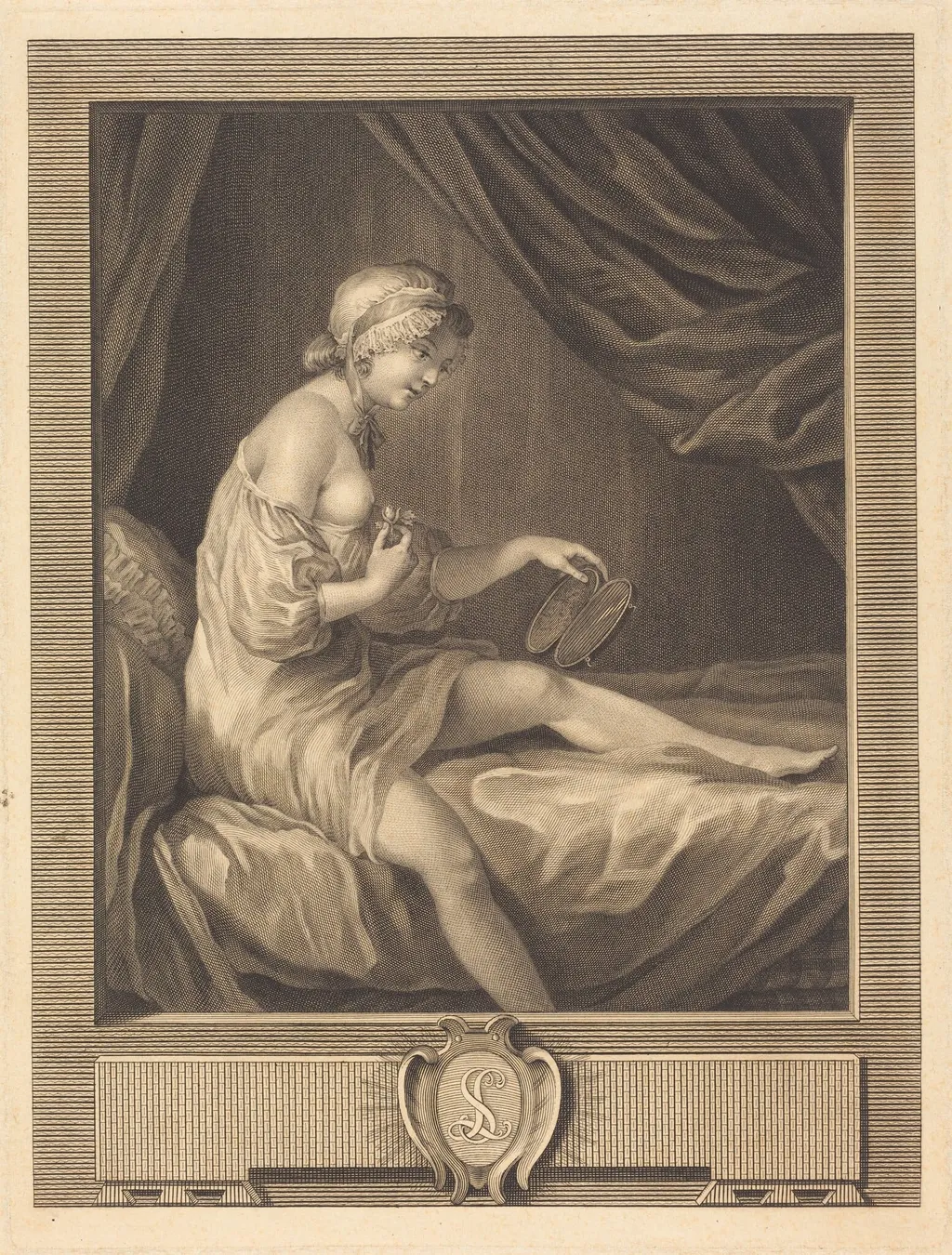
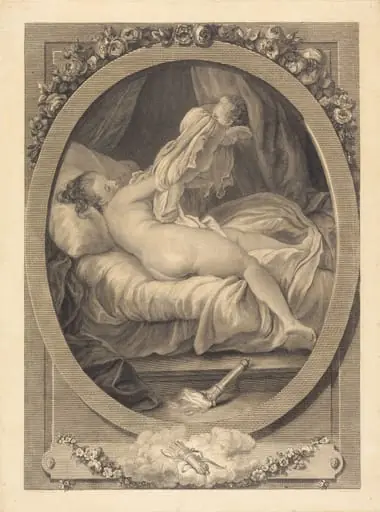
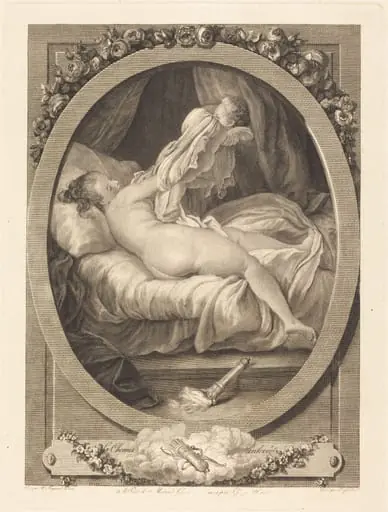
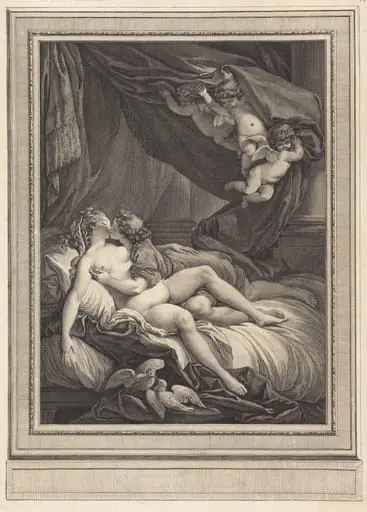
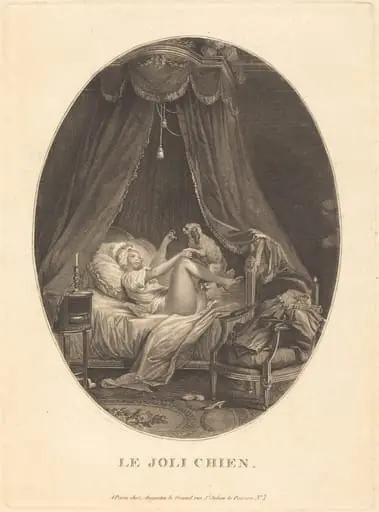
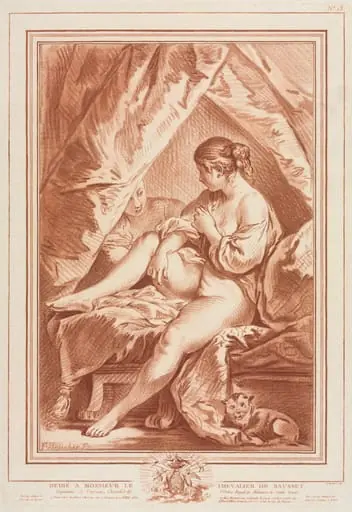
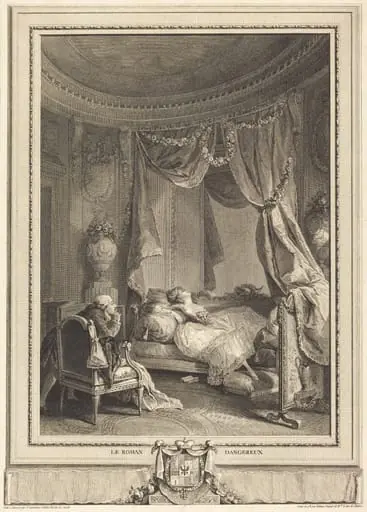
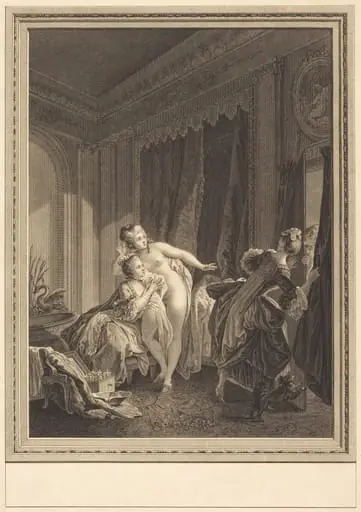
La Comparison du bouton de rose is an ink print by the Romanticist artist Antoine Francois Dennel. It dates from 1780 and is held in the collection of the National Gallery of Art.
About this work
Overview
La Comparison du bouton de rose is an 18th-century print by Antoine François Dennel, executed in etching and engraving around 1780. It presents a solitary female figure in a private interior setting, engaged in a quiet, introspective act. The composition emphasizes stillness and subtle gesture, with minimal background elements to focus attention on the figure and her interaction with objects.
Subject & Meaning
The figure holds a rose in one hand and a mirror in the other, her gaze lowered as if comparing the flower’s form to her own.
The figure holds a rose in one hand and a mirror in the other, her gaze lowered as if comparing the flower’s form to her own. This juxtaposition suggests a meditation on beauty, transience, and self-perception. The act is neither overtly erotic nor narrative-driven, but rather contemplative, inviting reflection on the relationship between natural forms and the human body without explicit symbolism.
Technique & Style
Dennel employed fine lines and controlled hatching to model form and texture, using chiaroscuro to define the figure’s contours against a deep, unbroken background. The soft gradations of light accentuate the skin’s surface and the delicate curve of the rose, while the draped curtain adds spatial depth without distraction. The precision of the engraving reflects academic training and attention to anatomical subtlety.
History & Provenance
Created in 1780, the print emerged during a period when intimate, allegorical subjects were popular in French graphic arts. Dennel, known for reproductive engravings and genre scenes, likely produced this as an independent work for private collectors. Its survival in limited impressions suggests it was not widely distributed, preserving its quiet, personal character.
Context
In late 18th-century France, depictions of the nude often blended classical ideals with domestic intimacy. This print aligns with a trend toward private, psychological moments rather than mythological or theatrical scenes. The absence of narrative or divine reference distinguishes it from earlier traditions, reflecting a shift toward individualized, secular introspection in visual culture.
Legacy
Though not widely reproduced or exhibited, the print remains a quiet example of pre-Revolutionary French printmaking that prioritized mood over spectacle. Its restrained composition and psychological nuance anticipate 19th-century explorations of female subjectivity, offering a subtle counterpoint to more overtly dramatic or idealized nudes of the era.
Artist & collection

Artist
Antoine Francois Dennel (1760–1806) was an artist, born in Abbeville.