Artwork
Mezzetin
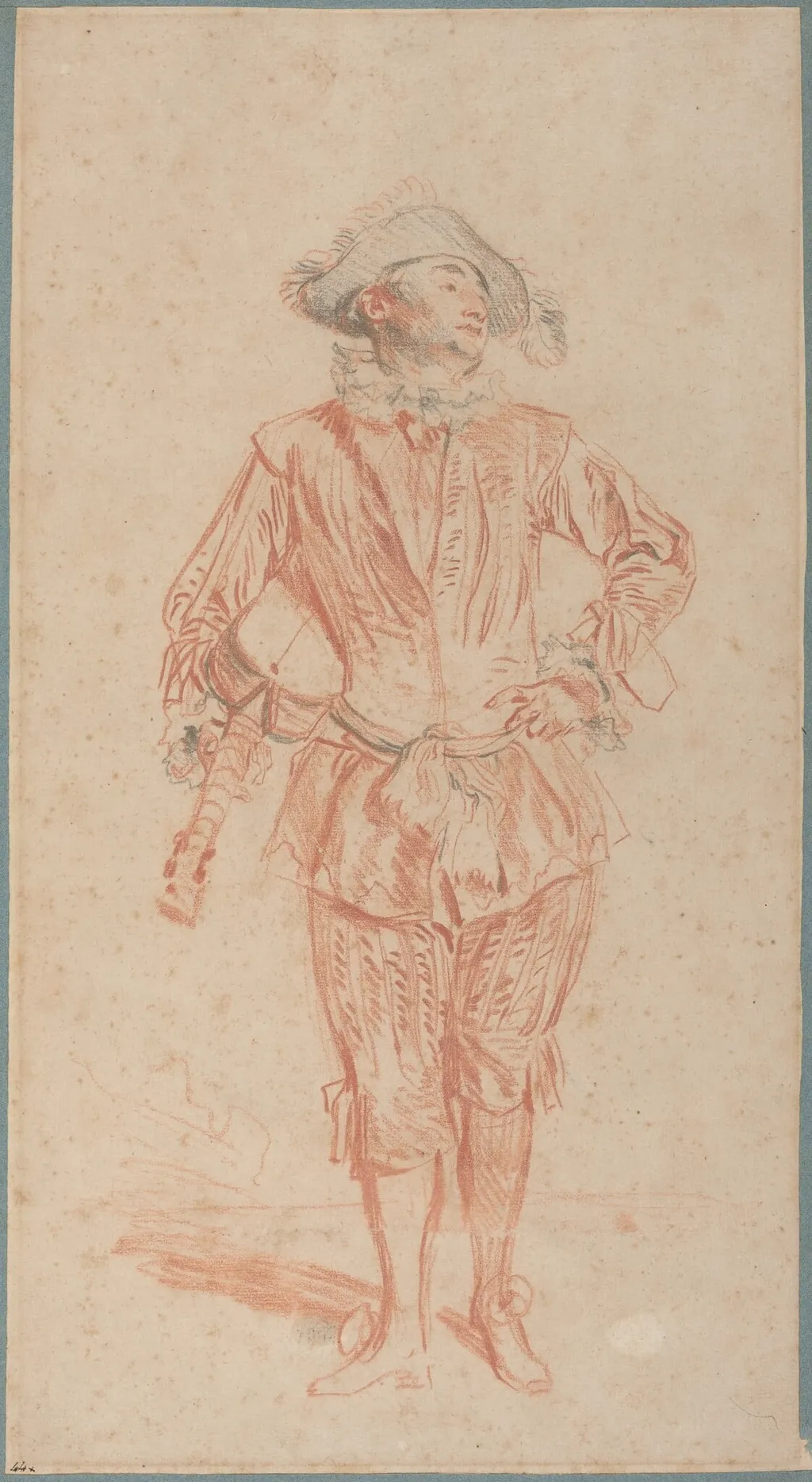
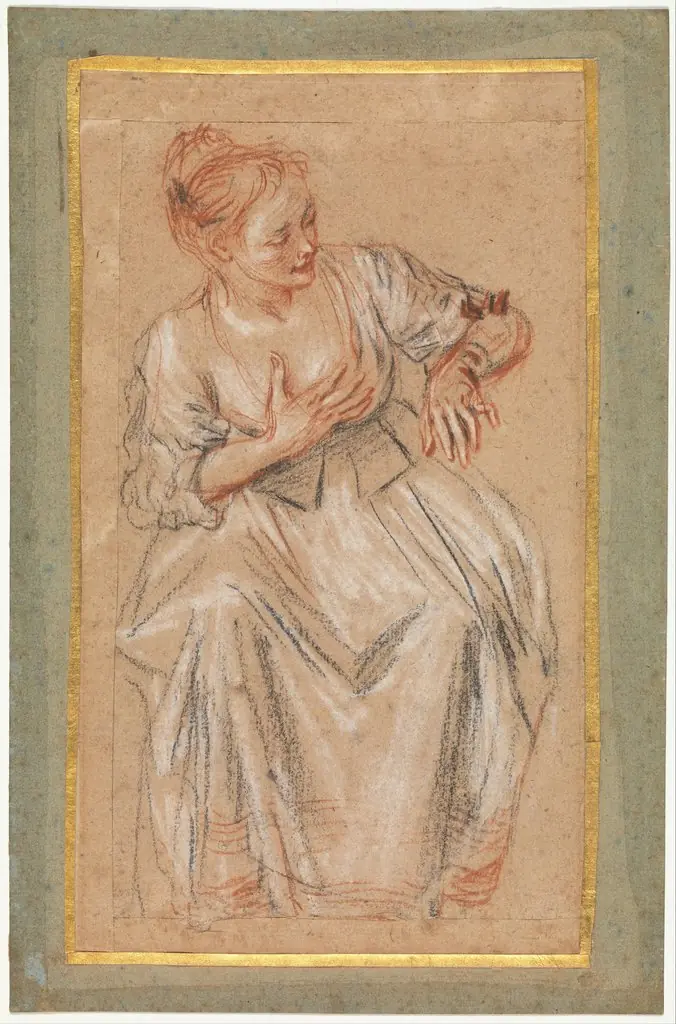
Mezzetin is a chalk drawing by the Baroque artist Jean Antoine Watteau. It dates from 1716 and is held in the collection of the National Gallery of Art. This drawing, executed in red and black chalk on laid paper, dates to approximately 1716 and is attributed to Antoine Watteau.
About this work
Overview
The work presents a figure in theatrical costume, rendered with swift, economical strokes that suggest both immediacy and refinement.
This drawing, executed in red and black chalk on laid paper, dates to approximately 1716 and is attributed to Antoine Watteau. The work presents a figure in theatrical costume, rendered with swift, economical strokes that suggest both immediacy and refinement. The paper’s surface bears signs of age, including minor perforations and faint discolorations, while the chalk’s muted tones create a subtle interplay of light and form.
Subject & Meaning
The figure depicted is Mezzetin, a stock character from the Italian *commedia dell’arte*, recognizable by his antiquated, voluminous attire. His wide-brimmed hat and puffed sleeves evoke the exaggerated costumes of the theater, while the small object in his hand—possibly a prop—hints at his role as a musician or trickster. The sketch captures a fleeting moment, emphasizing the character’s expressive potential rather than a finished narrative.
Technique & Style
Watteau employed counterproof—a method involving the transfer of chalk from one sheet to another—to achieve this composition. The technique yields a softer, more diffuse line quality, evident in the figure’s delicate contours and the loose, gestural handling of drapery. The red chalk dominates, lending warmth to the figure against the neutral paper, while the rapid, assured strokes reflect the artist’s ability to convey movement and spontaneity within a restrained medium.
History & Provenance
Little is documented about the drawing’s early history, though its creation aligns with Watteau’s engagement with theatrical subjects during the 1710s. The work’s worn condition suggests it may have been handled frequently, possibly as a study or preparatory piece. Its provenance remains fragmentary, typical of many drawings from this period, which often circulated among artists and collectors before entering institutional collections.
Context
Mezzetin emerges from Watteau’s broader fascination with the *commedia dell’arte*, a genre that blended improvisation, music, and visual spectacle. The drawing reflects the era’s interest in theatricality and the interplay between high art and popular entertainment. Watteau’s loose, sketch-like approach also aligns with the Rococo sensibility, which favored fluidity and suggestion over rigid academic finish, capturing the ephemeral nature of performance.
Artist & collection
Artist
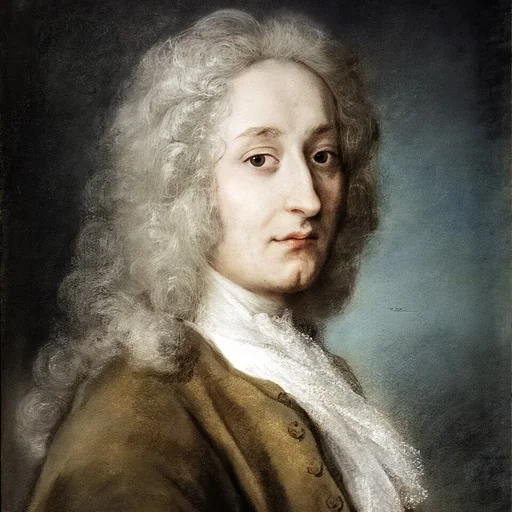
Jean-Antoine Watteau was a French painter and draughtsman whose brief career spurred the revival of interest in colour and movement, as seen in the tradition of Correggio and Rubens.

![Man Playing a Lute [recto], by Matteo Rosselli](https://artifactworldgallery.com/img/matteo-rosselli--man-playing-a-lute-recto--ba21023023a336b9-w320.webp) Man Playing a Lute [recto]
Man Playing a Lute [recto] Portrait of a Young Nobleman
 Standing Cavalier Wearing a Sword
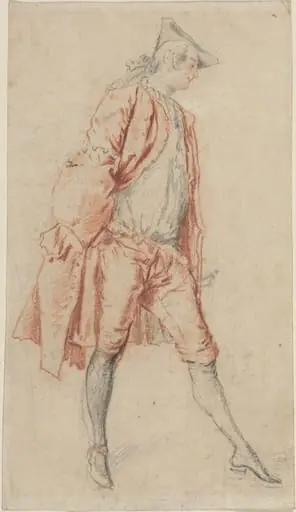 A French Gentleman Standing
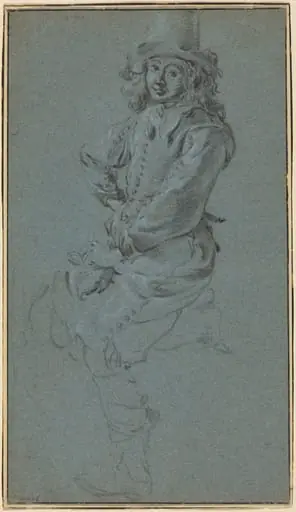 Seated Cavalier with His Arm Akimbo
![A Turk [recto], by Giovanni Battista Cipriani](https://artifactworldgallery.com/img/giovanni-battista-cipriani--a-turk-recto--12cde5f9bac9a966-w320.webp) A Turk [recto]
A Turk [recto]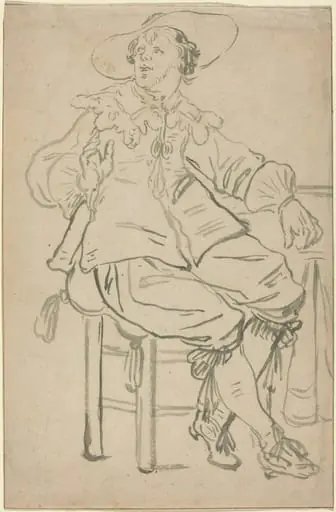 Seated Cavalier
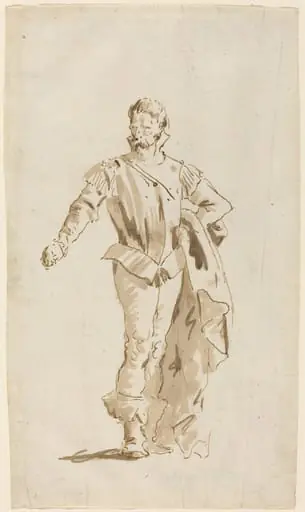 Standing Man in Sixteenth-Century Costume
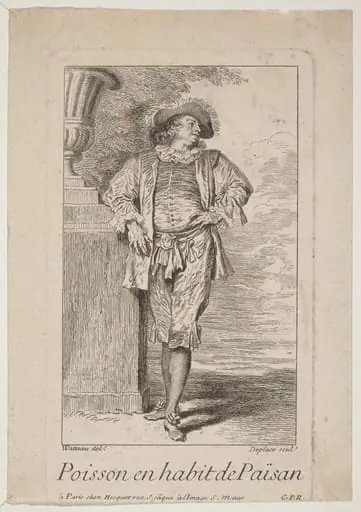 Poisson en habit de Païsan
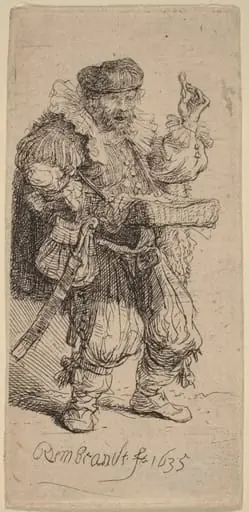 The Quacksalver
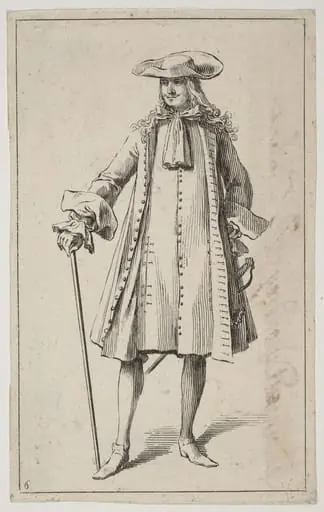 Man with a Sword
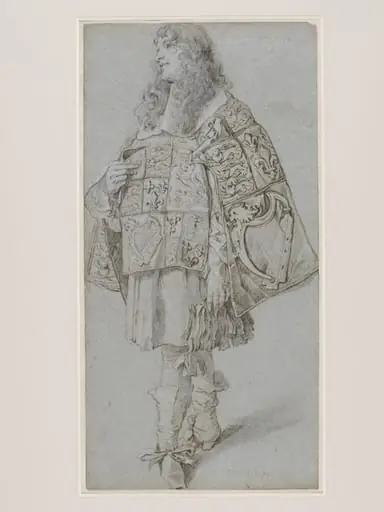 A Pursuivant from the Garter Procession