Artwork
L'assemblee au concert
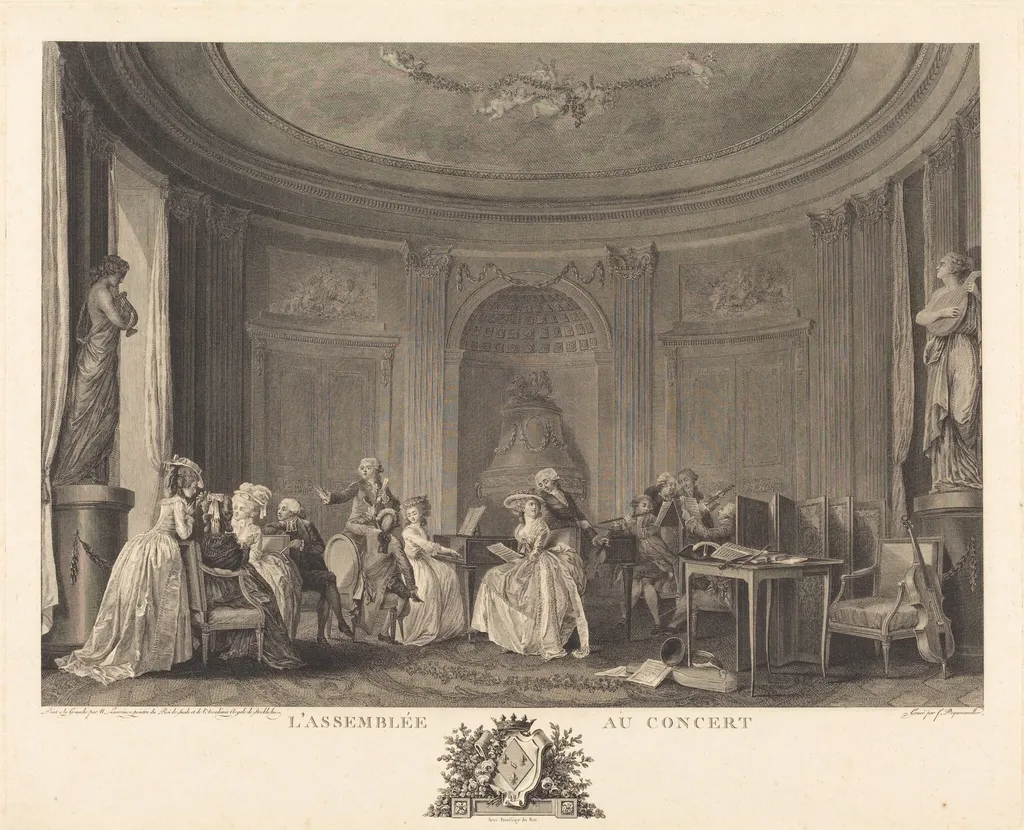
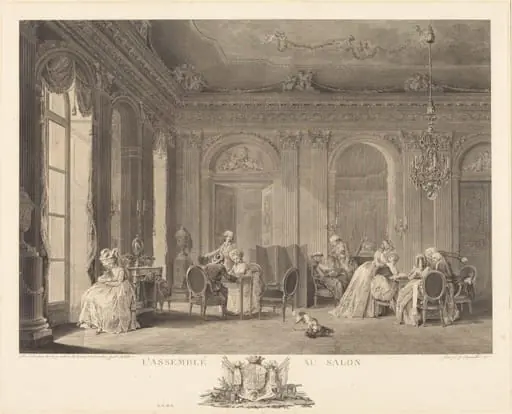
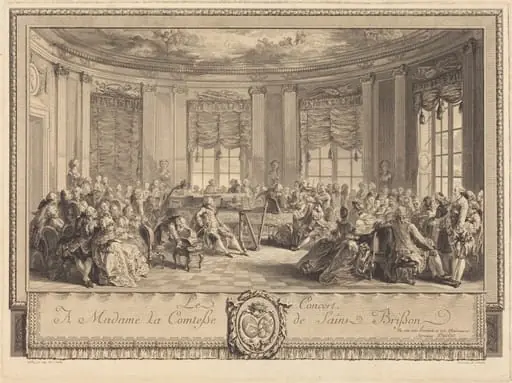
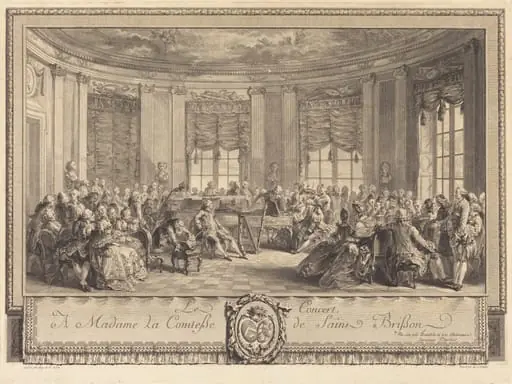
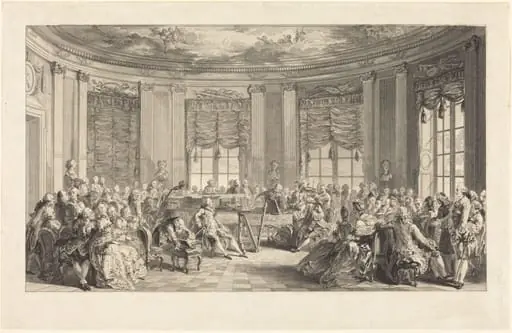
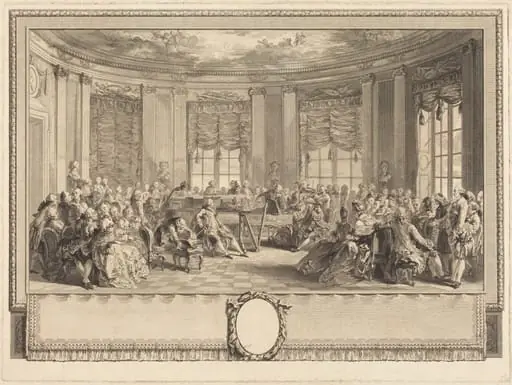
L'assemblee au concert is an ink print by the Romanticist artist Francois-Nicolas-Barthelemy Dequevauviller. It dates from 1784 and is held in the collection of the National Gallery of Art.
About this work
Overview
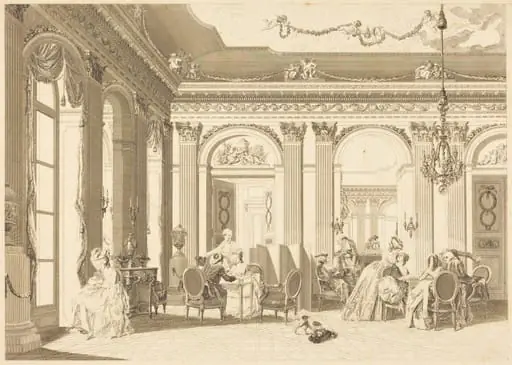
L'assemblee au concert is an 18th-century print by Francois-Nicolas-Barthelemy Dequevauviller, executed in etching and engraving. Created in 1784, it captures a social gathering in a concert hall, rendered with fine linear detail. As a reproductive print, it served to disseminate images of elite cultural events to a broader public, offering access to spaces otherwise restricted by class or cost.
Subject & Meaning
The scene depicts a bustling audience in formal attire, attending a musical performance. Musicians are visible on stage, while patrons engage in conversation, observe, or listen. The composition reflects the social rituals of public concerts in pre-revolutionary France, where attendance was both cultural and performative, blending artistic appreciation with social display.
Technique & Style
Dequevauviller employed etching and engraving to achieve nuanced tonal variation and intricate detail. Fine lines define clothing, architecture, and movement, while cross-hatching suggests depth and shadow. The technique allows for a sense of immediacy and spatial complexity, transforming ink on paper into a vivid record of a transient social moment.
History & Provenance
Produced in 1784, the print was likely part of a series documenting Parisian cultural life. Such works were circulated among the middle class and collectors, functioning as both documentation and entertainment. Its survival reflects the growing market for printed imagery in late 18th-century France, prior to the upheavals of the Revolution.
Context
Public concerts in Paris during the 1780s were becoming increasingly accessible, though still dominated by aristocratic and bourgeois patrons. Prints like this bridged the gap between elite entertainment and the wider public, offering visual narratives of urban life. They contributed to a culture of visual consumption that preceded photography and mass media.
Legacy
The print exemplifies the role of printmaking in shaping public perception of cultural institutions. Dequevauviller’s work contributes to a broader tradition of French graphic art that recorded social customs with observational precision. It remains a reference for understanding how visual media mediated class, leisure, and performance in pre-revolutionary society.
Artist & collection

Artist
Francois-Nicolas-Barthelemy Dequevauviller
Francois-Nicolas-Barthelemy Dequevauviller (1786–1786) was an artist.