Artwork
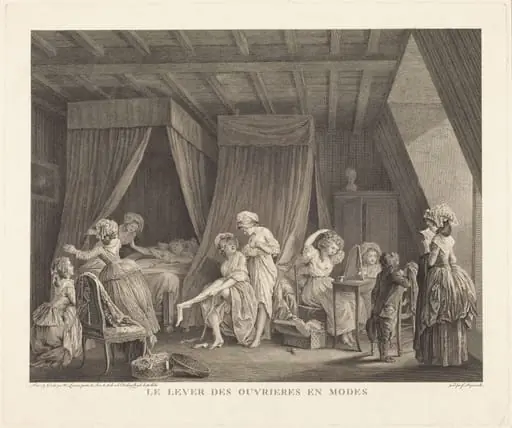
Le lever des ouvrieres en modes
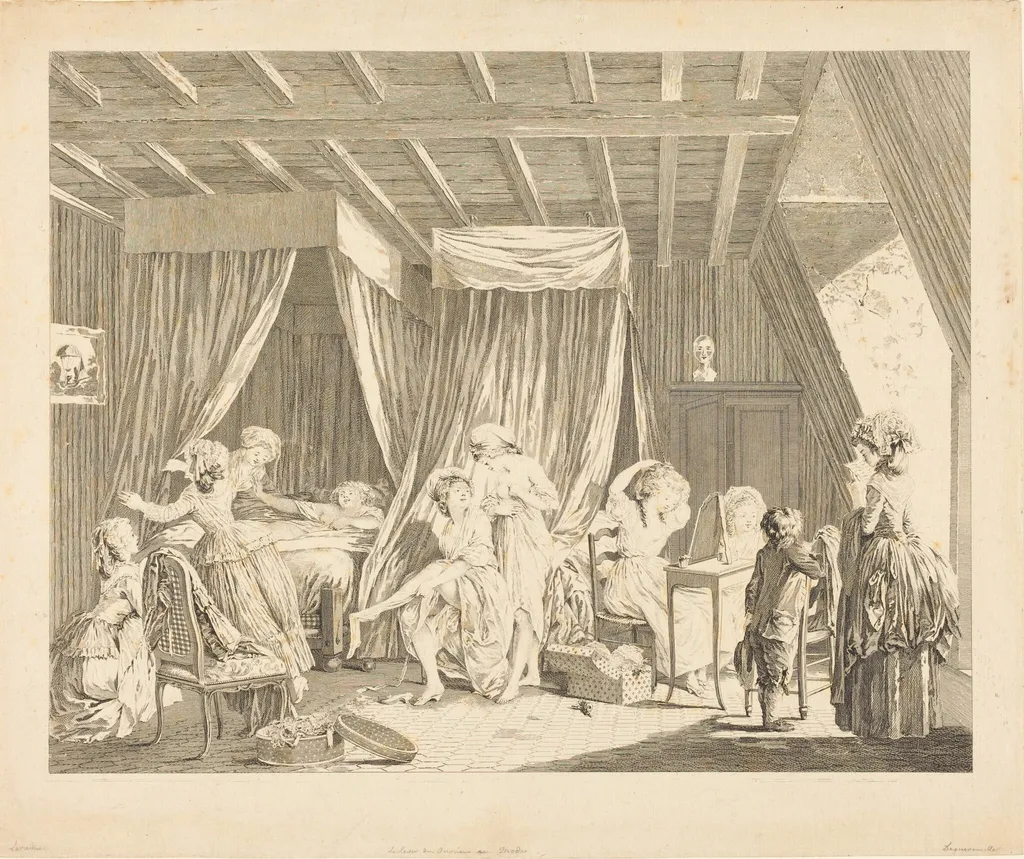
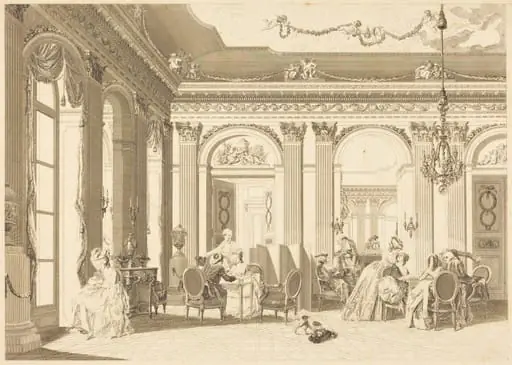
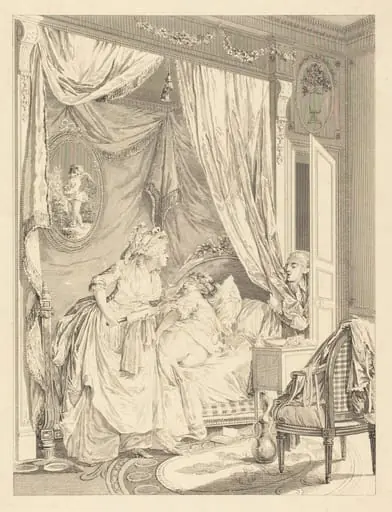
Le lever des ouvrieres en modes is an ink print by the Romanticist artist Francois-Nicolas-Barthelemy Dequevauviller. It dates from 1784 and is held in the collection of the National Gallery of Art.
About this work
Overview
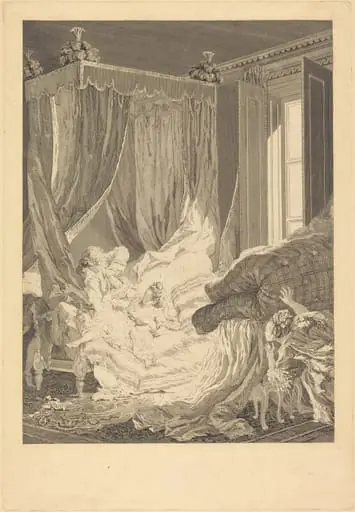
Created in 1784 by Francois-Nicolas-Barthelemy Dequevauviller, this etching captures a domestic morning scene in a working-class home.
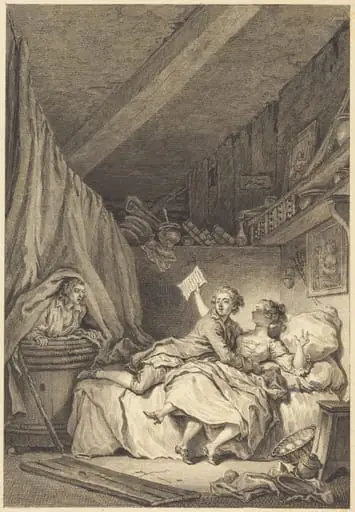
Created in 1784 by Francois-Nicolas-Barthelemy Dequevauviller, this etching captures a domestic morning scene in a working-class home. The print depicts the awakening of female laborers, surrounded by children and attendants in a cluttered bedroom. Rendered in fine, incised lines typical of etching, the composition conveys the quiet disorder of daily life, with draped curtains, scattered garments, and a modest bust on a shelf anchoring the space.
Subject & Meaning
The scene portrays the early morning routine of women engaged in manual labor, likely textile workers, as they rise from bed amid familial and domestic responsibilities. The presence of children and servants suggests a household where labor and domesticity overlap. The unidealized setting—tumbled chair, disarrayed clothing—rejects aristocratic refinement, instead honoring the rhythm of ordinary, industrious life.
Technique & Style
The artist employed etching, a method involving acid-bitten lines on a metal plate, to achieve fine detail in fabric textures, curtain folds, and facial expressions. The delicate, controlled strokes emphasize tactile surfaces—wool, linen, wood—while the composition’s tight framing enhances intimacy. The absence of dramatic lighting or idealized forms aligns with 18th-century print traditions focused on observational realism rather than grandeur.
History & Provenance
The print was produced in France during the late Ancien Régime, a period when printmaking increasingly documented everyday life beyond elite circles. Dequevauviller, known for genre scenes, likely intended this work for a middle-class audience interested in social observation. Its survival suggests it was circulated as a standalone print or in a portfolio, though its early ownership remains undocumented.
Context
In the decades before the French Revolution, artists began turning from mythological and noble subjects to scenes of common life. This etching reflects a broader shift in visual culture, where domestic labor and modest interiors gained artistic legitimacy. Similar works by contemporaries reveal growing public interest in the private routines of non-elite women, particularly in urban trades.
Legacy
Though not widely exhibited today, the print contributes to a lesser-known strand of 18th-century French printmaking that valued authenticity over spectacle. It stands as a quiet record of working women’s lives, offering insight into pre-revolutionary domestic economies. Its technical precision and unembellished narrative influenced later realist artists who sought to depict labor with dignity.
Artist & collection

Artist
Francois-Nicolas-Barthelemy Dequevauviller
Francois-Nicolas-Barthelemy Dequevauviller (1786–1786) was an artist.