Artwork
L'Indiscret
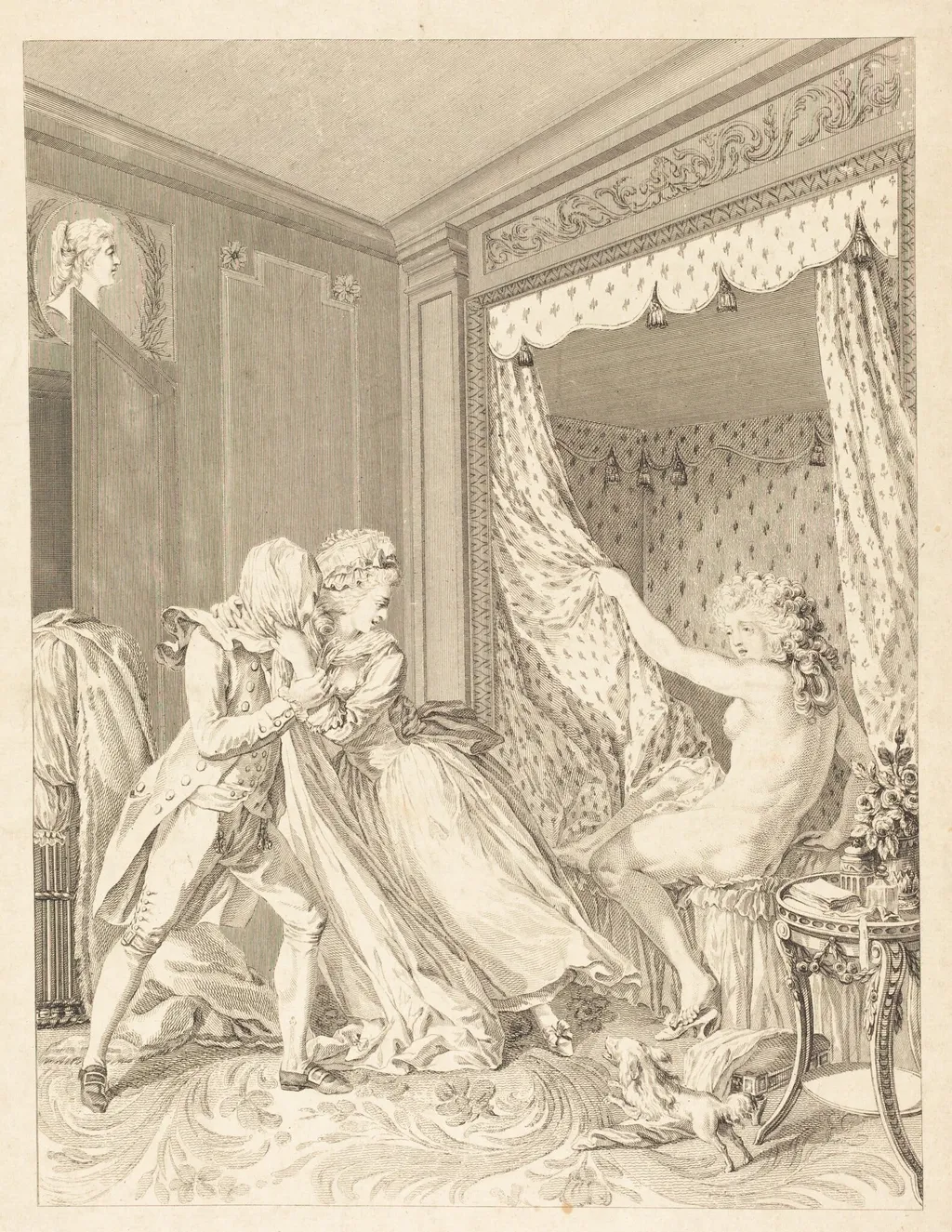
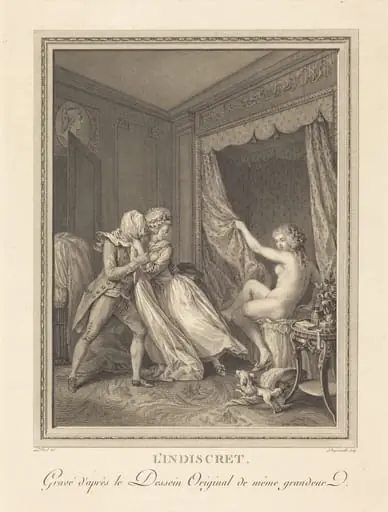
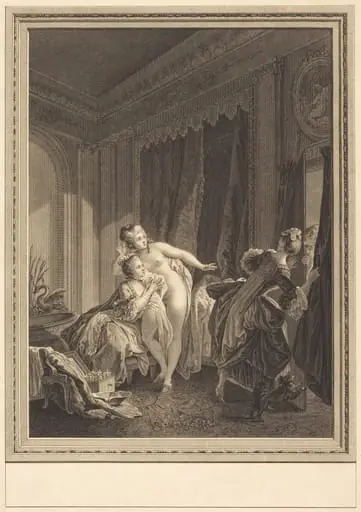
L'Indiscret is an ink print by the Romanticist artist Francois-Nicolas-Barthelemy Dequevauviller. It dates from 1786 and is held in the collection of the National Gallery of Art.
About this work
Overview
L'Indiscret is an 1786 etching by François-Nicolas-Barthélemy Dequevauviller, a French artist known for his satirical prints.
L'Indiscret is an 1786 etching by François-Nicolas-Barthélemy Dequevauviller, a French artist known for his satirical prints. The work captures a moment of intimate exposure within a lavishly furnished bedroom, using the precision of etching to render fine details of fabric, architecture, and gesture. It belongs to a tradition of 18th-century French graphic art that explored social manners through visual narrative.
Subject & Meaning
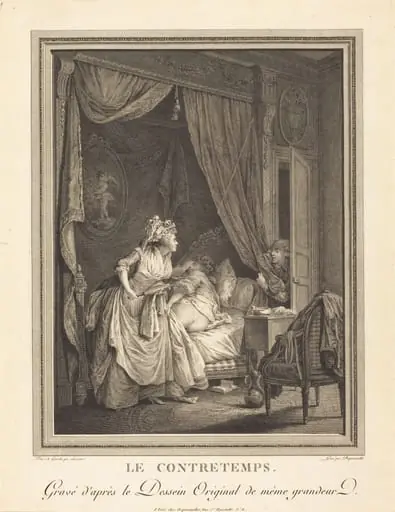
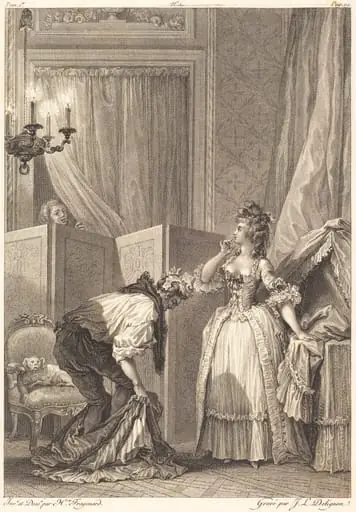
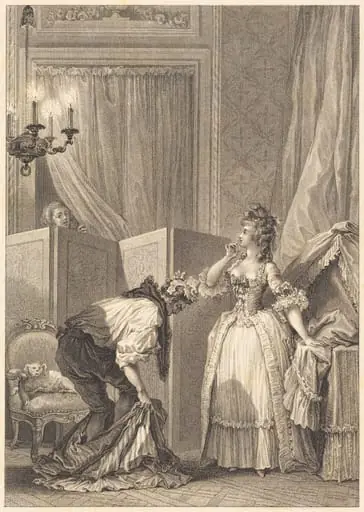
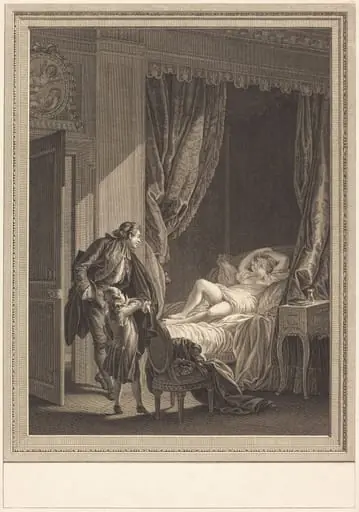
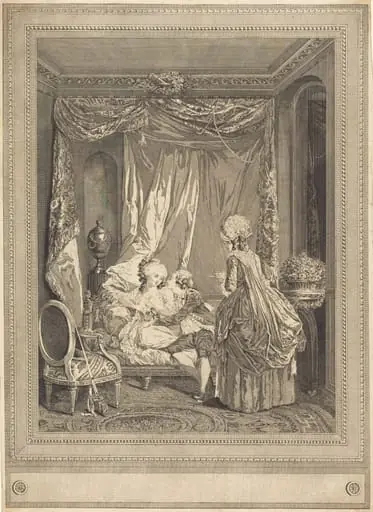
The scene depicts a man drawing back a curtain to reveal a woman in bed with a second figure, suggesting a clandestine encounter. The presence of a bust on the shelf and the opulent interior imply wealth and propriety, contrasting with the implied breach of trust. The title, meaning 'The Indiscreet,' frames the act as an exposure of hidden behavior, likely commenting on aristocratic hypocrisy or the fragility of reputation.
Technique & Style
Dequevauviller employed etching to achieve nuanced tonal gradations, using fine lines to suggest the weight of drapery, the sheen of wallpaper, and the texture of bedding. The lighting is carefully modeled to draw attention to the central figures, while the background remains subtly detailed, reinforcing depth without distraction. The composition relies on diagonal tension—the pulling curtain and the reclining figures—to heighten the sense of revelation.
History & Provenance
Created in 1786, the print emerged during a period of increasing public interest in private life among the French elite. Though specific early ownership records are sparse, it was likely circulated among educated audiences familiar with satirical prints. Its survival in institutional collections suggests it was valued for its technical skill and social commentary, even as its subject matter challenged prevailing norms.
Context
In late 18th-century France, etchings like this were widely distributed as affordable art, often serving as visual gossip or moral critique. The bedroom setting, rich in furnishings, reflects the era’s fascination with domestic interiors as sites of social performance. Dequevauviller’s work aligns with contemporaries who used private scenes to question public virtue, particularly as revolutionary sentiments began to erode aristocratic authority.
Legacy
L'Indiscret remains a representative example of pre-Revolutionary French graphic satire. While not widely reproduced today, it contributes to scholarly understanding of how visual media engaged with themes of secrecy, class, and gender. Its technical refinement and narrative subtlety continue to inform studies of print culture and the social dynamics of private life in Enlightenment France.
Artist & collection

Artist
Francois-Nicolas-Barthelemy Dequevauviller
Francois-Nicolas-Barthelemy Dequevauviller (1786–1786) was an artist.