Artwork
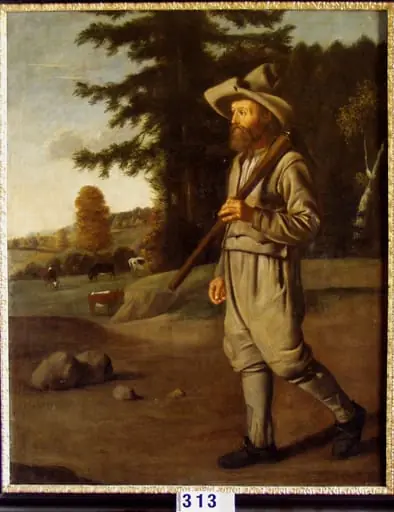
Țărancă schwabă (suabă); pandant: Țăran schwab (suab)
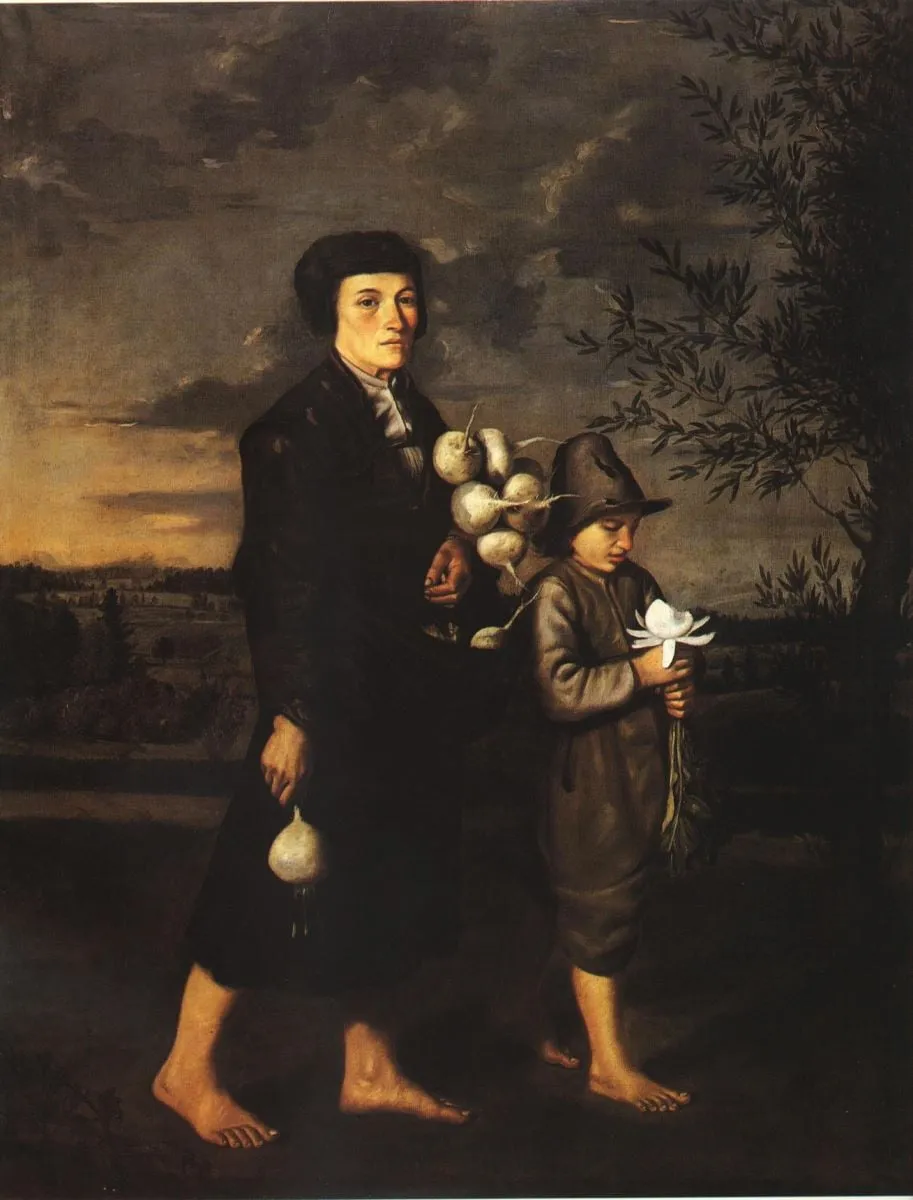
Țărancă schwabă (suabă); pandant: Țăran schwab (suab) is an unspecified painting by the Baroque artist Martin Dichtl. It dates from 1669 and is held in the collection of the Brukenthal National Museum.
About this work
Overview
Țărancă schwabă (suabă) is a 1669 painting by Martin Dichtl, complemented by its pendant, Țăran schwab (suab). The work portrays two figures: a woman and a young boy standing together, set against a serene landscape.
Subject & Meaning
The painting depicts a woman, slightly behind a boy, conveying a sense of accompaniment or guidance. The woman holds turnips, symbolizing rustic labor, while the boy grasps a white flower, introducing a note of innocence or simplicity. Their bare feet and contrasting attire (dark vs. light) highlight their distinct roles or statuses.
Technique & Style
Dichtl employs contrasting colors to draw attention to the figures' differences. The serene landscape background, with trees and a cloudy sky, is rendered in a manner that suggests a calm, natural setting, contrasting with the figural focus.
History & Provenance
Created in 1669 by Martin Dichtl, specific details about the painting's history, ownership, or exhibition record before its current location are not provided in the available information.
Context
The painting reflects 17th-century depictions of everyday life, particularly focusing on the Swabian population (as suggested by the title), emphasizing simple, rustic themes common in European art of the period.
Legacy
While reminiscent of broader European artistic traditions of its time, the specific influence or notable legacy of Țărancă schwabă (suabă) in the broader art historical canon is not detailed in the provided information.
Artist & collection