Artwork
Fetiță cu păpușă
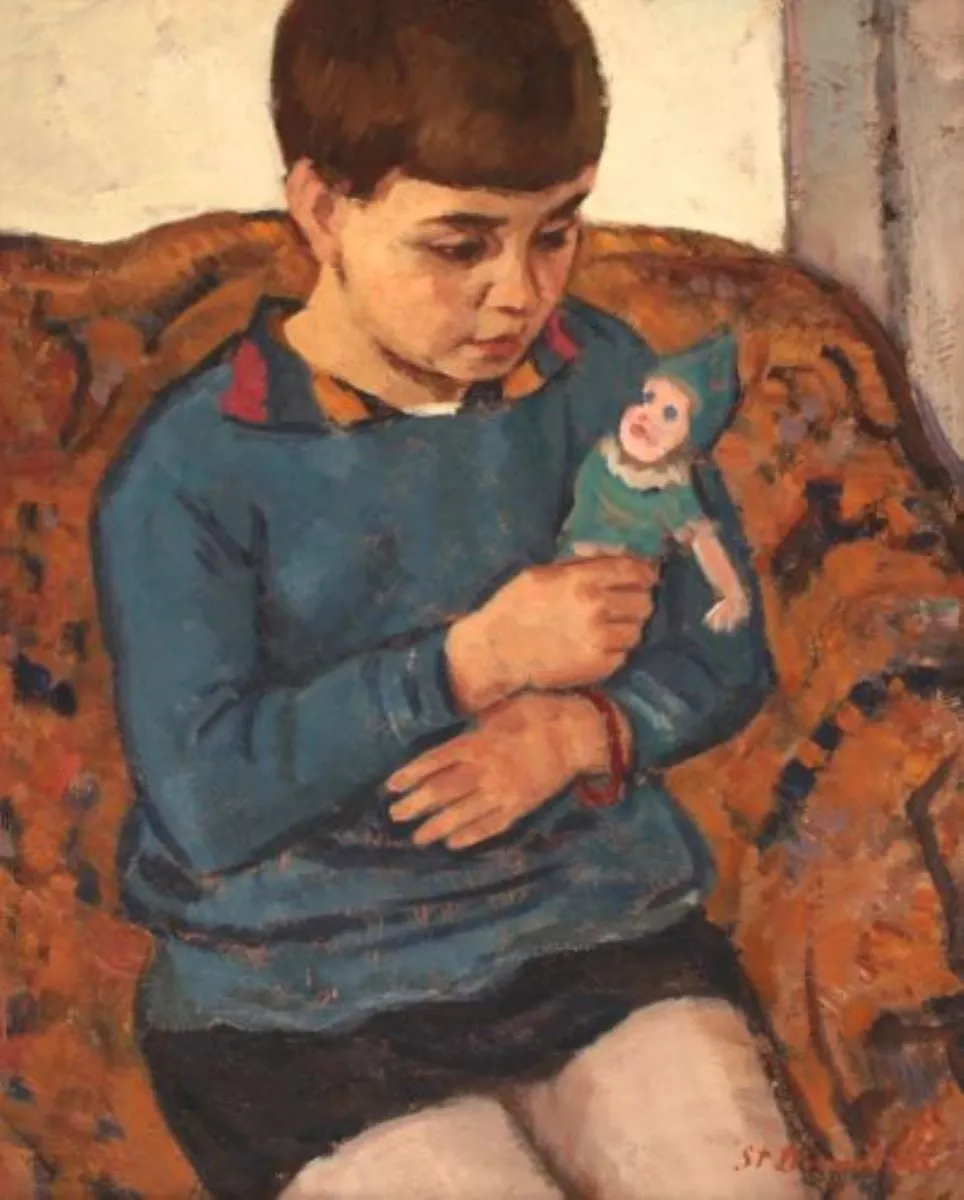
Fetiță cu păpușă is an unspecified painting by Ștefan Dimitrescu. It dates from 1919 and is held in the collection of the Art Museum of Constanta.
About this work
Overview
Rendered with thick, tactile brushwork, the painting captures quiet solitude rather than narrative drama, grounding its emotional tone in physical detail.
Painted around 1919 by Ștefan Dimitrescu, Fetiță cu păpușă depicts a young boy seated on an aged, patterned couch, cradling a simple doll. The work is part of the Museum of Ethnography’s collection and reflects the artist’s interest in intimate, everyday moments. Rendered with thick, tactile brushwork, the painting captures quiet solitude rather than narrative drama, grounding its emotional tone in physical detail.
Subject & Meaning
The boy, with tousled dark hair and a worn blue sweater, holds a doll with a blank, painted face and minimal features. His rough hands contrast with the delicate toy, suggesting a life shaped by labor or hardship. The scene avoids sentimentality; instead, it presents childhood as a quiet, solitary act of care, where the doll serves as both companion and projection of inner life.
Technique & Style
Dimitrescu employs impasto to build texture across the couch’s fabric and the boy’s sweater, giving the surface a tangible, almost sculptural quality. The thick application of paint emphasizes materiality over idealized form. Colors are muted, with subtle contrasts between the doll’s green-and-white dress and the boy’s blue garment, reinforcing the painting’s restrained, observational tone.
History & Provenance
Created shortly after World War I, the painting entered the Museum of Ethnography’s holdings in the early 20th century, likely through institutional acquisition or donation. Its preservation within a museum focused on cultural artifacts aligns with Dimitrescu’s interest in documenting rural and domestic Romanian life during a period of social transition.
Context
In post-war Romania, artists like Dimitrescu turned to domestic scenes to reflect the resilience of everyday life. Fetiță cu păpușă fits within a broader movement that valued authenticity over grandeur, portraying children and interiors as vessels of cultural memory. The worn furniture and handmade doll suggest economic hardship, yet the focus remains on quiet endurance rather than despair.
Legacy
The painting endures as a quiet example of Romanian interwar realism, valued for its emotional restraint and material sensitivity. It has not been widely reproduced or celebrated outside institutional circles, but within Romanian art history, it remains a touchstone for its unembellished portrayal of childhood and domestic space.
Artist & collection