Artwork
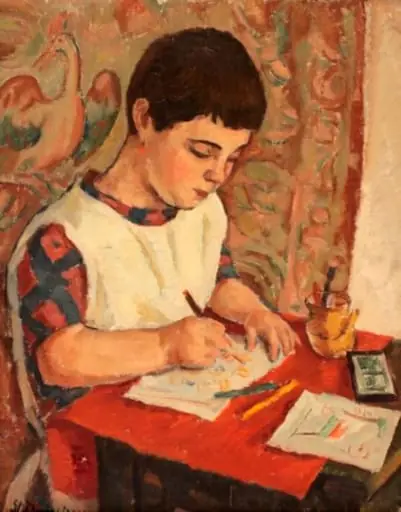
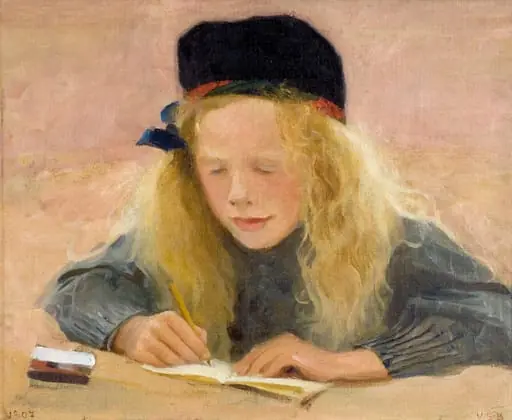
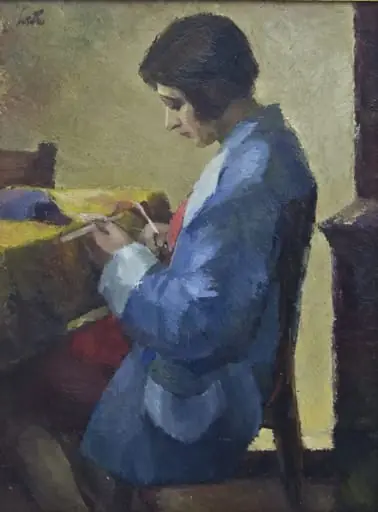
Margareta desenând (fata pictorului)
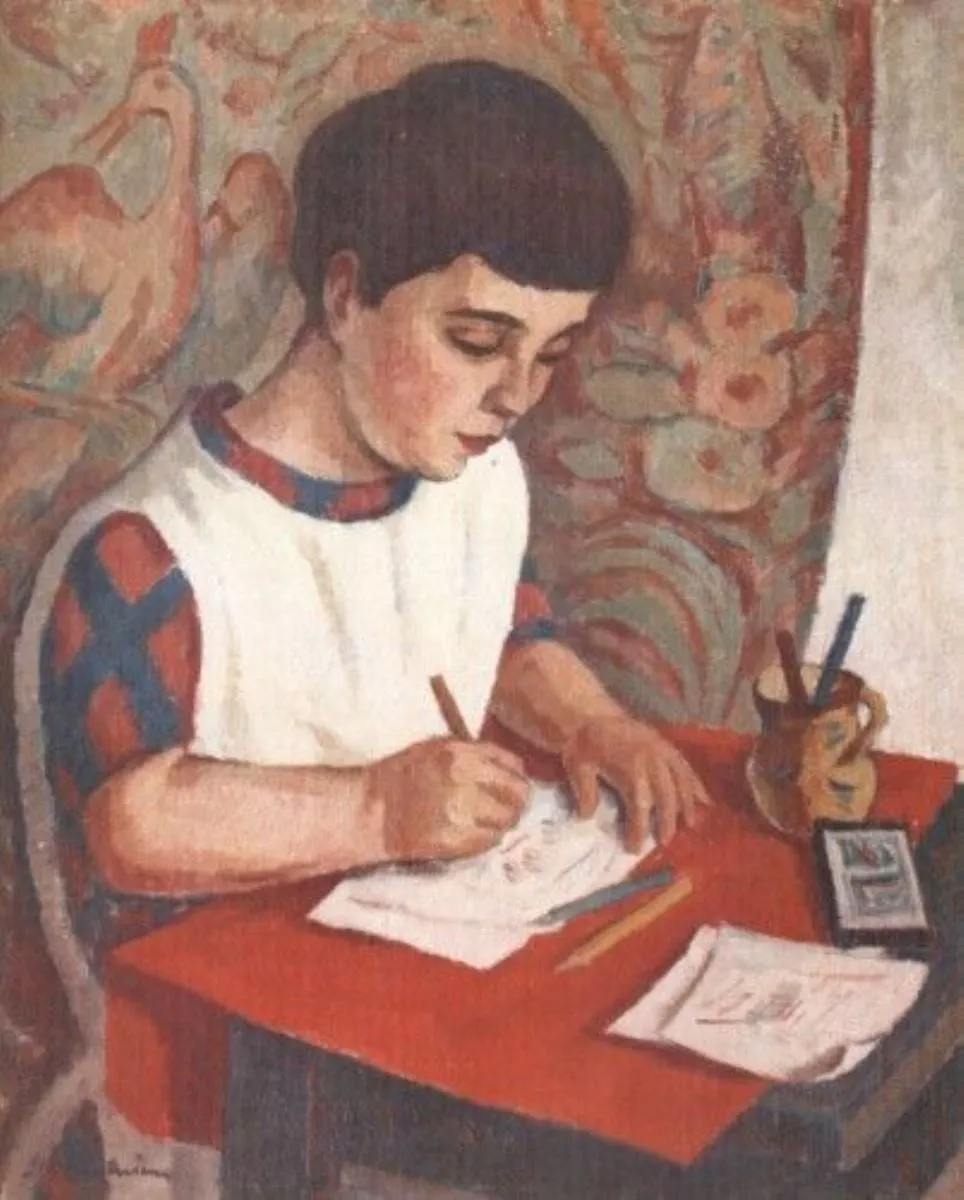
Margareta desenând (fata pictorului) is an unspecified painting by Ștefan Dimitrescu. It dates from 1919 and is held in the collection of the Colecție particulară - București.
About this work
Overview
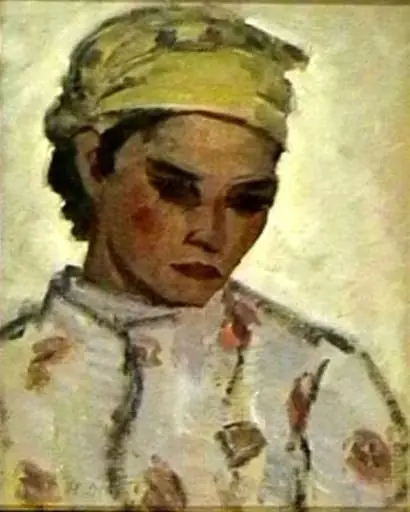
Painted around 1919 by Ștefan Dimitrescu, this intimate portrait captures a young person engaged in quiet artistic activity.
Painted around 1919 by Ștefan Dimitrescu, this intimate portrait captures a young person engaged in quiet artistic activity. The work is part of the Museum of Ethnography’s collection and reflects the artist’s interest in everyday domestic moments. Rendered with subtle attention to detail, the scene avoids grandeur in favor of quiet observation, emphasizing the routine act of drawing as a meaningful gesture.
Subject & Meaning
The figure, likely the artist’s daughter, is shown absorbed in sketching, her focus undisturbed by the viewer’s presence. The act of drawing—rather than the finished product—is central, suggesting an exploration of creativity as a personal, private ritual. The modest setting and unadorned clothing reinforce a sense of authenticity, positioning the subject not as a model but as an individual immersed in her own world.
Technique & Style
Dimitrescu employs soft, directional lighting to draw attention to the hands and tools, enhancing tactile realism. Subtle chiaroscuro models the face and forearms, giving volume without dramatic contrast. The brushwork is restrained, favoring texture over flourish—fabric folds, wood grain, and pencil shavings are rendered with quiet precision, reinforcing the scene’s intimacy and groundedness.
History & Provenance
Created during a period of cultural redefinition in postwar Romania, the painting entered the Museum of Ethnography’s collection early in its history. Its preservation there, rather than in a fine arts institution, reflects its perceived connection to daily life and folk realism. No significant alterations or reattributions are recorded, and its provenance remains stable since acquisition.
Context
In early 20th-century Romanian art, domestic scenes gained traction as artists turned away from academic grandeur toward personal, vernacular subjects. Dimitrescu’s work aligns with this shift, echoing contemporaries who valued authenticity over idealization. The inclusion of everyday objects—scissors, sketchbook, pencil holder—grounds the image in a specific time and social milieu, reflecting broader cultural interests in ordinary life.
Legacy
Though not widely reproduced, the painting remains a quiet reference in studies of Romanian interwar realism. Its emphasis on quiet concentration and domestic detail influenced later artists seeking to portray inner life without sentimentality. It endures as a testament to the dignity found in unremarkable moments, preserved not as spectacle but as witness.
Artist & collection